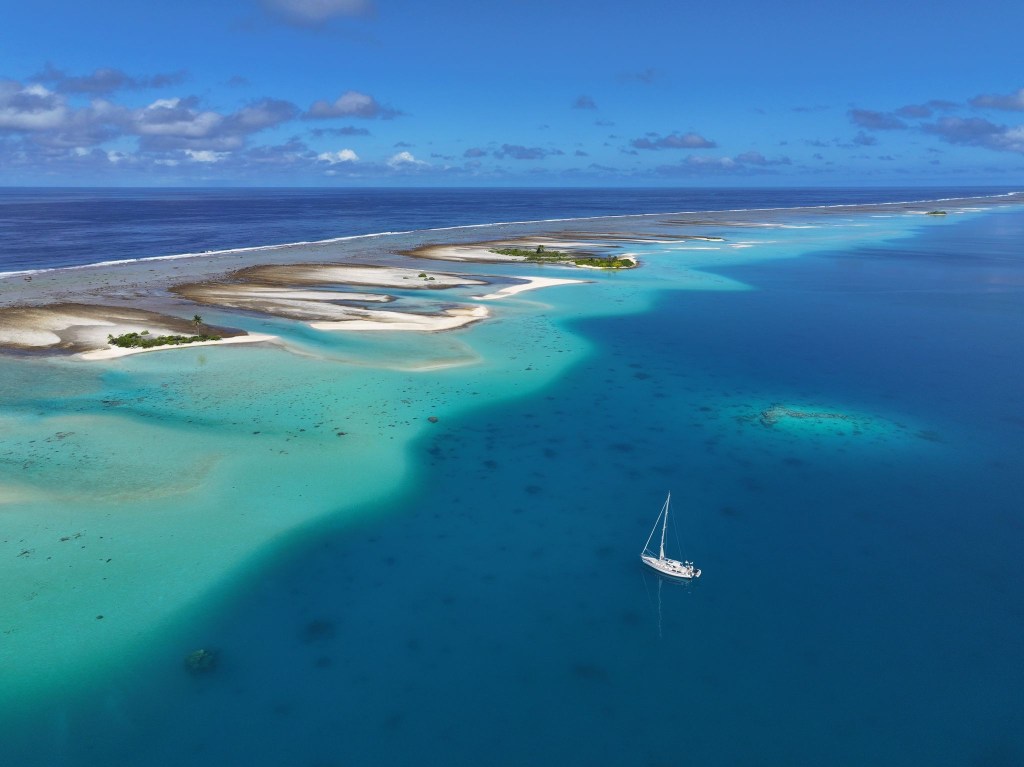
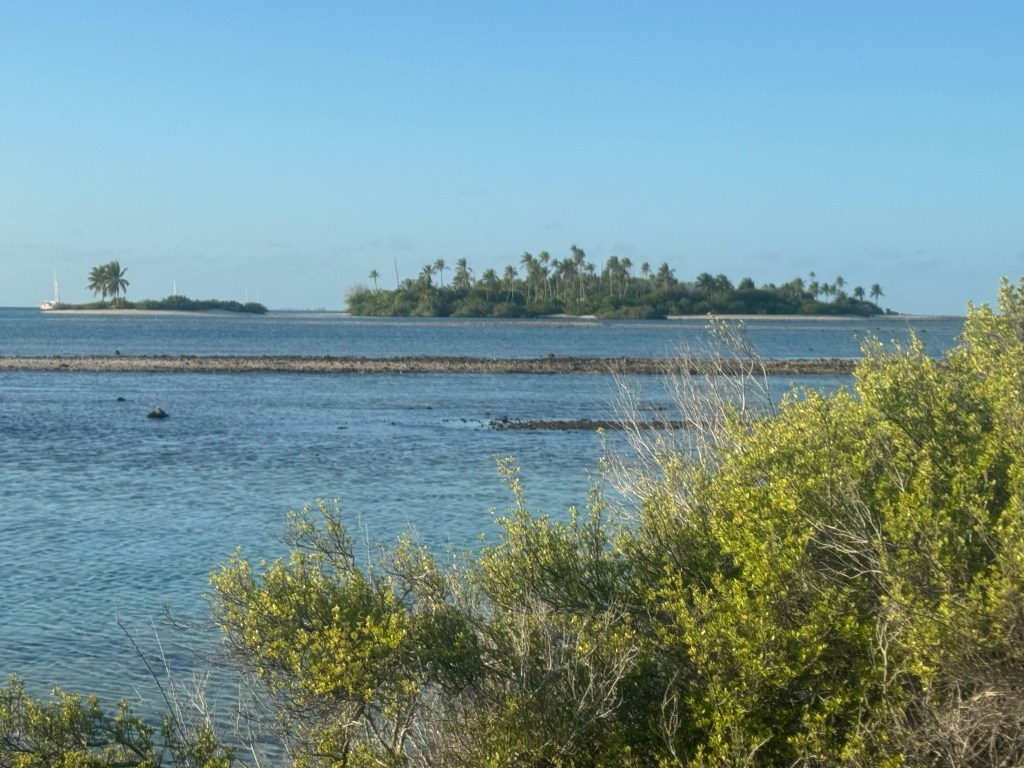
Charles Darwin’s theory is that the Tuamotus (and other atolls/motus around the world) form when volcanic islands collapse until only the surrounding coral reefs remain. Somehow nothing in our preparations readied us for the sheer size of Raroia, which is one larger of 78 atolls in the Tuamotus. We envisioned something about the size of Bainbridge Island and ended up with almost twice the size of Seattle: Seattle is 84 sq. miles (217 km) and Raroia is 139 sq. miles (369 km). We arrived to Raroia after a fairly uneventful four day 480 mile passage from Nuku Hiva, then transited an extra two hours to get to our anchorage.
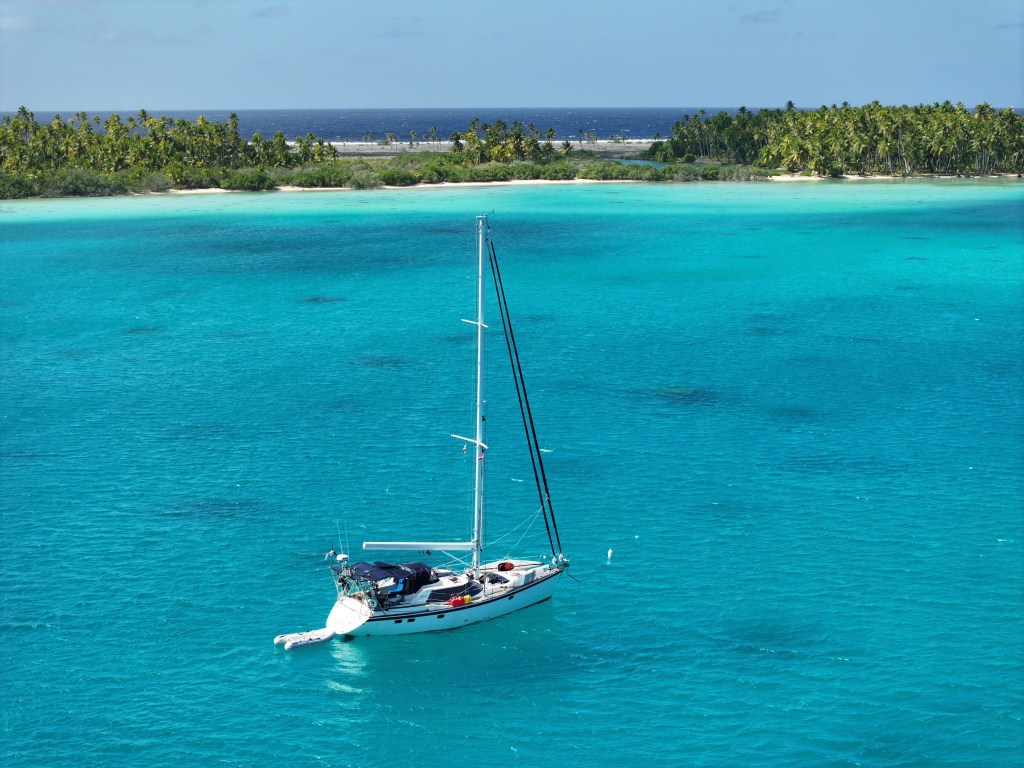
(Drone Photos Courtesy of Ralf)
Raroia is about 21 NM stretching from SW to NE and 7 NM wide. Typically, the wind comes from the large expanse of Pacific Ocean to the east. Over millennia, the coral reefs have worn down so some areas are partially covered during tidal flows and others become swift flowing like rivers, especially with strong currents in the ocean. Raroia has only one identified pass through which boats can navigate, and travel needs to be timed for when the currents are somewhat slow, which is a bit of a guesstimate given the lack of tide charts, buoys that measure pass currents, and the overall ocean current. We miss NOAA. Almost directly across from the entrance is where Kon-tiki was destroyed when she ran aground in 1947. We cannot imagine traveling here without the benefit of navigation apps, sonar, radar, GPS, satellite, and last, but most importantly, Polaroid sunglasses.
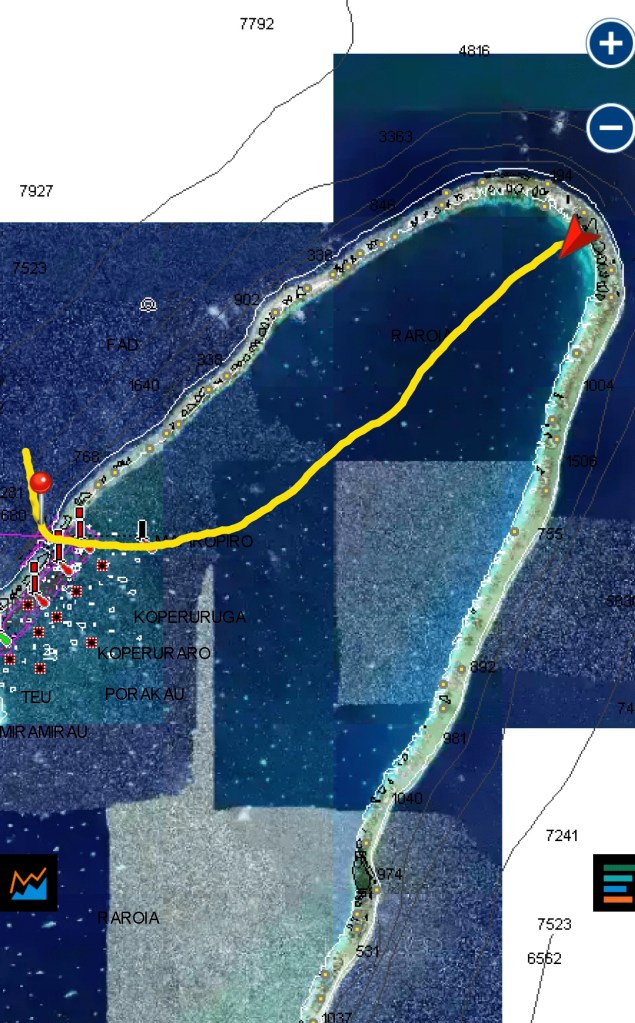
Fortunately, Ralf & Wiebke from SV Flora had shared their track to Twin Palms Yacht Club at the northern point of Raroia. The Navionics track below is layered with satellite images, which helps to navigate through the myriad of coral heads. Each white dot is a coral head that needs to be avoided. Even with all the charts, a sharp eye needs to be maintained by everyone on the boat.
Beach Party
The evening of our arrival to the anchorage at the north end of Raroia, Ralf and Wiebke came for “sundowners” and a wonderful evening of conversation. They began cruising full-time five years ago and Wiebke decided not to return to work after a three year sabbatical. Fortunately, they’d secured US long-stay visas pre-Covid, so they were able to spend much of the intense Covid period in the states and territories – as long as they didn’t leave. They consider themselves lucky that they didn’t end up separated from their boat, which happened to many cruisers during Covid shutdowns. Imagine anchoring off of Staten Island when New York was shut down.
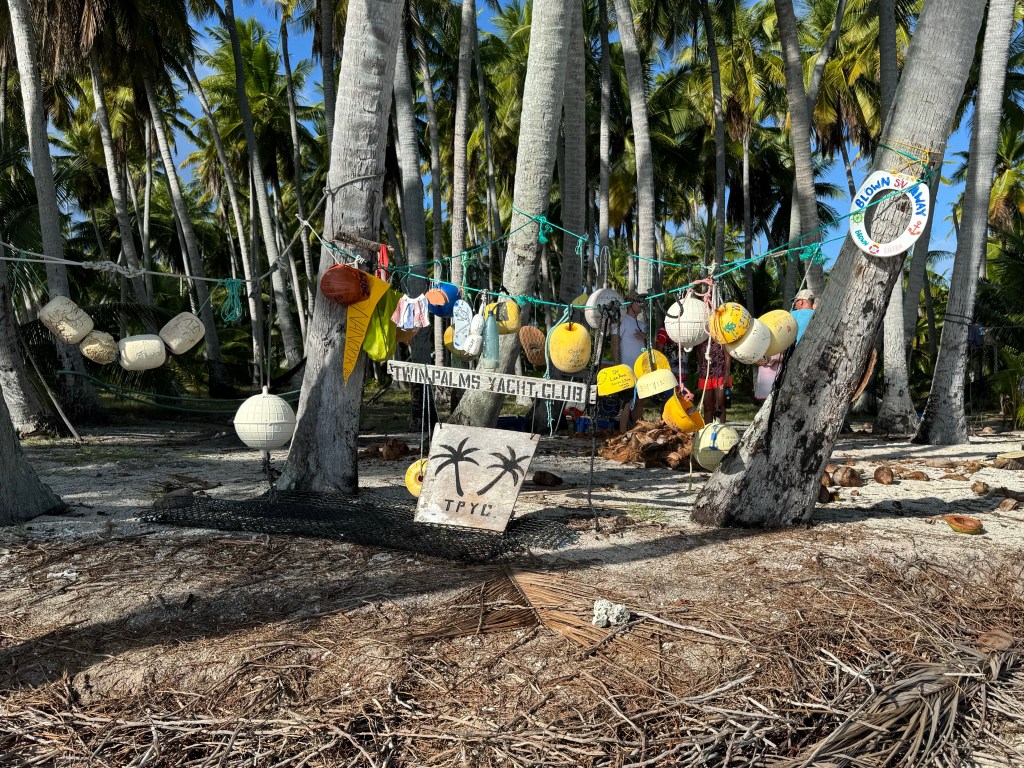
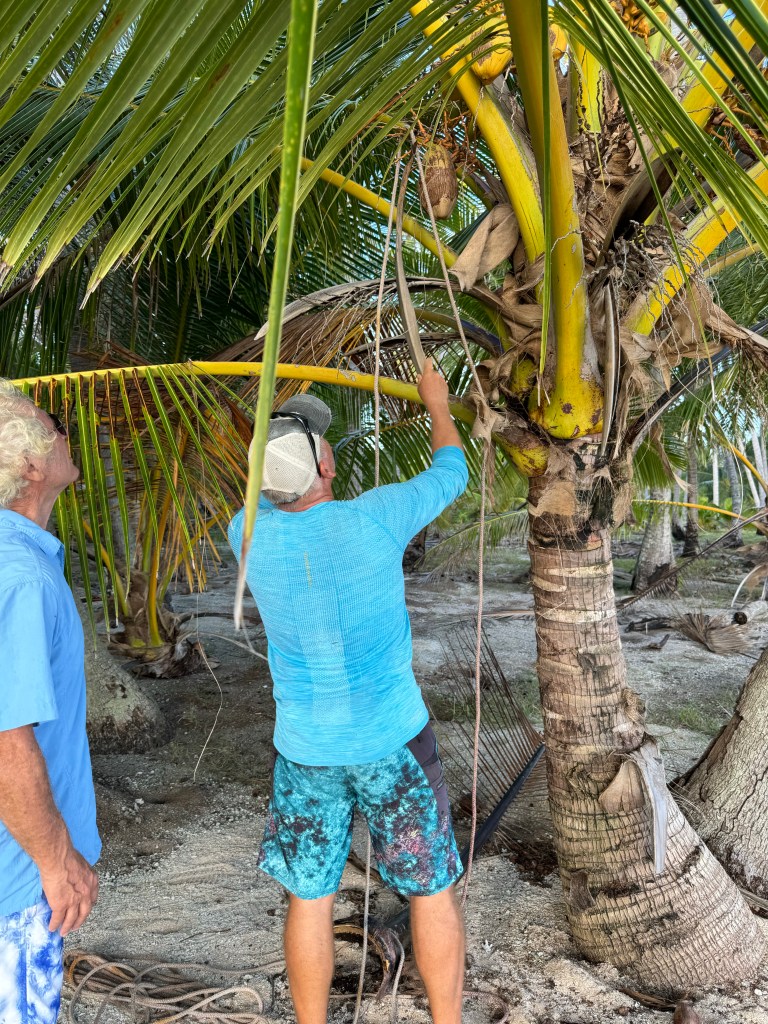
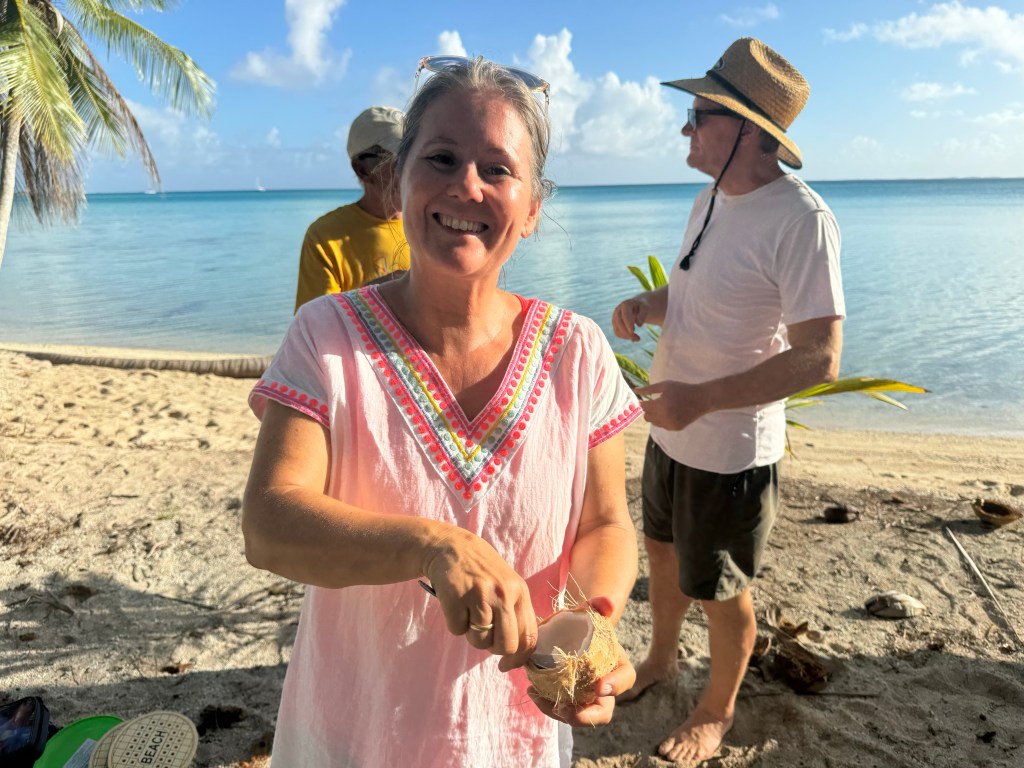
Ralf & Wiebke invited us to a beach party at the Twin Palms “Yacht Club” at 2 PM the next day. The so-called Yacht Club is just a spot on the beach with a fire pit, a net with abandoned pearl buoys, and a few hammocks. Next to the fire pit is a stake that is used to remove the husks from coconuts. The coconut is consumed and the husks burned to keep away the ever-present no see’ums. Everyone brings their own beverages, stories and some even bring a snack to share. With just nine months (what??) of cruising under our belts, we were the newbies. Amongst one other American boat, we shared the evening with boaters from Germany, the Netherlands, France, Britain, and Denmark. Of course, they all spoke perfect English. It was a nice way to meet our new neighbors and share our voyages.

Northeast Raroia
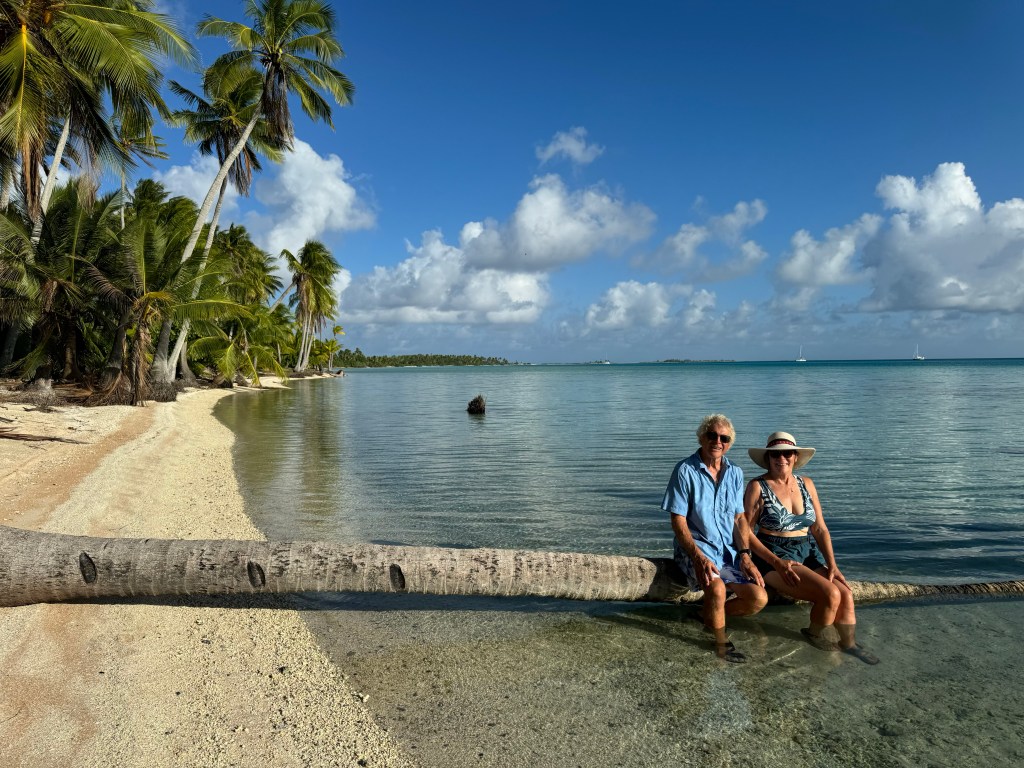
The northeast point of Raroia has an accumulation of sand that provides some protection from the wind and a shallow bay in which to anchor and play. We enjoyed our first few nights of a non-rocking anchorage since leaving Mexico.
On shore, a brackish lagoon provides a bit of a path towards the wide expanse of crumbling reef facing the Pacific Ocean. We walked the ridge of the reef and saw the disintegrating coral and shells, which eventually become sand. Unfortunately we also witnessed the devastating impact of plastic intermixed with nature.
We did our first “drift” snorkel along the shore, where the tide pulled us along with our trailing dinghy through the coral reef. We also snorkeled some of the coral heads, which also also known by the Māori term boomie.
One morning we watched a flock of birds follow a bait-ball across the bay. The following morning was glassy and I saw a black tip shark swimming near the boat. We’ve learned that these sharks are shy and will typically swim away when divers make eye contact.
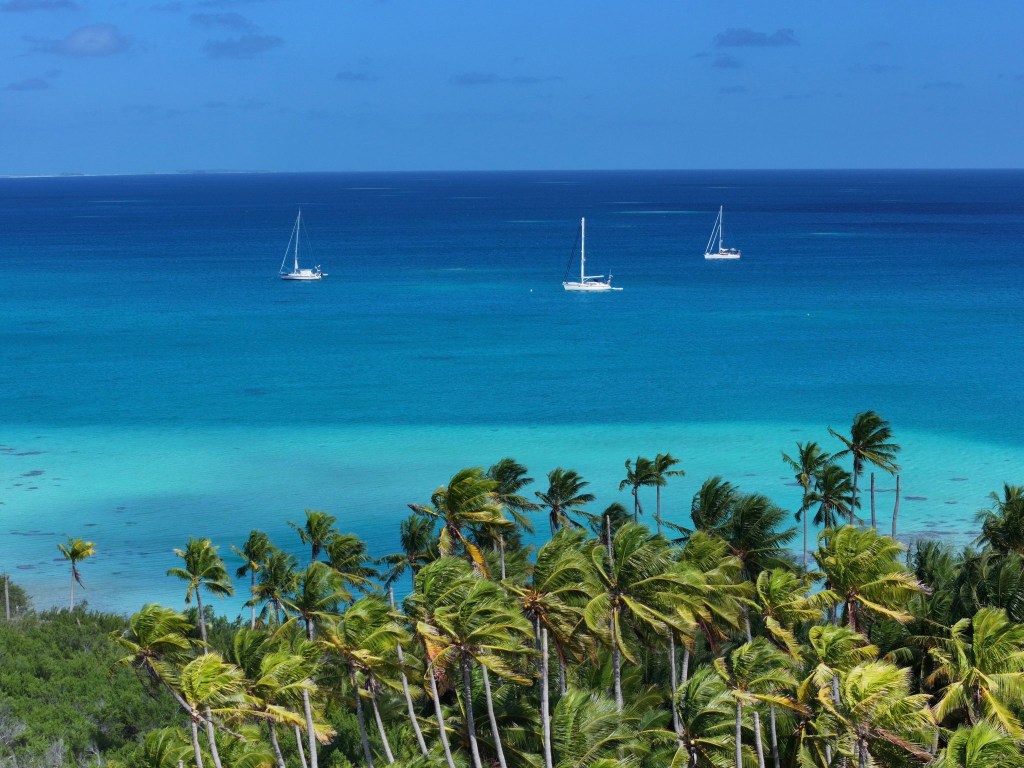

The wind shifted the next day and came up from the atoll. Our formerly calm anchorage turned very rough from the surge coming through the atoll into the shallow anchorage. We would have left the day before, but…
Boat $4#T
A crew member who accompanied another boat on a passage observed, “you’re always working on the boat!” Boats underway experience tremendous physical stress, which along with the marine air causes parts to fail. Which means we’re always working on Tieton.
During our passage from Marquesas, the connection to the boat from the portable generator shorted out, and the connection was completely fried. Fortunately, Herman was able to hardwire the portable generator into the boat. Not ideal, but it will suffice until we re-tackle the boat’s generator when we’re in New Zealand or get another connector in Tahiti.
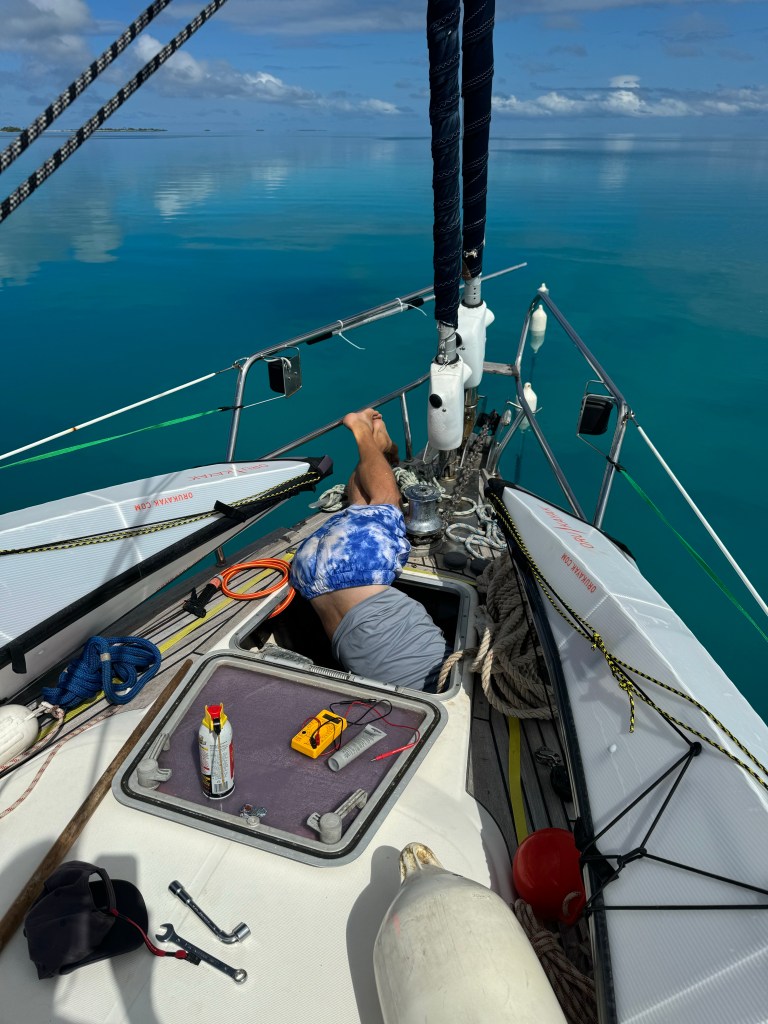
The windlass that hauls up the anchor stopped working after we set anchor in Twin Palms. Despite his best efforts, Herman wasn’t able to resuscitate the windlass, which means we’ll need to crank the anchor winch by hand until we get a new windlass/windlass motor. Herman did get a nice core workout keeping himself from falling into the hatch by keeping his feet on the rails.
Floating the Anchor Chain
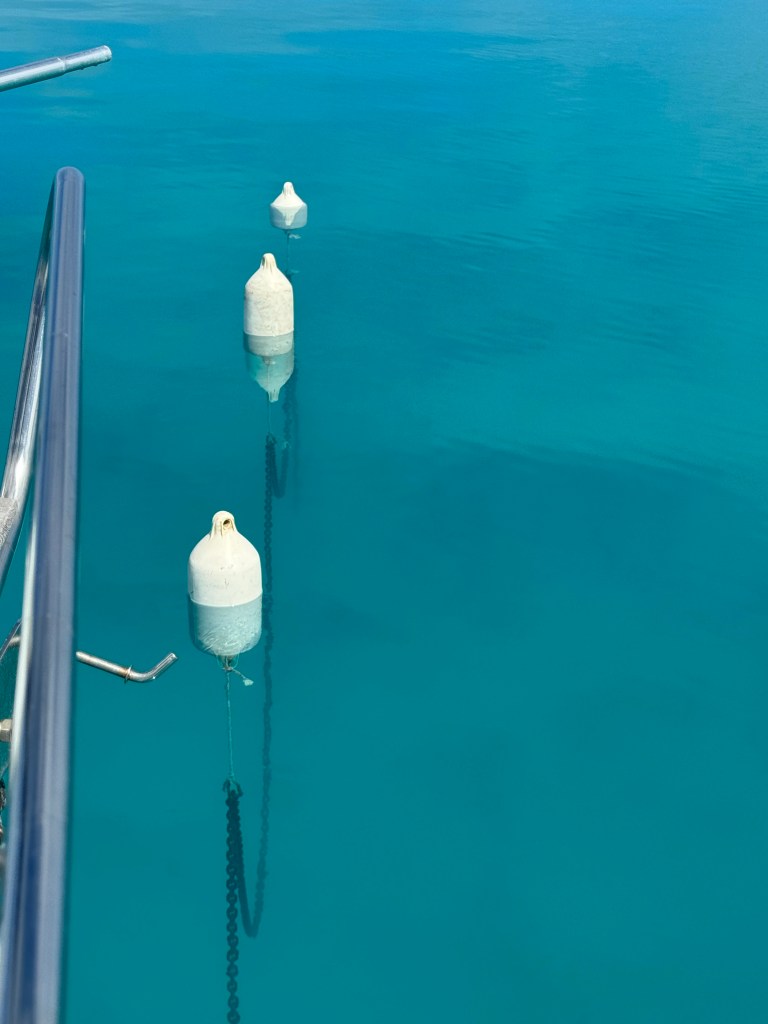
Anchor chains that drag across coral kill it, plus it can also get entangled, which along with killing coral is dangerous for boats. When anchoring, it is important to have a scope with a ratio of four or five feet of chain/line to depth, which accommodates tide changes and wind shifts. Floating the anchor chain provides for the desired scope while reducing the amount of chain on the bottom.
We did it! Now that we know this simple technique, we will continue using it and encourage our fellow Pacific Northwest cruisers to use it around our fragile eelgrass.
Kon-tiki
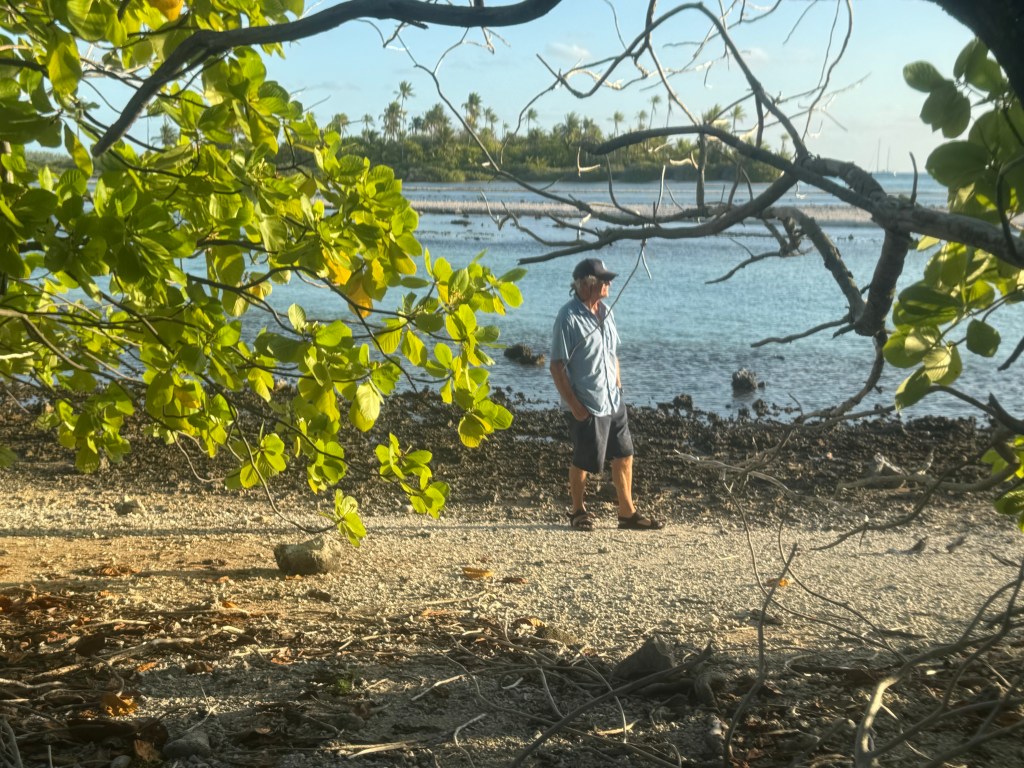
Norwegian Thor Heyerdahl sailed Kon-tiki from South America in an attempt to enlighten the world about the Polynesian people and islands. Post World War II some of the islands were being used to test atomic bombs. Kon-tiki’s voyage ended 4,000 miles later when it crashed on the Tahuna Maru Islet on the shores of the Raroia atoll. We moved Tieton so that we could explore the monument and surrounding area.
This part of the atoll is flat and narrow, with much more water from the ocean streaming across/through it. We did a brief drift through one of the weaker incoming streams to get an idea of the current. It was fun to float just inches above the sand with the current carrying us. Of course, we made sure that we were heading into the atoll rather than out to the ocean 🙂
The Kon-tiki monument is in the center of an islet about a half an acre around. Apparently the birds didn’t get the memo, because the islet also had a bird rookery there. The nesting birds were not too happy with our presence.
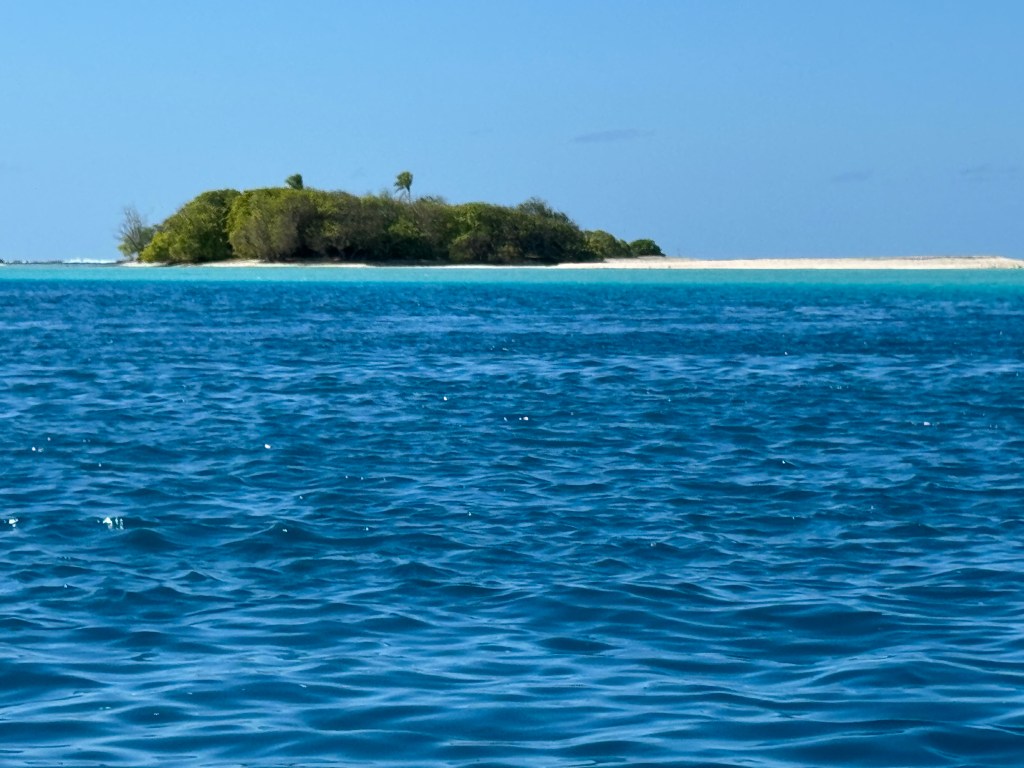

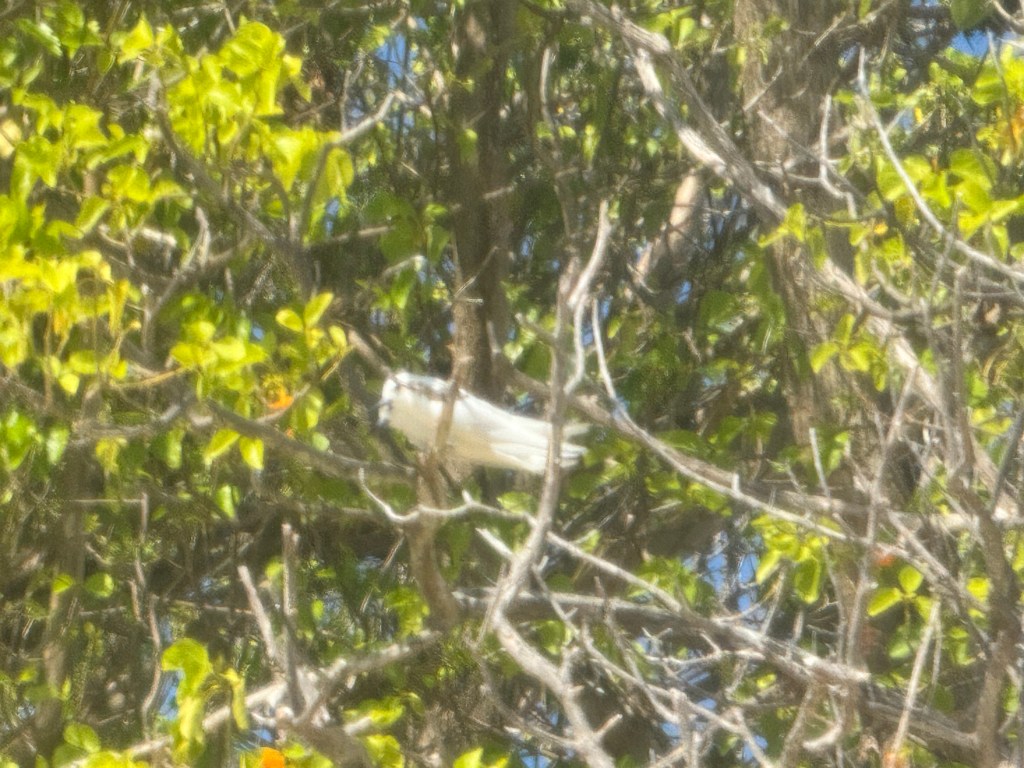
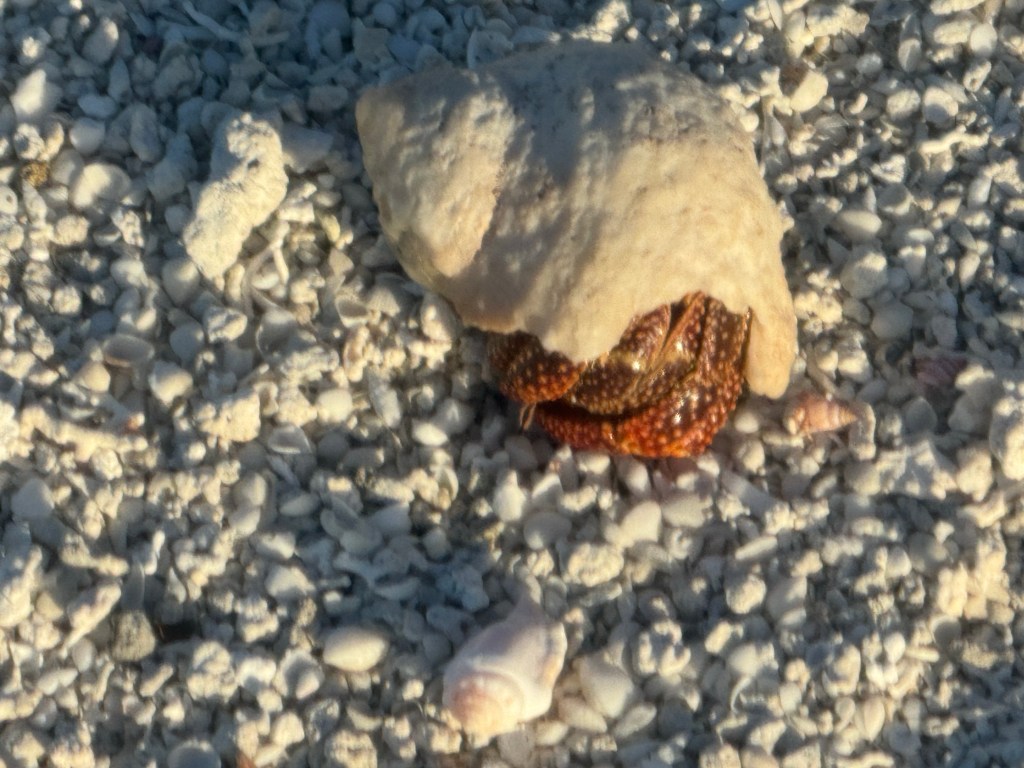
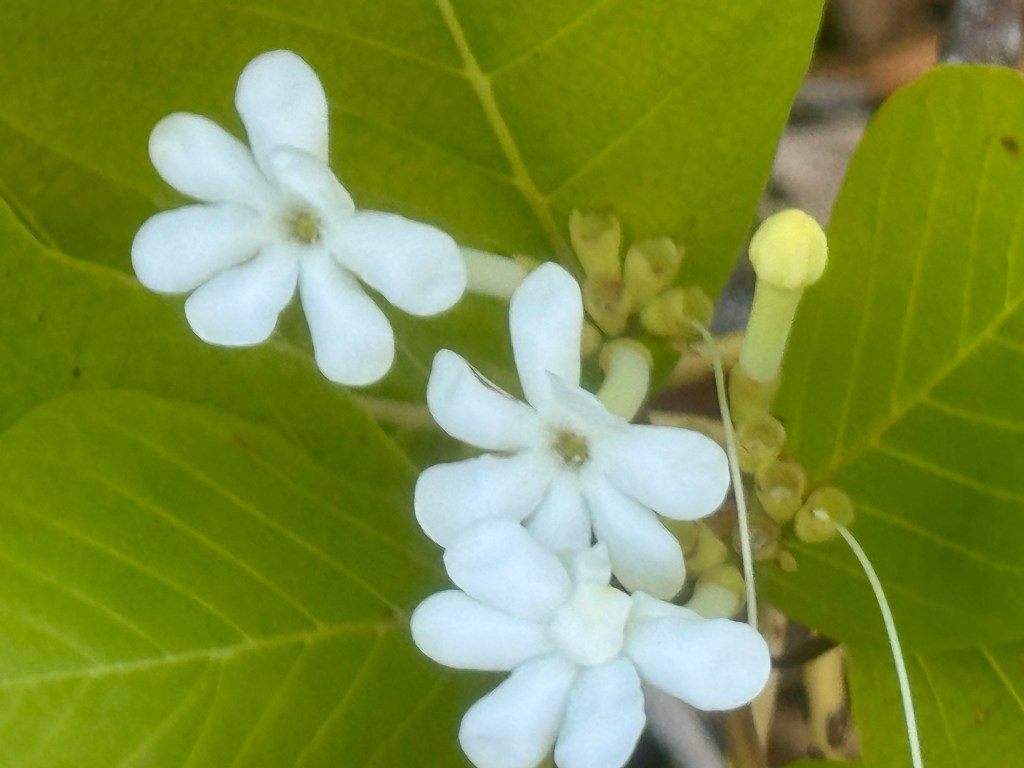
We also walked around the islet about a half mile away, which was completely different. Hermit crabs, which were absent on the other islet, were all over the beaches and wandered into the grass further inland. We were amazed by the squeaky sound they make, especially when another hermit crab is trying to mate/steal their shell. As compared to the rookery next door, we saw flying birds but didn’t see any nests. We also noticed the beautifully fragrant bushes and identified the source of the fragrance that occasionally wafted out to Tieton.
Coral Reef
Off to Makemo
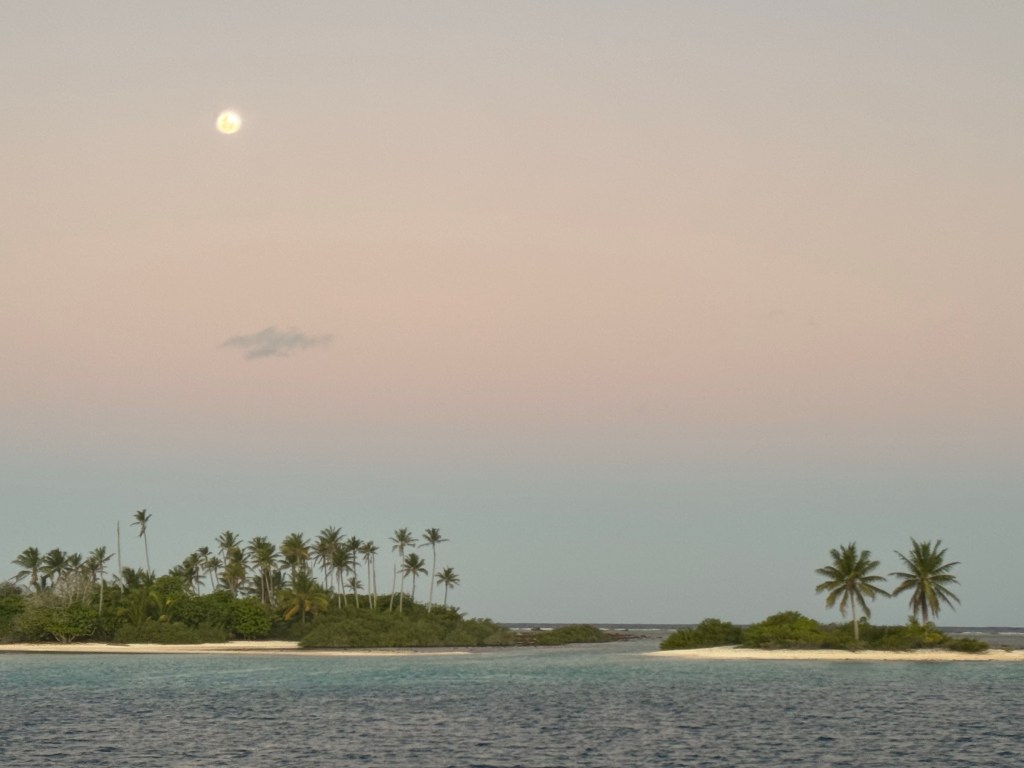
After a squally morning, we left Raroia this afternoon to sail to Makemo, an atoll 80 miles away. We left in the afternoon so that we could clearly see the coral heads in the atoll and will sail through the ocean on a beautiful moonlit night. We’ll arrive to Makemo in the morning and will enter the pass during daylight. Most of our passages for the next few weeks will follow this pattern.



 Sailing Tieton
Leave a comment