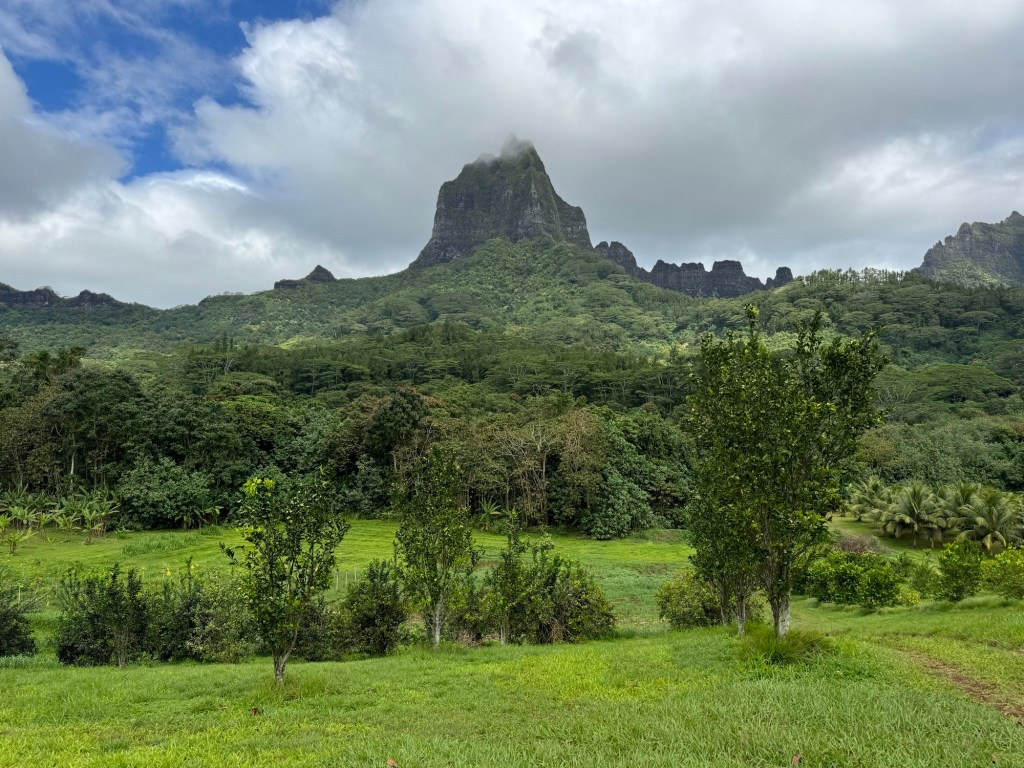
One guide book states “Mo’orea has it all”- mountains, beaches, hiking, snorkeling, etc. Yes it does, and our standout was the incredible experience of swimming with humpback whales.
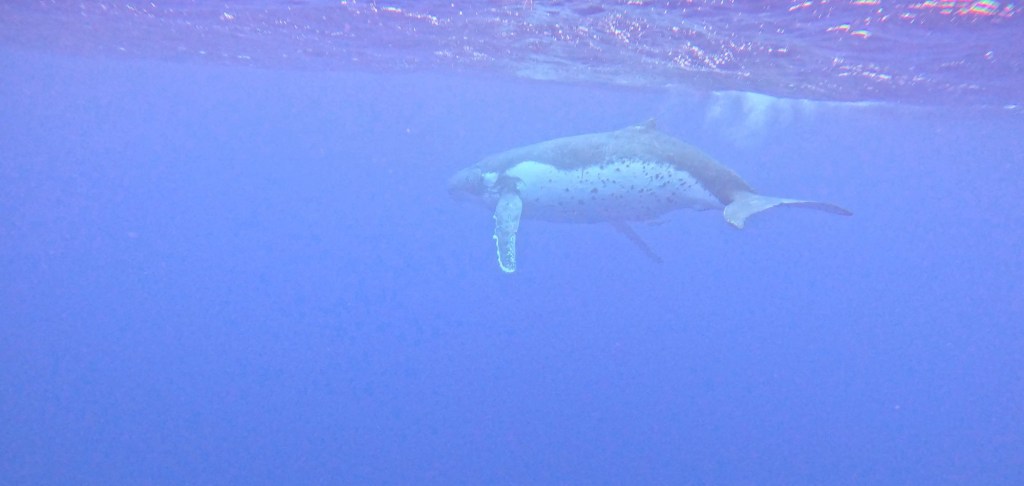
Swimming with Whales
Indescribable, but we’ll try. We arranged for a four hour boat tour with Mana, a knowledgeable and experienced guide (and owner) of Mo’orea Sea Experience. We had his maximum of six people on our tour, which allowed us to get into the water quickly and swim together more easily. Boats must stay 100 meters away from whales, and 150 meters away from a mother-calf pair, which means a lot of swimming.
The humpbacks here spend summers feeding in Antarctica and winters birthing and raising calves, and breeding in the South Pacific. Whales hang out as mother-calf pairs, male-female pairs, or small groups with a combination. Males chase the females in hopes of breeding, and sometimes will attempt to push a calf away from its mother. Sometimes the mother and calf hide in the bay, because the males won’t approach.
Scientists believe that male whales sing to attract females to mate, or to find other whales. All males sing the same song, which is modified every year. Mana heard from a fellow guide of a singing whale so we went to the site and waited for the other boat and swimmers to exit, while we donned our snorkeling gear and wetsuits. The boat captain put a microphone in the water so we heard the whale singing while we waited. At Mana’s direction, we all slipped quietly into the water, so as not to disturb the whale, then swam in the direction ahead of where the whale was drifting. All the while the whale sang. With Mana’s help, we could see the whale’s shadow. We watched and waited for the whale to surface, while swimming to stay ahead of the whale and away from its tail. Whales surface to breathe about every fifteen minutes when they’re sleeping or singing, or more when they’re swimming. We watched our whale surface three times, and then climbed back in the boat to rest and warm up, and in my case, throw up the seawater I’d accidentally ingested.
We travelled towards another location where a group of whales were swimming, and were treated to views of breaches and spouting. Again, we slipped into the water, swam in the direction the whales were heading and a few minutes later saw five whales swim past. Just incredible!
After the first few photos and videos, I tucked the GoPro away to allow complete focus on the experience. We never dreamt we’d be able to see whales this close.
We had ridden our bikes to the tour boat and Mana offered us a ride back. He grew up on the island and waved at someone at least ten times on the four mile drive back. We saw this interaction frequently on our bike rides, and it was nice to see someone enjoy interacting with fellow islanders.
Mo’orea
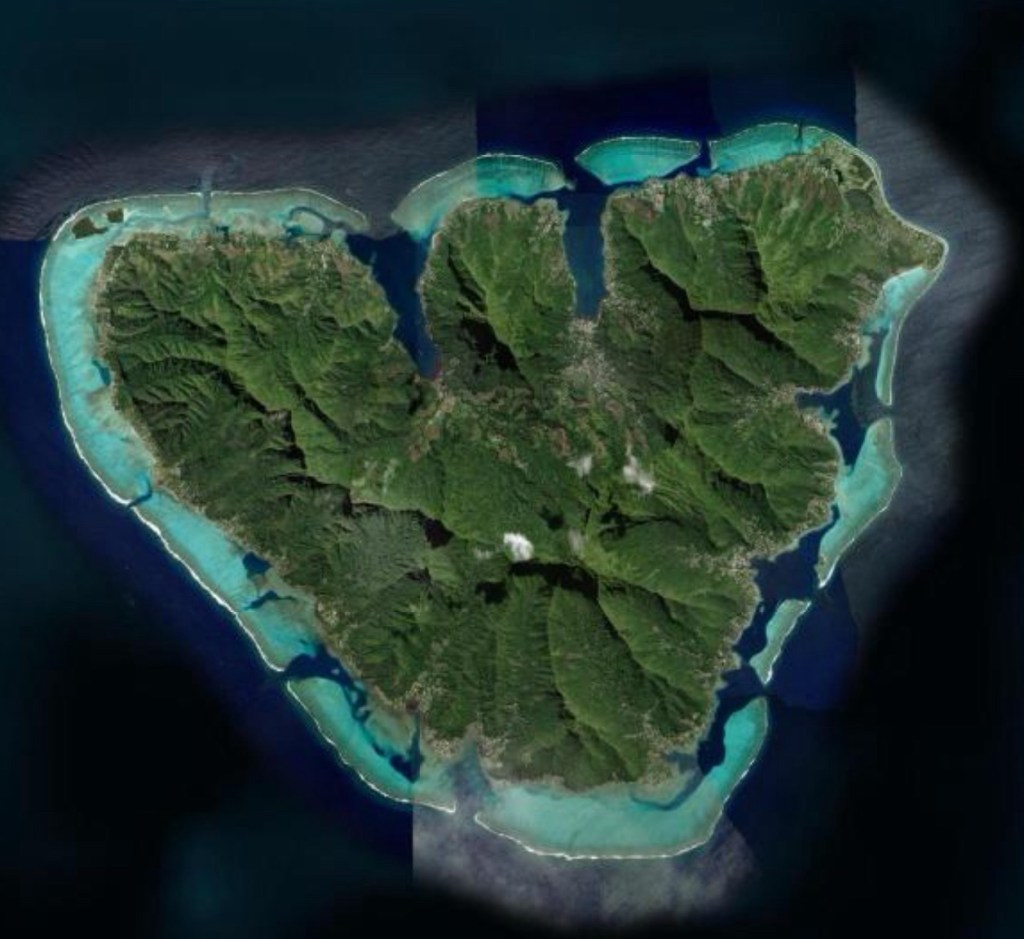
Opunohu Bay at Top Towards Left
Mo’orea is a short ferry ride from Tahiti. Legend has it that an octopus was sent by the gods to lead Mo’orea. With its nine brains it could lead the eight communities peacefully. Then the turtle men arrived, and took some inhabitants to visit the land of the turtle. When the turtle men returned, they were argumentative and couldn’t get along. The disgusted octopus decided to return to the gods, and after releasing its ink in the bays turning them black, left for good.

We stayed in ink black Opunohu Bay, which is lined with black sand created by dead coral. When we arrived to an afternoon shower and beautiful rainbow over the mountains around the bay. After some brief research about the Sea Eagle yacht at the end of the rainbow, we decided SV Tieton suits us just fine. Sea Eagle is 265 feet (81m), has room for 10 passengers plus 15 crew, and could be yours for a week at €550,000 (US$600,000).
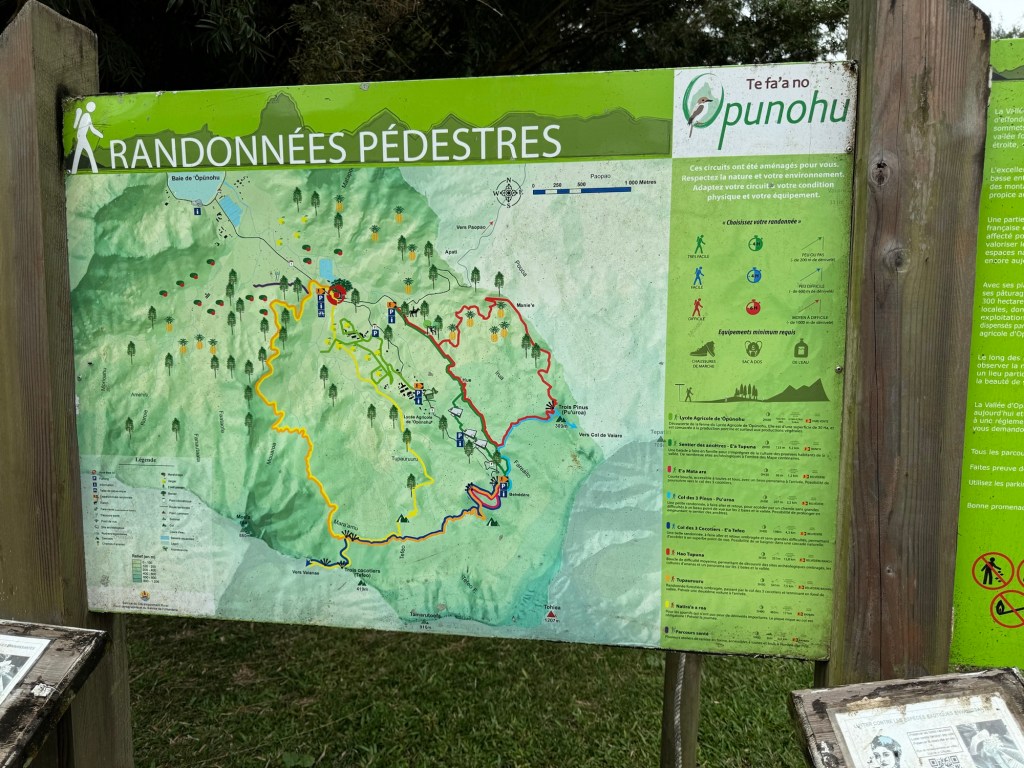
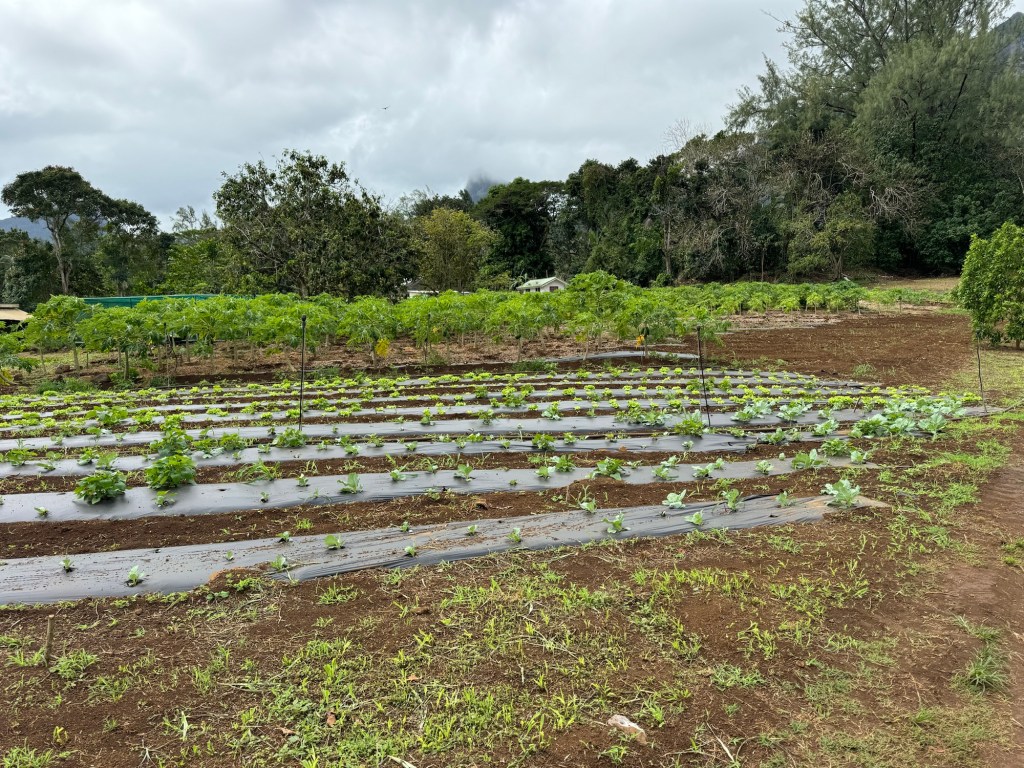
We tried to find a hike, and enjoyed the walk but never found the hike we were looking for. Instead we found a network of walks and bike trails, including some that wandered through the high school’s horticulture farms.
We went for several bike rides on the beautiful bike paths adjacent to the two lane road that circles the island. Bicycling is nice because we can see and hear so much more. We rode by public beaches packed with large and small family gatherings with barbecues and music, many fruit stands including one with produce in coconut bowls, and University of California’s Gump Station for biocomplexity research and sustainability science. We stopped at Gump Station and talked with two scientists who were analyzing fish poop. One was a local and the other from Rice University.



Tamahau Restaurant in Opunohu Bay hosts live music and fire dancers on weekend nights, to go along with $15 burgers. The performers seemed joyous to share their native music and dance with the restaurant patrons, and were a delight to watch.
Te Fare Natura (Nature Museum)
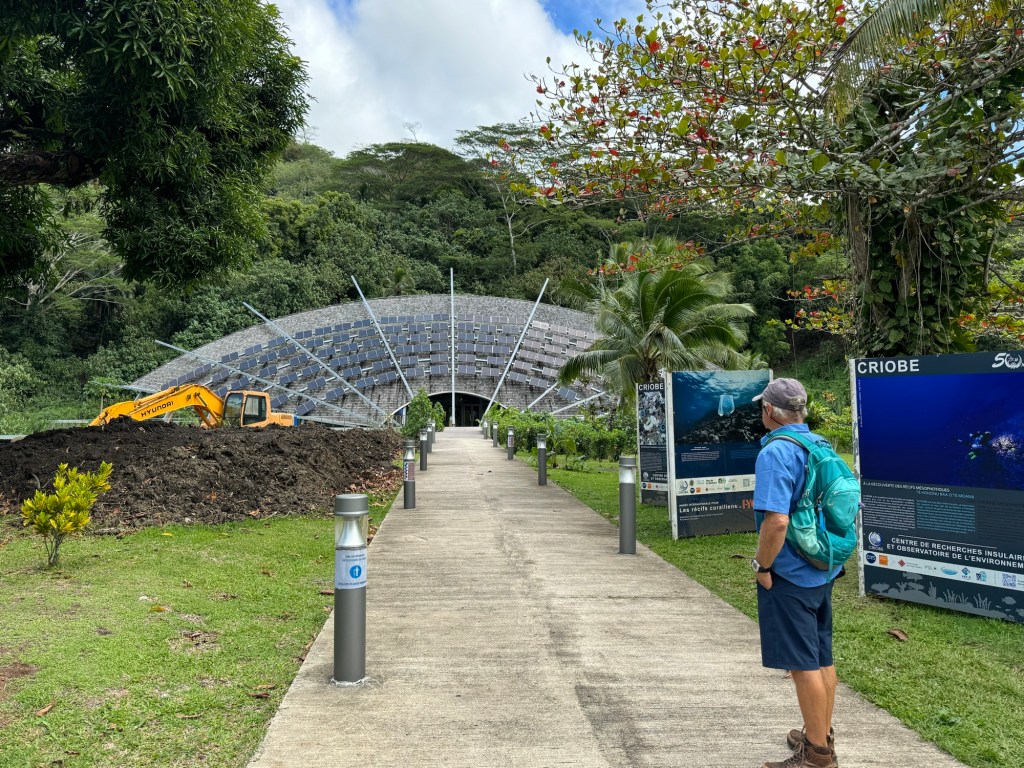
At the head Opunohu Bay, Te Fare Natura was founded by scientists from the adjacent Center for Island Research and Environmental Observatory (CRIOBE). The museum is housed in an environmentally friendly building designed in the form of an upside boat. The focus was primarily on coral and sustainability, and we learned so much thanks to our delightful guide Ta’u Here.
In the game 20 questions, for coral the answer to the animal, plant or mineral question would be “Yes”. Coral can reproduce three ways: (1) eggs float to the water top, are fertilized and sink, (2) seawater rushes over the coral, and carries the fertilized eggs to the sand, or (3) cloning by humans.
Worldwide, coral reefs are stressed and dying, especially with increasing sea temperatures and chemical contamination. Some sunscreens contain chemicals that bleach coral, so it is important to make a reef friendly choice. Crown of Thorns Seastars eat coral and Mo’orea is currently experiencing a devastating outbreak. If plucked, seastars release about 60 million spores, so human intervention doesn’t work. Conches are a natural predator and make quick meals of the delicious seastars. Although they’re an important part of native culture and taste delicious barbecued, they’re now a protected species.
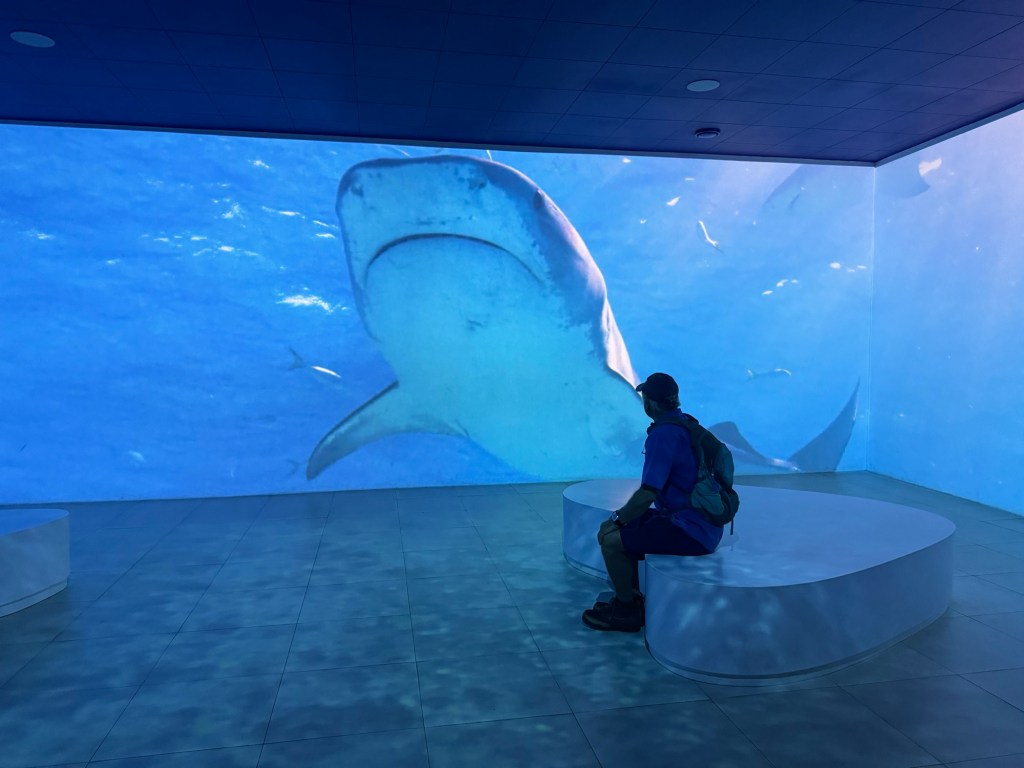
We enjoyed the immersion theater, but not quite as much as the young kids enjoyed making shadows on the screen.


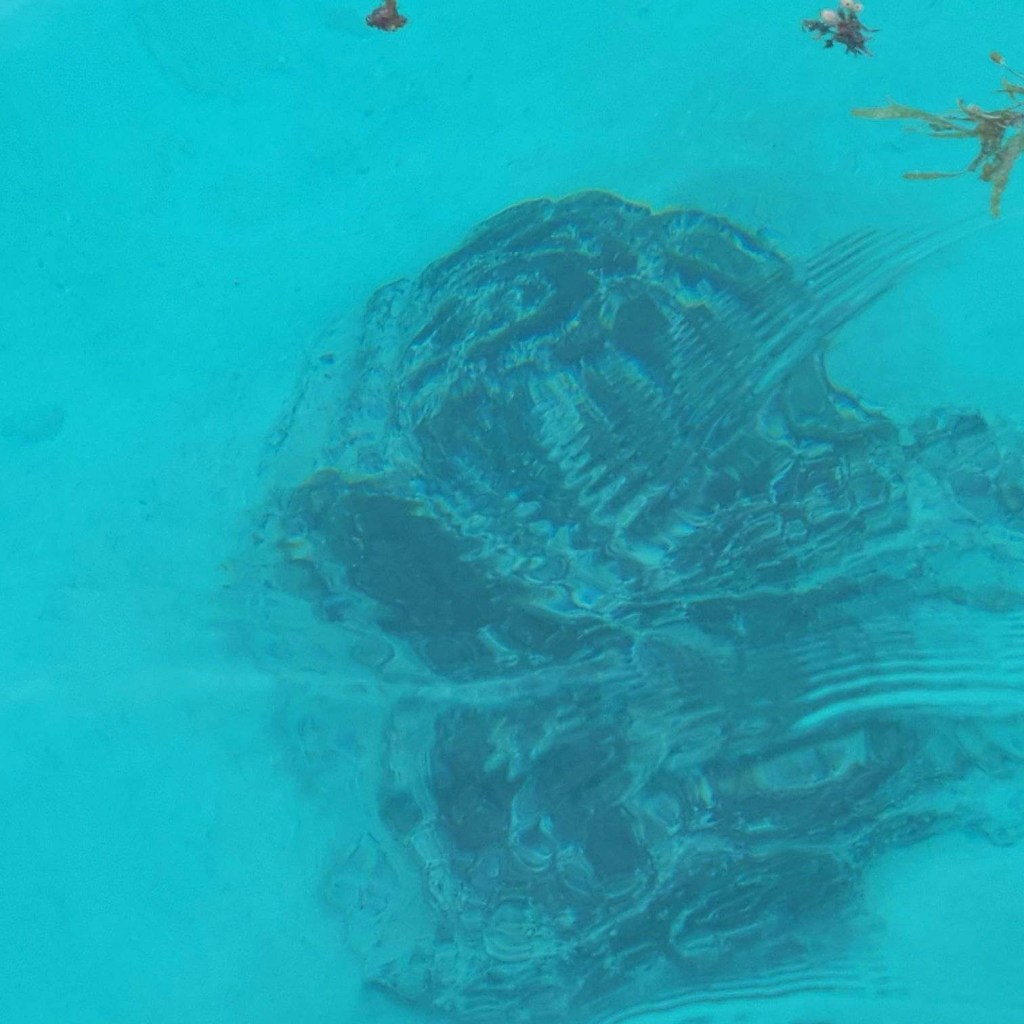
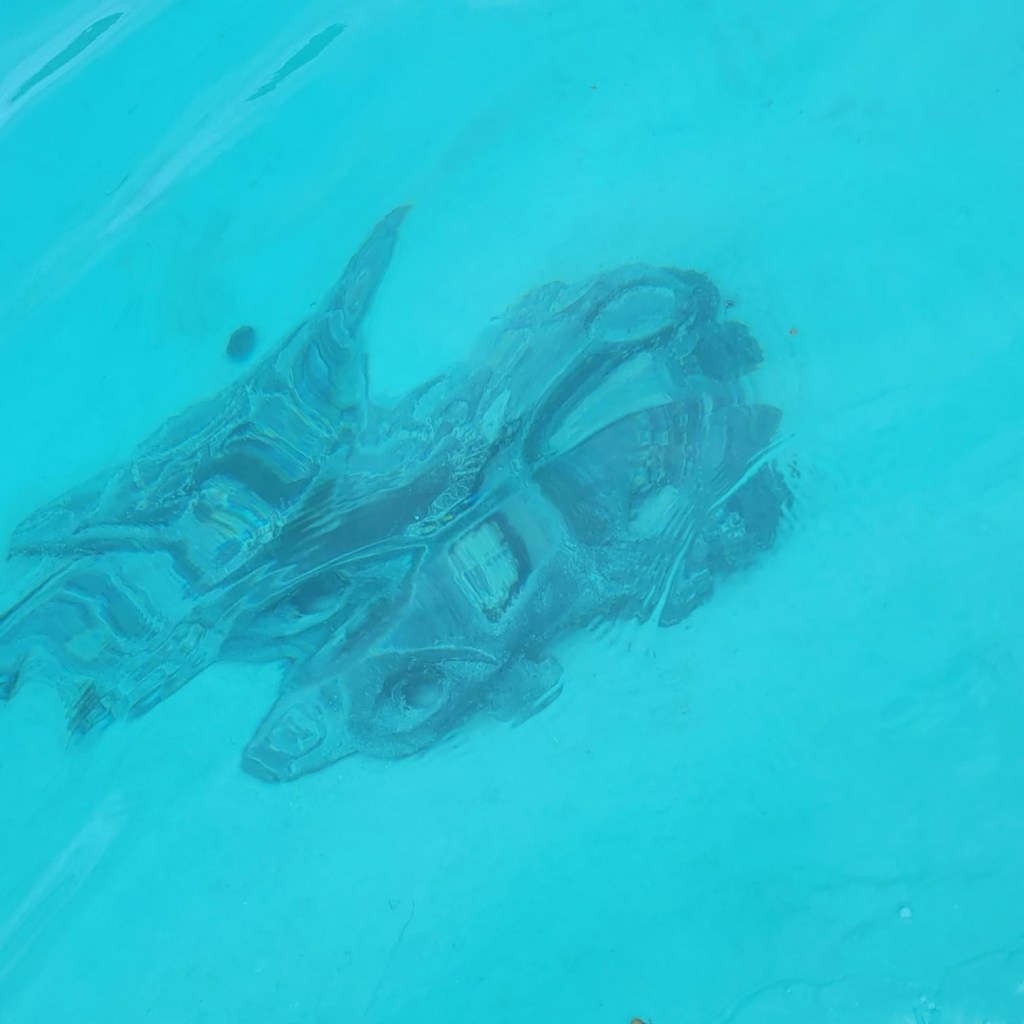
Underwater Tiki Garden
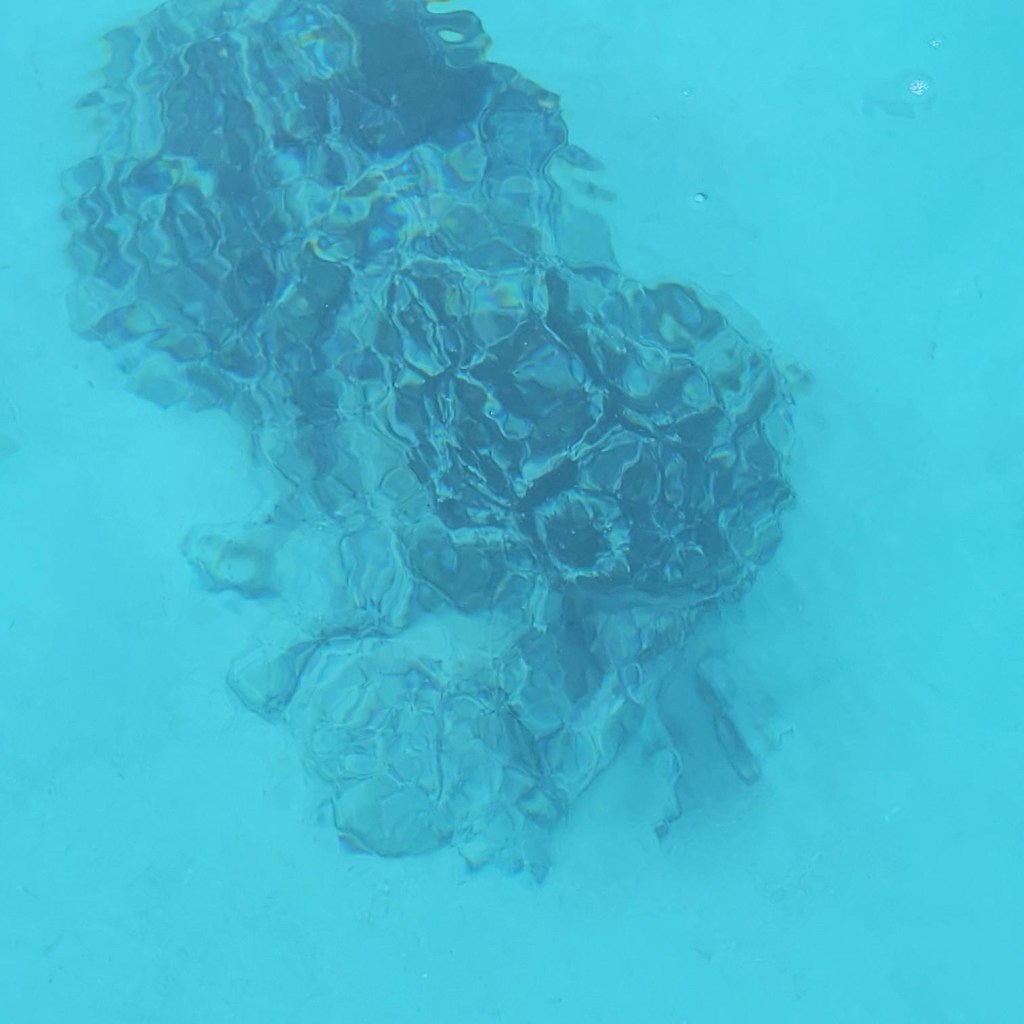
A local artist carved tikis, which were placed in the sand outside Opunohu Bay. The Tiki Garden is a haunting reminder of the Tikis natives disposed of at the request of the missionaries.
What Next?
Our next stop is Hauhine, 80 miles away, which we will sail at night. We plan to wait out some upcoming strong winds there.


 Sailing Tieton
Leave a comment