We found the location for the next Raiders Of The Lost Ark or Jurassic Park movie. The country of Niue (pronounced like newbie without the b), with its population of 1,600 residents, is an uplifted coral atoll 400 miles west of Palmerston and 230 east of Tonga. The craggy limestone cliffs rise from sea in a stunning display of ruggedness. Because of the weather patterns this year, we thought that we’d have to skip Niue and we’re so glad the weather gods relented and let us visit!
Niue has a free association with New Zealand, so New Zealand currency is used and Nieuians carry New Zealand passports. Only Nieuians can purchase property, which usually passes down through families and often have family graveyards. Nieuians can emigrate freely to New Zealand and many young people do so for the economic opportunity.
The Niue Yacht Club maintains 20 buoys in the harbor, which is the only location boats can stay. Anchoring isn’t allowed and one would need to be crazy to do so anyway, because the reefs are so shallow and unforgiving. Visiting boats are advised to leave if winds come from the west, which had occurred the day before we arrived.
As we approached our reserved buoy, we were greeted by a mother whale and her calf, who then disappeared. We were having lunch in the cabin when I heard a whale blow, so we quickly hurried on deck. The mother and calf were NEXT to Tieton – just amazing!
Customs invited us to check in onshore, which we completely understand given the boat/dinghy dock. The wharf was busy with the barge transferring containers from the supply ship to the wharf. Just writing this makes me hold my breath again… Herman approached the wharf trying to steady the dinghy in the surging waves to allow me to grab the ladder and ascend to the dock. (Did I mention vertigo and a fear of heights?) Herman then attached the crane hook to the dinghy bridle, and using the dockside crane, I lifted the dinghy and maneuvered the dinghy to the dock. We wheeled the dinghy to a marked parking spot, and restored the crane hook to its seaside location for the next user. People on the dock frequently offered their help, which we gladly accepted. It was so much easier, albeit terrifying, to climb into the dinghy and be lowered into the water.

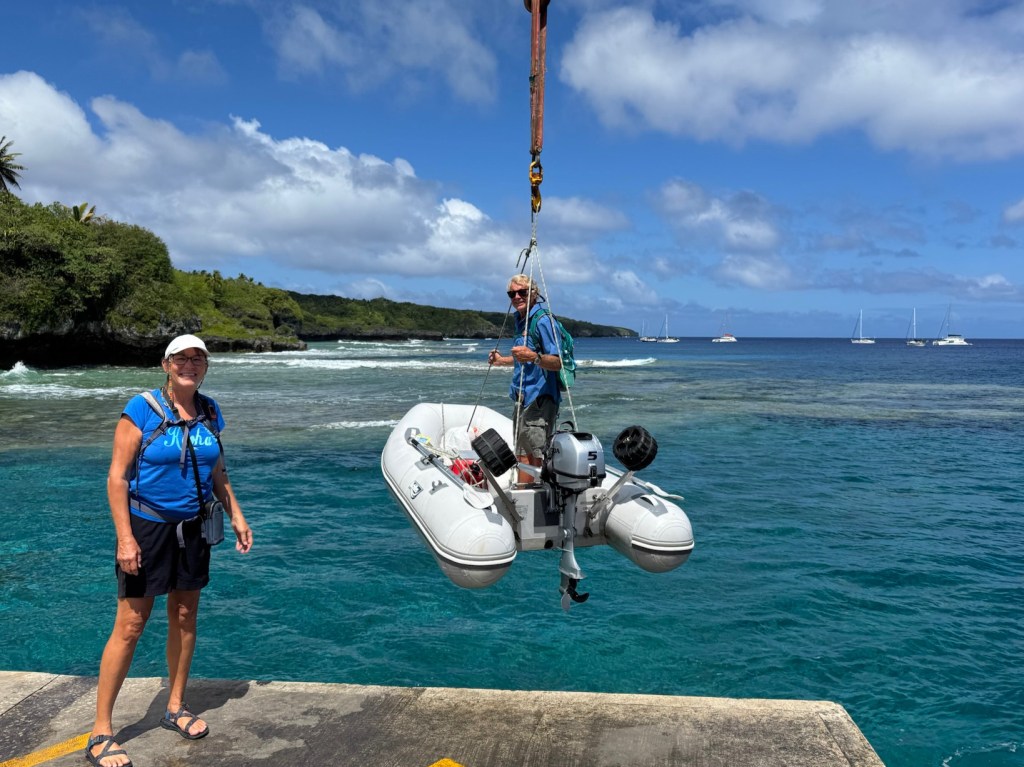
We checked into customs and were told to return the following day (Thursday) if we wanted to leave over the weekend, because they don’t process exits on Friday. The reasonable entry and garbage fee totaled NZ$300 (about $200), which is paid during the exit paperwork process. The tourist information and signage throughout Niue is superb, so perhaps the fees pay for them.
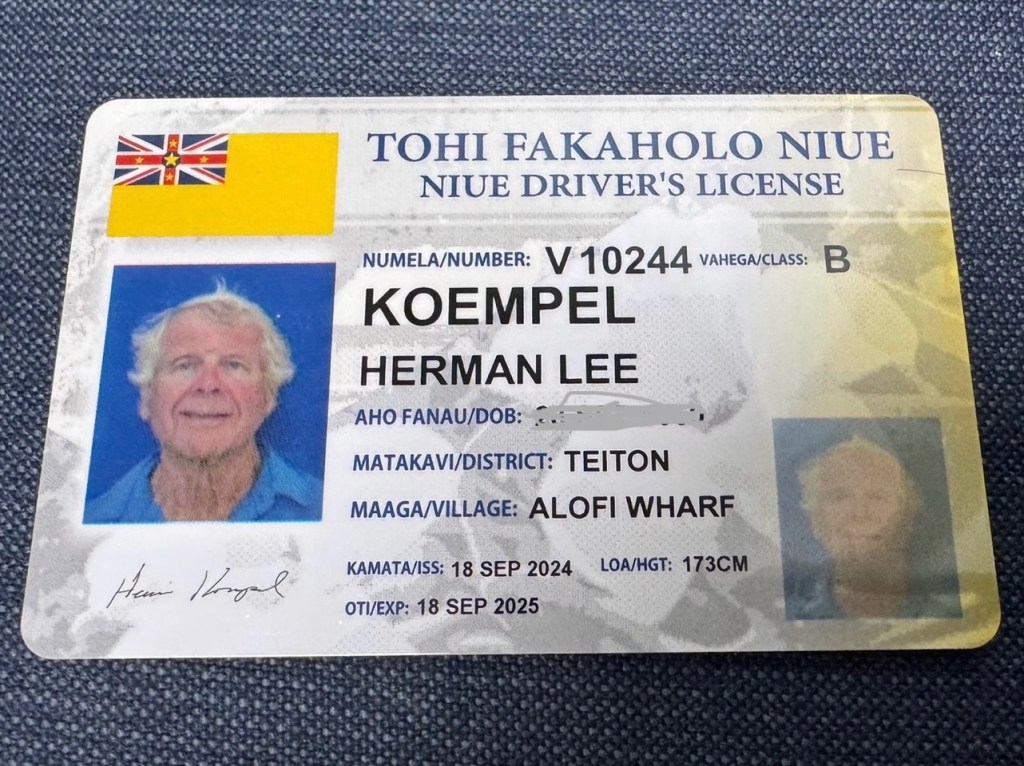
The next stop was to acquire a Niue drivers license (NZ$22.50) at the police department. A passing vehicle offered a ride, which happened every time we walked along the road outside the main town. Evelyn gave us a ride to the police department, and after her errand stopped by to offer a ride back into town.
We then picked up the rental car and headed out for a whirlwind of few days of touring. It is amazing how uncrowded Niue is. The first two days, we encountered no other visitors at any of the sites, which made the landscape all the more magical. On our final day, a few people were at most sites.
Amanau Cave
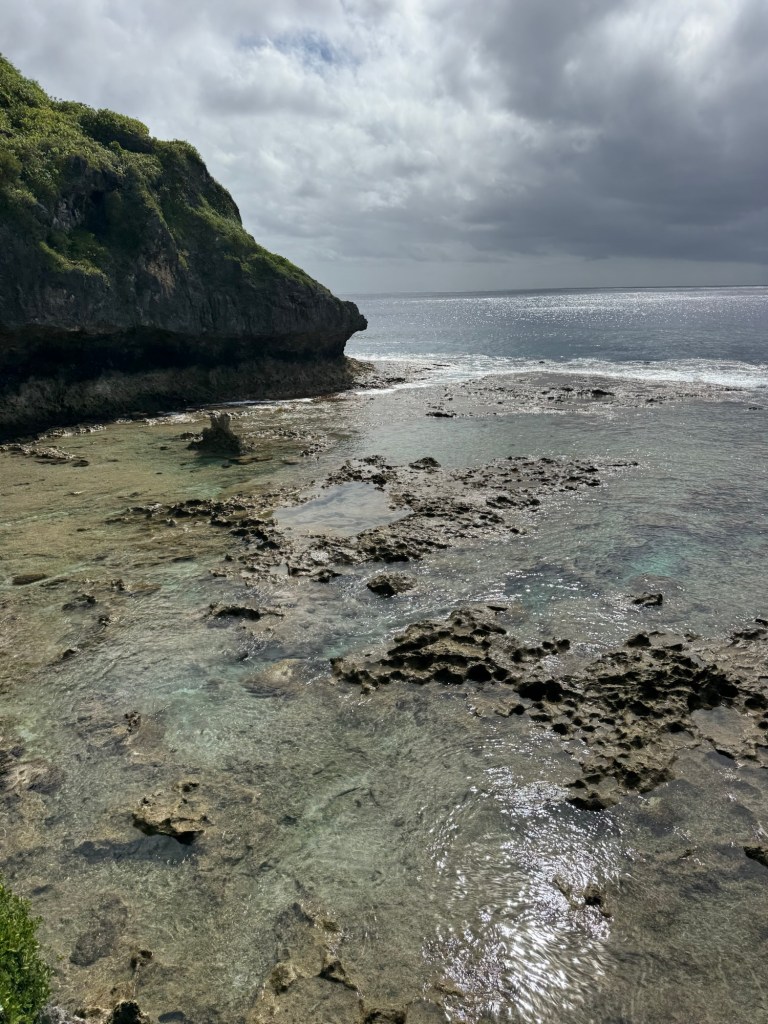
Amanau Cave exposed us to one of Niue’s many sea tracks, where people hike out to a reef, walk across/around the reef and snorkel or swim. Many hikes involve climbing stairs or using ropes to scramble across rocks. Although caution is advised, no barriers exist allowing hikers and swimmers to choose their risk preference. Niue is renowned for the visibility of its waters and we could easily see the bottom of the deeper sections on the reefs.
Sheltered on the southwest side of Niue, Amanau Cave is where the Latter Day Saints church first baptized Niue natives in 1952.

Ana Ana Point
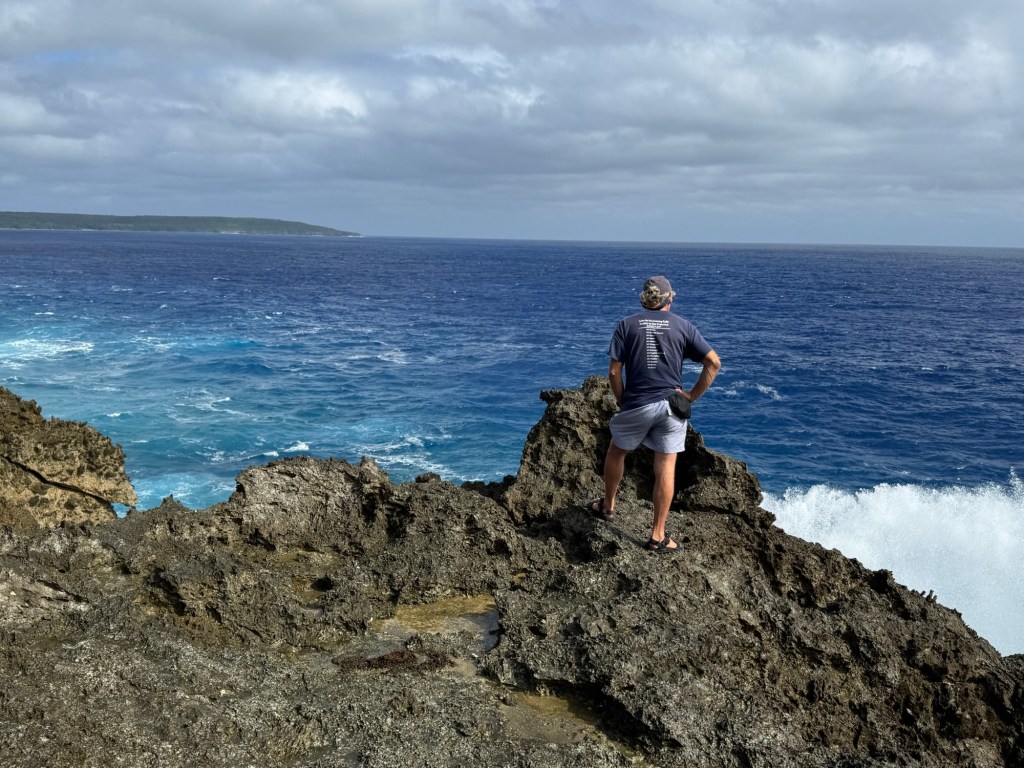
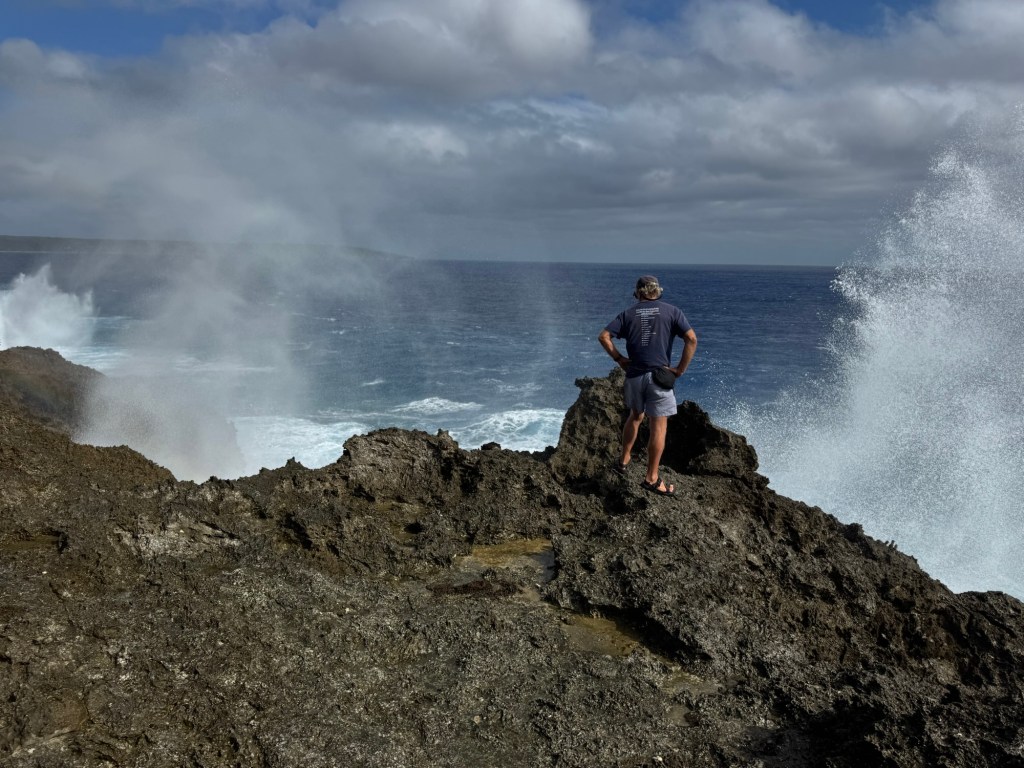
The Ana Ana Point at the southern tip of Niue looks out on the vast expanse of the Pacific Ocean. The powerful surf surges through the blowholes that have been worn over time. Herman was a good sport and got soaked by the spray, and the photographer also got a little wet. We certainly wouldn’t stand on the cliff during any significant wind or waves.
Anapala Chasm
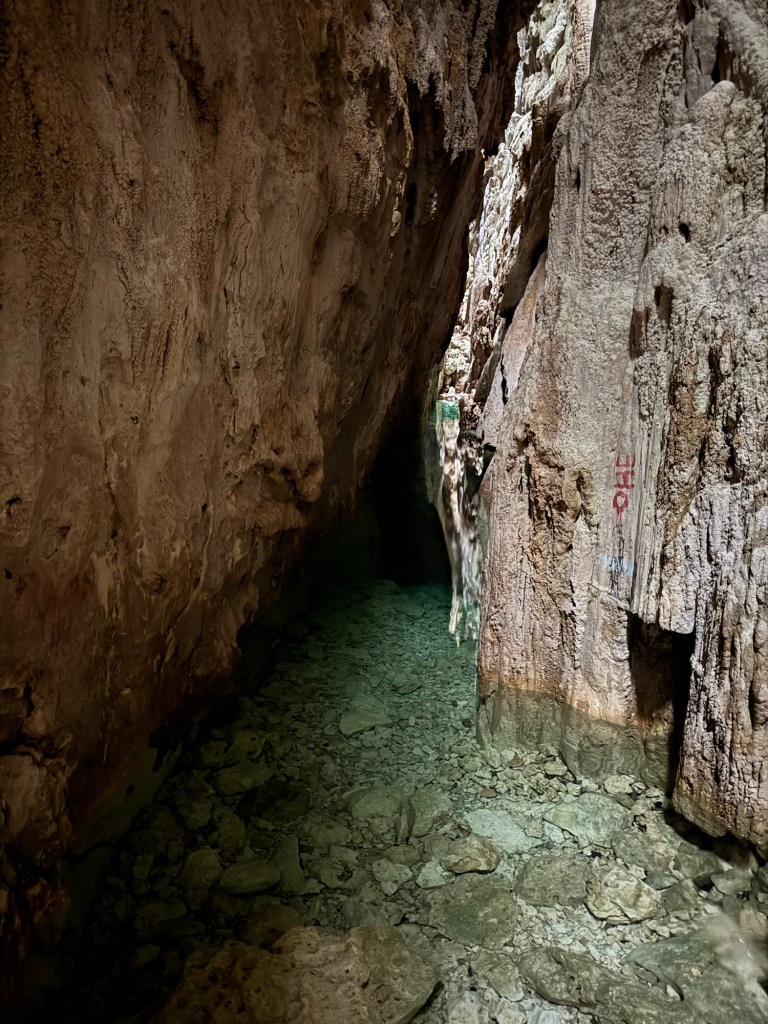
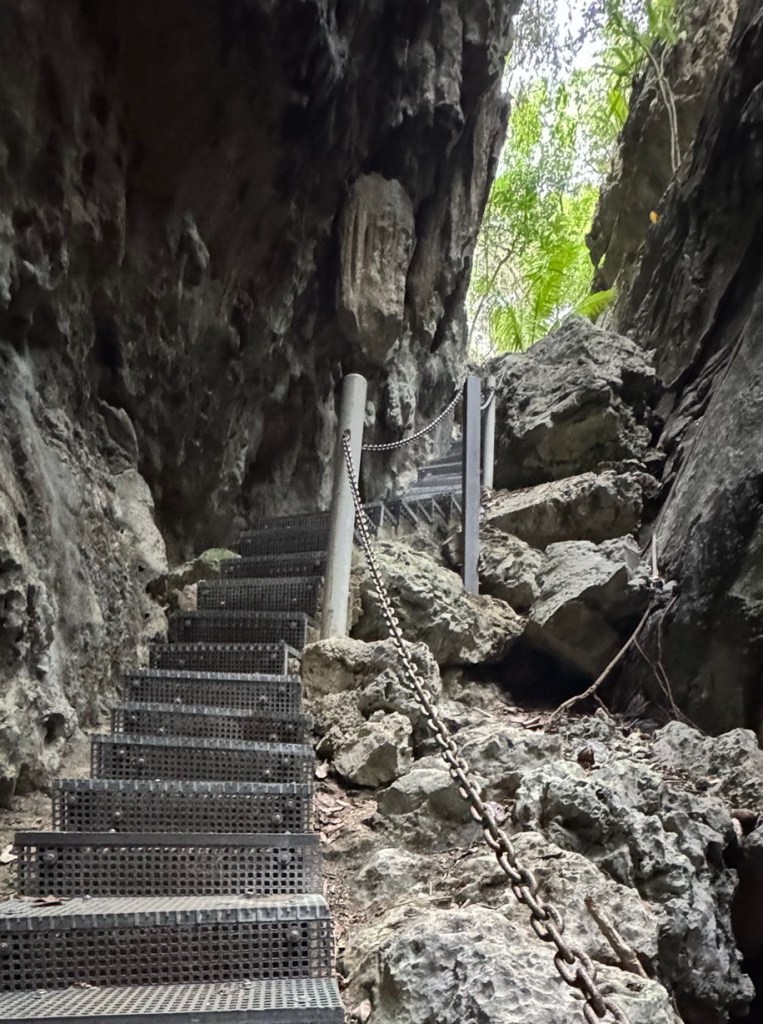
Chasm: a deep fissure in the earth, rock or other surface. At the base of Anapala Chasm is a fresh water pool that the natives used before modern water catchment systems and wells existed. Visitors now have the benefit of a steep 150 step staircase. It is easy to imagine the pleasure of a dip in the cool fresh water, especially during the dry season. We’d forgotten to bring a flashlight so skipped a swim. Natives used coconut shells for hauling water out of the chasm, which is hard to imagine without the stairs.



Togo Chasm
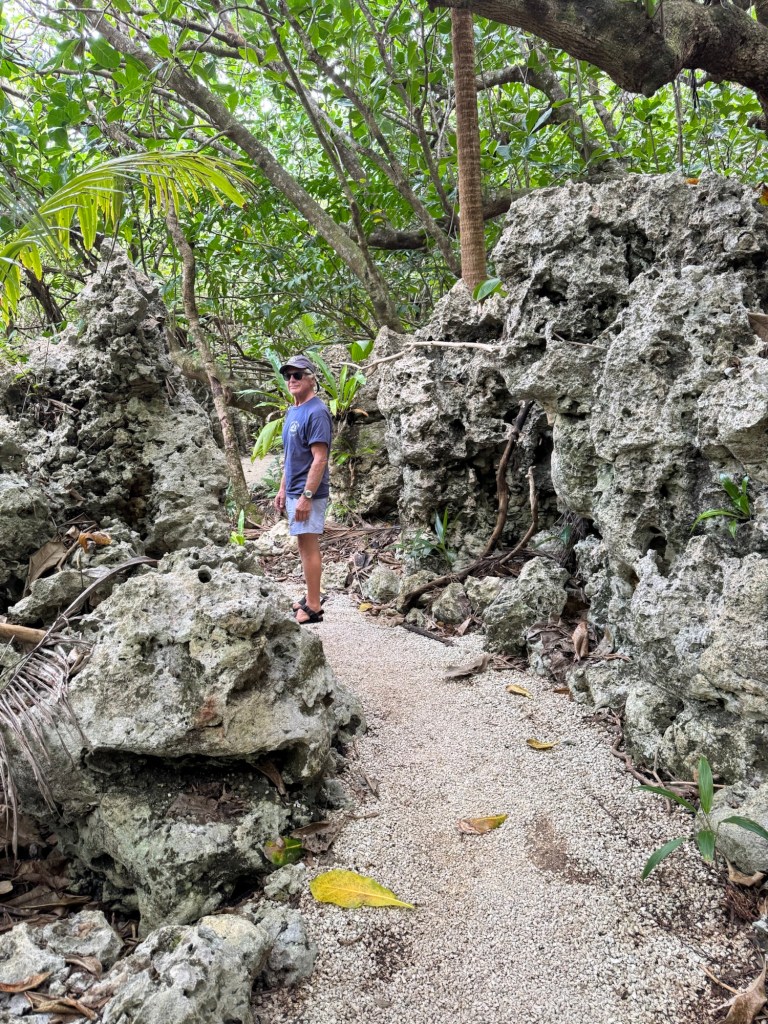
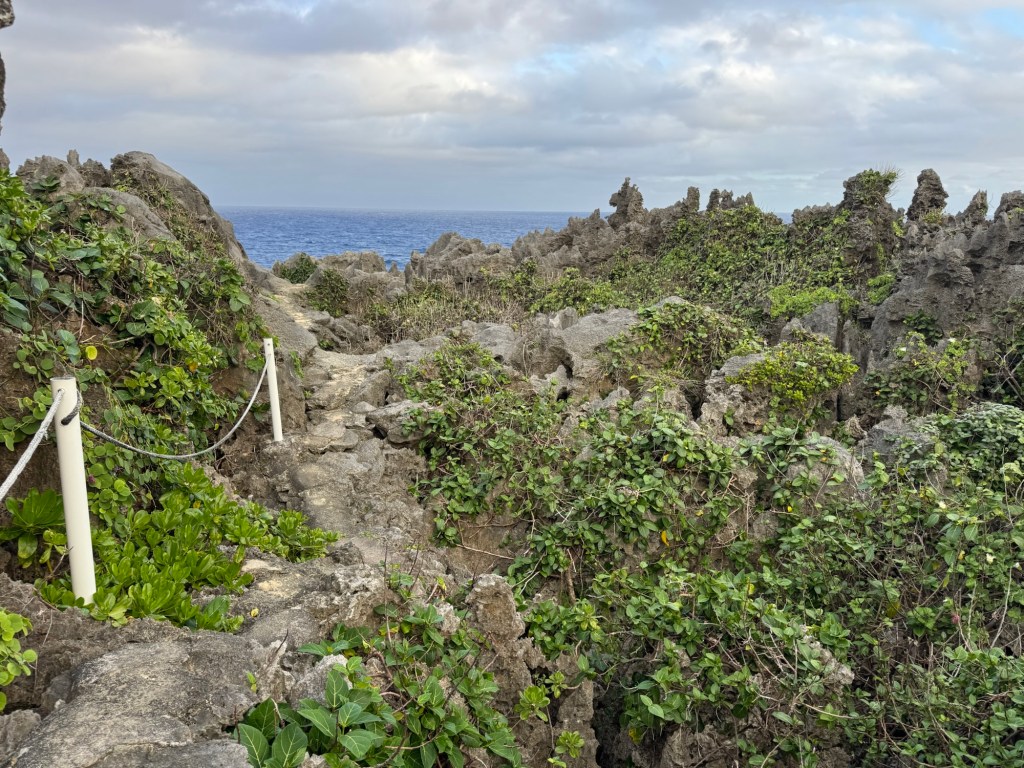
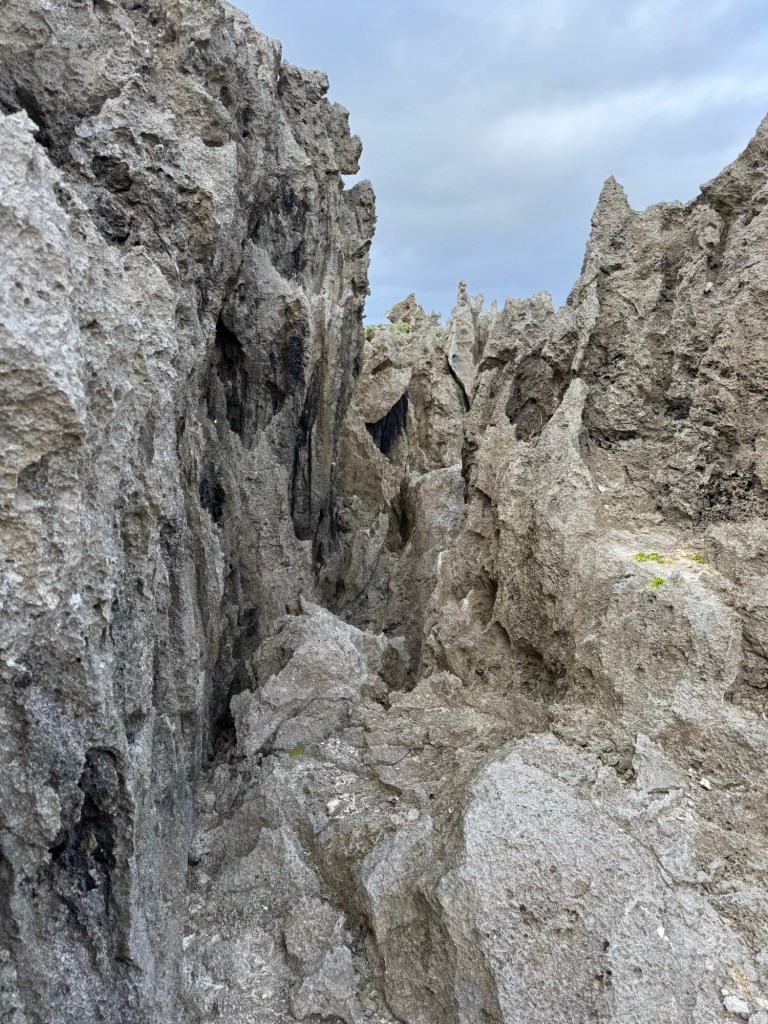
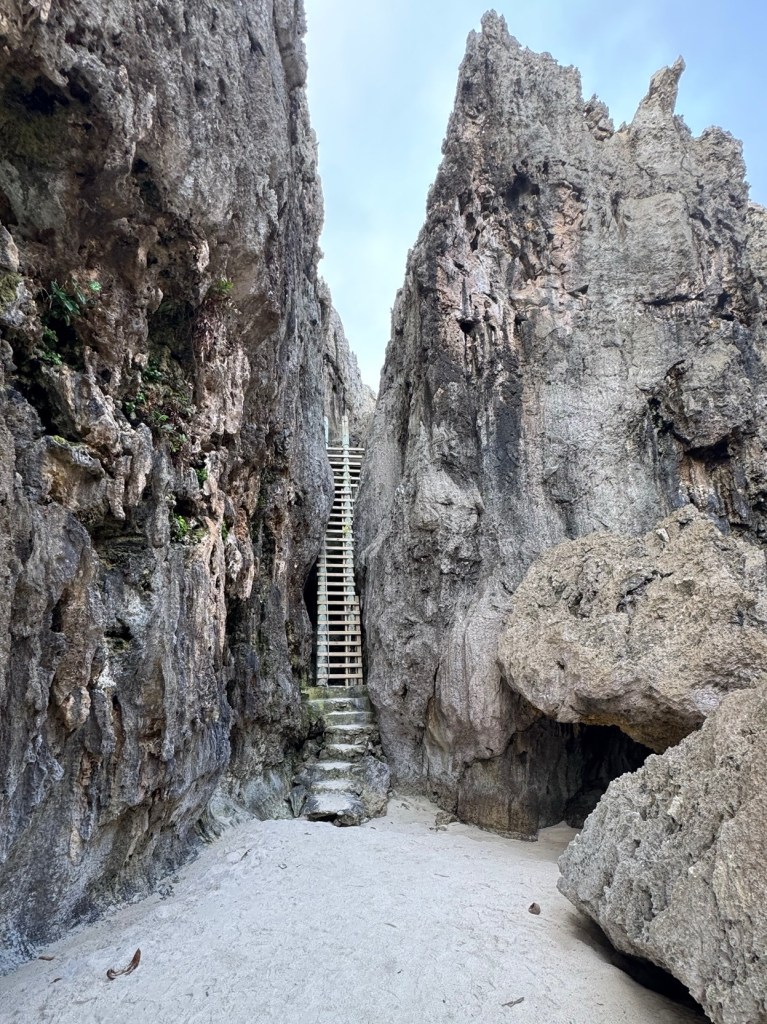
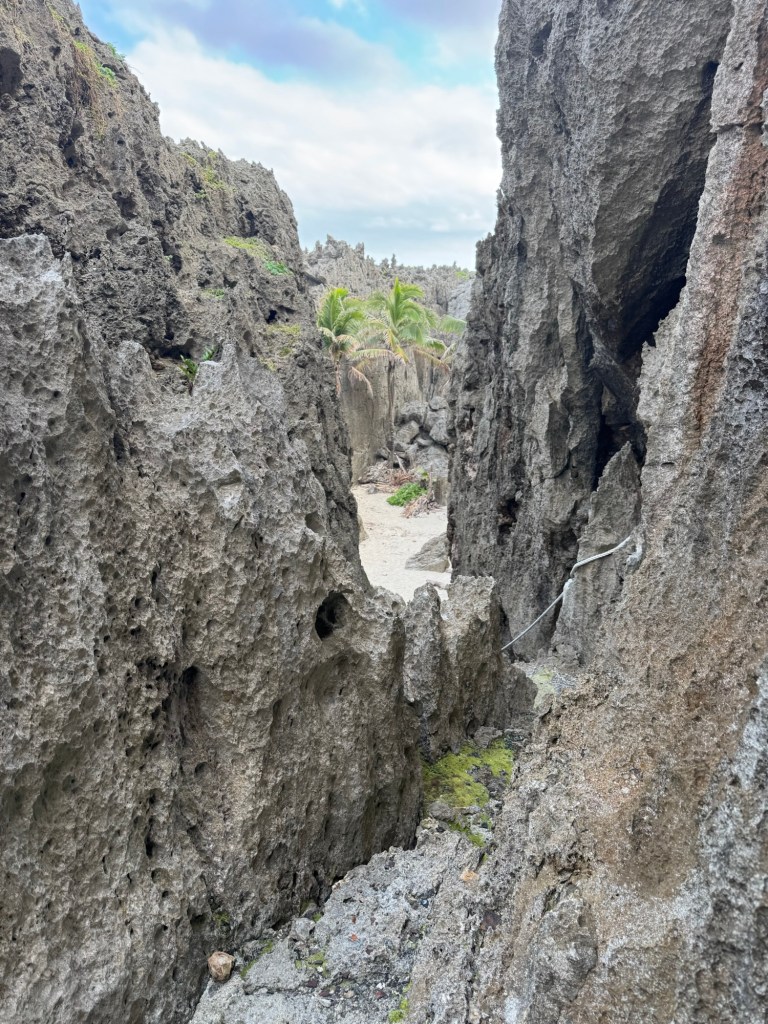
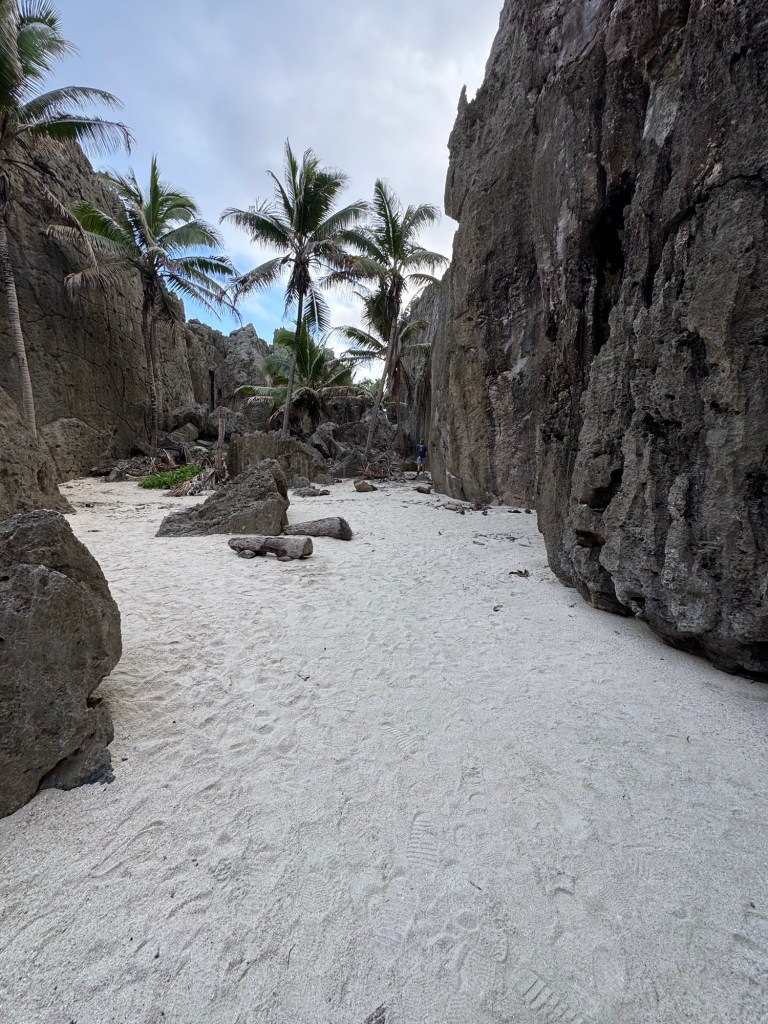
A half hour hike and through a forest and scramble across bare coral, sometimes with rope assists, brought us to Togo Chasm. The sand covered oasis, complete with coconut palms, sits at the bottom of a cliffside ladder. We could hear the ocean through an array of rocks and decided it was best not to chance climbing through lest we encounter the ocean waves bringing in more sand.

Sculpture Park
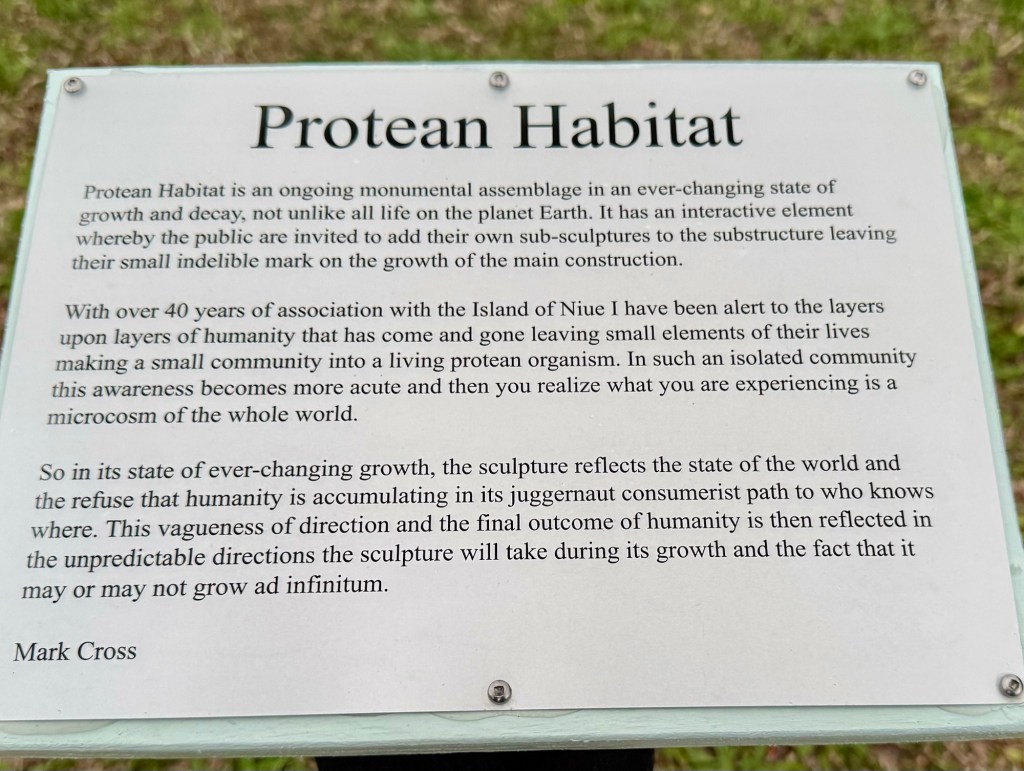
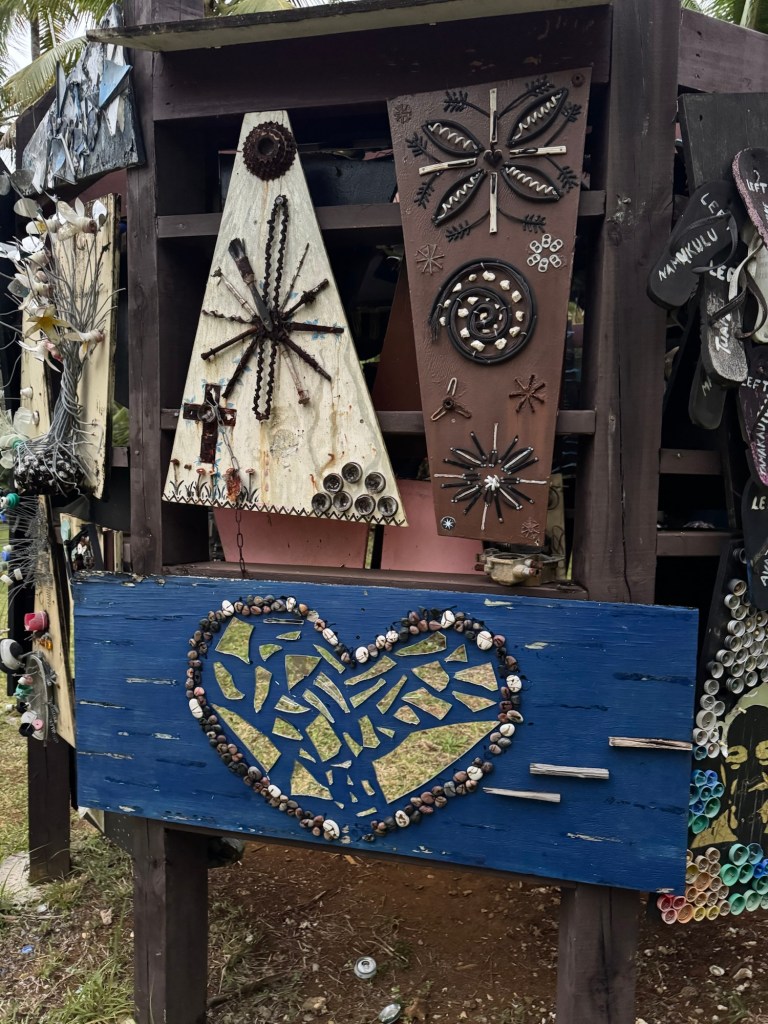
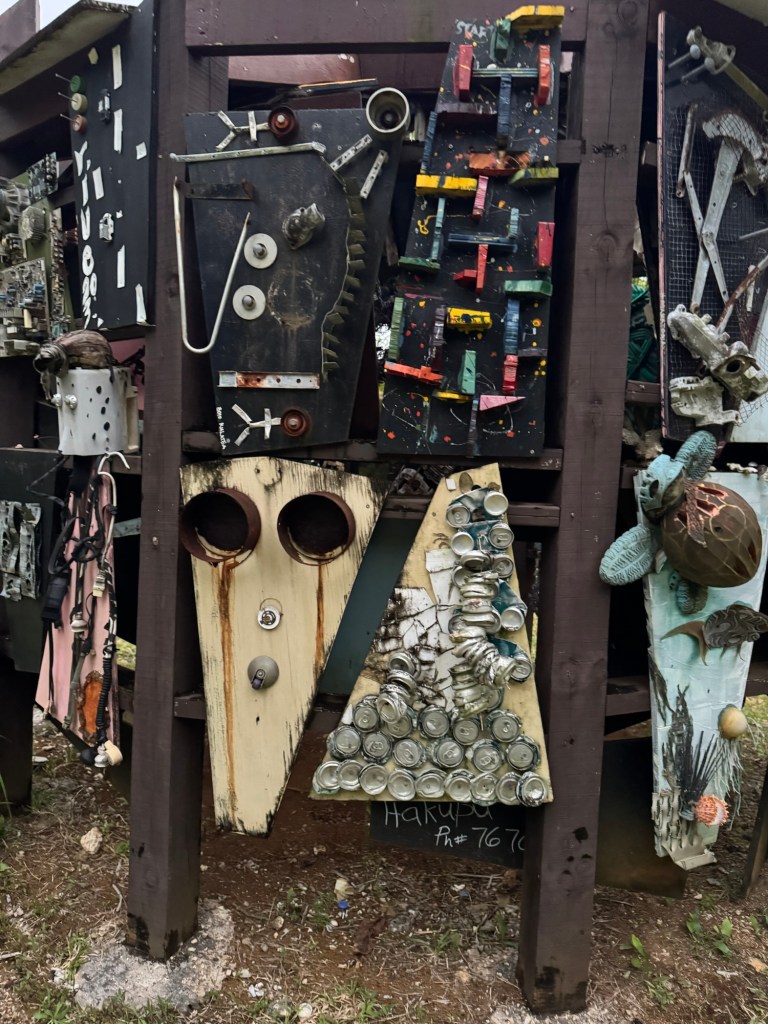
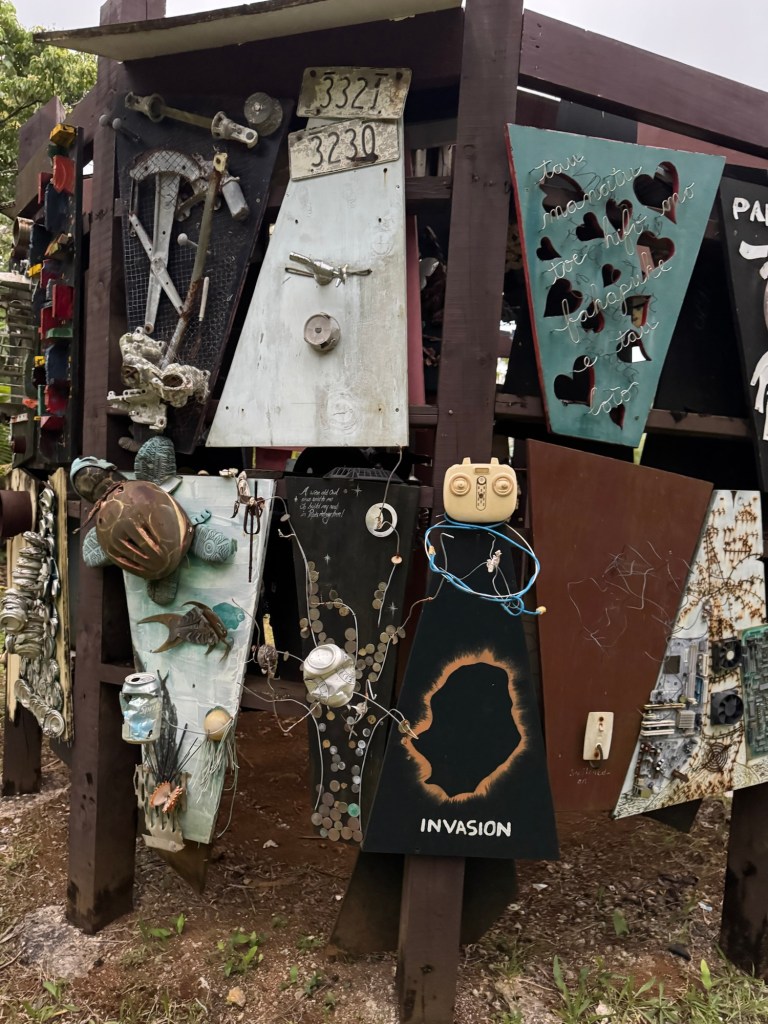
Dusk brought us to the sculpture park, which we thought we’d miss and sure are glad we didn’t. The artist’s Protean Habitat invites the community to contribute their refuse to the ongoing monument that “reflects the state of the world and the refuse that humanity is accumulating in its juggernaut consumerist path…”. Heavy stuff.

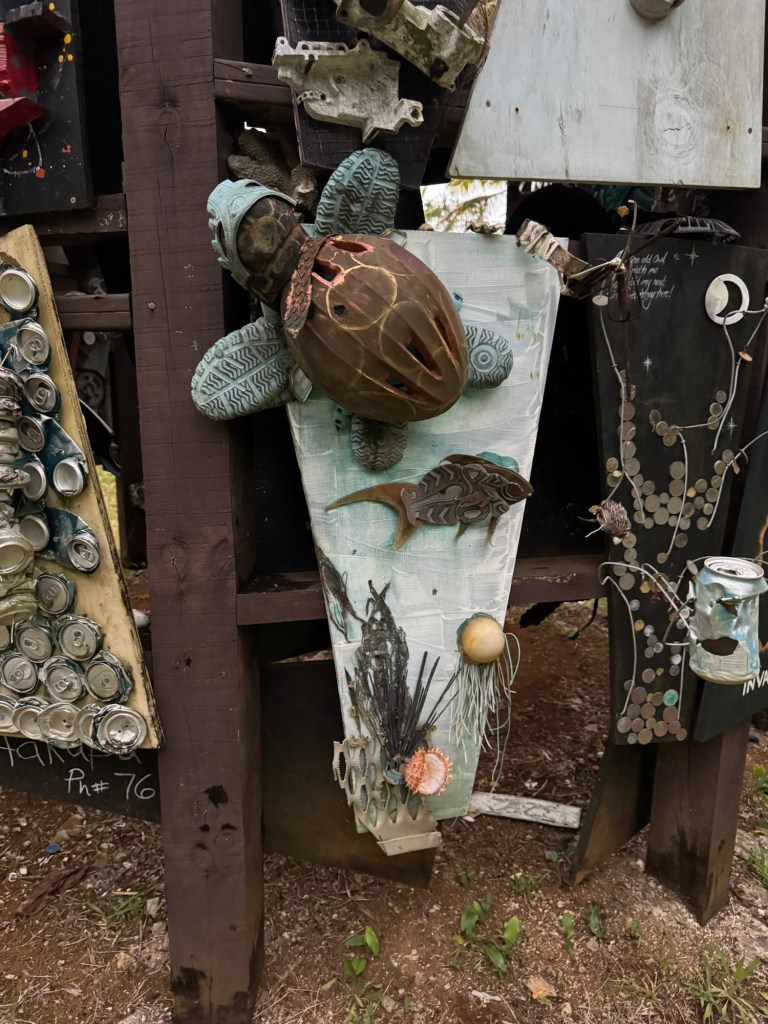
On a lighter note was his tribute to a Niuean art teacher. The turtle made out of crocs and a bicycle helmet was one of my favorites.

Talava Arches
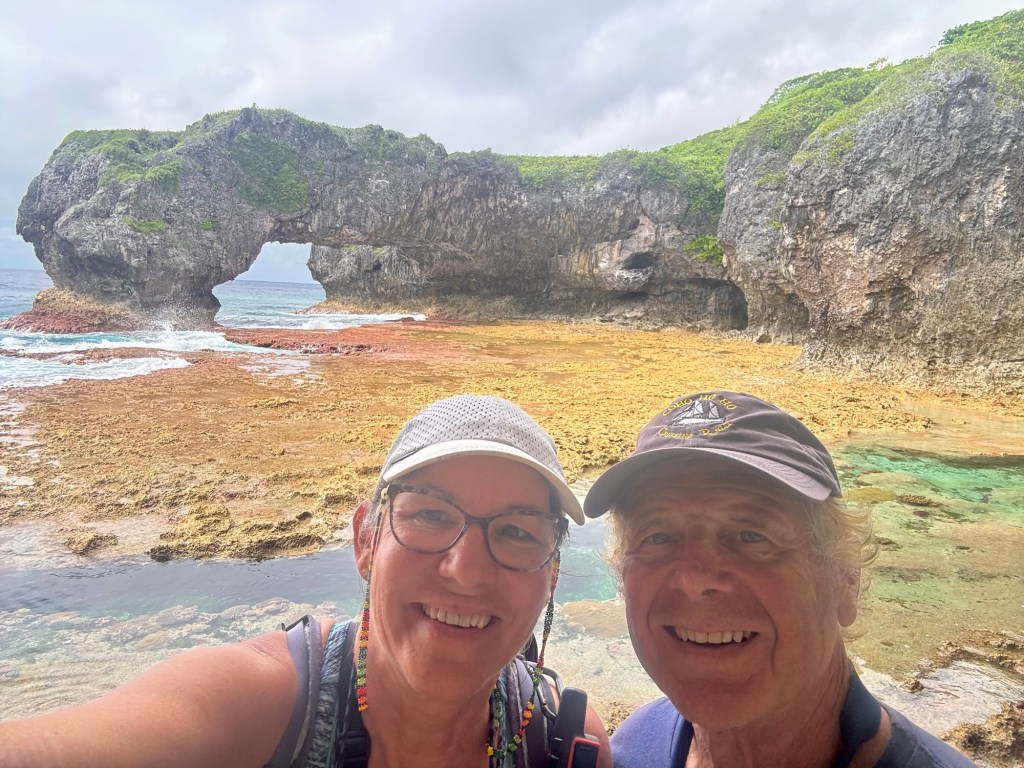
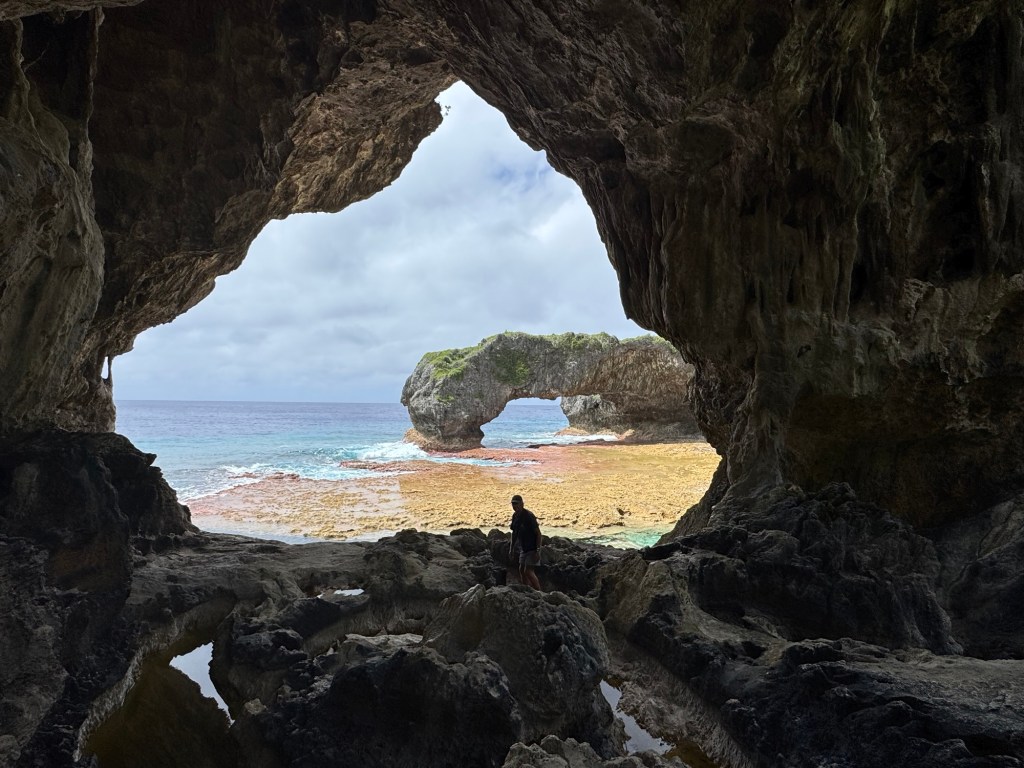
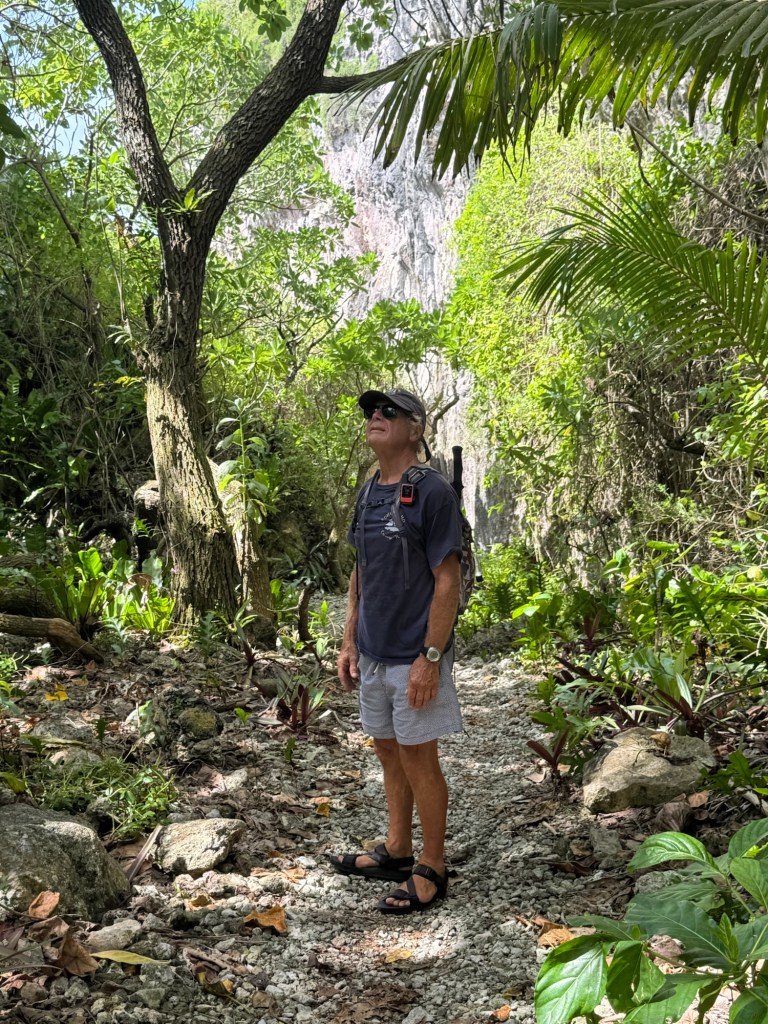
The Talava Arches were featured on Niue’s postage stamp and are a must see for visitors. At the north end of the island, they’ve experienced millennia of waves washing over and through them. After a walk through forest covered coral, we scrambled through the covered rocks to arrives at the reef and stunning arches. It isn’t surprising that the first settlers used the arches as a lookout.


Matapa Chasm
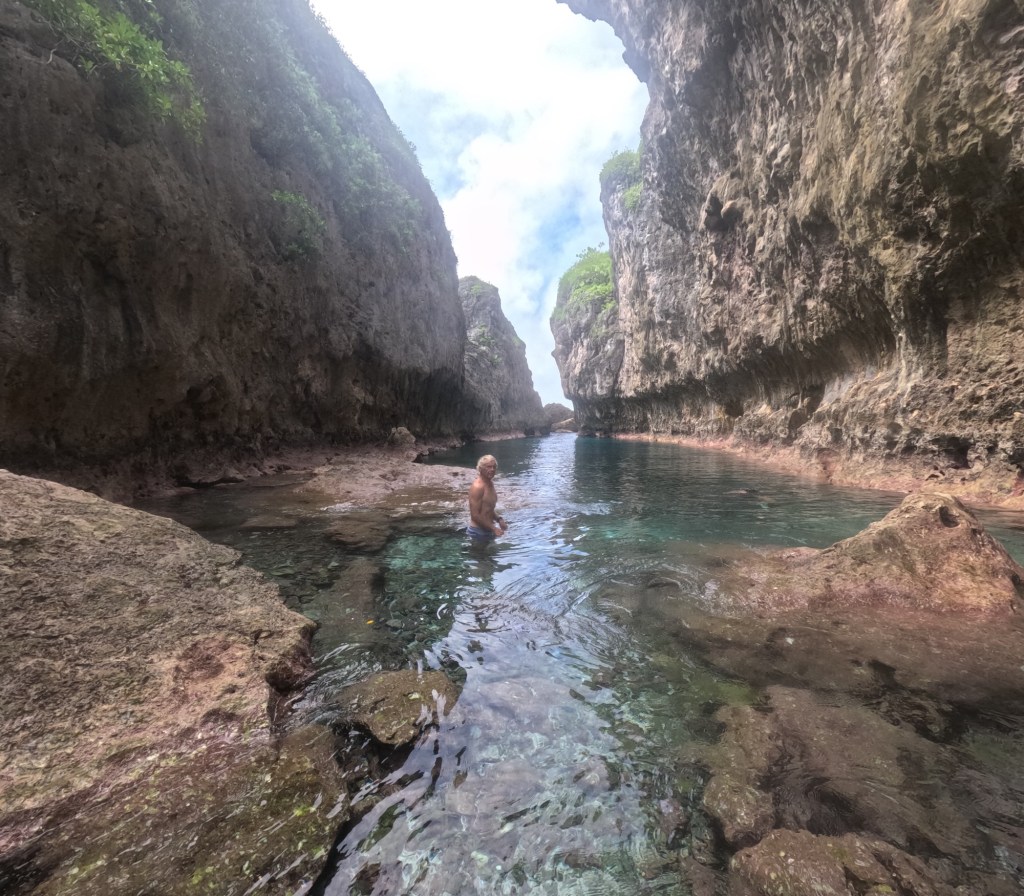
Next to Talava is the Matapa Chasm, which is reputed to be the bathing pool historically used by Niueian royalty. The chilling freshwater is at the top of the pool, and ocean water warms toes lowered into the depths.


Avaiki Cave
Avaiki is a derivative of Hawaii, the ancestral home of Polynesians. Oral history tells that this cave was where the first canoe landed on Niue, and the site was named in honor of the safe passage and landing. In the past only those of high rank were allowed access to the cave and reef.
We walked down the path through no the drip stone cave that brought us to the reef-side cave. We timed our visit for low tide so we could snorkel in the beautiful cave.


Dinner and Trivia at Hios
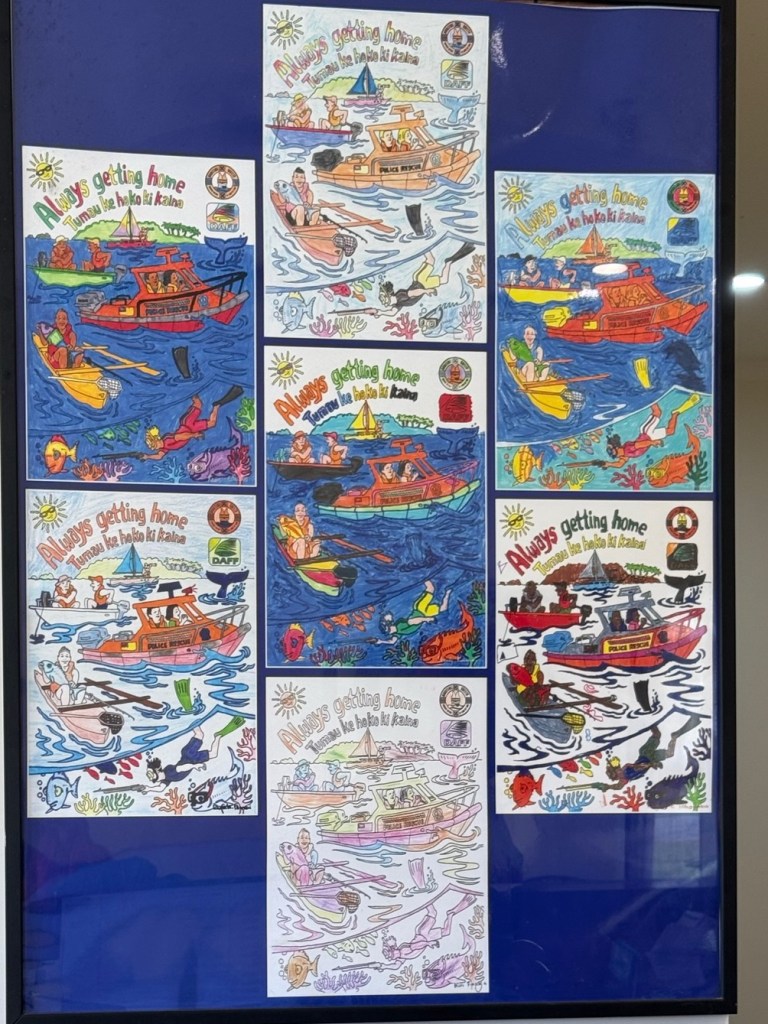
We joined a bunch of fellow cruisers for dinner and trivia at Hios restaurant. Herman taxied two groups from the wharf, because Niue doesn’t have any commercial ride sharing services. The proceeds from the trivia entrance fee are split between the youth rugby team and kids’ swimming lessons. A number of children perish annually because they’re boating without life jackets and don’t know how to swim. Search and rescue are teaching swimming and educating about safe practices around water.
Laundry, Coffee & Papaya
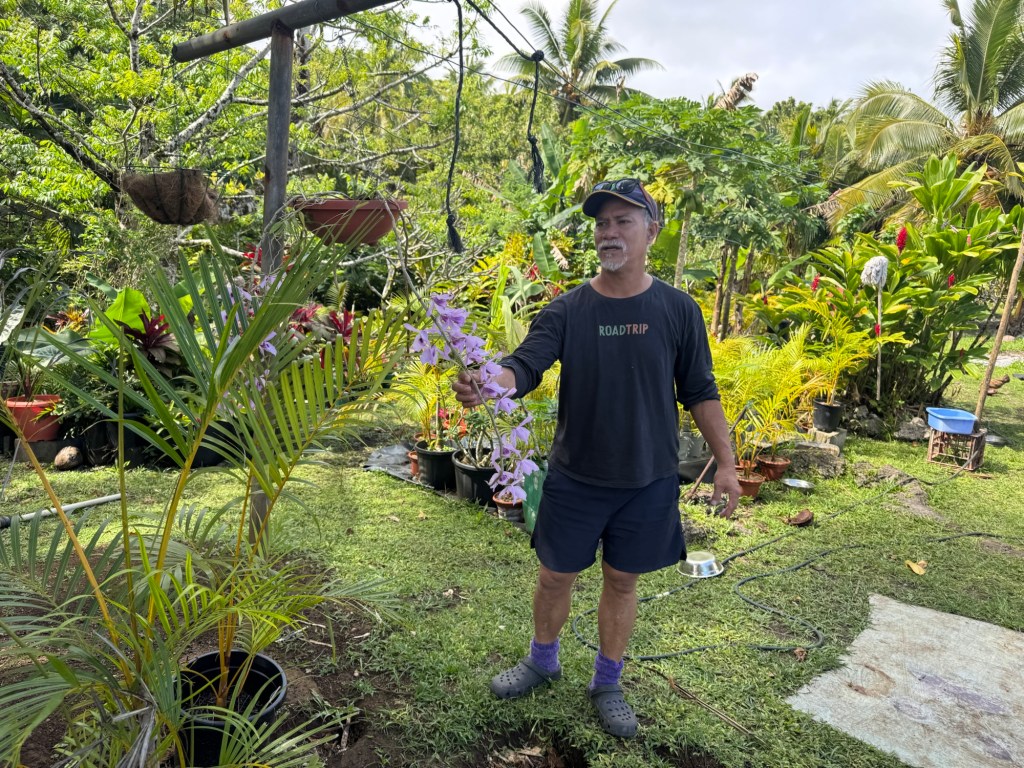
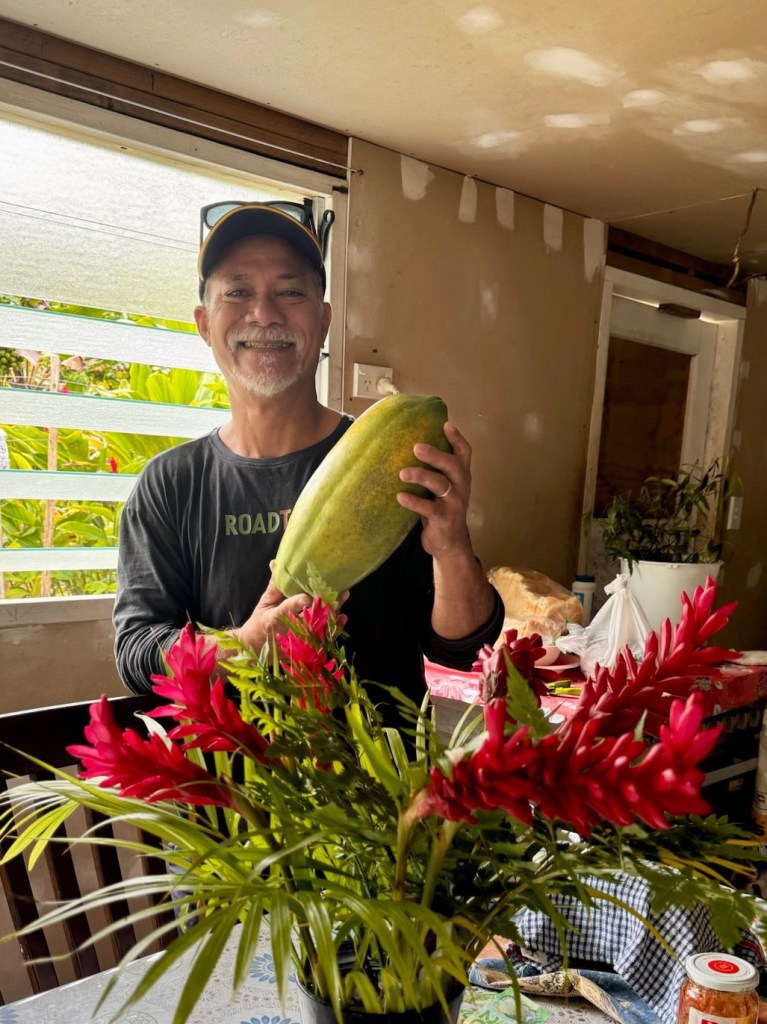
How are these related? Hina and Feti saw a need for laundry service for Niue visitors, so they started a laundry business and they obviously enjoy interacting with clients. When we picked up our laundry Feti invited us to sign the guestbook and have some coffee. Over coffee, toast, peanut butter, and strawberry jam, Feti told us about their business, and proudly bragged about his wife’s garden, flower arranging and artwork. Before we left, along with our laundry, he gave us a papaya and picked some limes for us. So much more than laundry 🙂
Scuba Diving and Sea Snakes
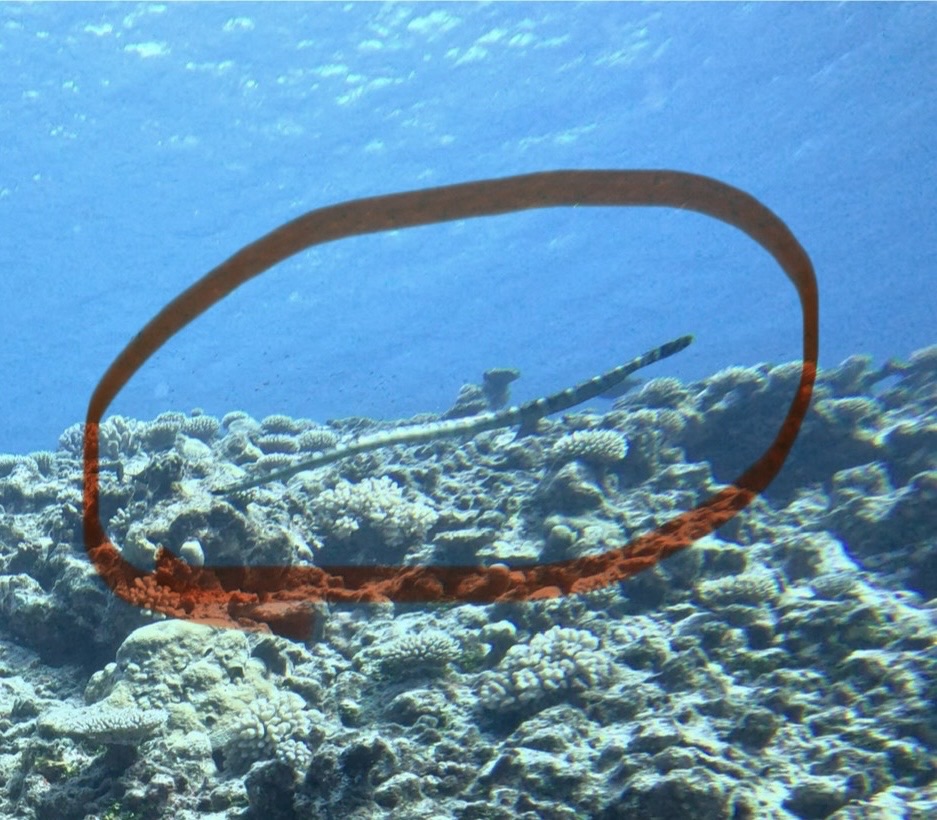
Yes, they go together! Venomous sea snakes swim Niue’s reefs, and they’re regularly visible because they need to surface to breathe. The good news is that they’re somewhat shy and their mouths are too small to bite humans. We enjoyed scuba diving along the reef and drop off into the deep bay, and we also got to see a couple snakes.

What’s Next
Tonga is 240 miles almost due west, which is a two night journey. We will cross the international dateline, which coincides with Herman’s birthday. Should we celebrate twice or skip it? We’ll let you know next time.


 Sailing Tieton
Leave a comment