Spending a second week in Fulaga gave us a chance to get to know the community better and develop a deeper understanding of their culture and challenges.

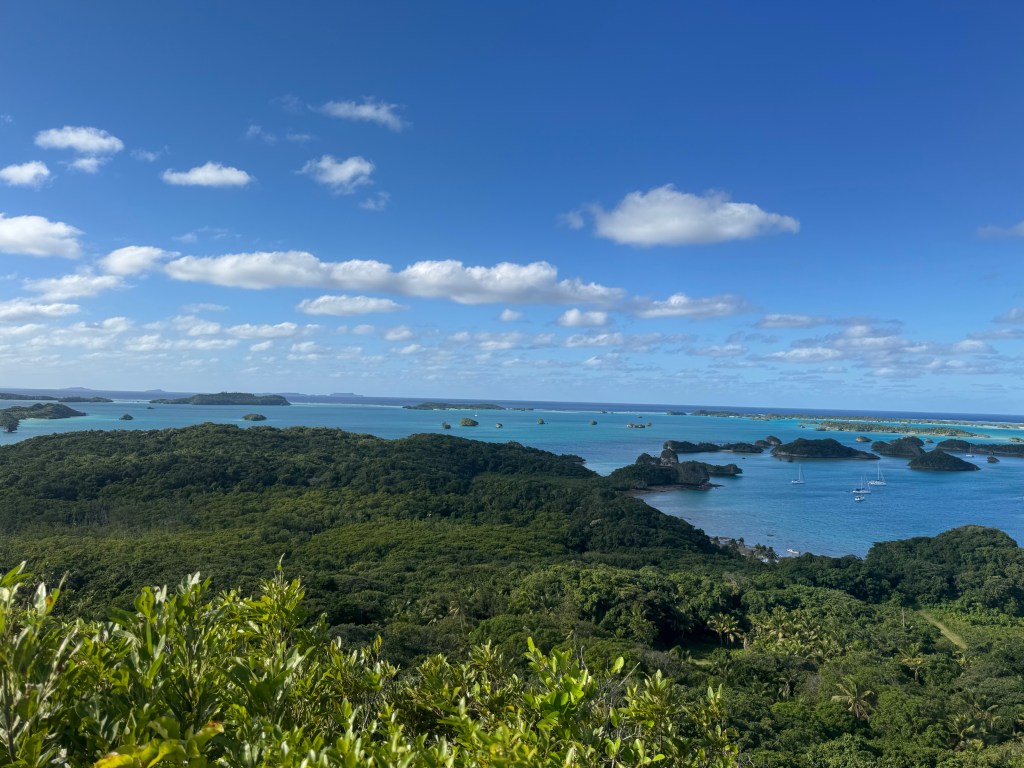
We also explored more around the island, with one of the highlights being a drift through some islets along the reef. We also hiked up another lookout through sharp limestone.
Education
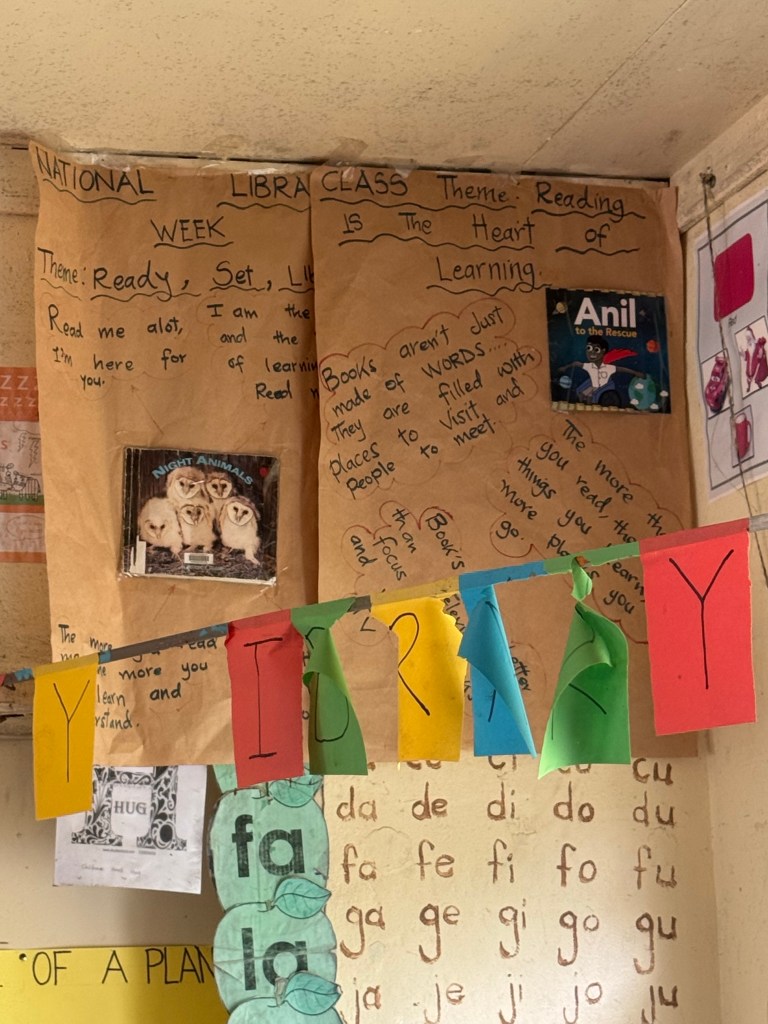
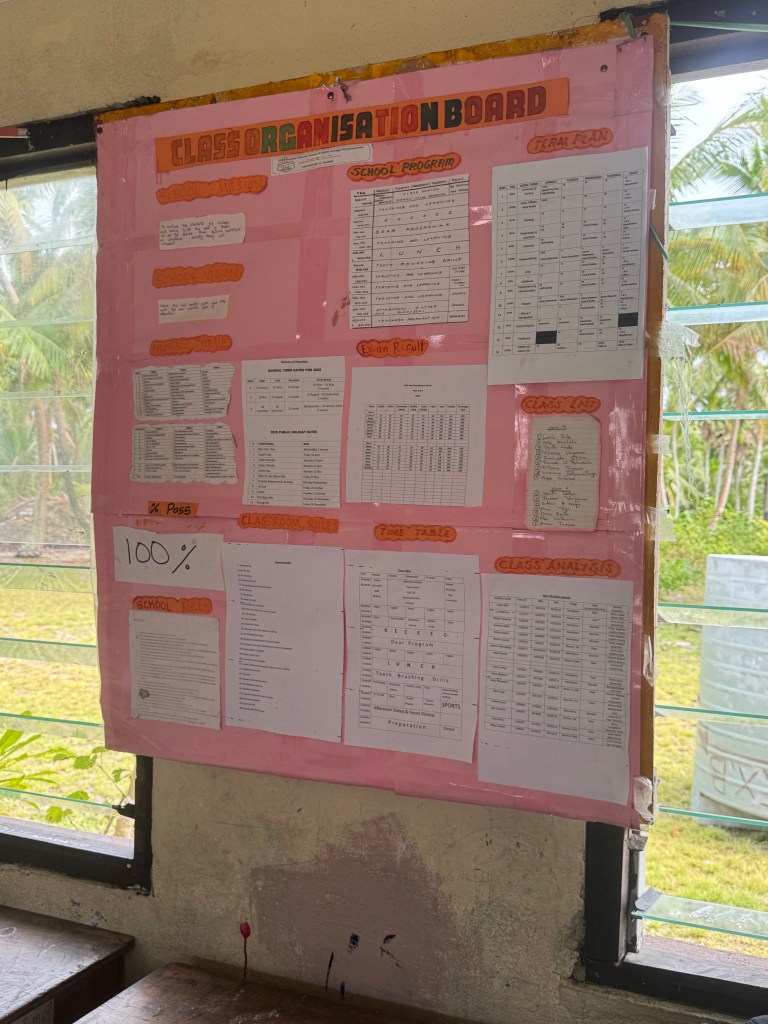
The island’s primary school educates students from Kindergarten to eighth grade. Children from the two outlying villages are housed in the school dormitory from Monday – Friday. Teachers have multi year contracts and are provided housing within the school compound. The breadth of material covered in one classroom was remarkable: Alphabet, morals, division, sentence structure, and plant parts. In addition to recess and lunch, teeth brushing drills were scheduled immediately after lunch. Students’ grades were posted on the bulletin board for anyone to see. Let’s just say, expectations are a little different.
A friend in New Zealand gave us a box of books she curated to give to the village schools, with subjects such as polar bears and snow that they might not be exposed to otherwise. It was our pleasure to hand some over to a teacher who was delighted to have them for the library.
Beginning with ninth grade, students go to Suva on Fiji’s main island, where they stay with family. After graduating from high school or college, many remain on the more populated islands for jobs in hospitality, or construction, which seem to be lower wage jobs. Others emigrate to New Zealand, Australia or other countries seeking migrant workers.
Those who return to Fulaga seem to do so for the quality of a subsistence life, or more towards their retirement years. Several families we met were grandparents raising their grandchildren in the village before they joined their parents in Suva.
One commonality was in a conference for schools within the eight island region. One Friday, schools were closed so that teachers could gather in Fulaga for a conference. The village prepared lunch and dinner for the conference. We observed the teachers greet each other enthusiastically, and clean up after their boat rides and walk into town. After lunch and an education session followed by dinner, it was expected some might enjoy some grog along with their fellowship later in the evening. They’d return to their respective islands the following day. It sounds like some conferences I’ve attended, although we never had to sleep on a classroom floor.


Village Lagoon – Tabu
Our host village’s chief declared the lagoon in front “Tabu”, which in essence creates a no-take zone. This is becoming more common amongst the remote islands. With the arrival of generators and supply ships, villagers could harvest and freeze fish and shellfish to sell to the big cities. The reef and lagoon can’t sustain this level of harvest, especially when coupled with international fishing fleets and neighboring villages expanded harvesting.
After a couple years, the reef and lagoon populations may recover so that the villagers can return to a more sustainable harvest for their subsistence. The preservation is also intended to promote tourism.
Cruising Families
We moved to an anchorage by a sand spit and were once again surrounded by wind-sport fans, catamarans and families with school-age children. We missed the yoga class on the beach, but fortunately heard about the beach happy hour and bonfire.
VHF radio is reminiscent of a telephone party line and we laugh when we hear some of the conversations. The distress/hailing channel is 16, and generally people switch to another channel to converse, understanding that others may eavesdrop. On channel 16, boy’s voice, “Mom have you seen my phone?” Mom’s voice, “The last thing I remember was Dad took it away because you hit your brother.” A few minutes later, Dad modeled appropriate radio etiquette of hailing properly and switching to another channel, where we eavesdropped as the father told the boy he’d given his phone back and didn’t know where it was. Another fun walk down memory lane was a child inviting a neighbor to play legos on a rainy day; the parent said would be great after school work and chores were done. It made me miss the days of playing legos with Jefferson.

Alcohol and Drugs
The traditional gift of kava is used ceremonially. The roots are ground, then combined in a bowl with water. The chief has the first bowl, followed by another bowl shared by the men, and sometimes women follow. Some people also make grog out of coconut milk combined with yeast, then fermented for a week or so. Not surprisingly, over indulgence becomes a problem for some. Leadership discourages visitors from gifting, offering to sell, or sharing alcohol, especially liquors.
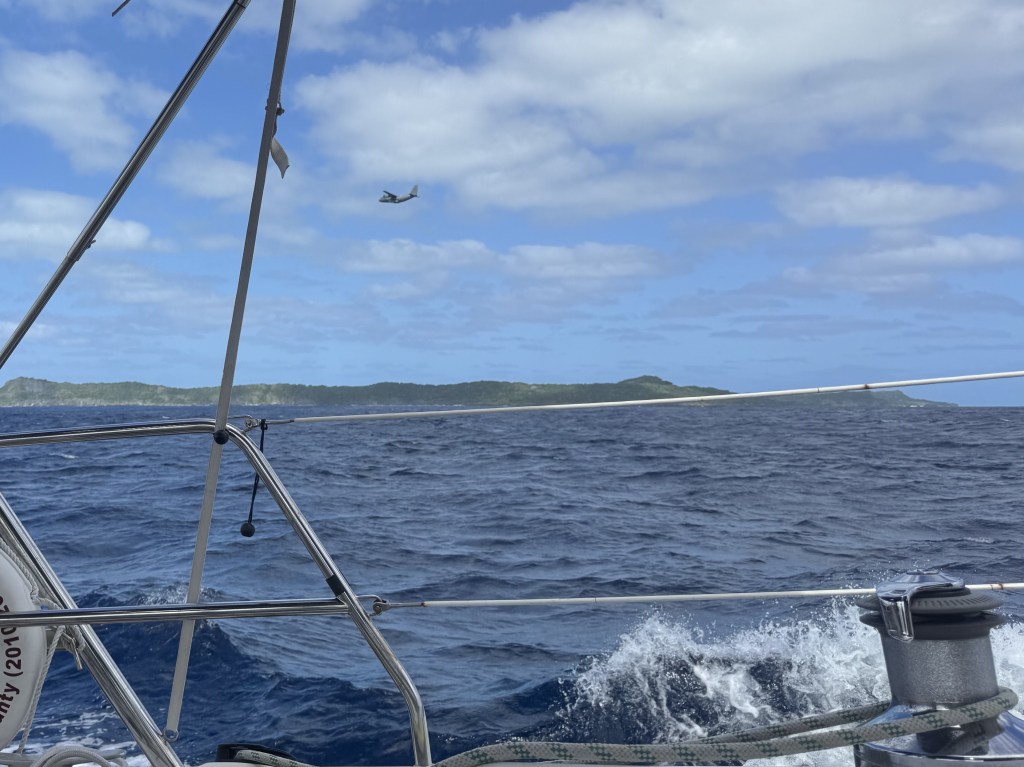
The import of drugs is becoming a huge issue, and the government is clamping down on boats. Last season, several cruisers had unpleasantly aggressive searches with Fijian crews being trained by the Japanese navy. Fortunately, this has abated. All boats, including fishing vessels, are required to have our AIS systems active while in Fijian waters, so our location is known to all. Cruisers are required to email our location weekly, and to show our Fijian cruising permit at remote villages. When we departed from Fulaga, a military plane circled Tieton three times before moving on. Hopefully their efforts will reduce the flow of drugs.
Royalty
The role of the chief passes by bloodline. Bill’s great-grandfather was the village chief, and Bill’s grandmother was the eldest child. Although jurisdictions in Northern Fiji allow a female chief, they’re not permitted in the Southern Lau Group. Thus Bill’s grandmother needed to be asked permission for her younger brother to be appointed. Spoiler alert, she had to say yes.
Bill’s cousin showed us the village cemetery and pointed out that chief’s graves were adorned with a conch shell.
Goodbye Fulaga
We went to the village to say goodbye and thank the chief for his hospitality. Bill told us that he and Amelia had a falling out 😦 Bill was making a gift for us and welcomed us to sit with him while he finished. He’d already carved and sanded a fruit bowl with hand tools, and drawn the turtle on the section with the drain hole. Bill made a sponge brush in front of us, and then stained the turtle and edge of the bowl. To allow the stain time to dry, we walked with Bill around the village. We went back to his house and, using his dad’s small tools, continued carving while we chatted. His cousin stopped by and sat in the doorway while we talked and Bill carved. Bill’s gift is also the more precious to us because of the hours we spent with him while he made it.


We continue to reflect on the generosity of Fijians in the remote islands, especially when they have so “little”. When Seta was showing us around, he said they appreciated when cruisers used their skills, such as engineering or medical, to help the village. When I mentioned that we were accountants, Seta laughed and said when you only have $2, you don’t need an accountant. We bought some things with cash and gave Bill and the village some food staples, a solar usb charger, books, and some medical supplies for the clinic. We plan to continue to share our “wealth” along the way, without giving too much to change their subsistence living.
Tsunami?
We awoke on our last day in Fulaga to learn of the earthquake in Russia and the developing threat of tsunamis in the Pacific. We spent a good deal of the day learning the fuzzy science of tsunamis and communicating with cruisers throughout the Pacific regarding their plans. The Marquesas, with their mountains and wide, shallow bays, required that all boats leave their bays, and if that wasn’t possible that the occupants were to come ashore. With similar geography, New Zealand required all live-a-boards to come ashore. In short, the best place to be would have been in deep water without any boats around. In order to get there, we would have to navigate a challenging passage in inclement weather. We were at the far side of a wide lagoon with a narrow entrance and felt fairly safe, so we decided to stay put for the rest of the worrisome day. At 9 PM, we felt a slightly odd shift that could have just been the incoming tide or ?? Phew 😅

What’s Next
We’re off to Matuku, which is the southern most island of the Koro sea to the west. Once again, we’ll pass through longitude 180, which marks the midpoint around the world. It is amusing to view the proficiency of the glue jobs of the various satellite images. We’re primarily using the OpenCPN navigation application now, with Navionics as a supplement. This allows us to simultaneously view six different maps and satellite images for our navigation. Surprisingly for us from the well-charted US, the charts and images sometimes differ, and one needs to use all of them to figure out the best course. For some maps, either side of 180 loads separately. Nail biting for sure…


 Sailing Tieton
Leave a comment