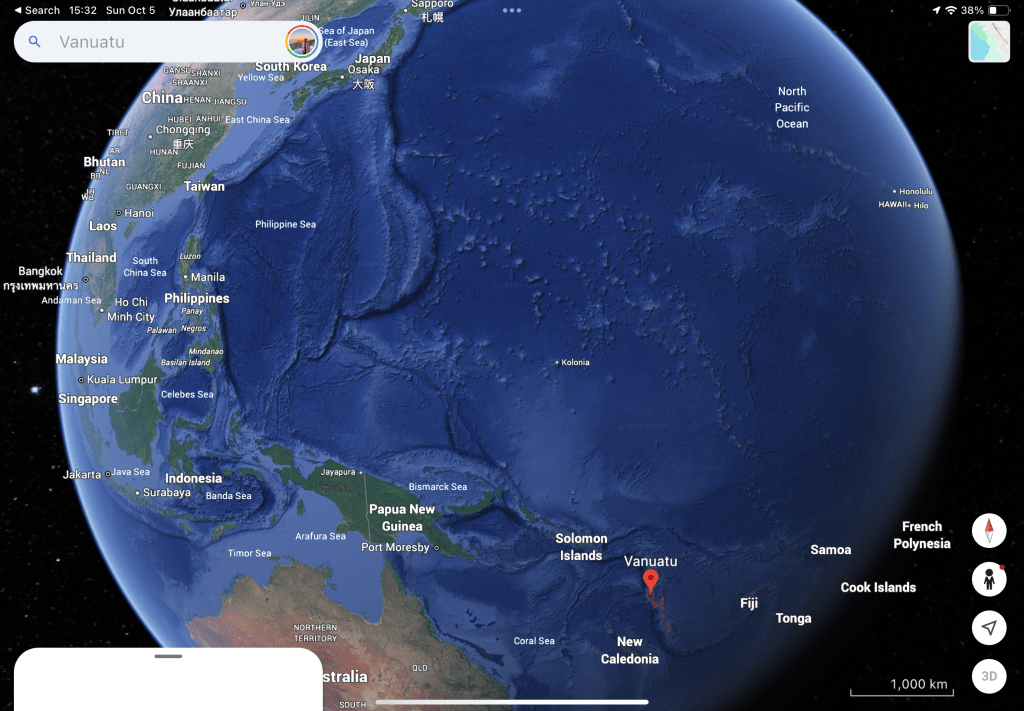
Located west of Fiji, Vanuatu consists of 83 islands, home to a mixture of natives with heritage from Asia, Indonesia and Papa New Guinea, who arrived about 3,500 years ago. In early 1600, a Spanish sailor arrived and named the main island Espíritu Santo. In 1768, French captain Bougainville arrived and gave many of the other islands French names, including a strait he named after himself. Captain Cook arrived in 1774 and called the collective islands New Hebrides.
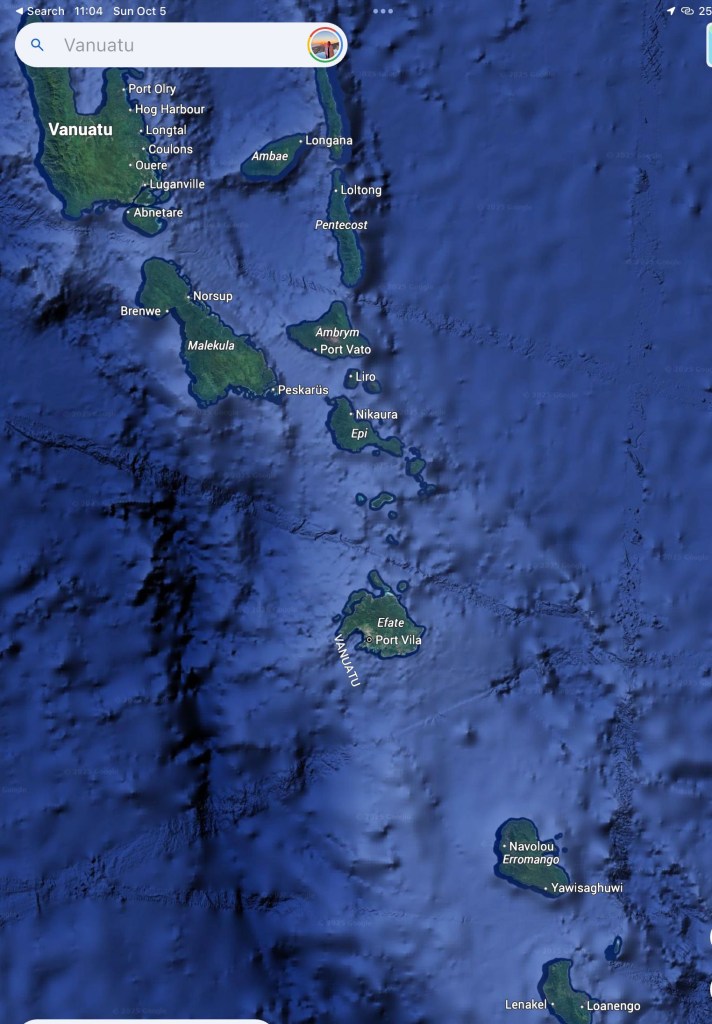
In early 1800‘s, missionaries and foreign settlers primarily from Australia and France arrived. Between diseases the settlers brought and enslavement/indentured servitude in Fijian and Australian plantations, the population shrank from an estimated one million in 1800 to 45,000 in 1935. In 1906, France and the United Kingdom agreed to jointly administer the islands, although islanders probably didn’t get a say. During World War II, the islands served as a base in the Pacific region. In 1980, independence was granted and the collective islands were named Vanuatu.
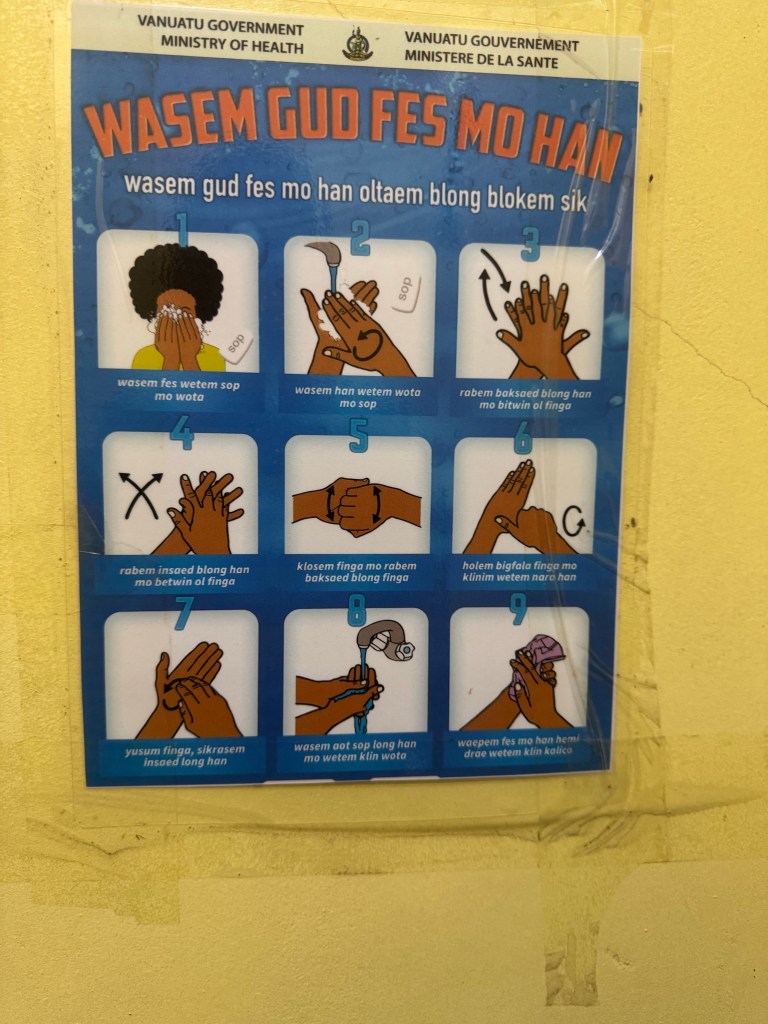
One of the most entertaining aspects of this history is the language. The official languages of Vanuatu are French, English, and Bislama, a common language developed so the islanders with over 100 separate languages and foreigners could understand each other. Bislama is fairly easy to understand and when written reminds me of a primary school student whose teacher doesn’t care about grammar or spelling. “Mi lookem three turtles” = I saw three turtles. “Titi basket” needs no explanation.
Mo Hans

Blong Mi
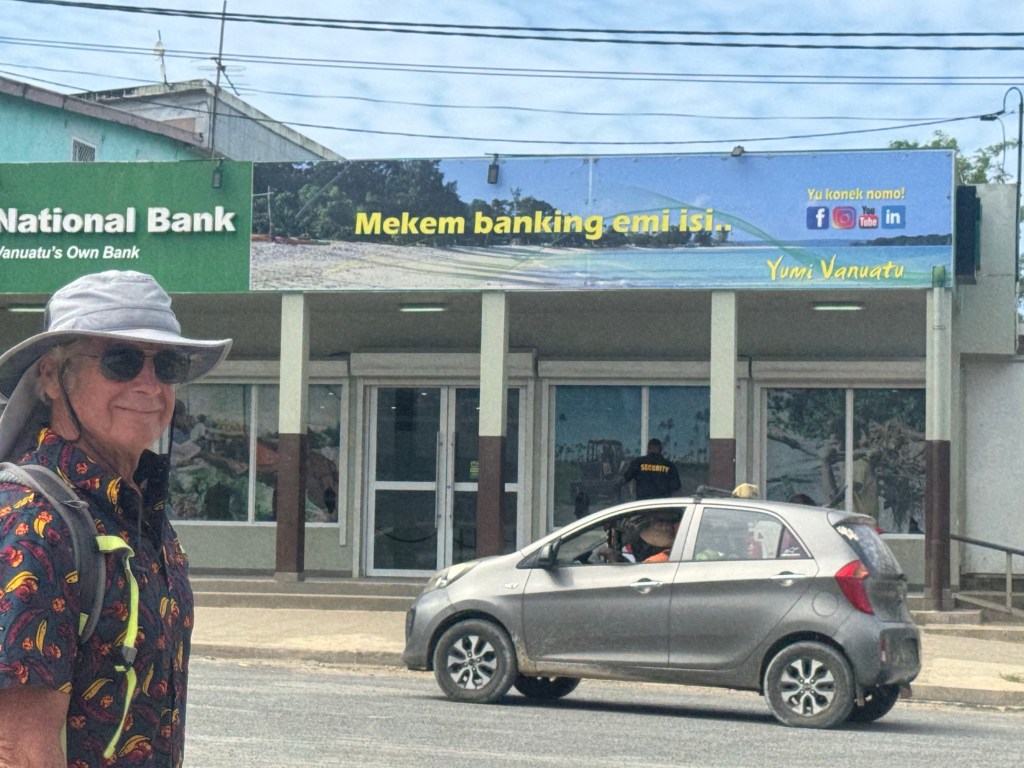

Vatu is the currency, and 100 Vatu coin is worth US$0.90. Paper money starts at 200 Vatu. Credit cards users incur an additional charge of 3 – 5%, which is only available in larger cities and at resorts.
World War II Museum
Like other island groups in the South Pacific, Vanuatu served as part of the Pacific theater with an Allied Forces presence on Espiruto Santos. Carrying 5,000 US military crew, the US’s SS Coolidge hit a Japanese mine and sank in ninety minutes. Realizing that most of the crew did not know how to swim, the captain beached the Coolidge. Remarkably, only two casualties occurred, including one upon impact.
When he learned that nine men were still in the ship’s hospital, Captain Elwood Euart tied a rope around his waist and returned to rescue the men from the sinking ship. Captain Euart was the second casualty. Seventy years later, his remains were discovered and repatriated to the US.
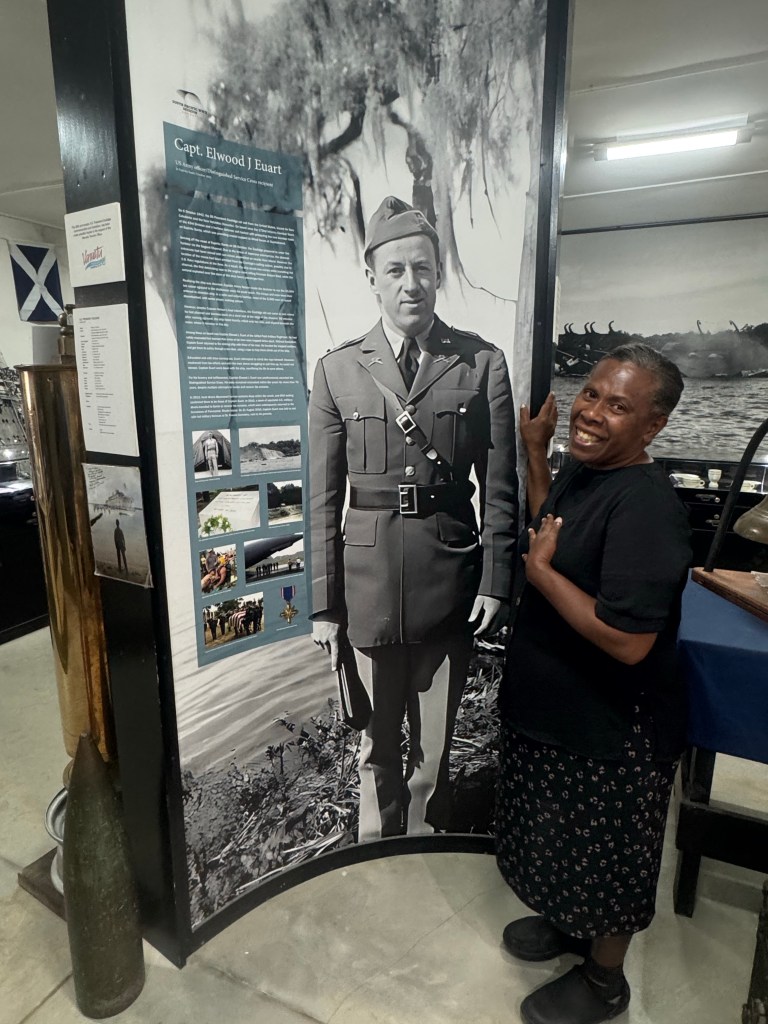
(& Docent Marina)
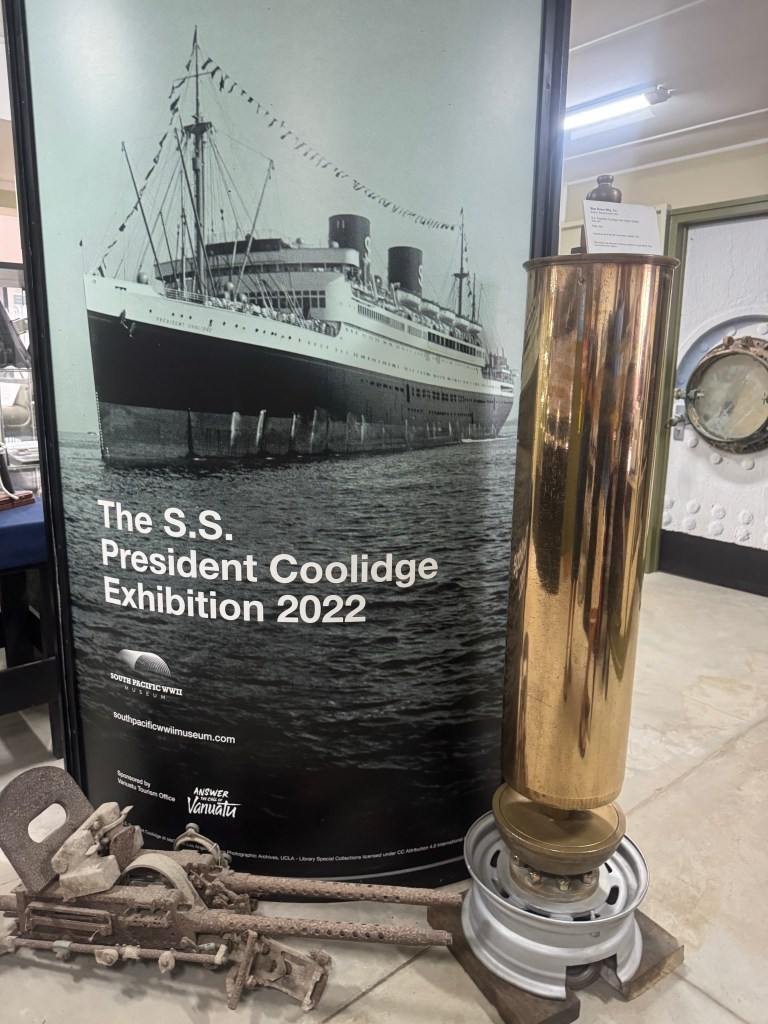

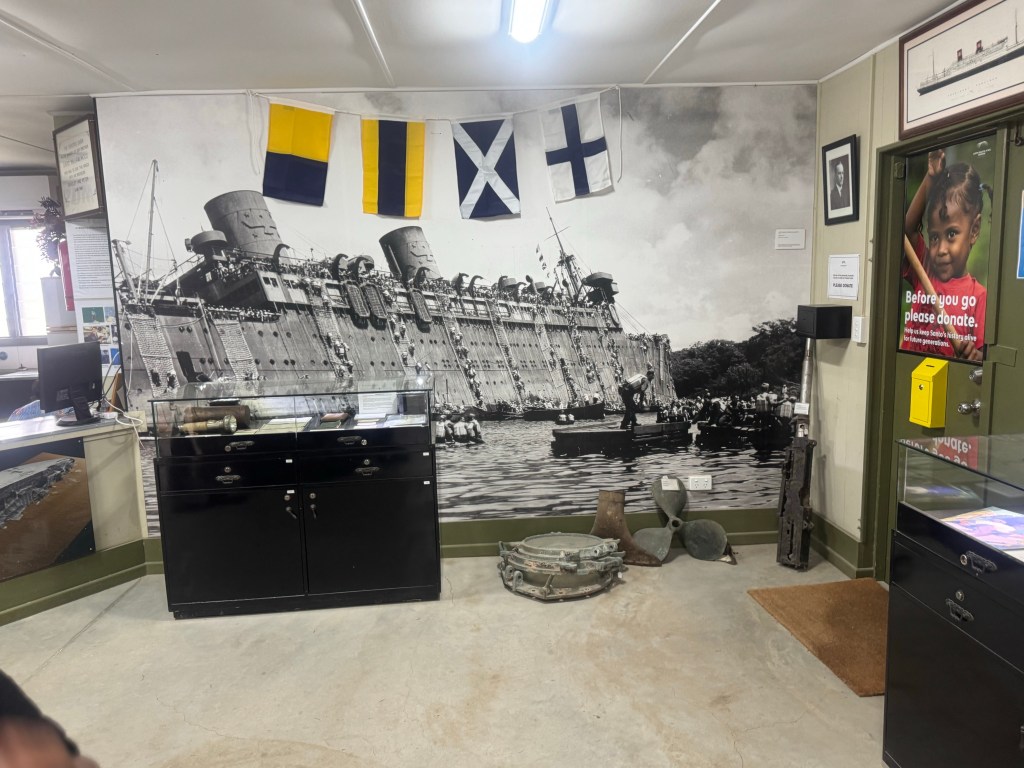
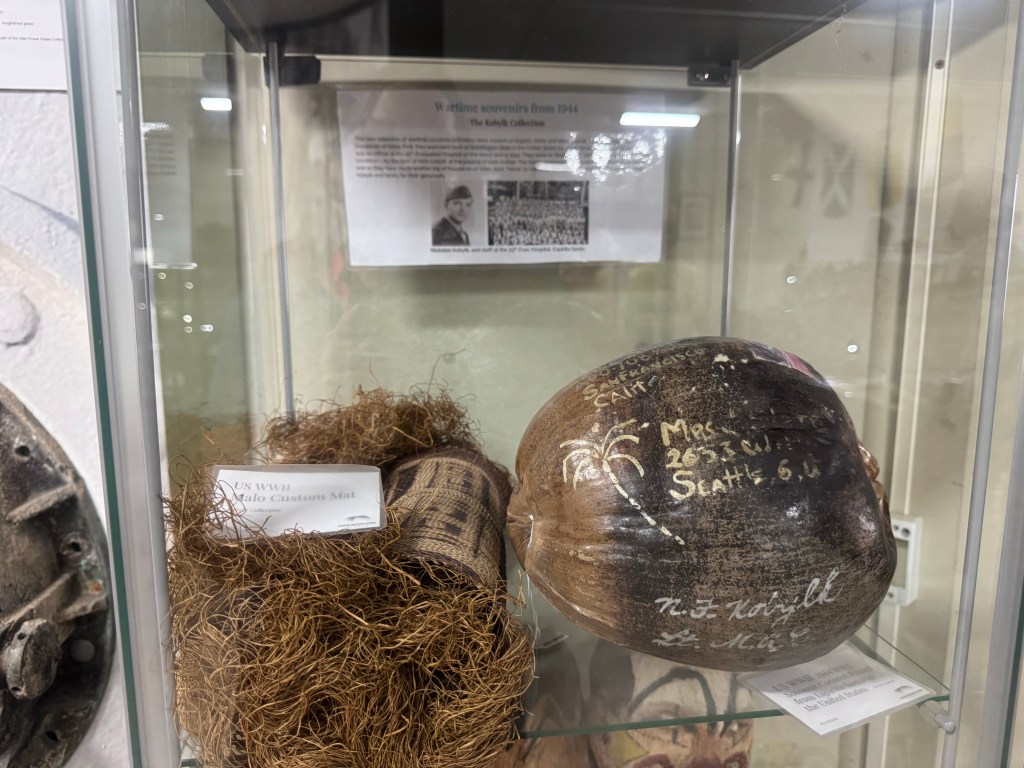
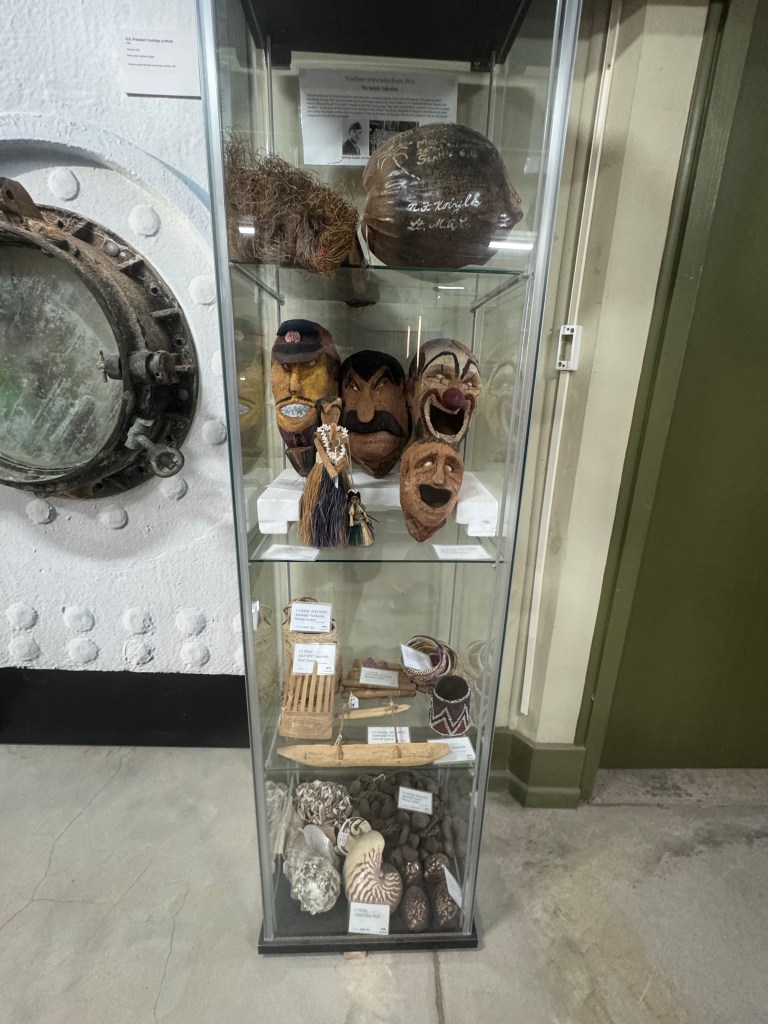
When docent Marina learned we were from Seattle, she was excited to show us a display of artifacts received from a Seattle family who discovered them when their WWII veteran died recently. Imagine how today’s postal service would process a stamped coconut with a handwritten address.
Espíritu Santo Land Tour
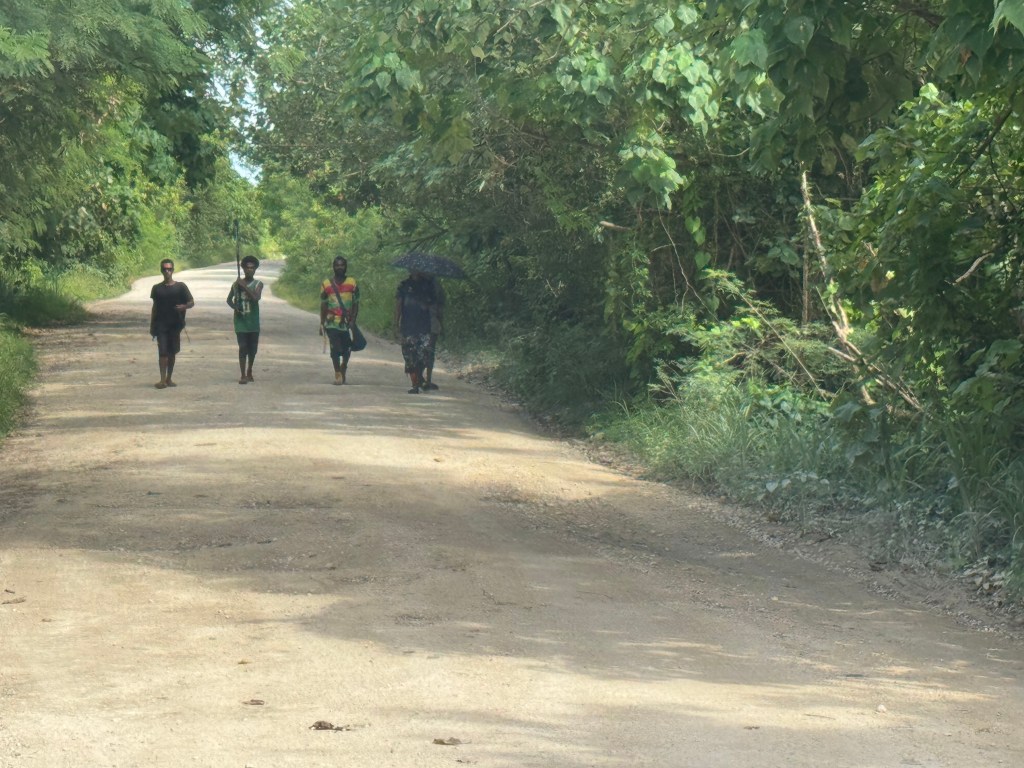
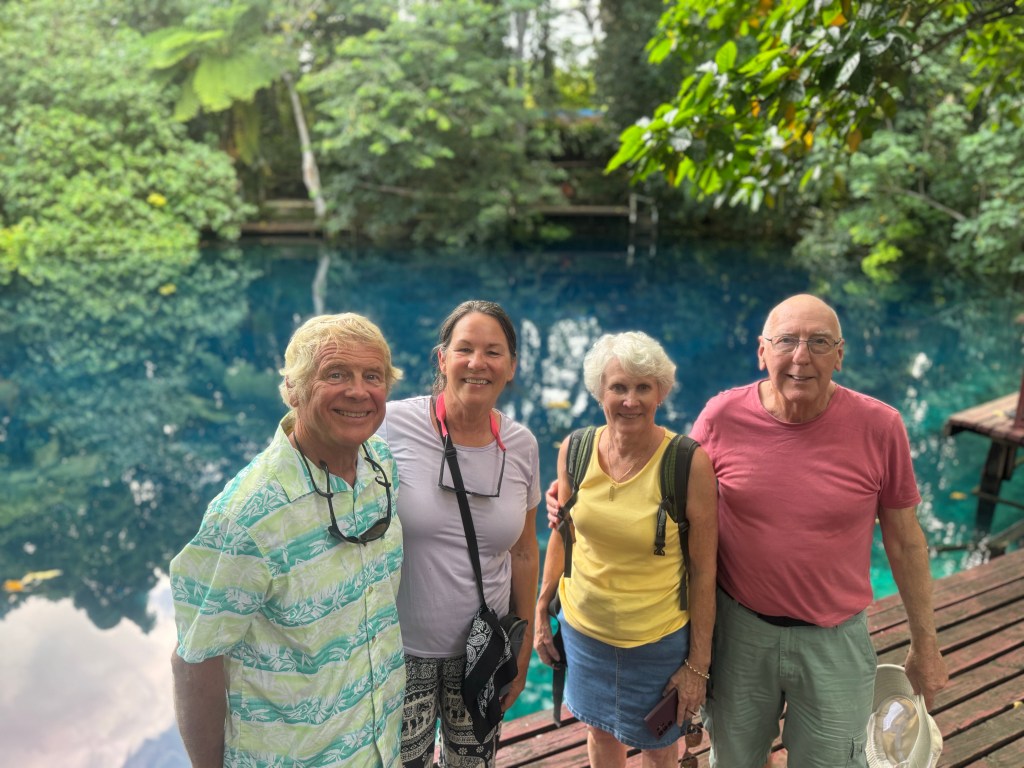
We took a taxi ride tour of the east side of the island along with our newfound friends Janelle and Wayne, who flew from Australia to visit a friend on another yacht. Herman and I had moved Pilikulo, a cove we’d read was easily accessible by bus or taxi. It turns out the “road” was built by Allied Forces in WWII and was pretty rough, and the buses and taxis that passed by infrequently were full. We arranged for the tour taxi to pick us up and were on our merry way after our hour diversion.
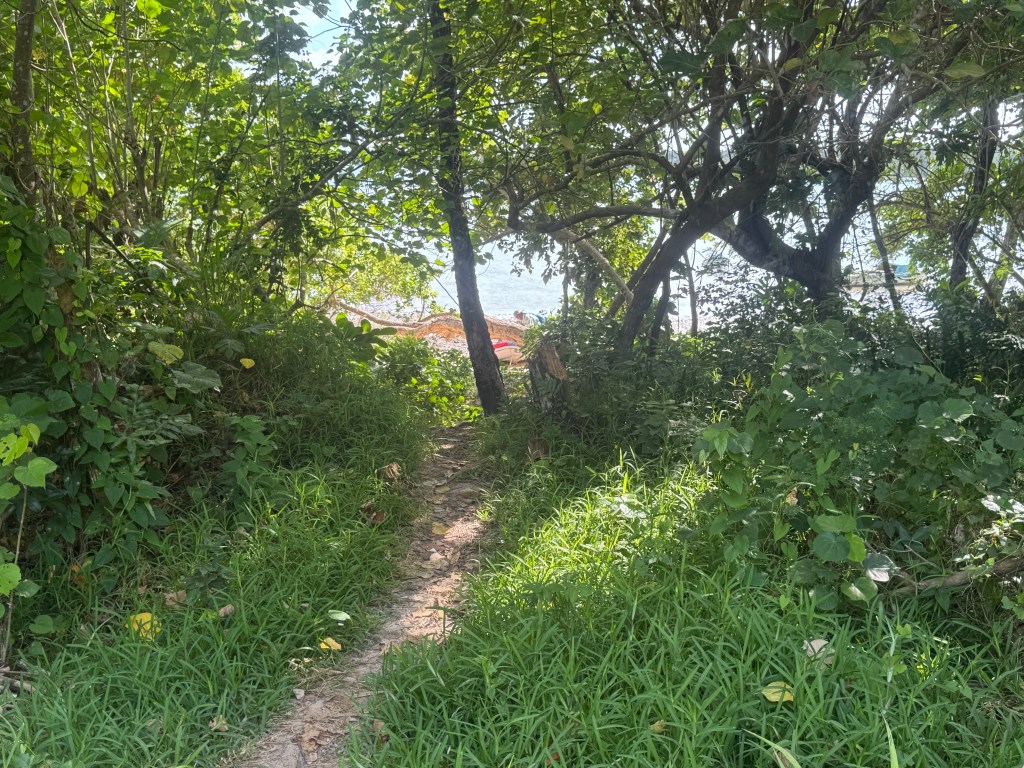
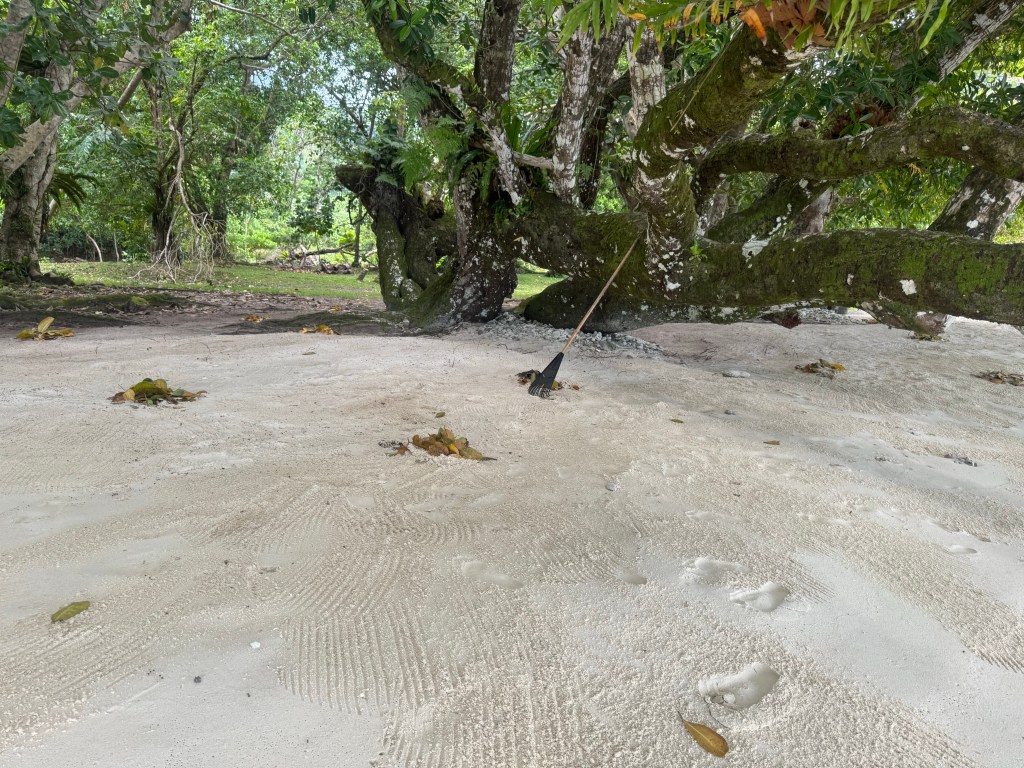
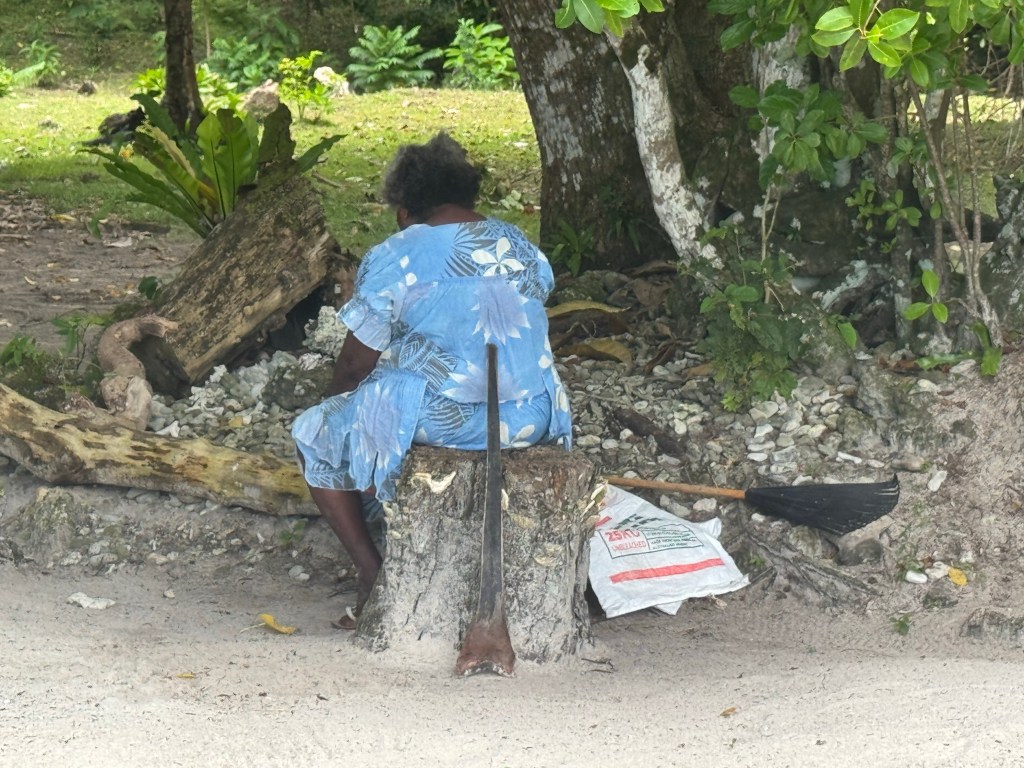
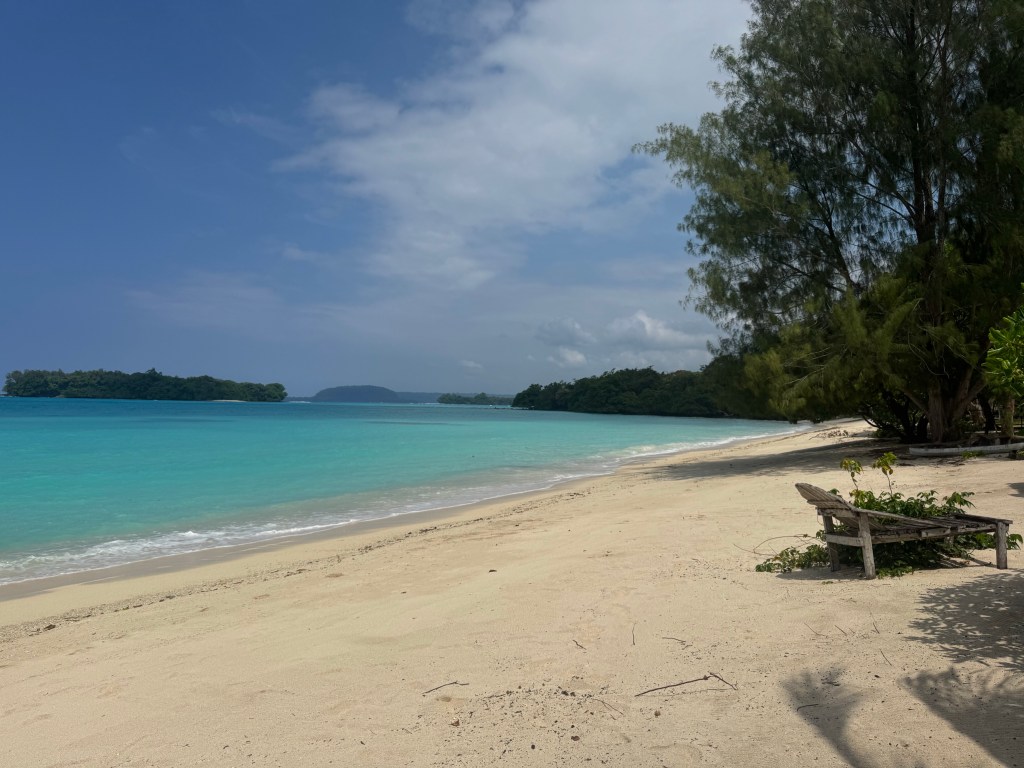
On the way to our lunchtime destination of Port Olry, at the northeast point of the coast, we stopped at Champagne Beach, thus named for its fine pink sand. We paid the entrance fee of 10,000 Vatu ($9), which supports the community and provides for upkeep. Two elderly women raked the beach, keeping it free of the leaves fallen from the trees.
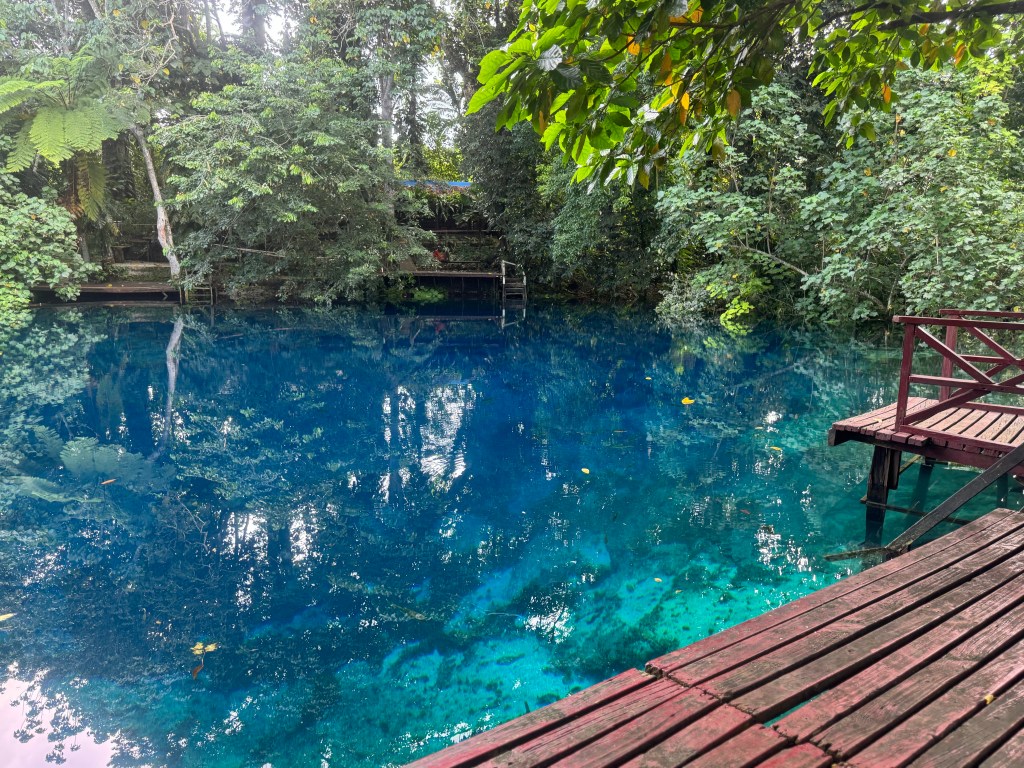
We had a simple lunch at a beachside restaurant in Port Olry, then went to Jackie’s Blue Hole, a small freshwater lagoon in a chasm. We stopped briefly at a roadside stand where four women were selling their produce. I purchased tomatoes, cucumbers and peppers for 300 Vatu (US$2.70).
Our land tour was great and reminds us once again of how lucky we are to be cruising and have the opportunity to visit so many remote locations.
Diving Coolidge & Million Dollar Point
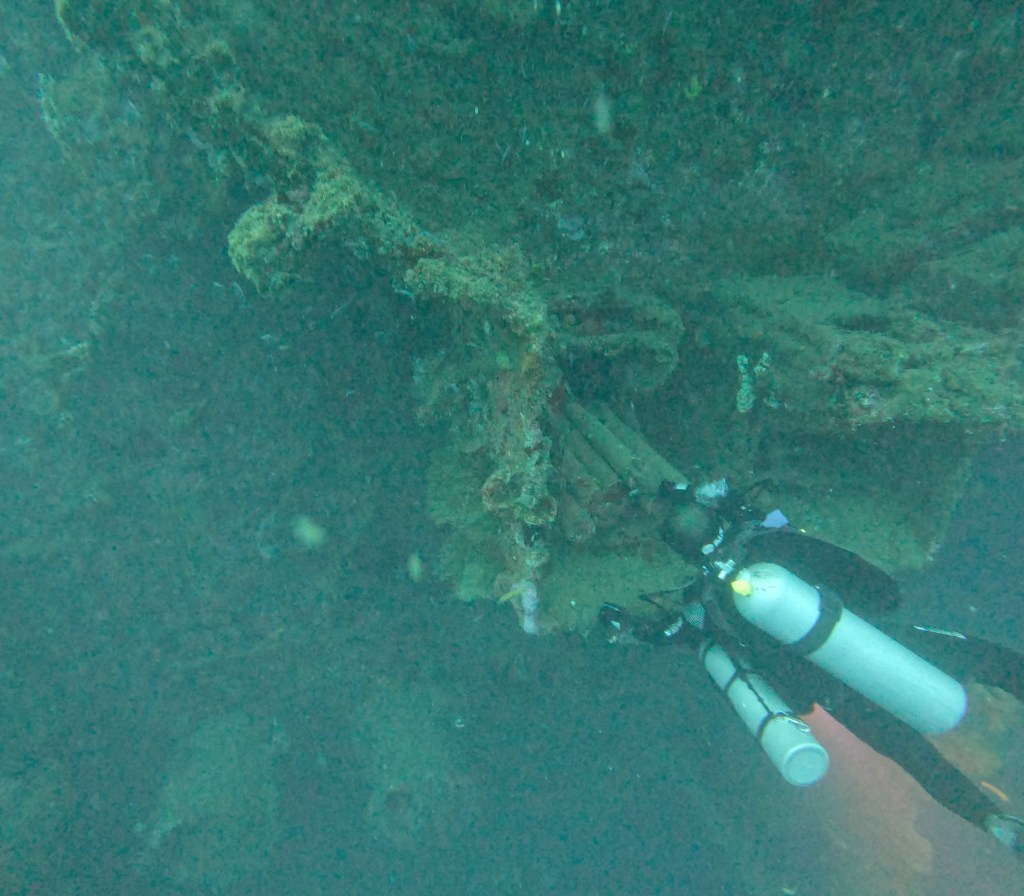
We arranged to moor at Aore Adventures so that we could do two scuba dives the following morning. Our first dive was on the Coolidge, where we were able to see most of the top and side of the ship. Amazingly, some hinges still worked and torpedos were still in the casements. Others in our party dove through the dining room, in one of the 20ish dive options inside the wreck. After 70 years, the sunken ship is covered with hard and soft corals, and also has abundant fish life.

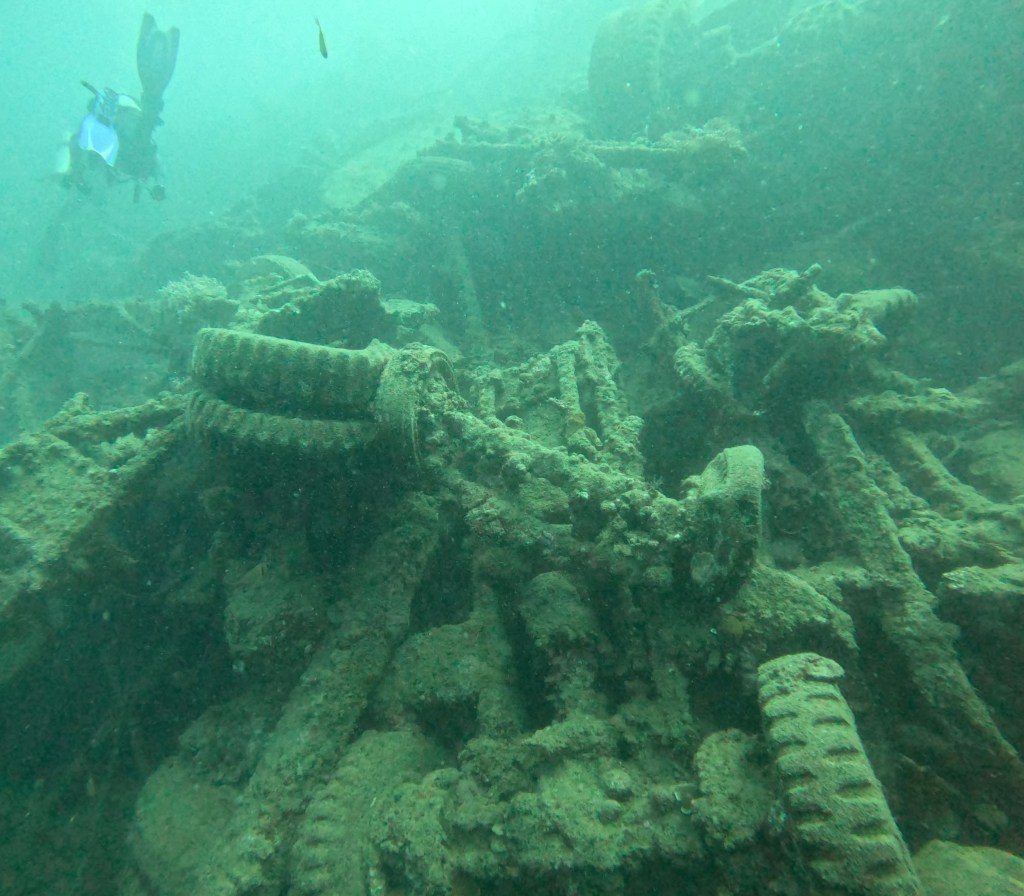
Million Dollar Point is another story. As the Allied Forces were vacating Vanuatu, they offered to sell onsite equipment for $1 million, which was cents on the dollar of the value. When no deal was made, in a horrific act of waste, environmental contamination and international security, the Allied Forces built a pier, drove the equipment off the pier, and then destroyed the pier so the equipment couldn’t be recovered. It was surreal to dive amongst the sunken tanks, vehicles and other equipment. Imagine sitting behind the steering levers of a tank. Our guide encouraged us to count the tires, which gives a crazy perspective of the magnitude of damage. The site is mostly devoid of coral and sea life.
Aore Coffee
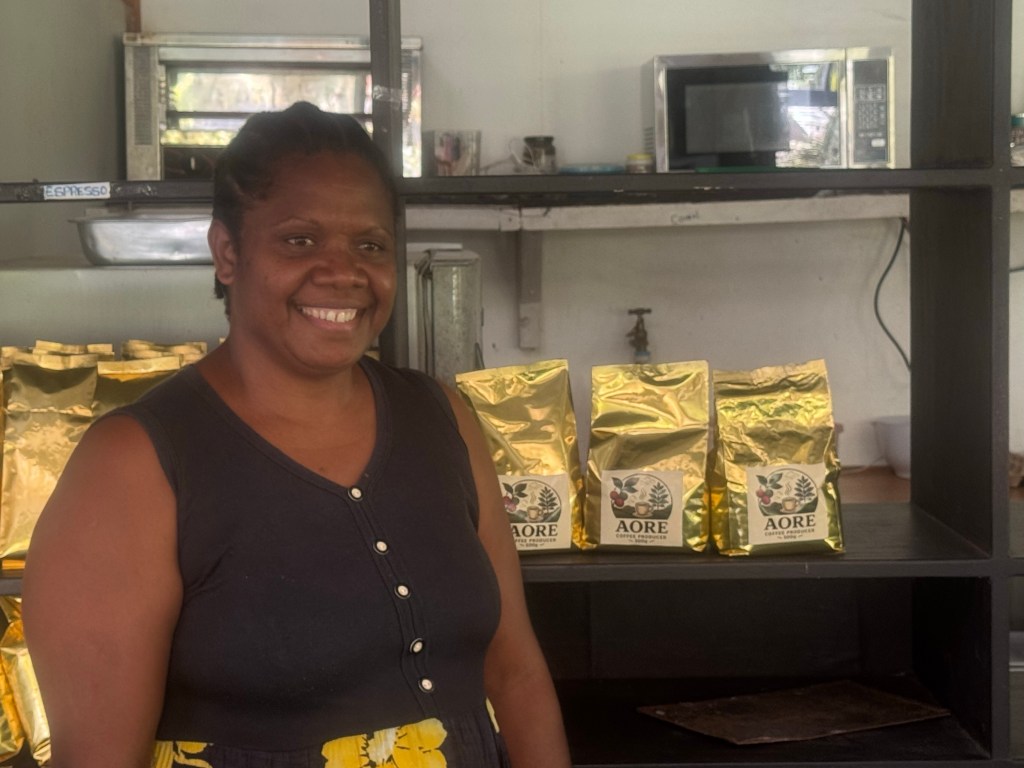
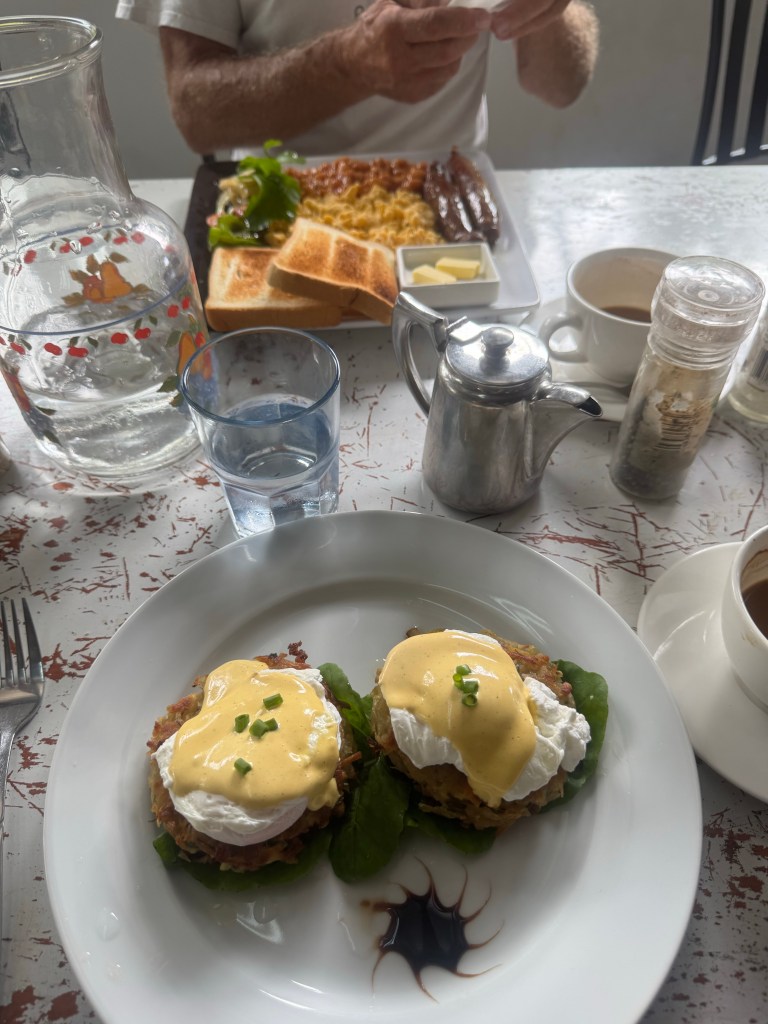
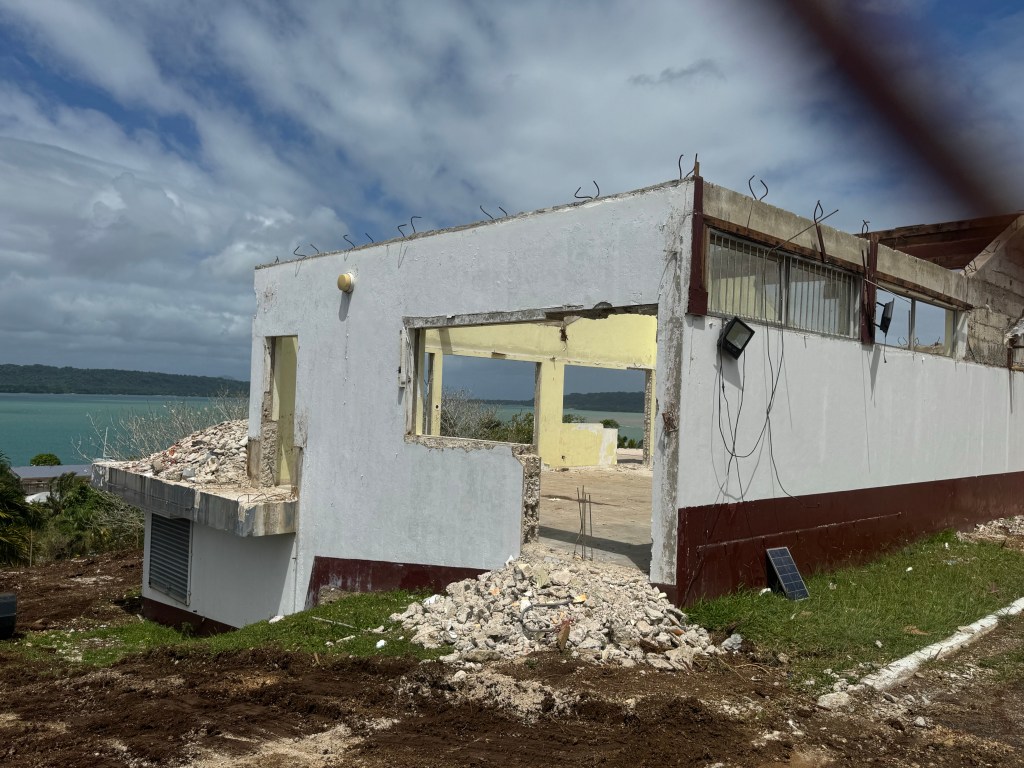
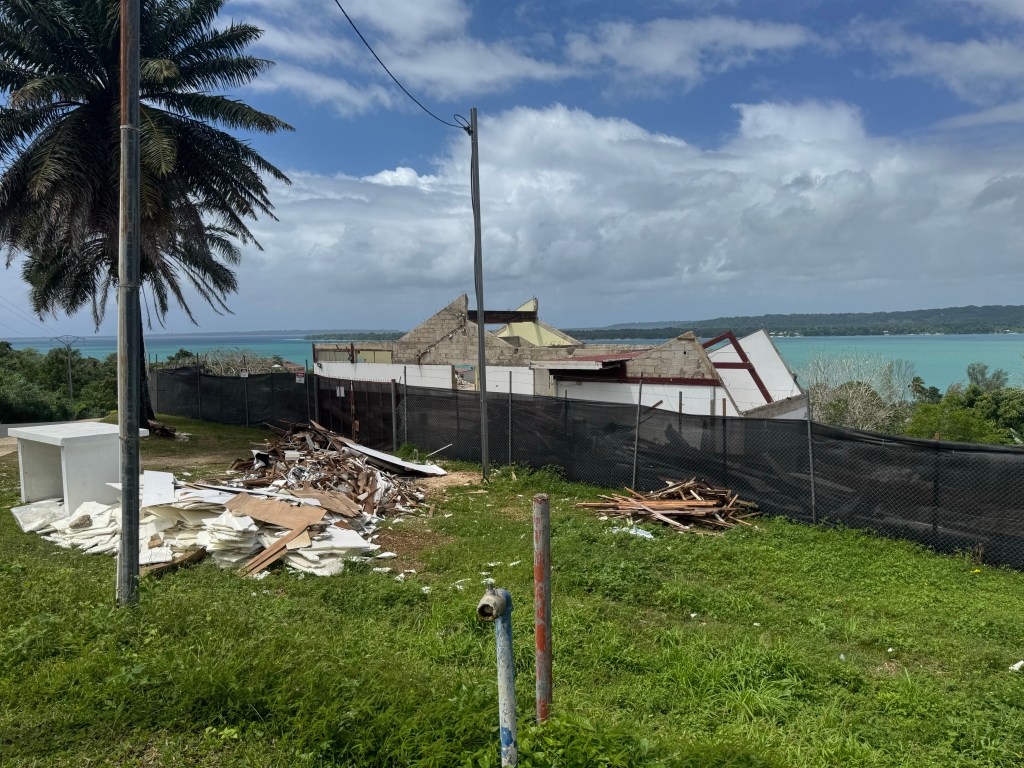
Breakfast at Aore Coffee gave us a chance to talk with owner Sue about her business and the 2020 cyclone. Sue started her coffee business in 2018 after working in the nearby resorts, and she lost most of it to the cyclone. With no help from the government, she restored the coffee plantation, bought another small coffee roaster, and taught her and 21-year-old daughter to roast coffee and cook lunch or breakfast for the restaurant. Her nearby garden provides fresh vegetables for her cooking, and when excess is available, guests can buy produce.
Celebrating
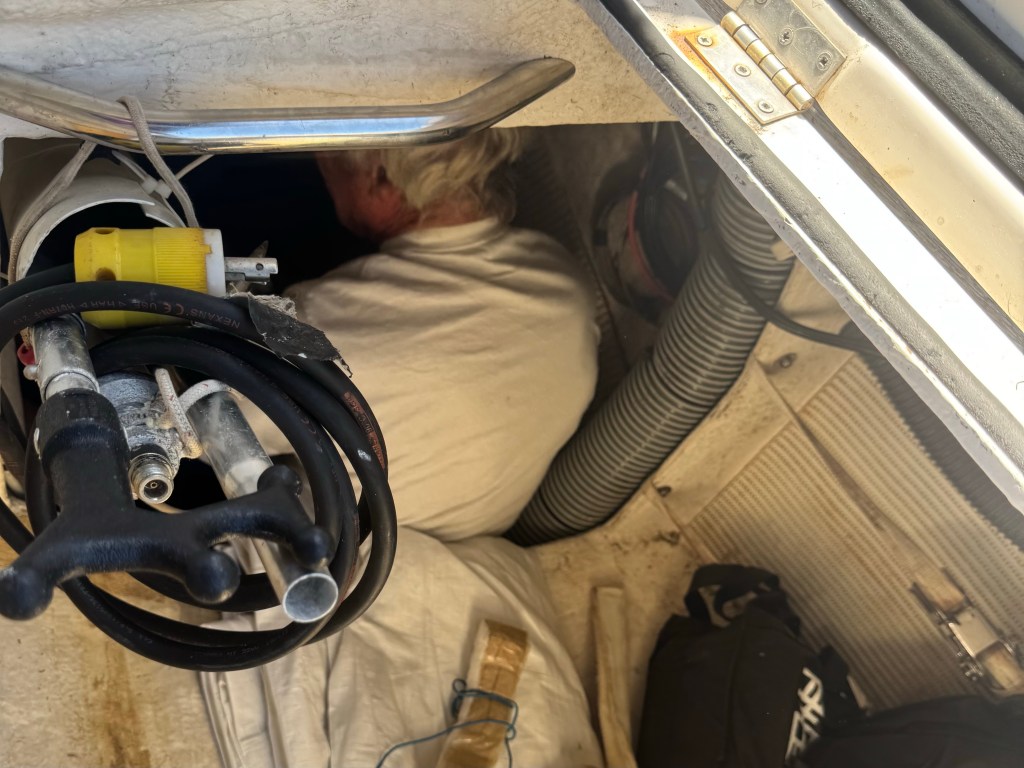
We just celebrated Herman’s birthday and our two year cruise-a-versary. We are so grateful for our health and adventure, and I’m grateful that Herman is so fit! Just for fun, here are some “where’s Herman?” photos.

Balanced on Winch and Lifeline

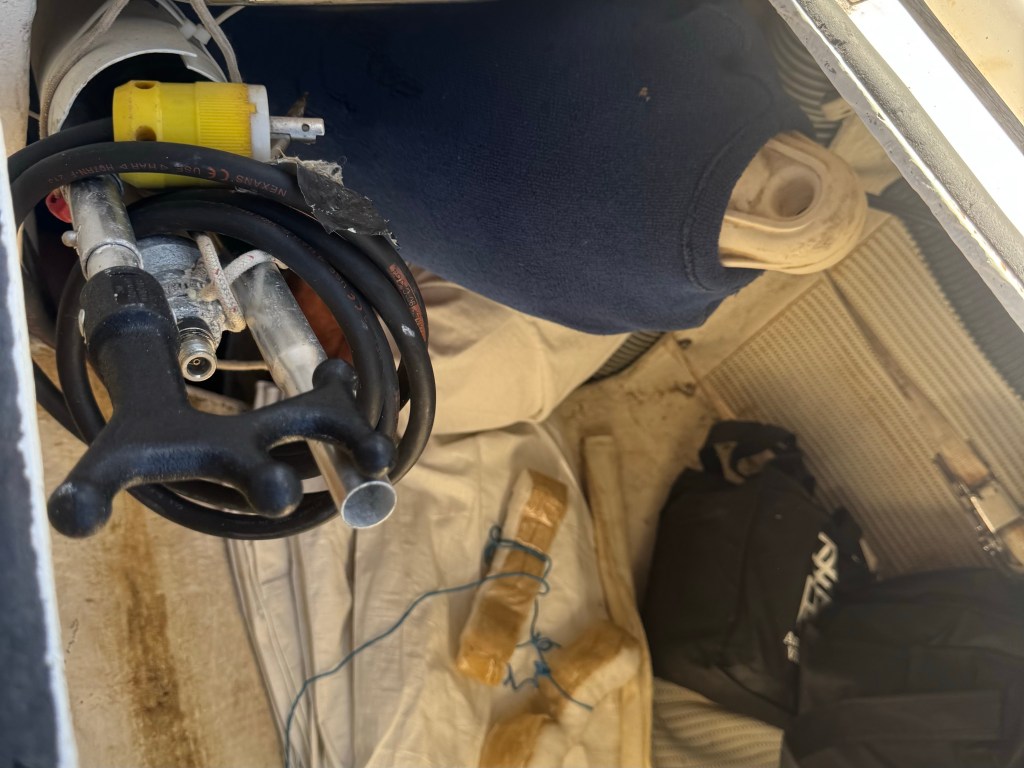
The lazarette is a deep pocket at the stern (back) of the boat, which we use for fender storage. I’ve never seen the deep recesses because I’m afraid I wouldn’t be able to get out.

What’s Next?
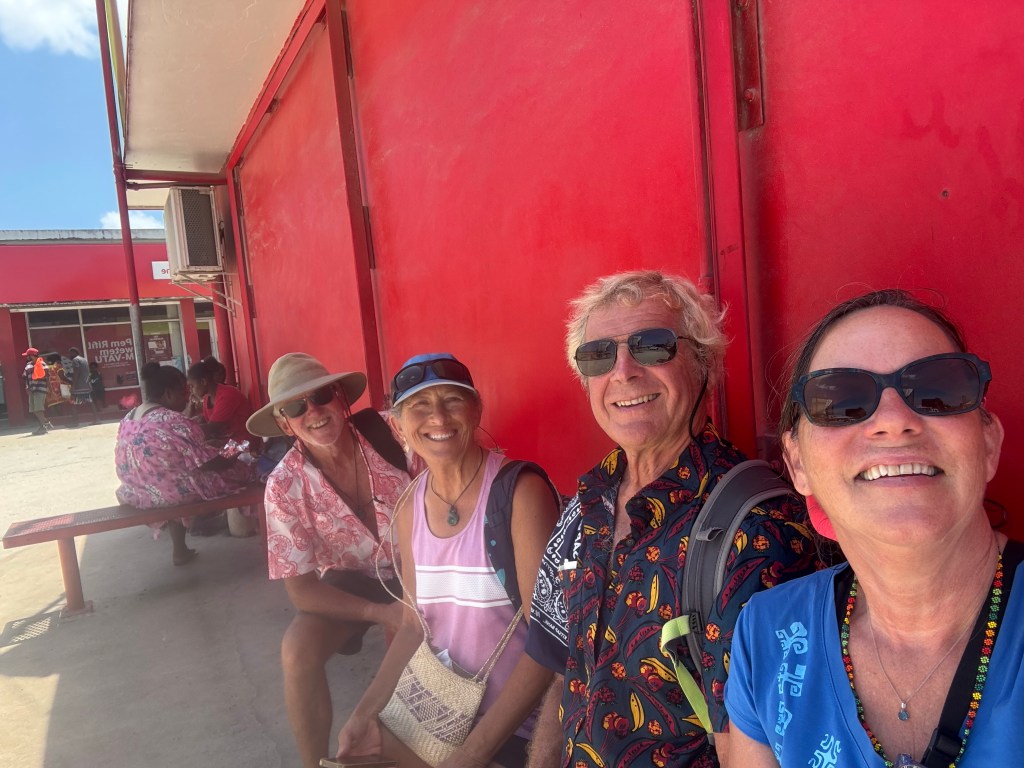
We’d planned to cruise with our friends Robyn and Mark, our dock neighbors in Whangãrei, and we’re excited they’re joining us soon! This is their third time in Vanuatu, and we’re looking forward to continuing to cruise in Vanuatu with them.

 Sailing Tieton
Leave a comment