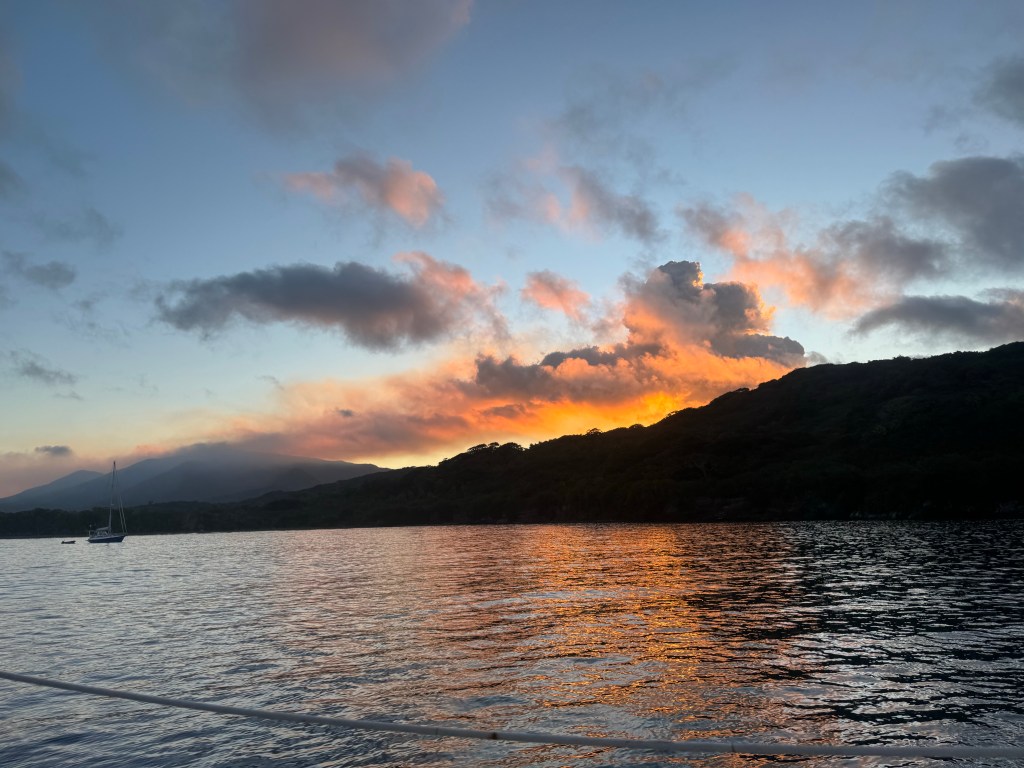
After our challenging trip from New Zealand to Fiji, apprehension surrounded our journey from Vanuatu to New Zealand, which we estimated would take nine days. We departed Vanuatu on October 28 to join the fleets of boats sailing down from Tonga, Fiji and New Caledonia.
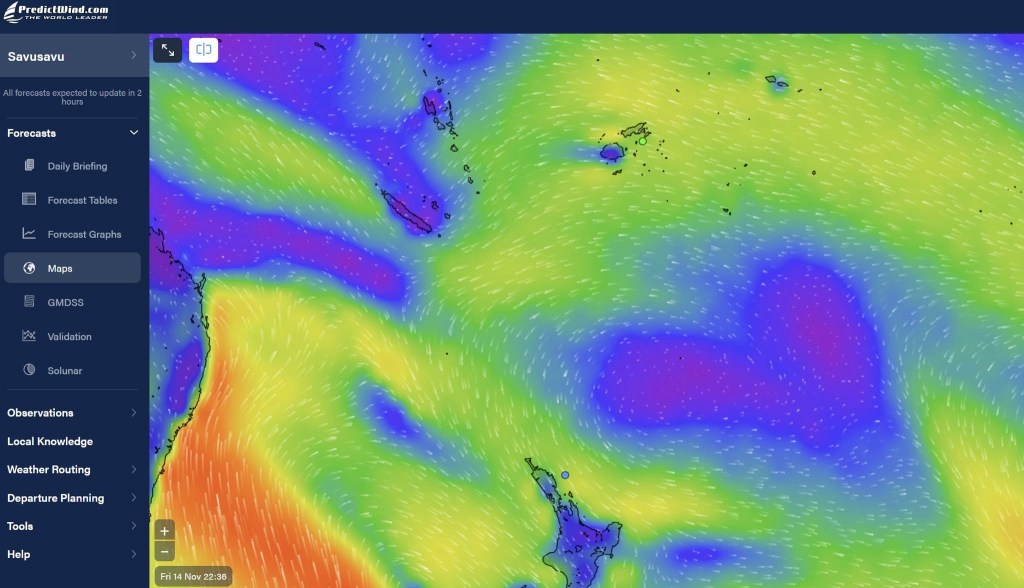
We sailed for four glorious days with smooth seas and the sun at our backs – “champagne sailing”. As we approached 20 degrees latitude, the flying fish disappeared and we pulled out our socks, shoes, and warm clothing. We sailed southeast towards 28S 174E, which put us almost directly north of New Zealand, well positioned to sail due south when a winds from the east arrived. We motored through a low pressure/no wind patch, dreading the arrival of what our coach termed “the wall of doom” – a front that would bring strong unpredictable winds, lightening, and a lot of rain. Harry Potter fans may remember Platform 9 3/4, where Harry slips through a wall to board the train to Hogwarts. We magically slipped through the “wall of doom” with some heavy rains and wind, and no lightening! Whew! We later learned that other boats encountered nasty squalls and lightening around the same area.
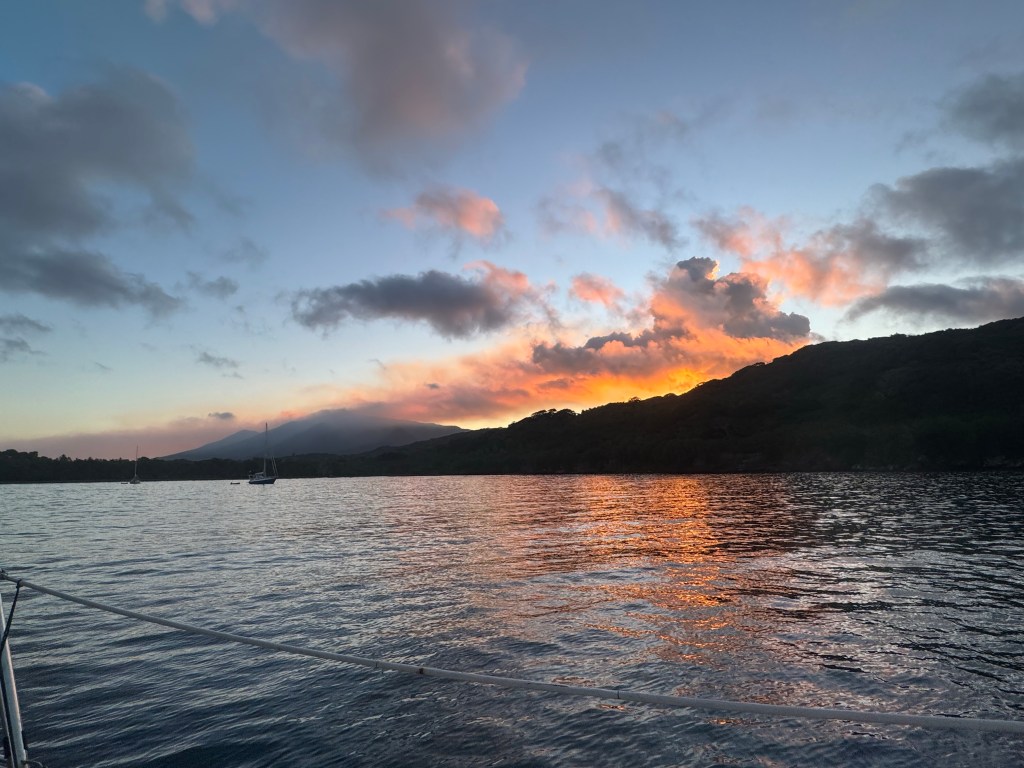
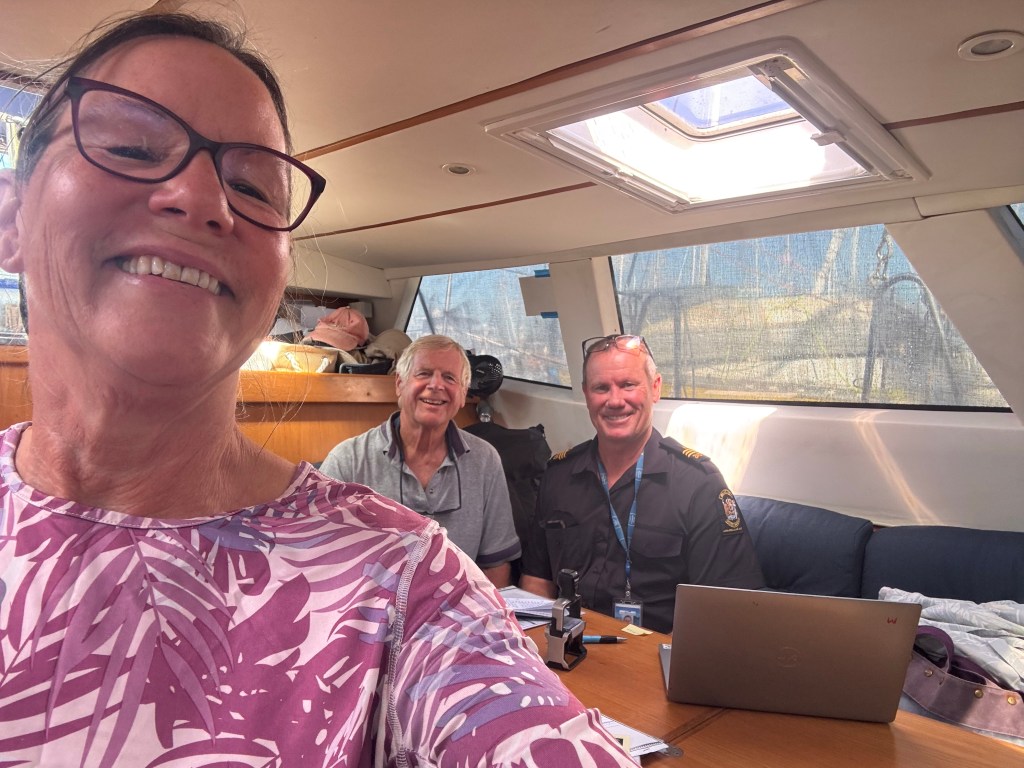
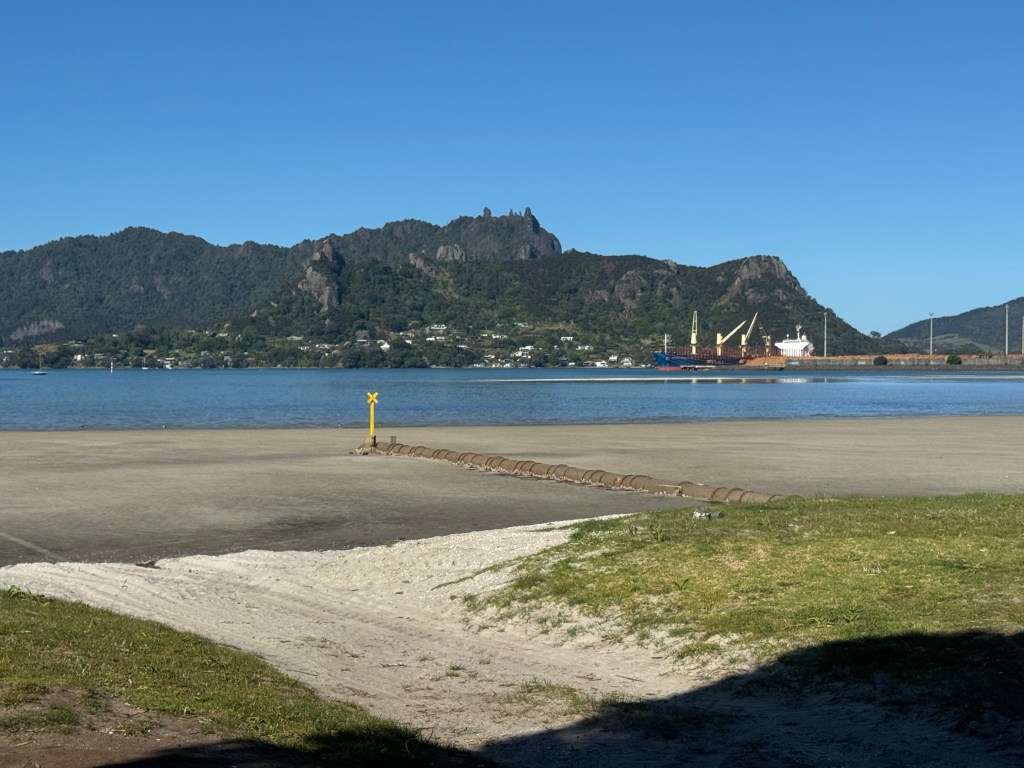
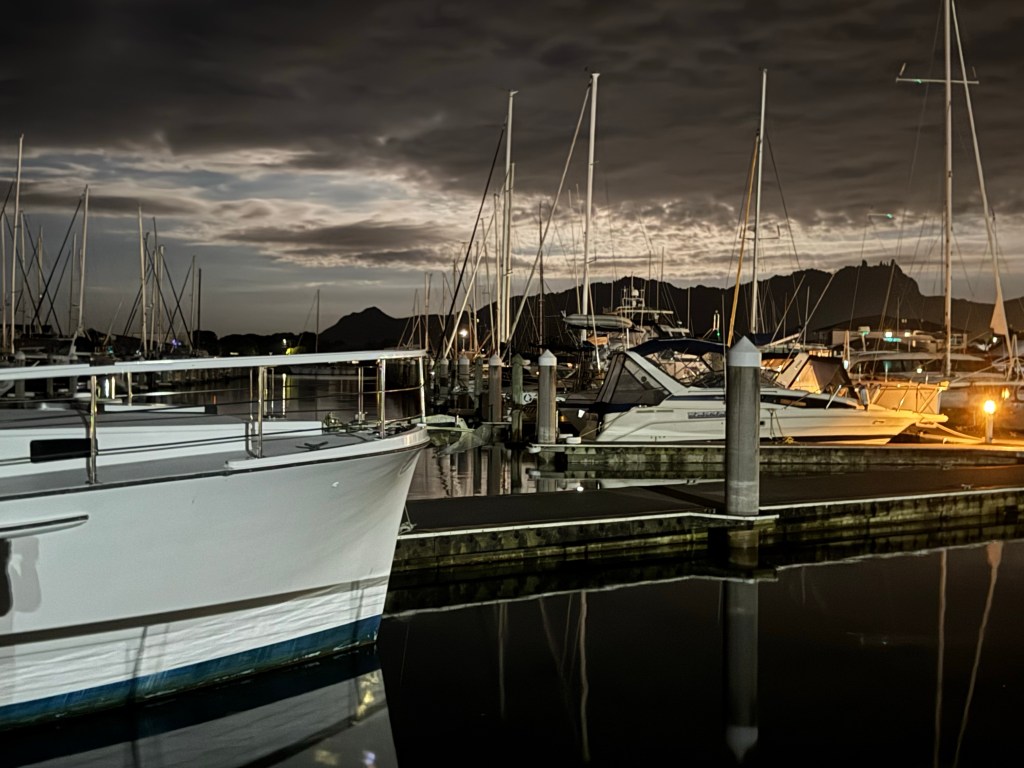
After a bluebird day of sailing, we arrived to the customs dock in Whangãrei, New Zealand the evening of November 4, in what turned out to be a mostly pleasant eight day journey. Cruisers continued to arrive throughout the evening, staying close to their boats because we’re not supposed to interact unnecessarily on the customs dock. We spent the night at the customs dock, setting our alarm so we’d be up and ready for biosecurity, customs and immigration officials early the next day. Similar to last season, the officers appreciated our preparation and respect for their various requirements, and were friendly and welcoming. After another night at the marina, we headed west up the river to our delightful “home” at the Whangãrei Marina.
Injury & New Zealand Healthcare
During our voyage from Vanuatu, as I was going up the companionway stairs, one of the stairs broke away, causing me to smack my shin on the next stair, which resulted in a couple inch gash in my shin. After the pain medication kicked in, Herman cleaned the wound, and he’s still disappointed that I wouldn’t let him stitch it. We bandaged it, and I cleaned it twice daily for the remainder of our voyage, plus started a round of antibiotics.
When we arrived to New Zealand, I went to the urgent care clinic. The nurse examined the wound, and told me that the doctor would need to see me in order to prescribe antibiotics and a treatment plan. This first visit took about three hours. The visit cost NZ$30 (US$17), and antibiotics including a replacement dose for our first aid kit cost NZ$106 (US$60).
For the next several weeks, I had scheduled appointments to have the wound cleaned until it was healing nicely and the infection cleared. My maximum wait was 15 minutes at most. Because the injury was caused by an accident, the remainder of the treatment cost me nothing!
Although my experience was great, the New Zealand healthcare system is under tremendous stress with a huge shortage of healthcare personnel. For elective surgeries like knee or hip replacements, people with only the state insurance can wait years in debilitating pain until they finally have surgery. The wait is much shorter for those who pay for the premium insurance.
Chinese Fishing Fleets
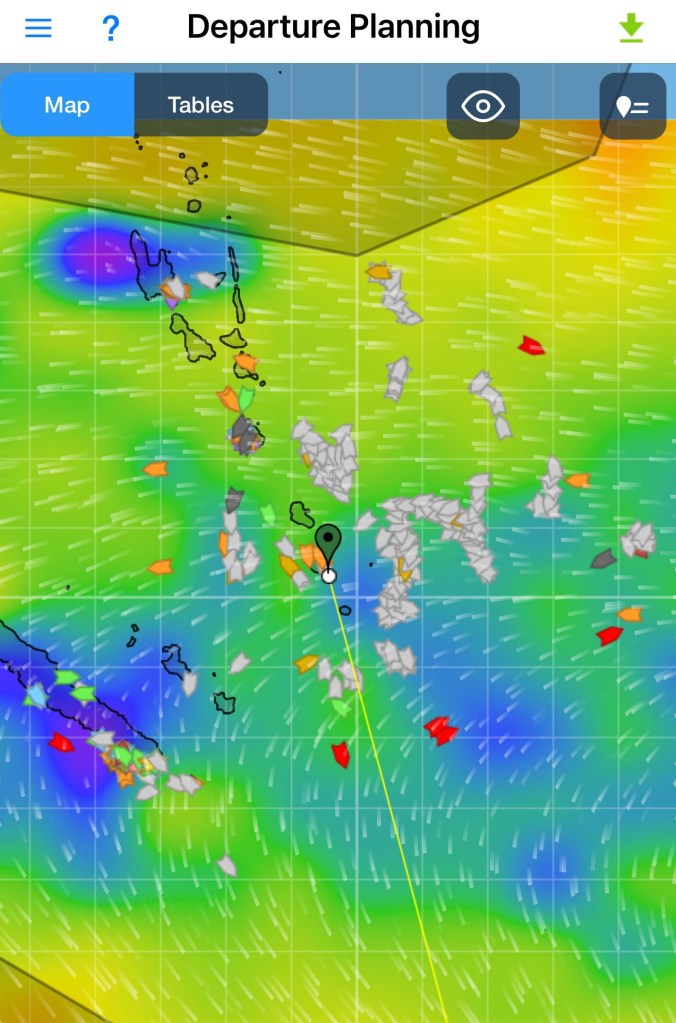
It is depressing to see the devastation of over-fishing by the Chinese fleets, although others are doing the same. Some methods are particularly disturbing. Fish Accumulation Devices (FAD) are basically subsurface nets that capture and contain the fish until the processing boat arrives. Computers within the net relay information regarding the level of the catch. Long-line fishing stretching lines over miles and fish just hang on the lines until they’re dragged in.
Although for the most part we actually see very few boats on long passages, the enormous fleets are visible on the applications we use for weather and navigation. The gray “boats” on this screenshot are FADs or fishing boats.
Reflections on Season Two
After experiencing a tough trip from New Zealand to Fiji, we were grateful to wrap up the season with a nice passage. We loved both Fiji and Vanuatu, and plan to return next season to explore different locations.
By the numbers:
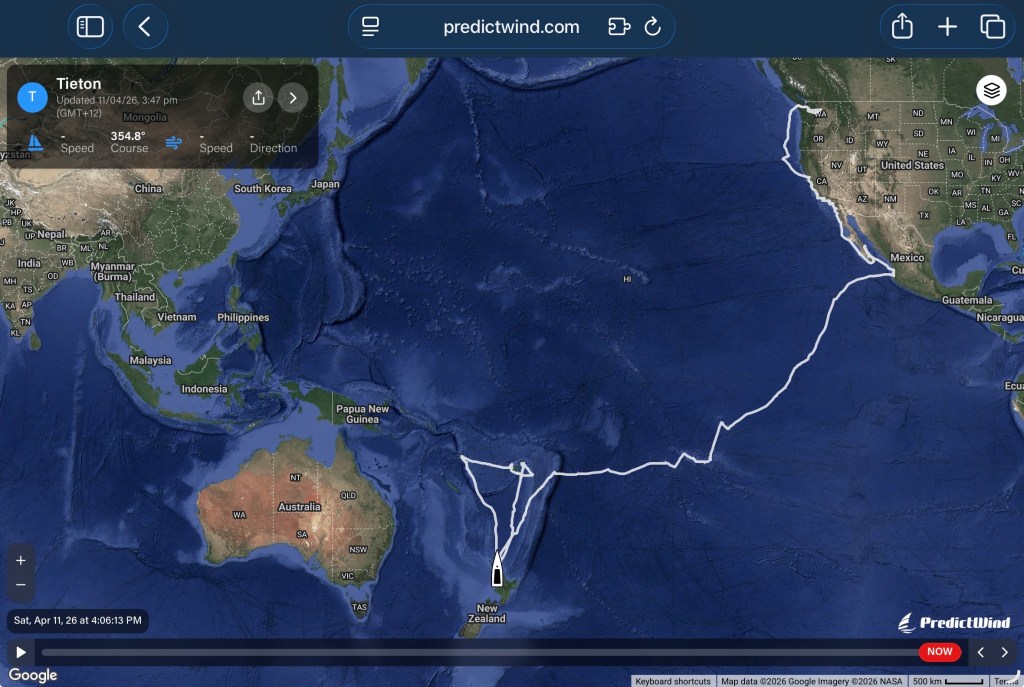
- Nautical miles travelled this season 4,937 for a total of 15,100
- Nights on passage: 24
- Nights at anchor: 82
- Nights at marina: 37
- Nights on mooring buoy: 6
- Routes planned and taken 41
Each day, we pause to appreciate the incredible journey we’re having, and our gratitude for the health and resources to be on such an adventure.
What’s Next
As we write this, it is April 11 and Cyclone Vaianu is arriving to New Zealand. We’re tucked into our lovely marina miles from the coastline and will wait out the wind and rain. After our busy time with chores, socializing and travel, we’re looking forward to a couple of days of things like blogging and reading. Expect a blog catchup to follow!
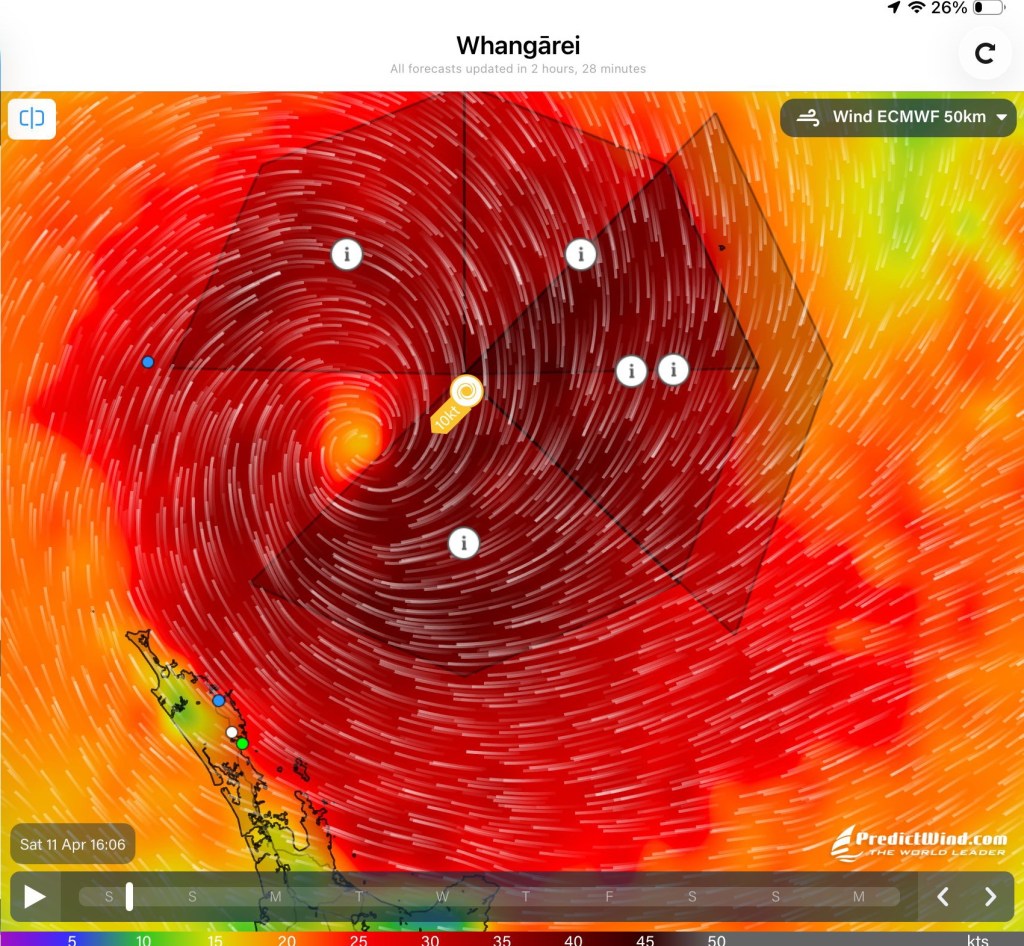
Dark Red = 45 Knots
i’s are Gale Force Warnings
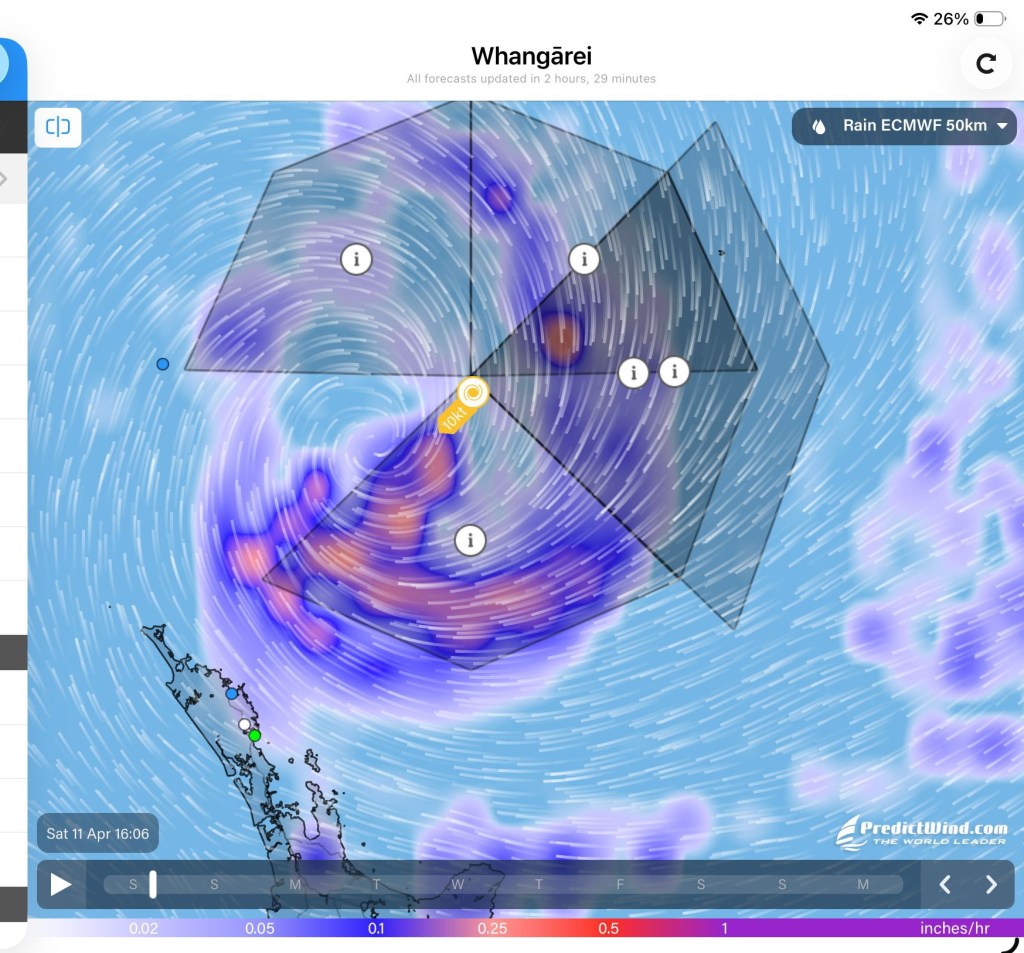
Orange = 1/4” or 6.3 mm per hour
 Sailing Tieton
Leave a comment