Some might ask, why did they go due west from Mexico, rather than just making a beeline for French Polynesia (FP)? The answer my friends, is weather. Our strategy was developed with help from our coaches Jamie & Behan Gifford from Sailing Totem, Mike at PV Sailing, and many other FP crossers. It is broken into four segments: 1) getting to the trade winds, 2) trade winds, 3) equator crossing 4) homestretch. Each segment has unique weather issues.
Getting to trade winds
In the spring, a high pressure system develops off the coast of California, which influences airflow from Alaska to close to equator. Nice winds for sailing occur outside this high pressure system, but if one goes too far outside, the wind subsides.
We motored almost due west from under the southern tip of the Baja, which has somewhat poor winds and waves coming from the Sea of Cortez at the north, around the tip of Baja from the northwest, and the Pacific Ocean to the west. Some say this segment is like a washing machine, and we agree. 48 hours into our journey, we put up our sails and turned southwest towards Clarion Island, which is a waypoint used to catch those wonderful trade winds. Clarion is occupied by the Mexican Navy and is the last landfall before FP. Some sailors anchor there to rest, repair, or rejuvenate, although the Navy doesn’t allow anyone to come ashore. 600 NM down, 2200 to go.


Trade winds
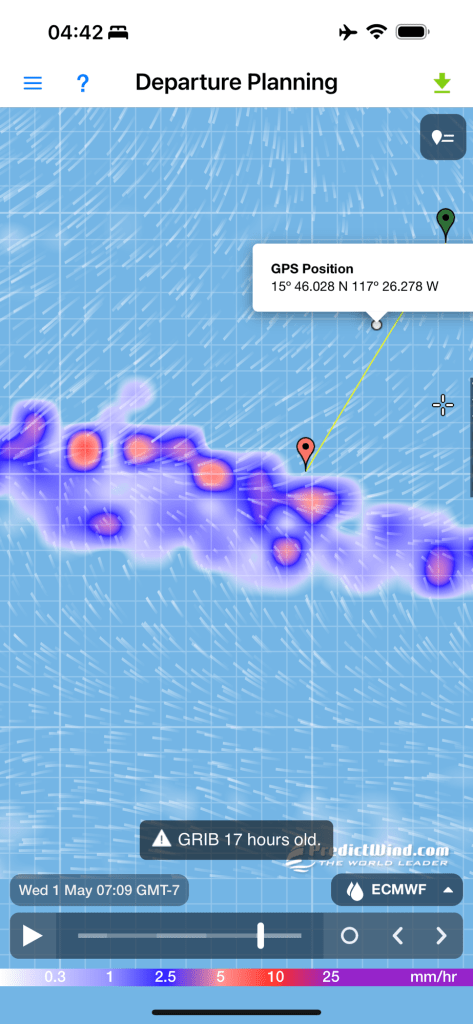
This phase involves sailing southwest towards and through “Jamie’s Box” (our coaches designated area) which will set us up to cross the equator. The good news about trade winds is that they’re strong (reddish on map) and going in the right direction.
Crossing the Equator
The Intertropical Convergence Zone (ITCZ) is where the trade winds of the northern and southern hemispheres meet. This is the area where many an ancient mariner got caught in the doldrums and struggled to hold onto their sanity. Squalls develop their own little weather systems. Sailing/motoring through this area will involve a lot of reefing and unreefing sails due to the squalls. Reefing a sail reduces the sail area, which is desirable because otherwise the boat will be tossed around too much, risking damage to the boat, sails and crew. Of course, when we’re not in squalls, the wind will be light so we’ll want the sails up as quickly as possible.
Our strategy for this segment is to find a section that’s seen less squall activity. We will motor/motor sail to get through it as quickly as possible.
Home Stretch
After getting through the ITCZ we should be in a position to set our sails and head to Hiva Oa in the Marquesas.
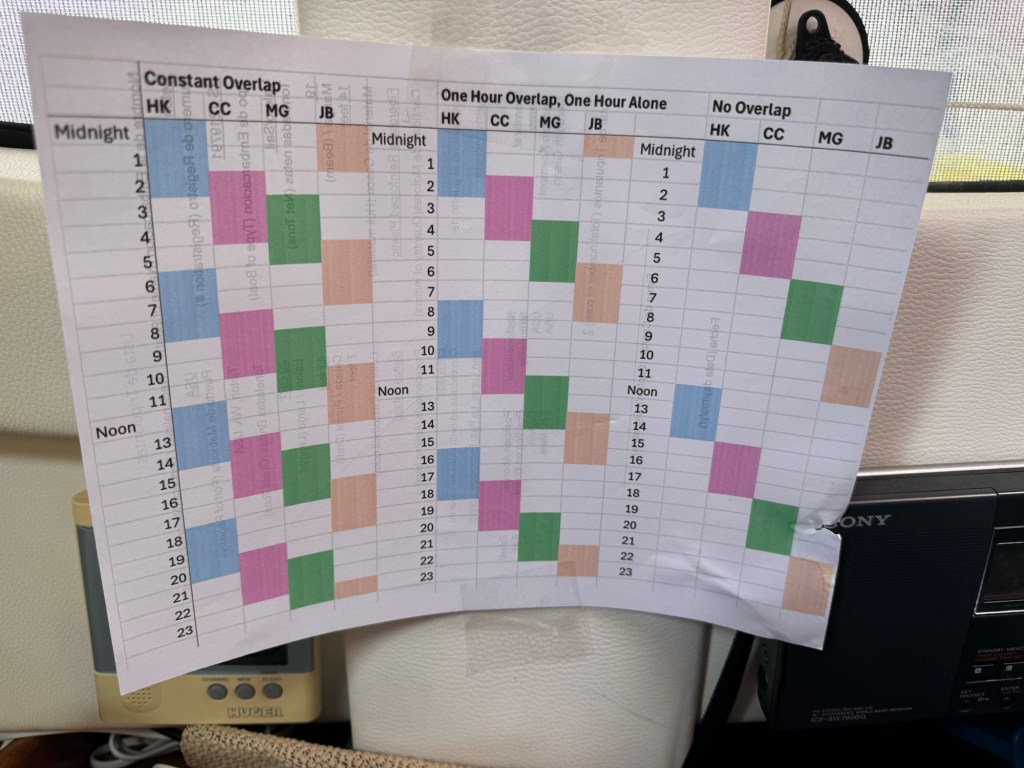
So far, we’ve been blessed with a fairly uneventful sail, with wind and sea-state much like we’d anticipated. We started with three hour overlapping watches so that we always had two people on deck, which can be grueling because everyone is sleeping less than three hours at a time. As Chris and Jean became more comfortable, we transitioned to a rotating three hour watch schedule with a solo hour in the middle. This is more sustainable because now we have five hour sleep breaks. We may move to a no overlap schedule in calm situations, or return to two-on-deck when we’re in the ITCZ.
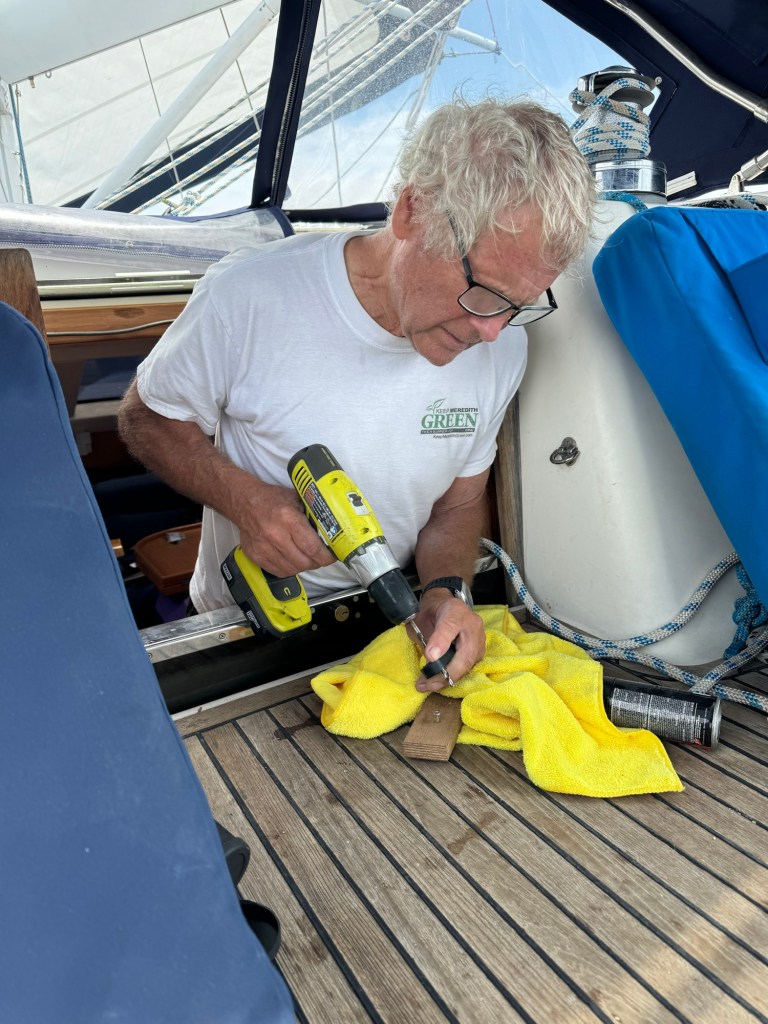
Director of Public Works Herman (AKA Captain) has been working with the portable generator to understand how quickly it charges the batteries, plus monitoring our use of energy. Our fifth crew member Otto (autopilot, get it?) is a bit of a power hog, so we started hand steering some to reduce our autopilot use. Herman is also installing additional flexible solar panels to increase our production.
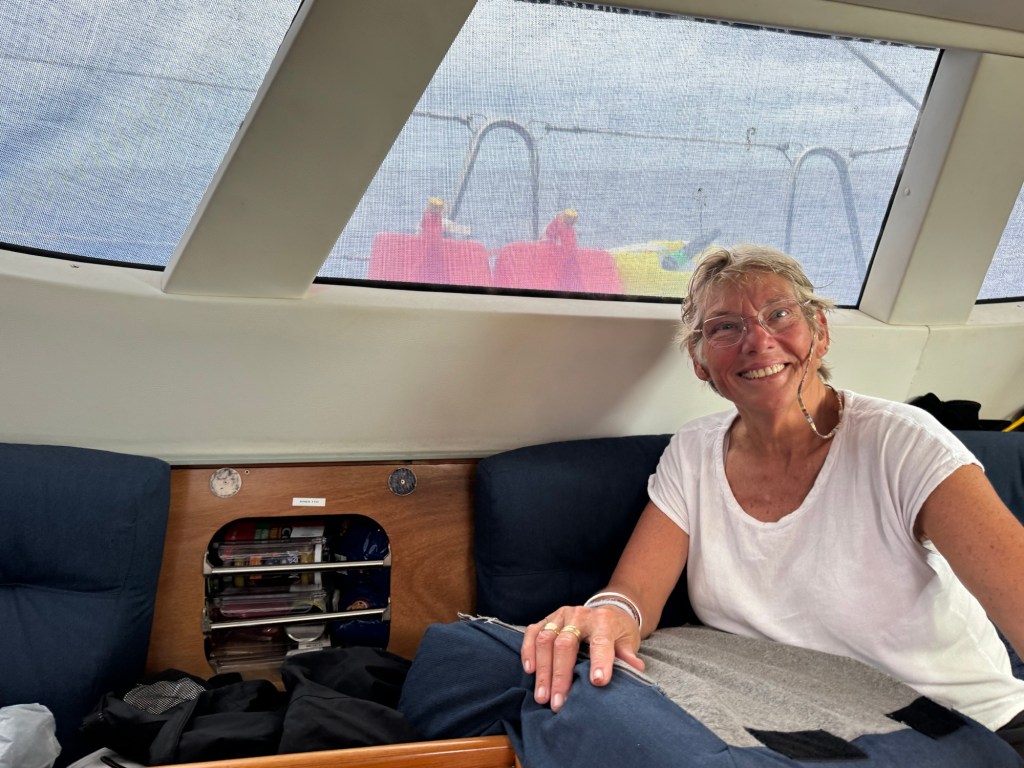
Today is our eighth day at sea and we’ve barely made a dent in our provisions. The first few days, we ate mostly meals I’d frozen when we were in LaCruz. Now that we have a little room in the freezer, we’ll start throwing out a line and hopefully catch a fish to eat. We will soon transition to dried fruits and vegetable to supplement the remaining fresh supplies we have. The Boat Galley cookbook is a great resource for learning some tricks like thermos cooking yogurt/beans/rice and storing fruits and vegetables without refrigeration.
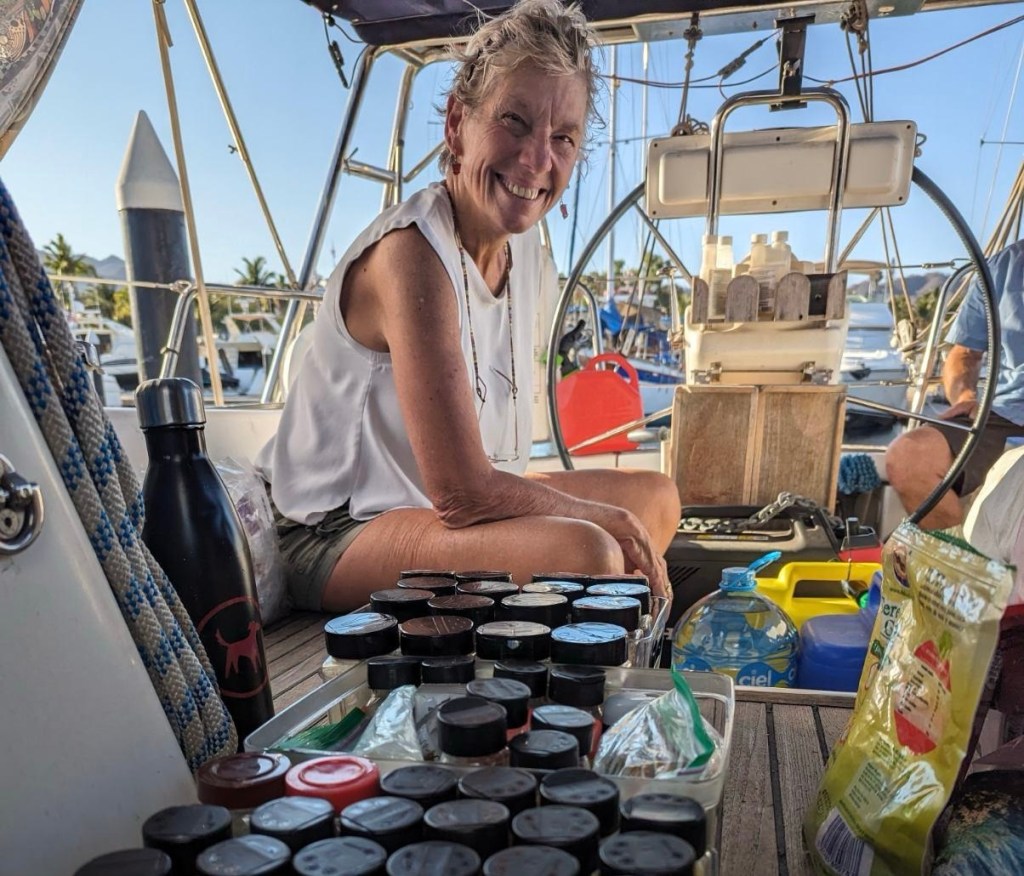
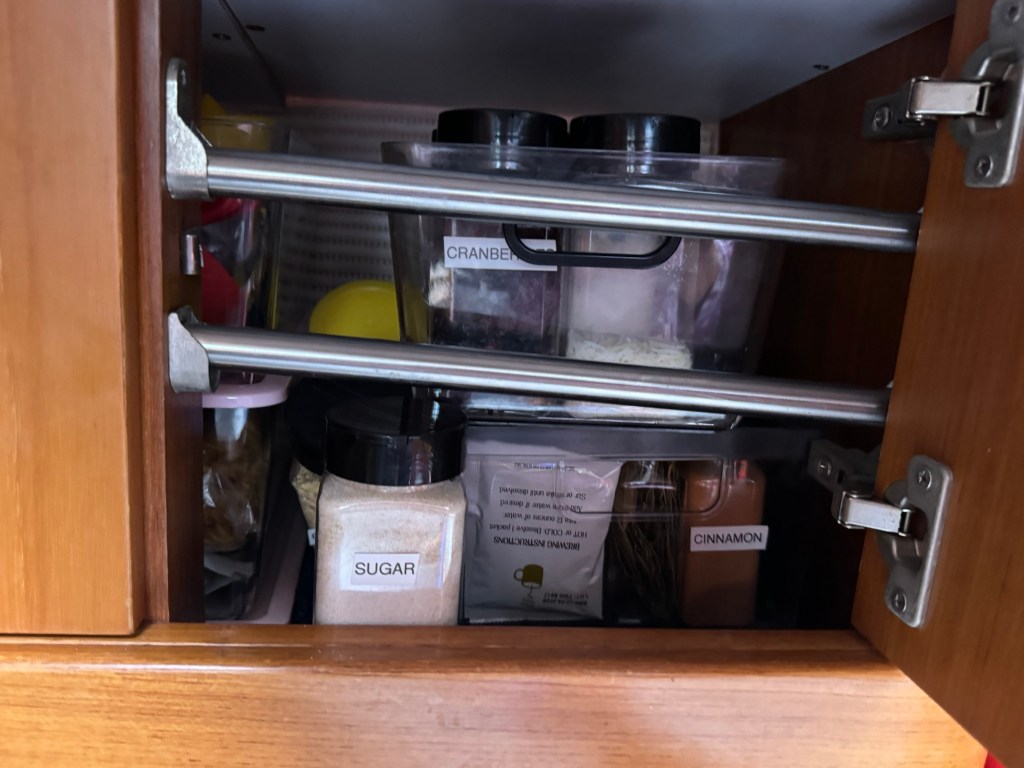
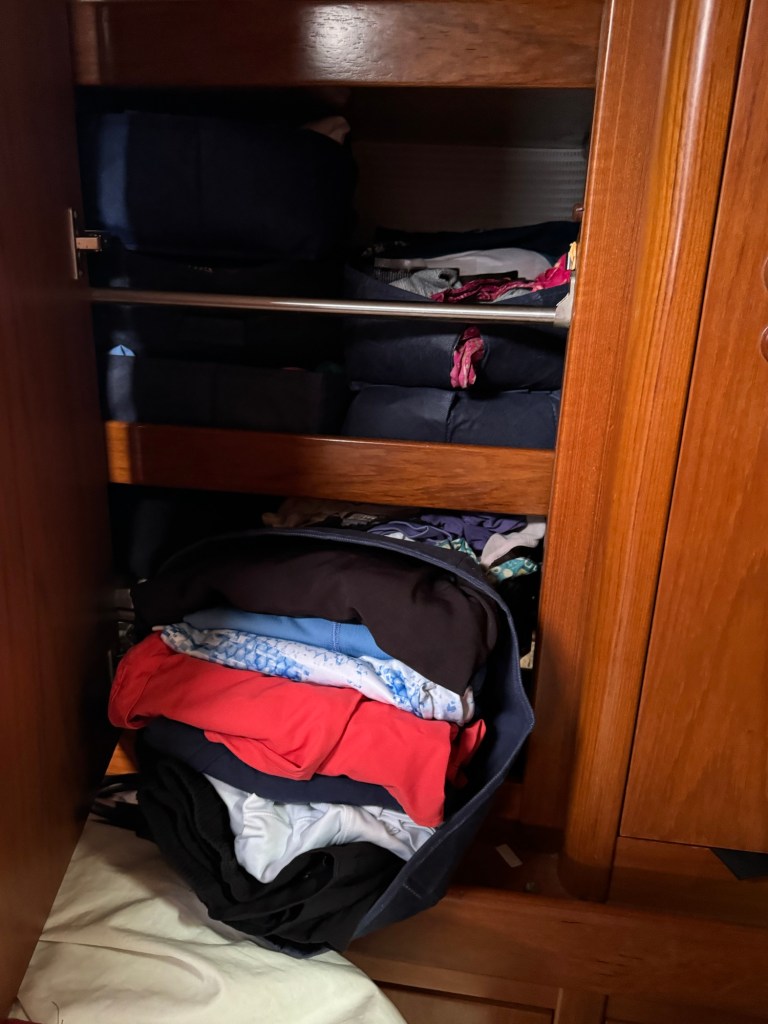
While we’re on provisioning, Organizer Extraordinaire Cheryl Harris deserves a huge thanks. Before we left Poulsbo, Cheryl volunteered to help me organize Tieton. As obvious as it seems, she encouraged me to consider whether something is used daily, frequently, or infrequently and store them accordingly. She also suggested storing similar things together in containers with square corners. Our clothes are also stored in containers and folded in a “library” fashion. These techniques make a HUGE difference, especially in a small space. We diligently worked to convert our bar to square-corned bottles too. The importance of labeling became clear when we had not so tasty lemon drops made with white vinegar instead of orange liqueur. .

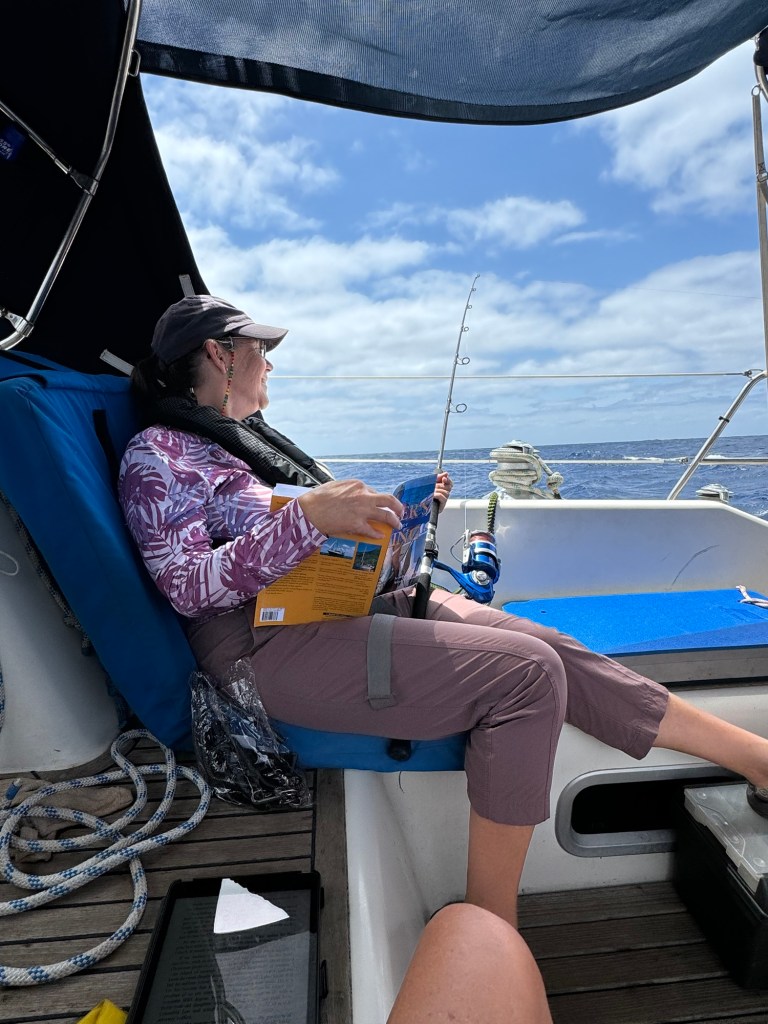
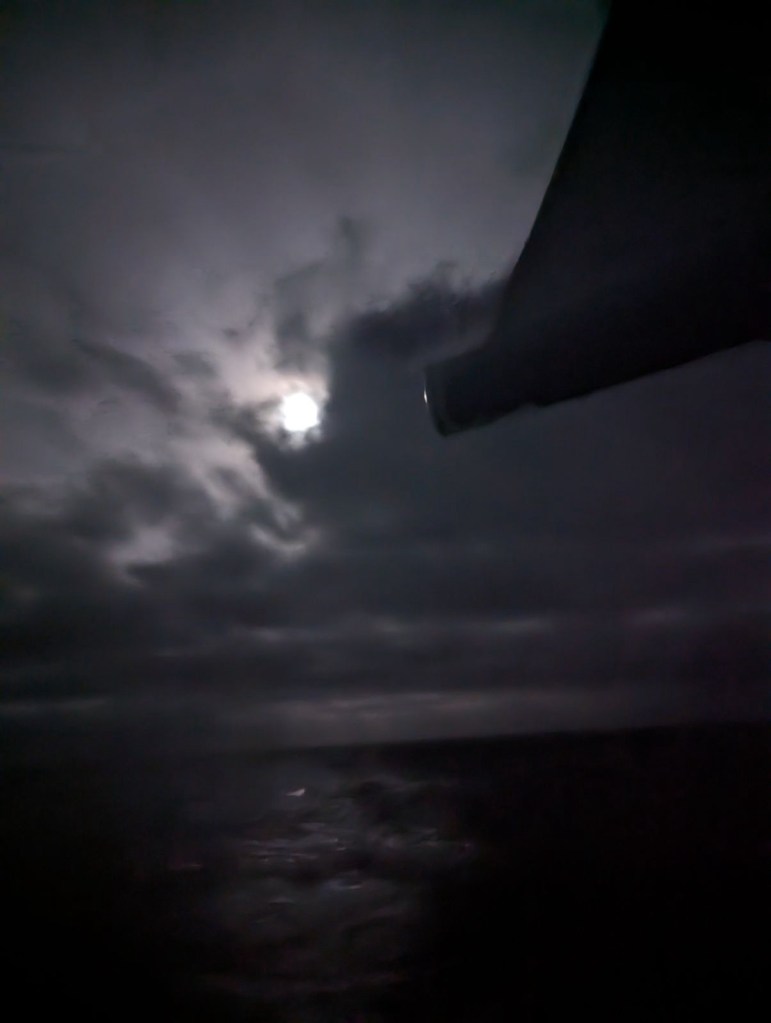
Back to fishing…. I finally threw out a line and I’m reading “Fishing For Cruisers” to learn more techniques. I didn’t have any luck with the pole, BUT… I was on watch working on my iPad on a cloudy pitch black night when my back was thumped. I felt the chair cushion behind me and much to my surprise found a squirming fish. My scream woke Jean and Chris, then quickly changed to laughter. What are the odds that a flying fish would hit me in the middle of the night? After letting the fish struggle briefly for a photo shoot, it was reunited with the ocean. The next day I found an appetizer sized fish, but alas no takers.


We’re at least two weeks from the Marquesas and holding up well. This truly is an amazing trip of a lifetime.
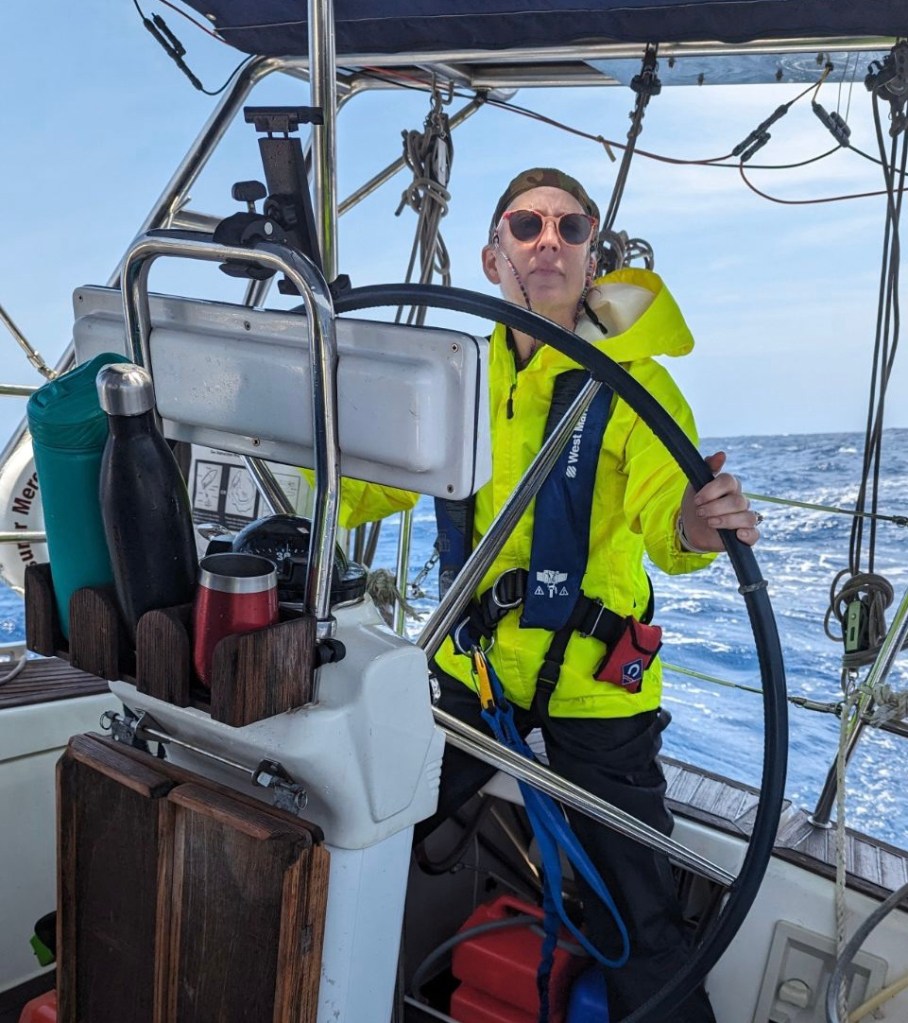
New Grundens
(Poulsbo Company)

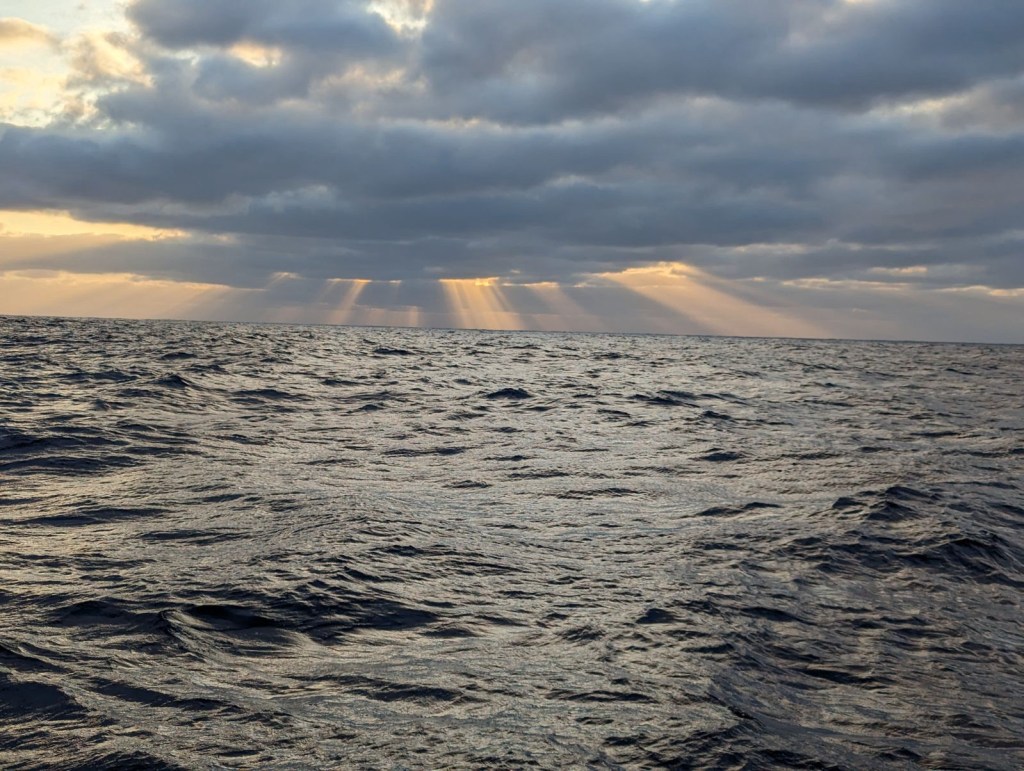
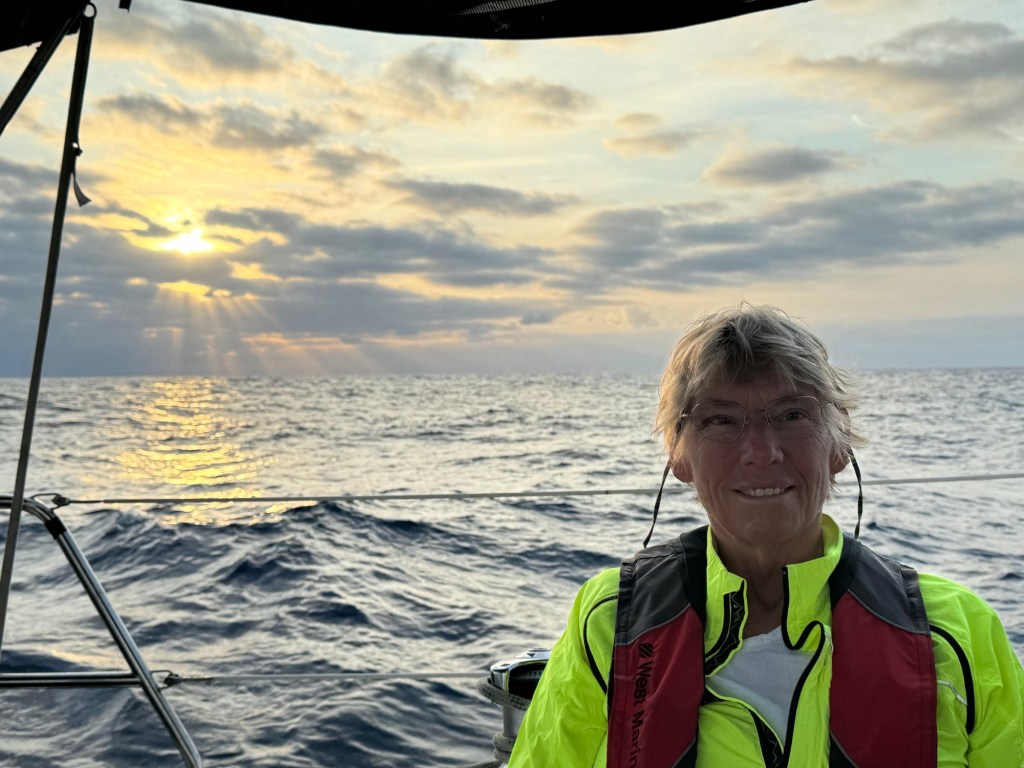


 Sailing Tieton
Leave a reply to fredsaas Cancel reply