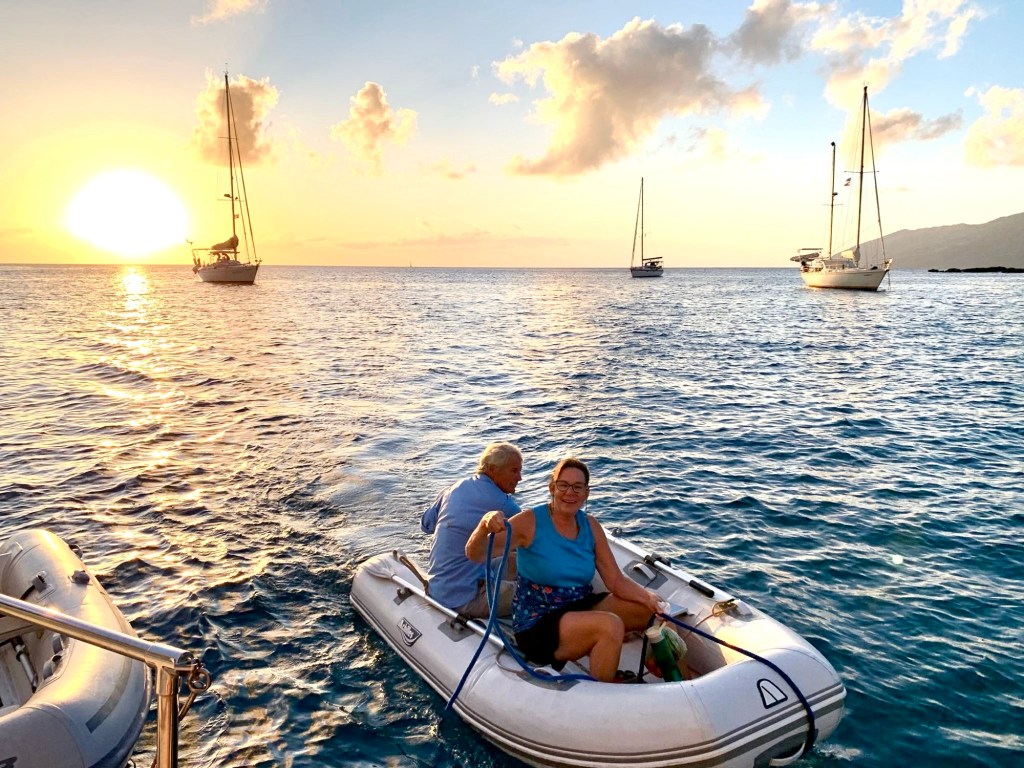
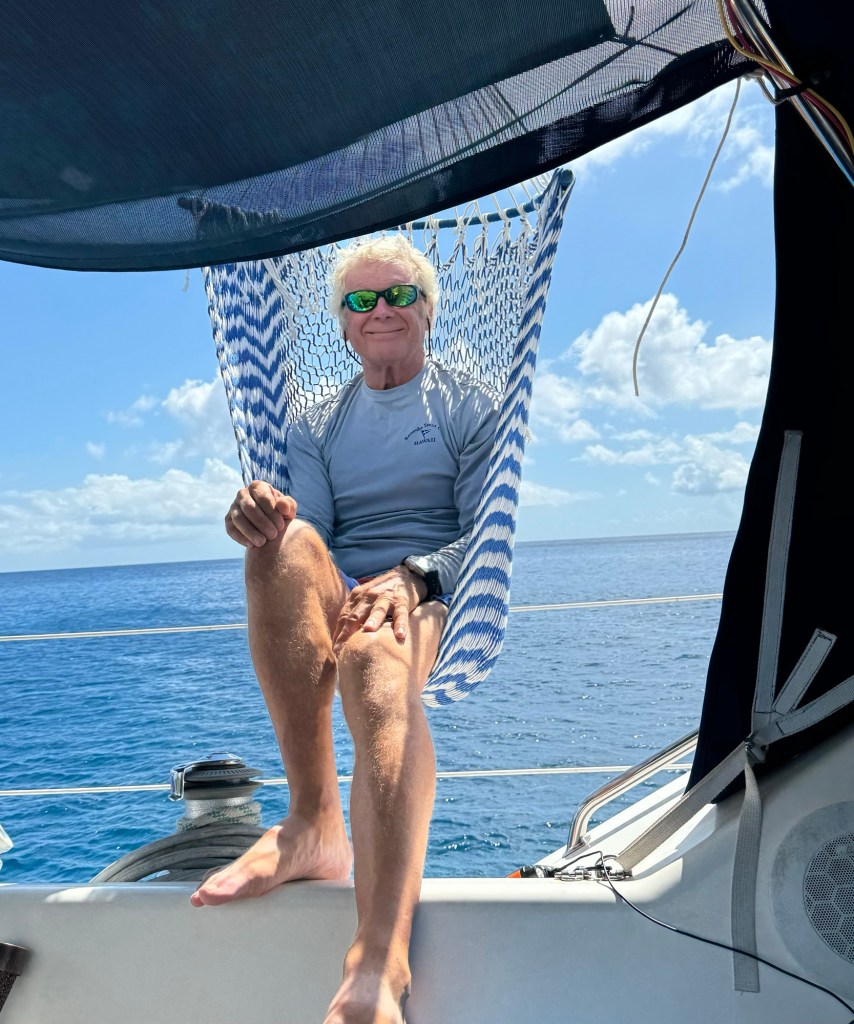
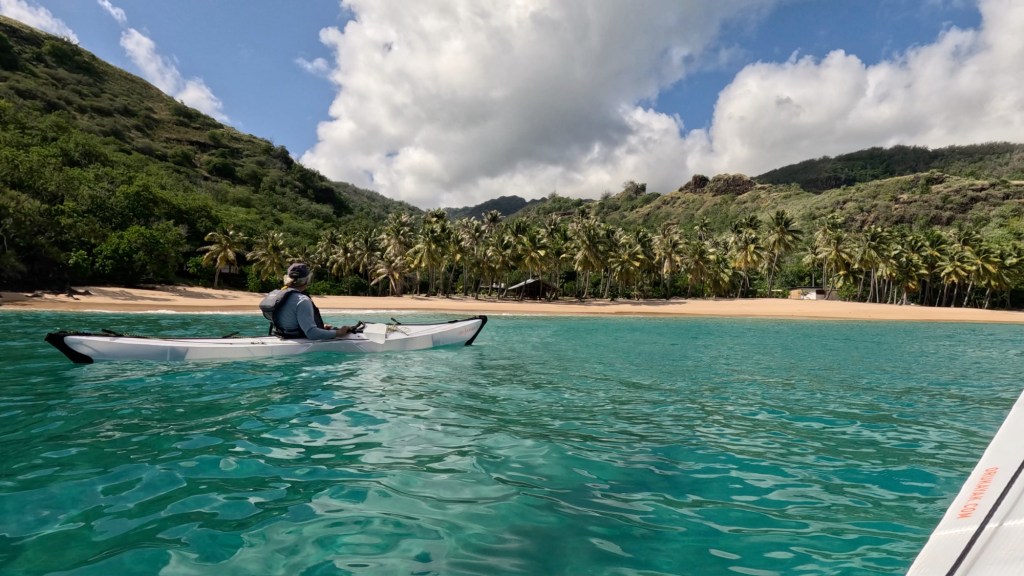
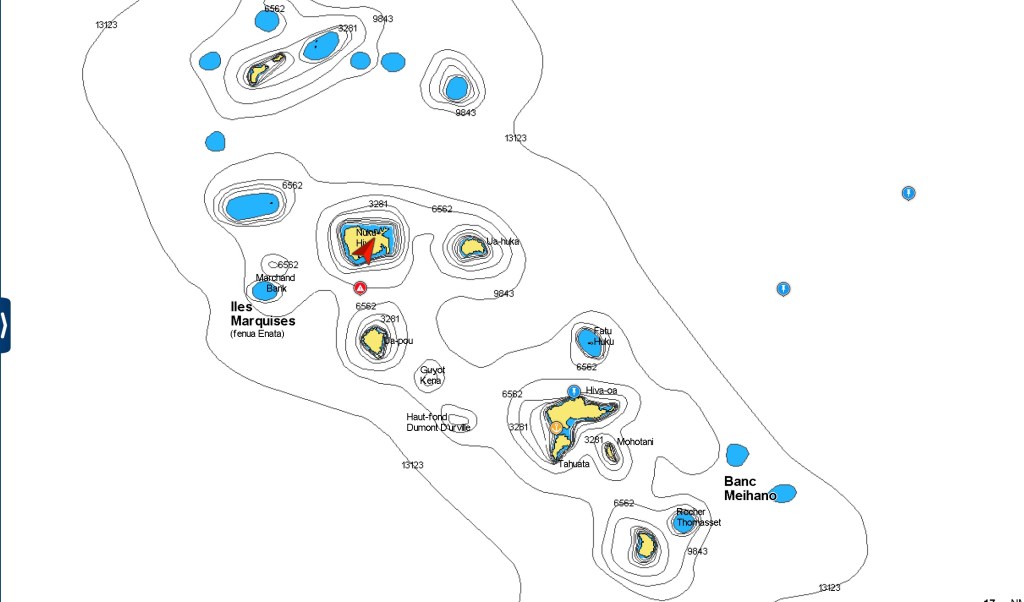
Oh my gosh, this is a gorgeous place and we’re loving it! After a week in the harbor at Hiva Oa, we headed 7 miles south to Tahuata. Here’s a banner day… We were sipping our morning coffee when a school of flying fish started traversing behind the boat. Soon a few birds started following the fish and one bird caught a fish mid-air. After another traverse by the fish, a bill fish jumped, which explained why the fish were flying. So cool! We followed breakfast with a kayak around Hanamoenoa Bay on Tahuata.
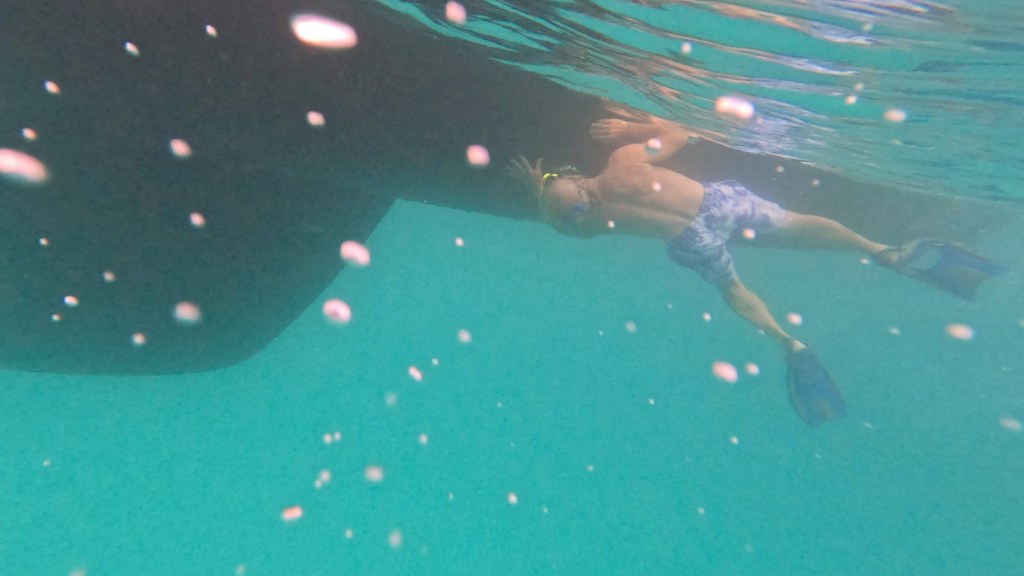
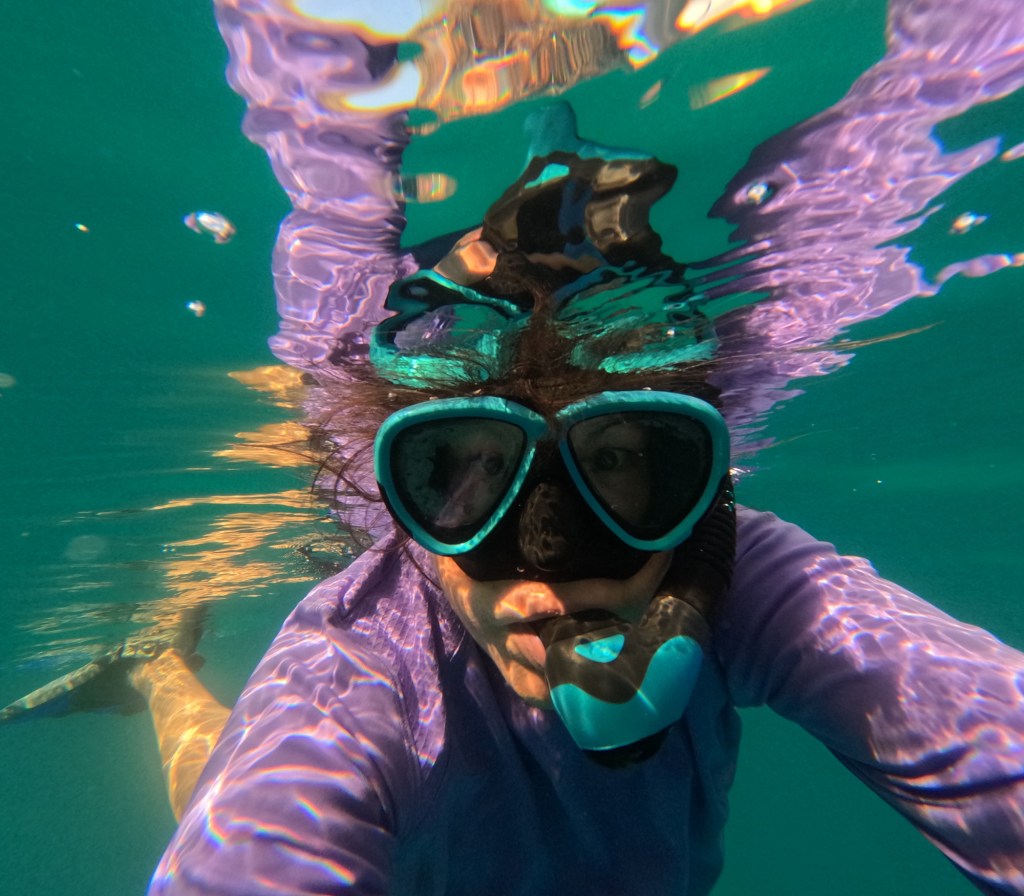
Later that afternoon, I swam around the bay using a snorkel, mask and fins. I don’t call it snorkeling, because I kept a cardio-invigorating pace, while still enjoying the view of the fish swimming below. And then I saw a turtle! Just in case you’re wondering, turtles swim faster than you think they would given their small flippers. I swam above the turtle for a few minutes, then it turned and quickly outstripped me.
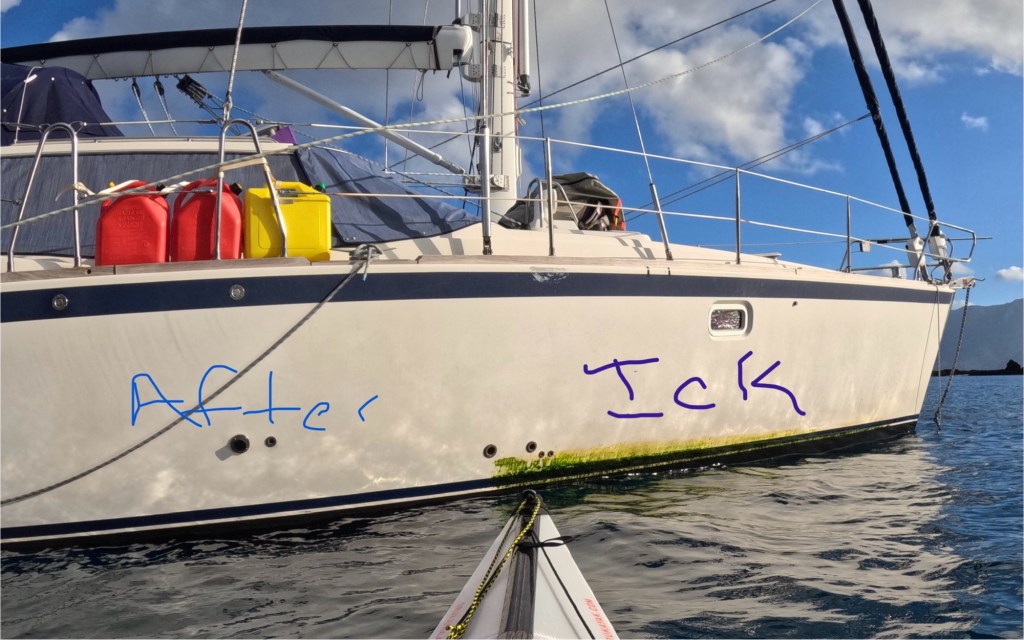
Lest it seems all fun, Herman scrubbed the waterline of the boat, which was covered with gunk from LaCruz, our crossing and Hiva Oa. We also figured out one of the problems with the freezer was that both the intake and exhaust hose were completely plugged with mussels and other sea life. I tried to figure out the GoPro while defrosting the fridge.
The day wrapped up with a potluck on SV Dakota (Dave And Karen On Their Adventure).
Reprovisioning
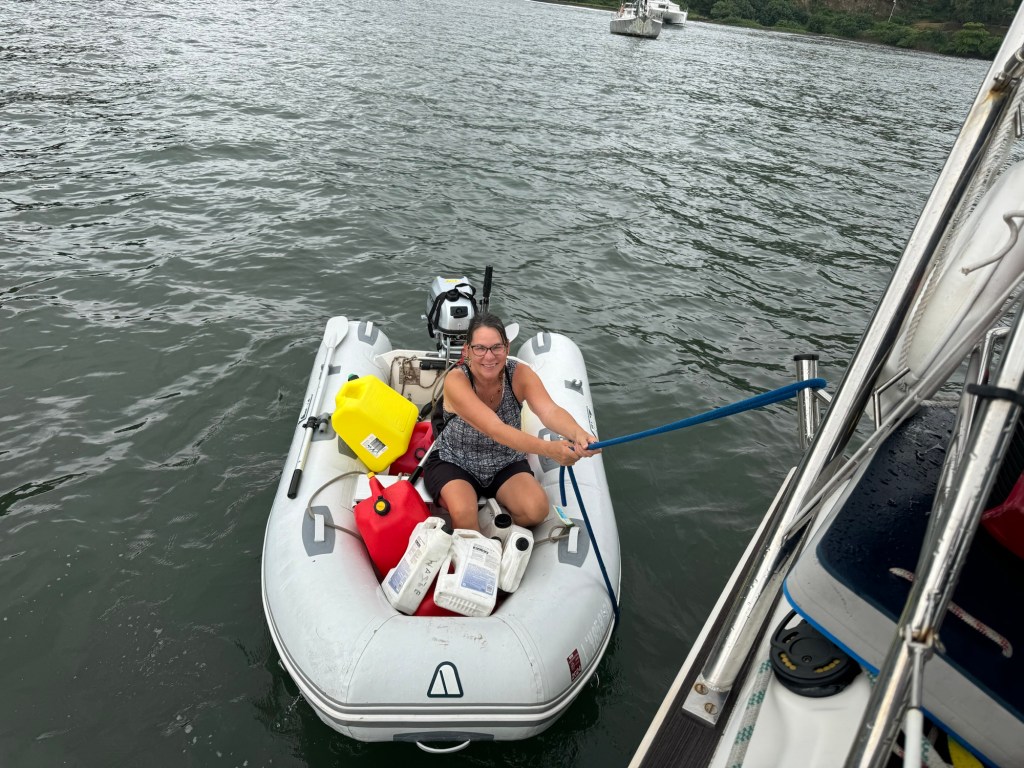
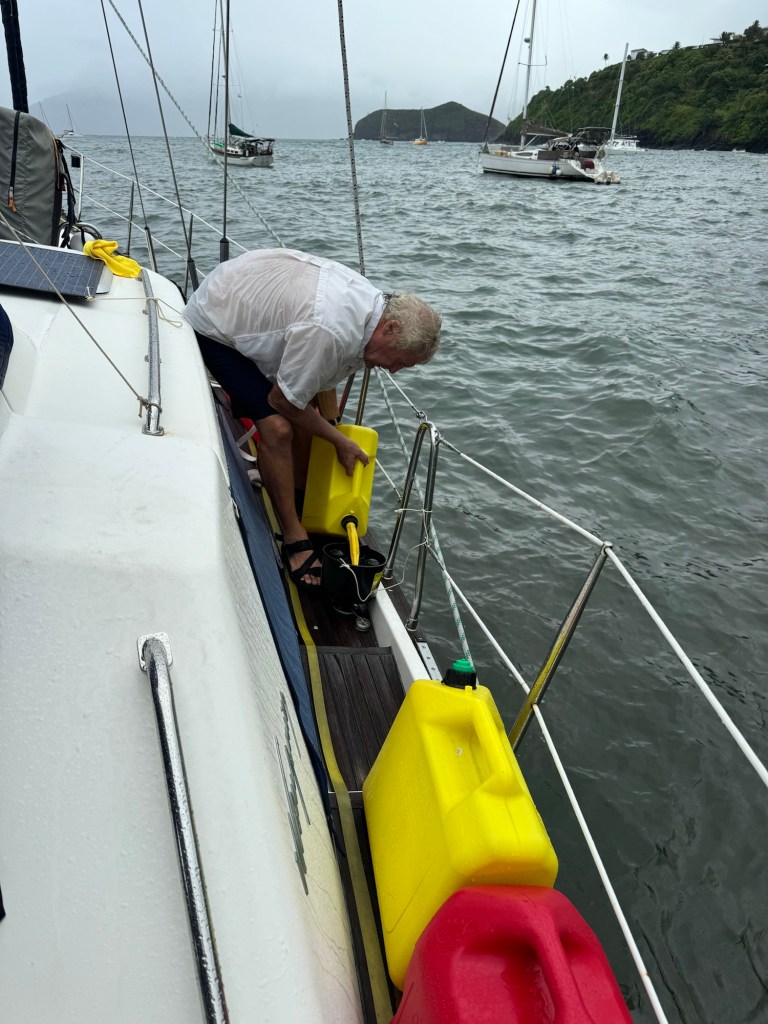
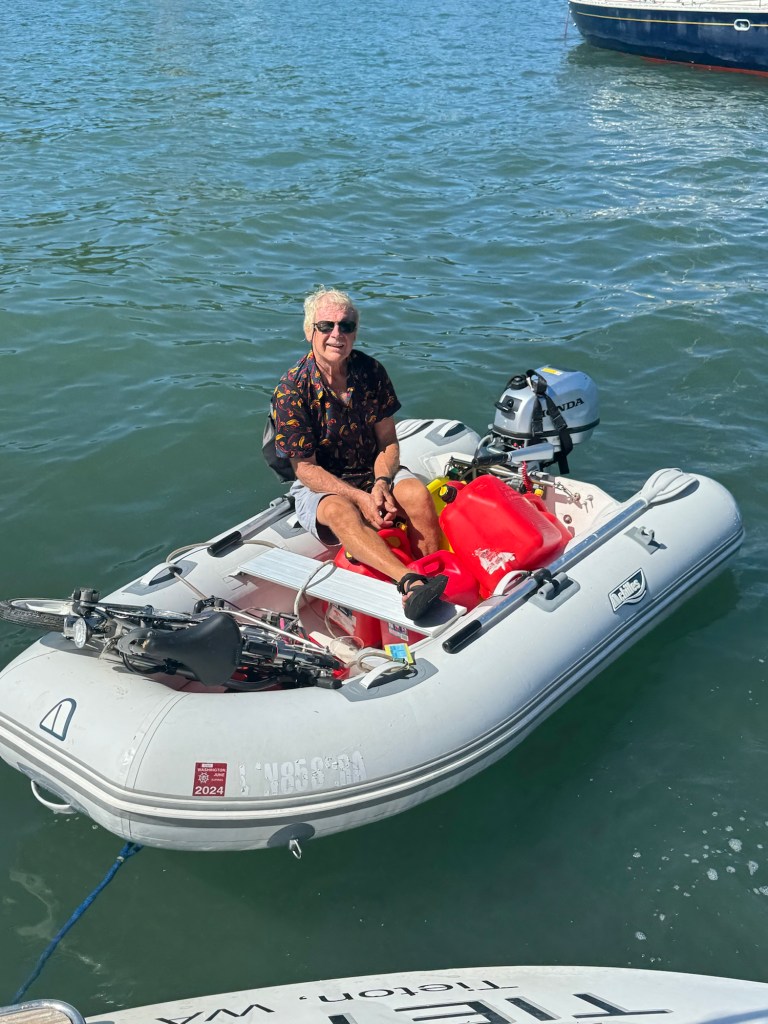
Fresh fruits and vegetables, diesel and gas were our reprovisioning priorities. We arrived to Hiva Oa on Friday, which preceded the three day Pentecost holiday weekend, so the gas station and government offices were closed until Tuesday. On Wednesday, we received our visitors’ diesel fuel tax exemption, which saves about a third of the cost of diesel. Then the fun began… the gas station is about a block from the dock, which meant we loaded our six five-gallon containers into the dinghy, motored to the dock, walked to the station, filled the jugs, lugged the full containers back to the dock, transferred the containers to the dinghy, returned to the boat, lifted the full containers onto the deck, then poured the fuel into the tanks. This harbor has the well-deserved reputation for being rolly, so that added more effort. It took FOUR trips to fill our tanks, plus another for gas for the generator, which took us into Thursday since the gas station (the only one on the island) closes at 3 PM. On one trip, when we moved the dinghy to retrieve the containers, three beefy Marquesas natives brought our containers to us, with nice smiles on their faces 🙂
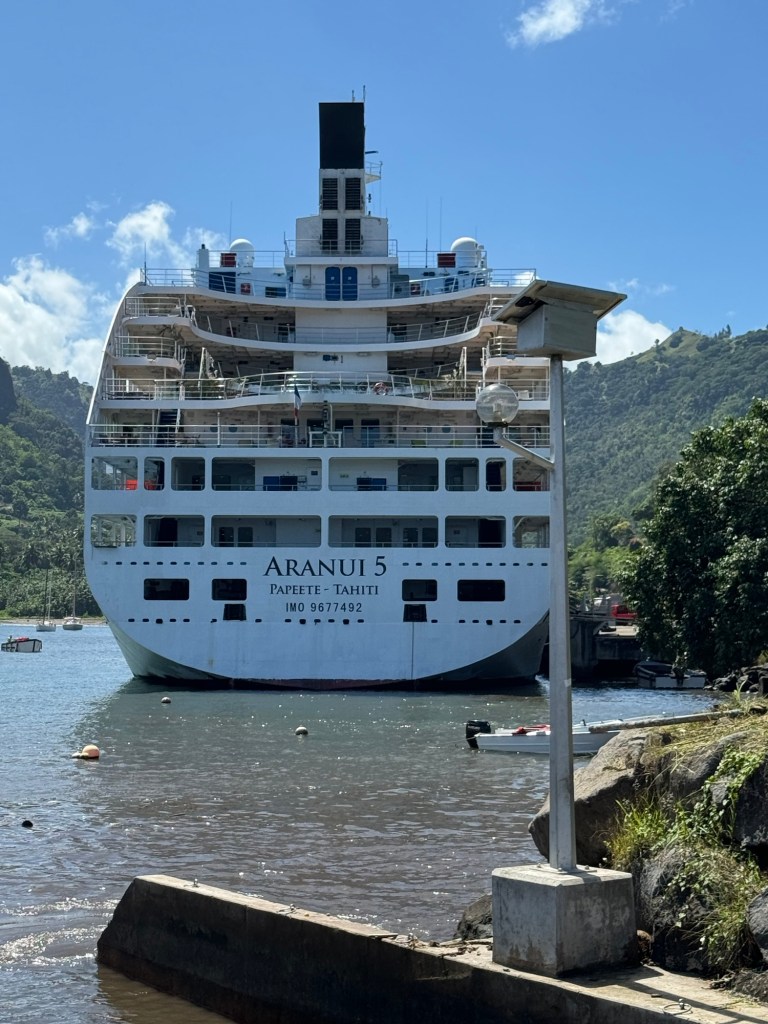
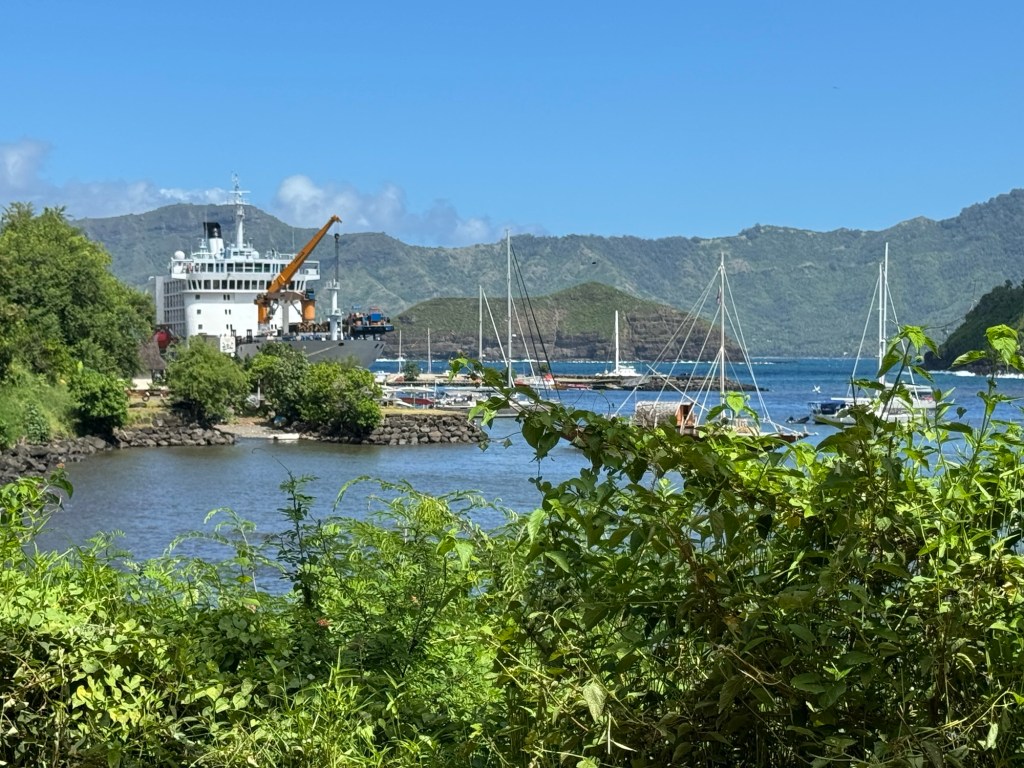
Grocery shopping was another adventure, especially since we’re now speaking (or not) in French. Thank goodness for “the cruisers’ shopping list”, Google translate, friendly people and sign language. The small grocery stores in the three-block town of Atuona receive most product via supply ships every couple of weeks. The cruise/freighter ship Arunai 5 might be a fun way to see this part of the world! It was amazing to see the ship pull into the relatively small harbor and dock.
Warm baguettes, delicious pastries cooked by locals, and limited local produce are daily. Some fresh cheeses, lunch meats, and produce arrive via the daily flight from Tahiti. Fresh eggs arrive at 11 AM daily and they’re gone by 11:15. We finally got eggs on the fourth try. Many of the staples are government subsidized, so a can of vegetables cost less than a dollar, and a package of crackers about a dollar. The fresh produce and product that arrive by airplane are comparatively expensive, and foreign liquor and tobacco cost dearly. By noon when the stores close for a 2.5 hour lunch, many of the fresh supplies have been depleted, and before the supply ship arrives, the shelves can be fairly bare of some of the staples.
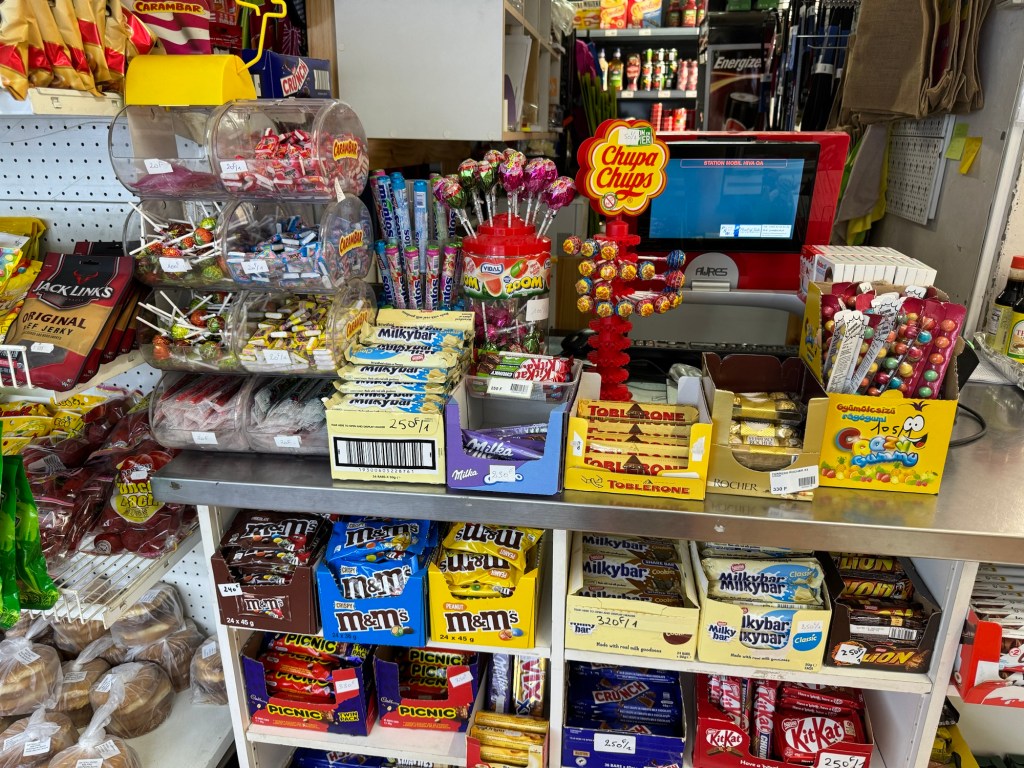
The dockside gas station store reminded me of the stores that still exist in some areas of rural America, down to the penny candy (now less than two cents), including Bazooka bubblegum. I laughed when the clerk handed a young boy a ketchup bottle to keep his hands busy while his mom finished paying for groceries. His excitement and grin when his mom bought some gum was universal.
Marquesas
The Marquesas Islands were “discovered” by Europeans in the late 1500’s and became a French protectorate in the 1840’s via treaty. The deep bays and tall mountains reflect the volcanic eruptions that formed them. The rich soils, rain and humidity result in a luscious and diverse landscape, especially on the windward side that receives the bulk of the rain. The valleys in the rain shadows are somewhat barren.
Temperatures this time of year average 80-85 with a slight cooling at night. The sea temperature is in the 70’s, which is refreshing yet comfortable for lengthy snorkeling expeditions without wetsuits. Most days, we have at least sprinkles, and some days we get a nice boat-cleaning downpour.
The time zone is GMT -9.5, which means that we’re 2.5 hours behind the west coast. Speaking of time zones, before we left Mexico, we decided that “boat time” was PDT, so we didn’t need to worry about time changes throughout our trip. as we approached land, we fell back 2.5 hours to “dock time” so we matched our destination.
Marquesas recently applied for UNESCO heritage site status to recognize the rich archeological treasures throughout the islands. The missionary influence continues in that most holidays are religious based.
Paul Gaugin & Jacques Berl
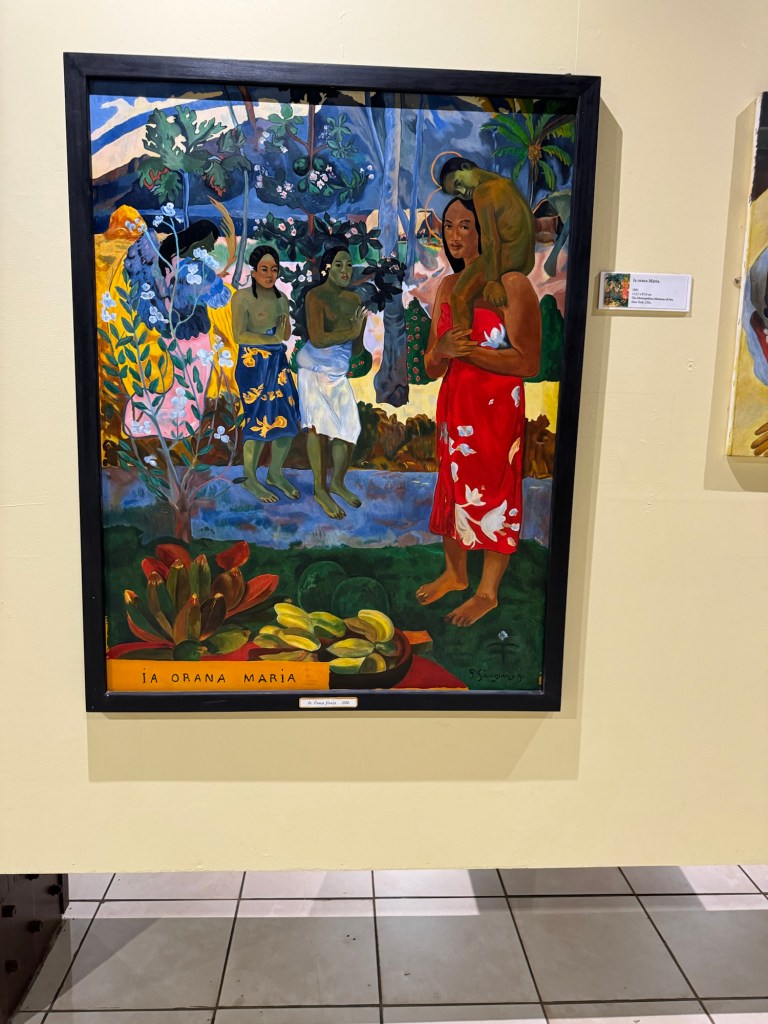
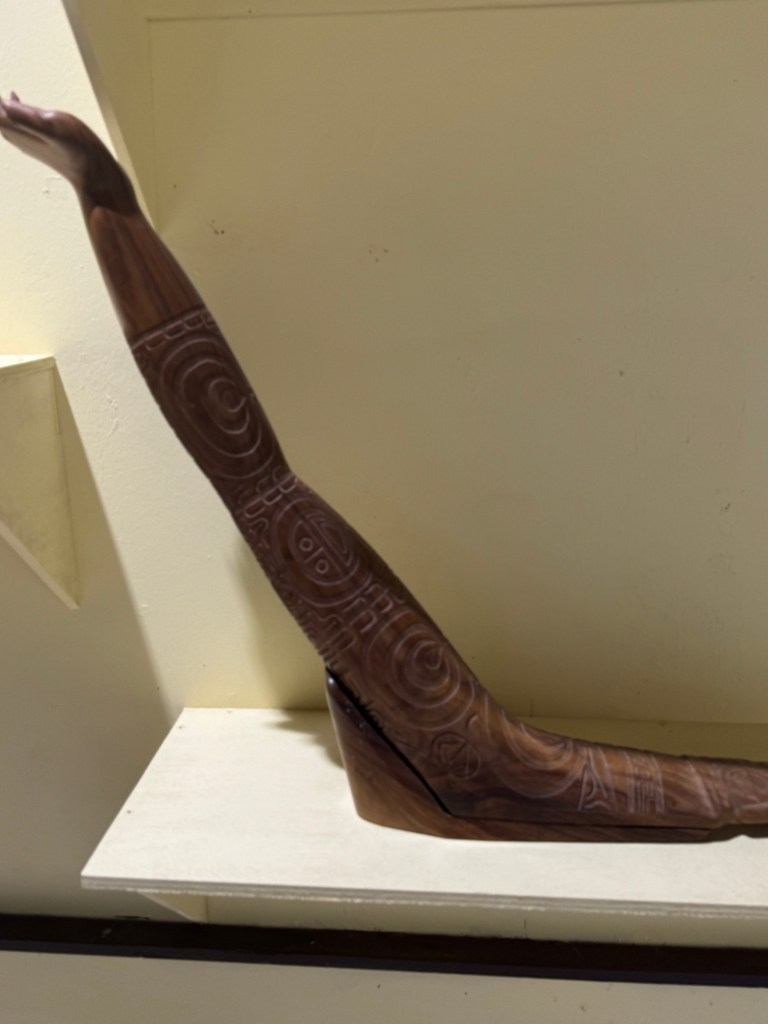
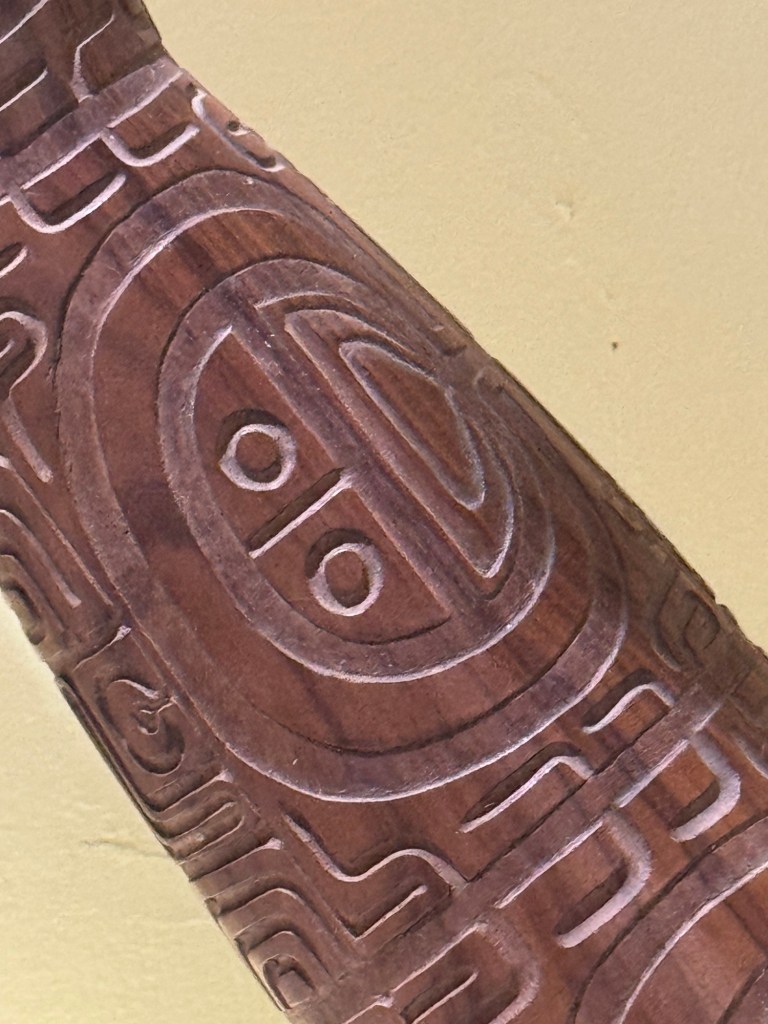
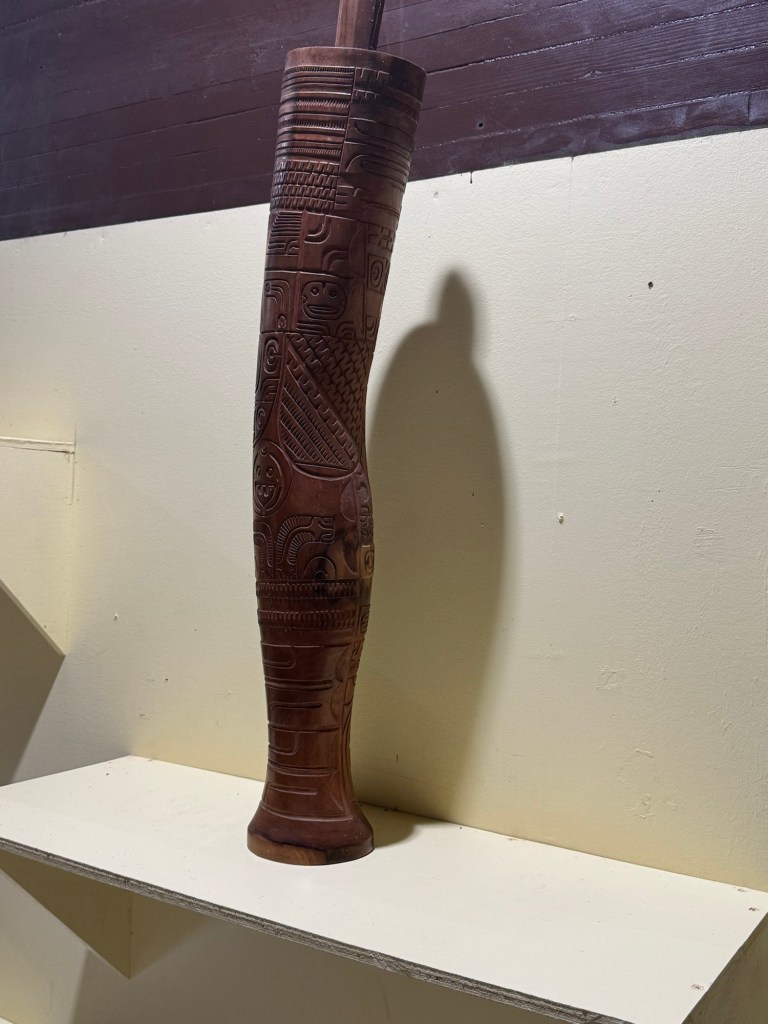
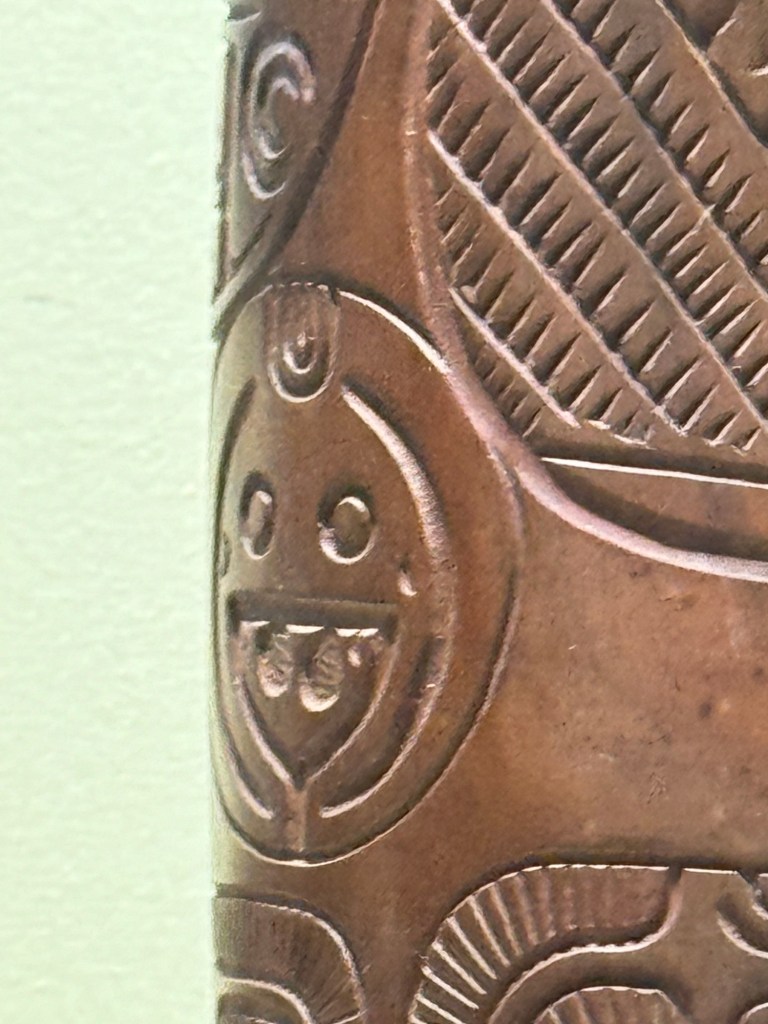
Artist Paul Gaugin and singer Jacques Beryl loved the Marquesas and spent their last years on Hiva Oa, where they’re also buried. The Gaugin museum in Atuona had replicas of his masterpieces that referenced the premier museums which display the originals. Herman and I pretty much had the place to ourselves.
Gaugin wasn’t widely appreciated until decades after his death in 1903. His painting and other art forms were just astoundingly beautiful and intricate.
Hiva Oa & Tikis
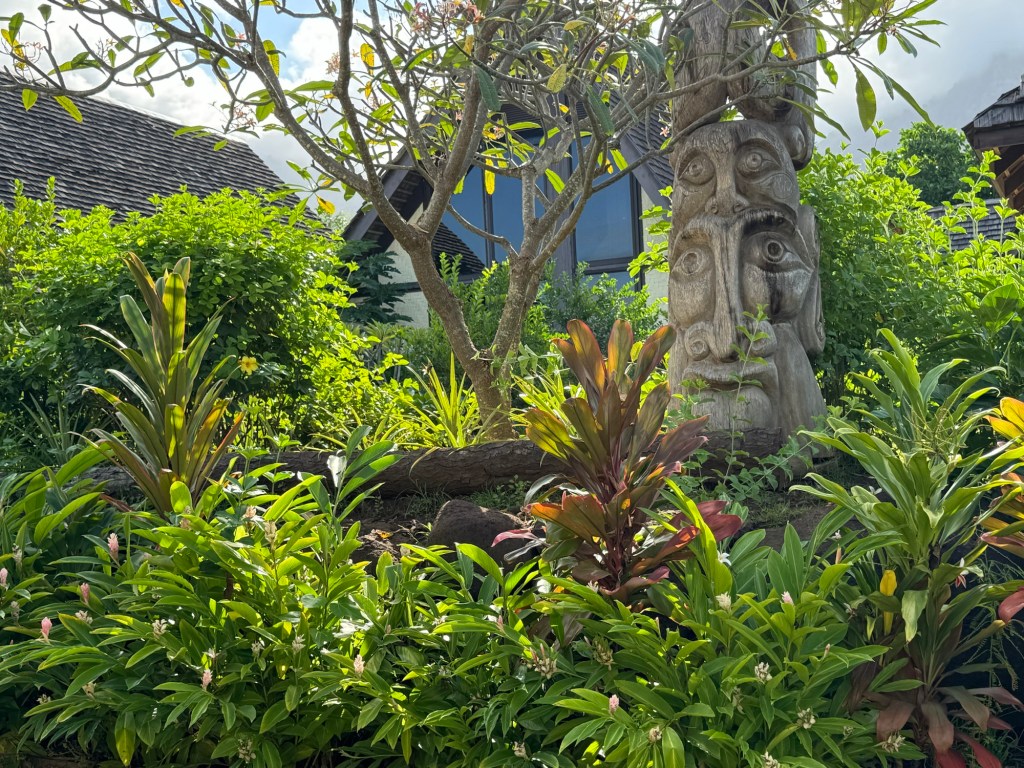
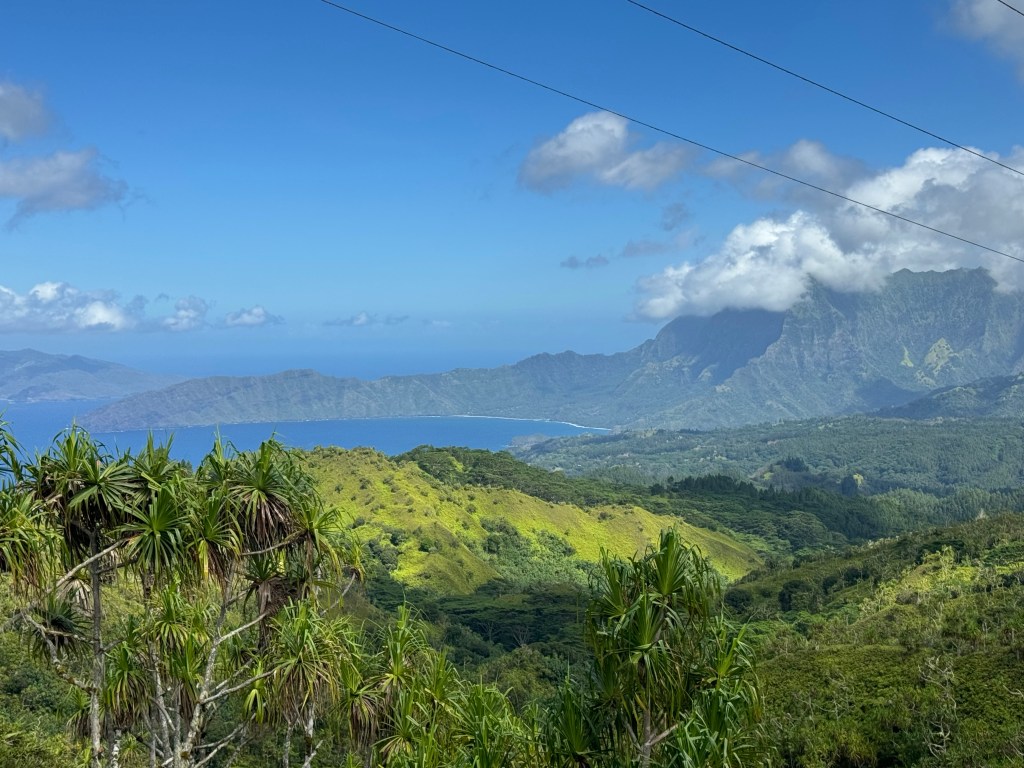
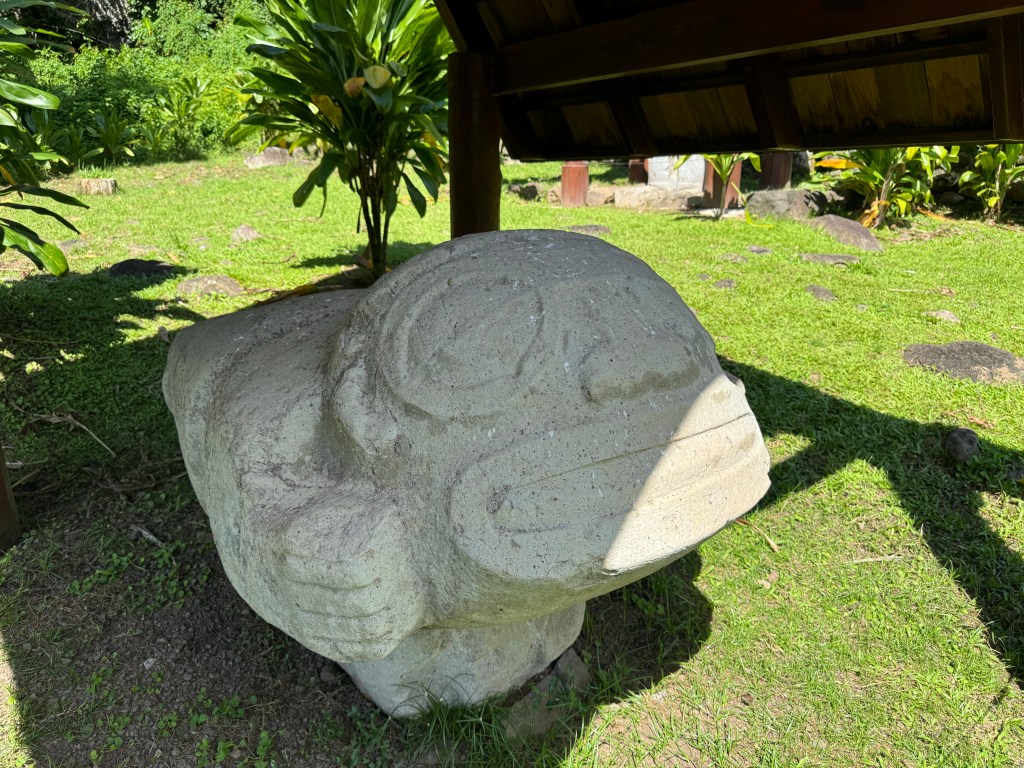
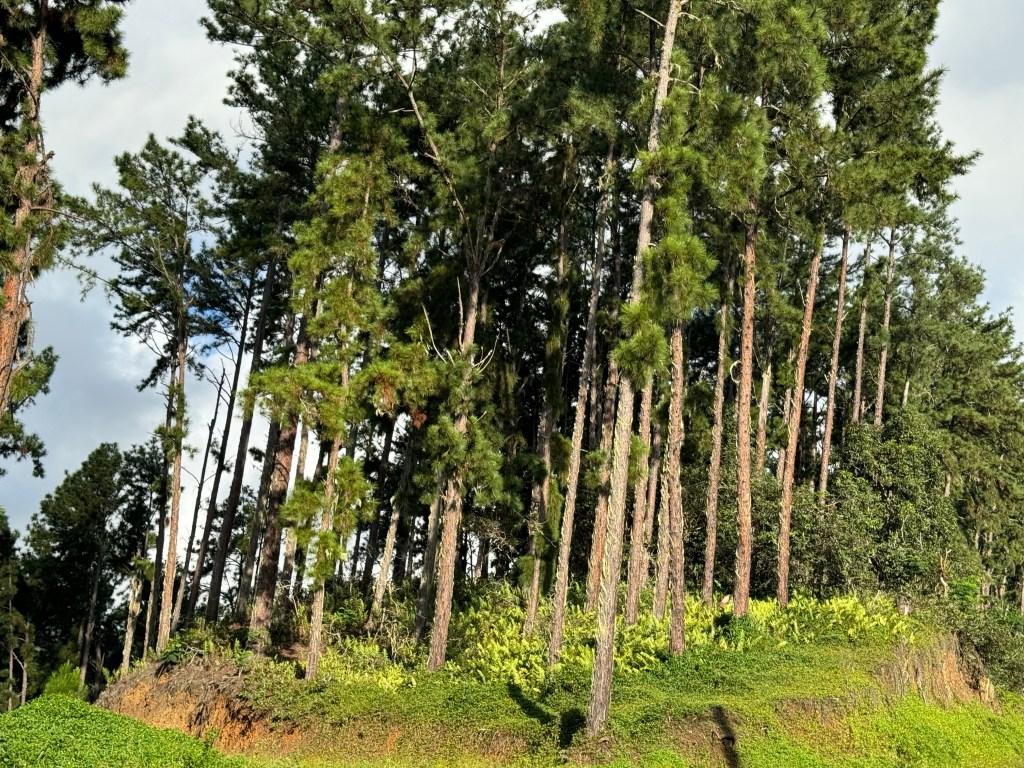
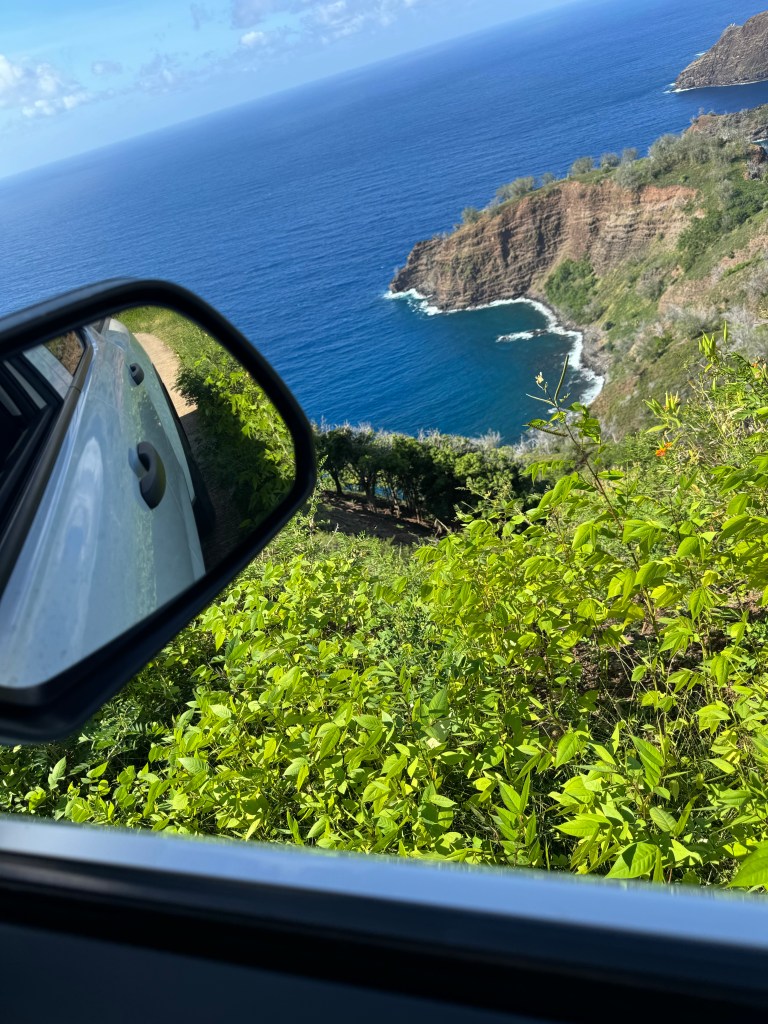
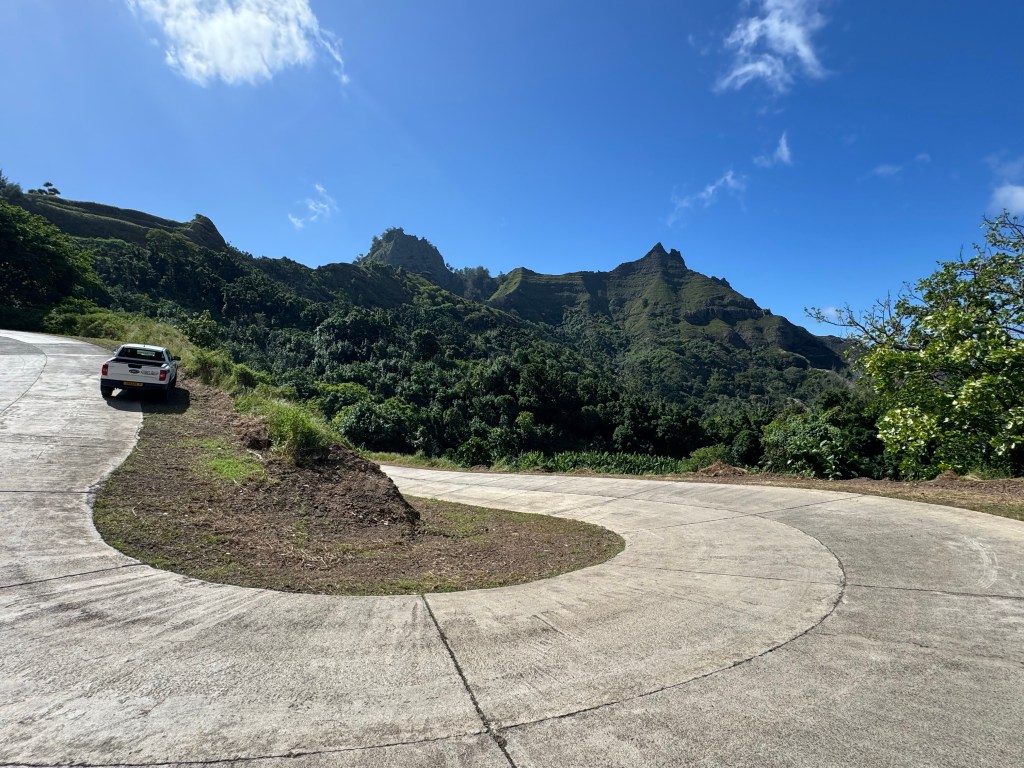
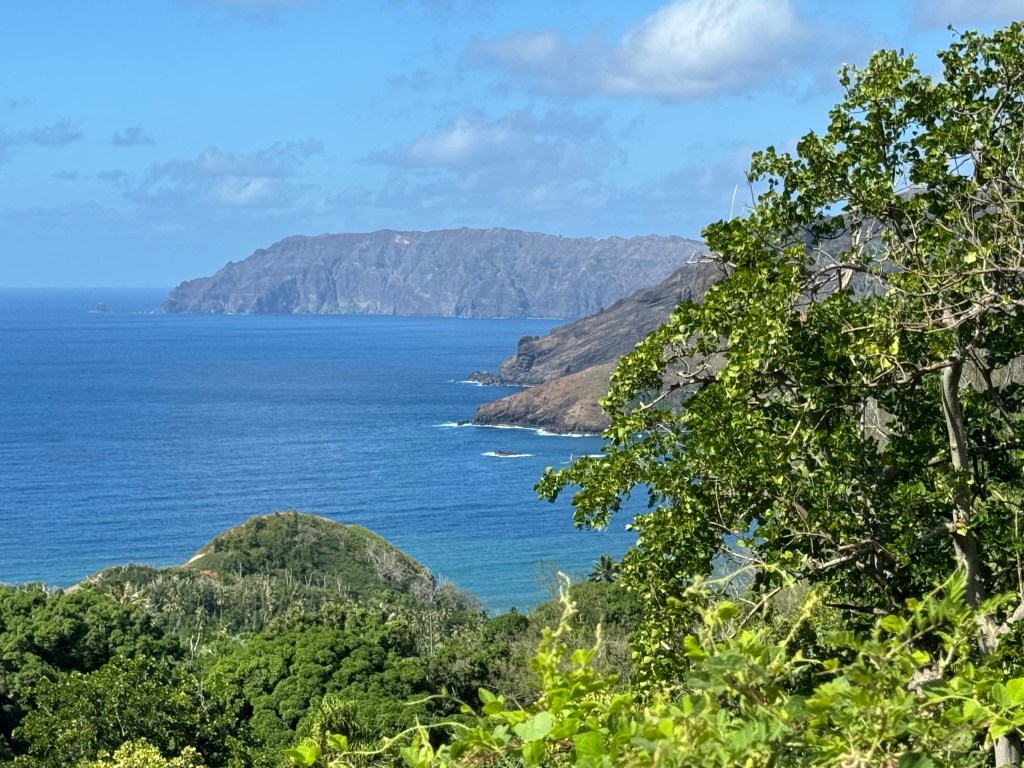
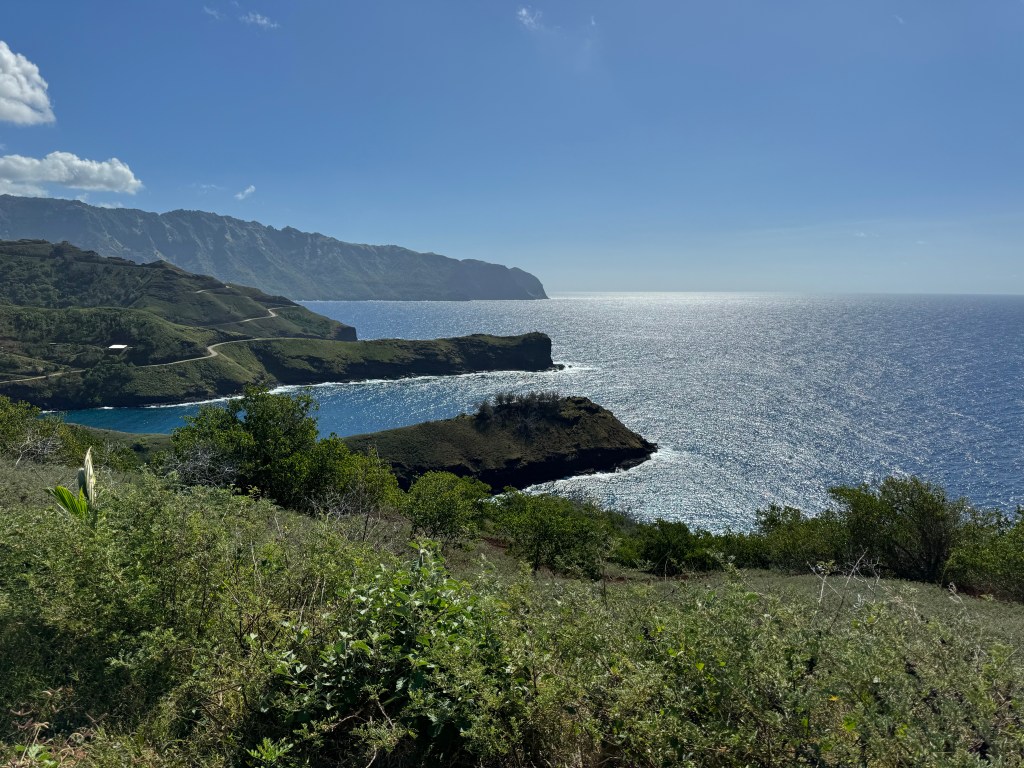
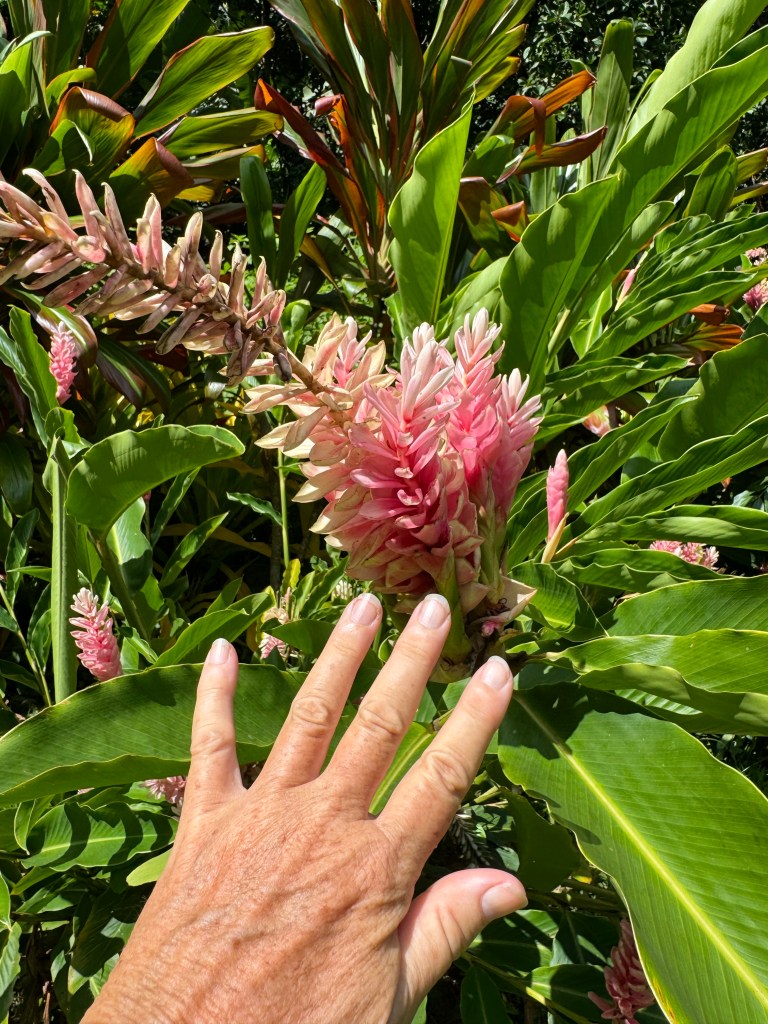
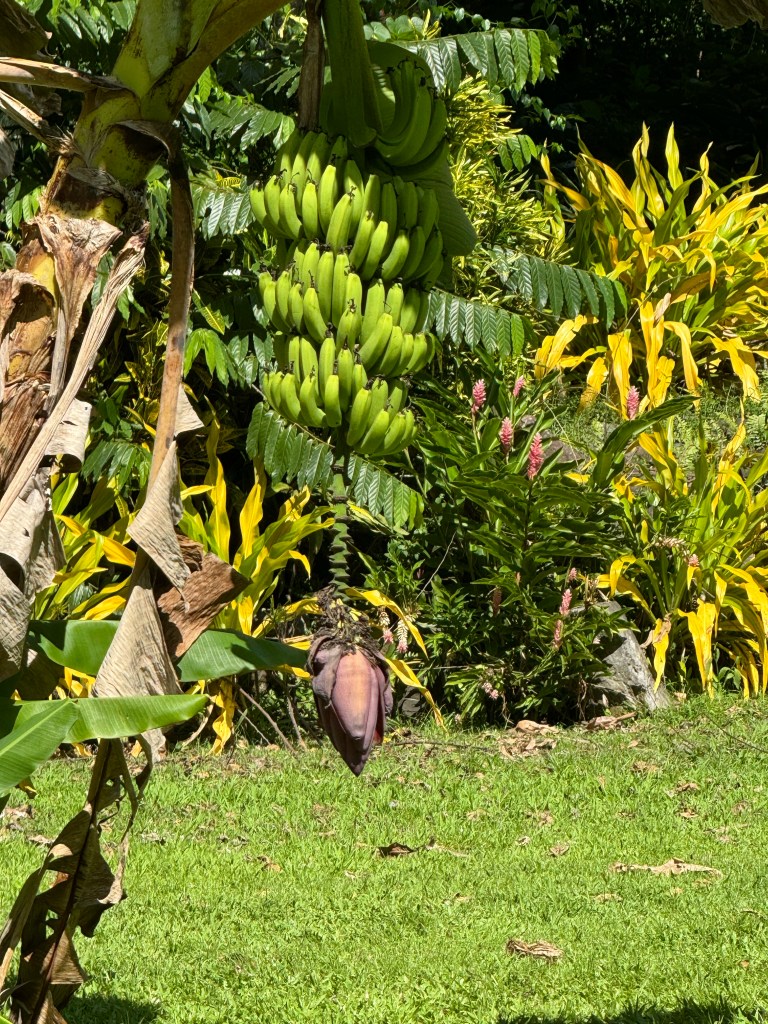
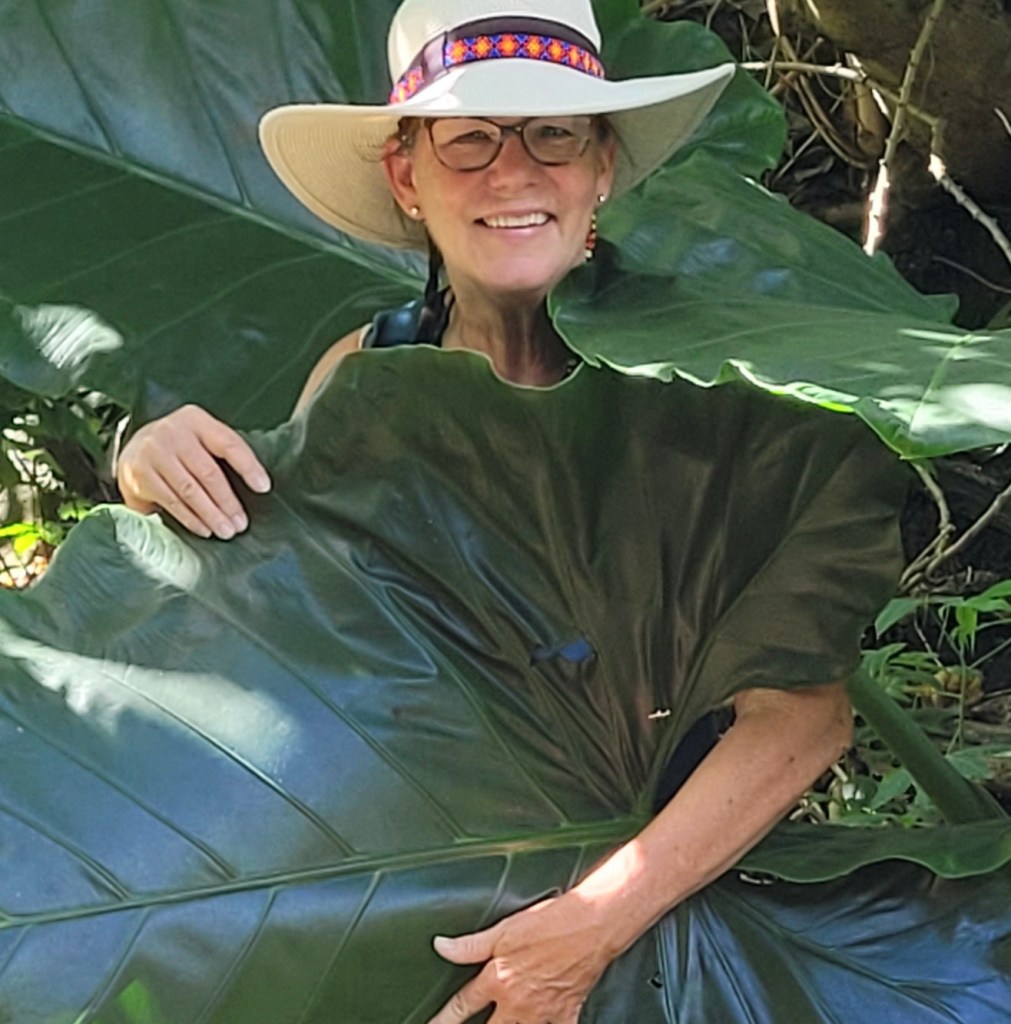
We rented a car for the day so that we could tour the island, see some tikis and other archeological sites, and Herman could refresh his sports car driving skills on the extremely curvy roads. The island has a surprising variety of vegetation starting with coconut trees and fragrant flowers closer to the shore, and then pine trees and ferns at higher elevations.
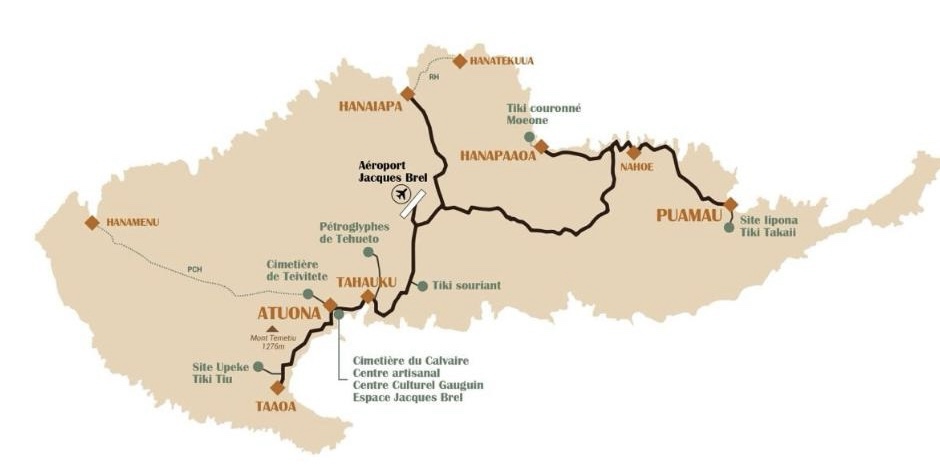
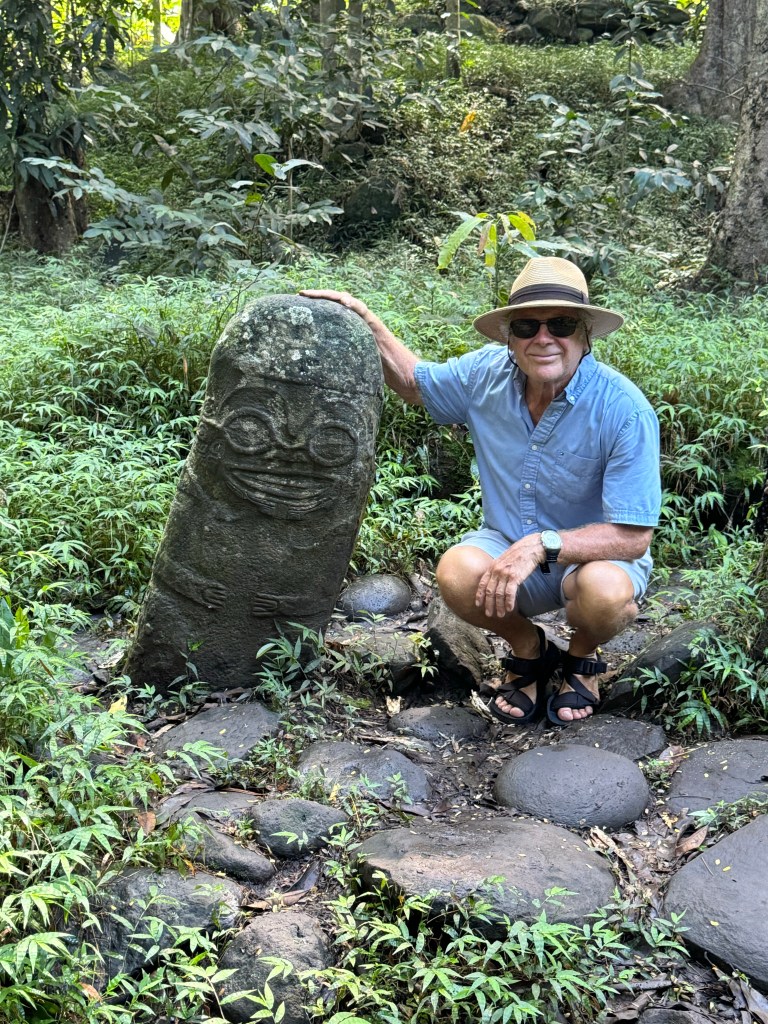
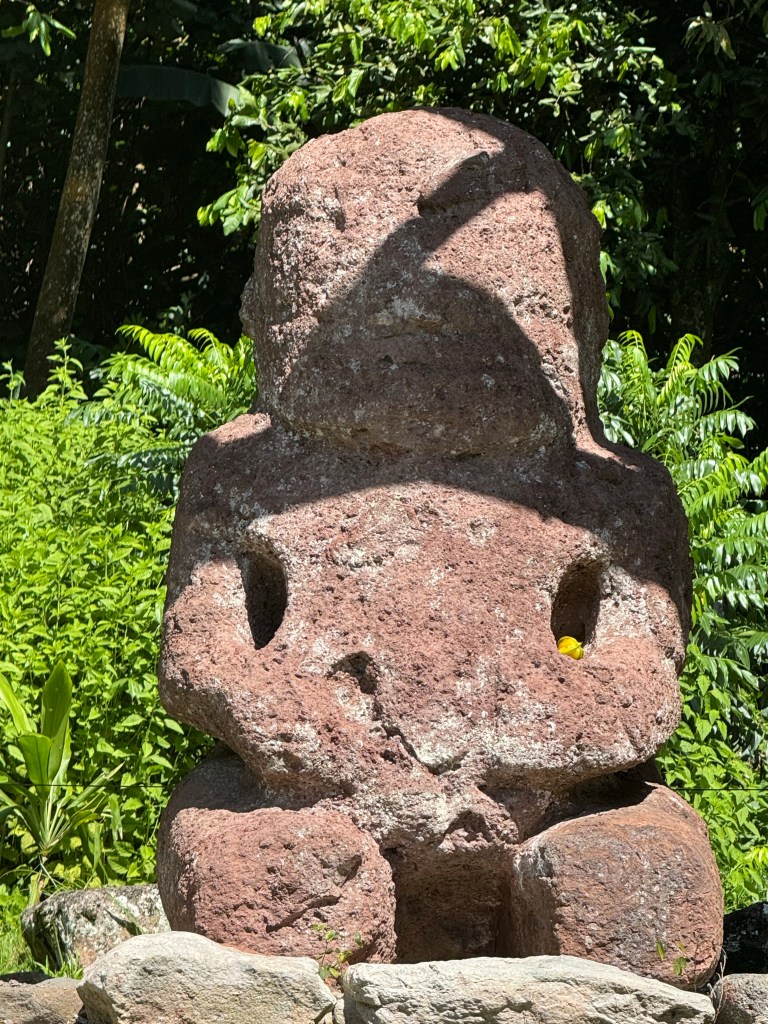
To get to Tiki Souriant, we were told to look for a dirt pullout under a mango tree, which was amazingly accurate. Fortunately a small sign on the tree also helped. We wandered down the nearby dirt road and ran into another couple who told us to take a right at the unmarked Y. The mango-lined path narrowed and brought us to Tiki Souriant, who is purportedly smiling because she’s expecting a child.
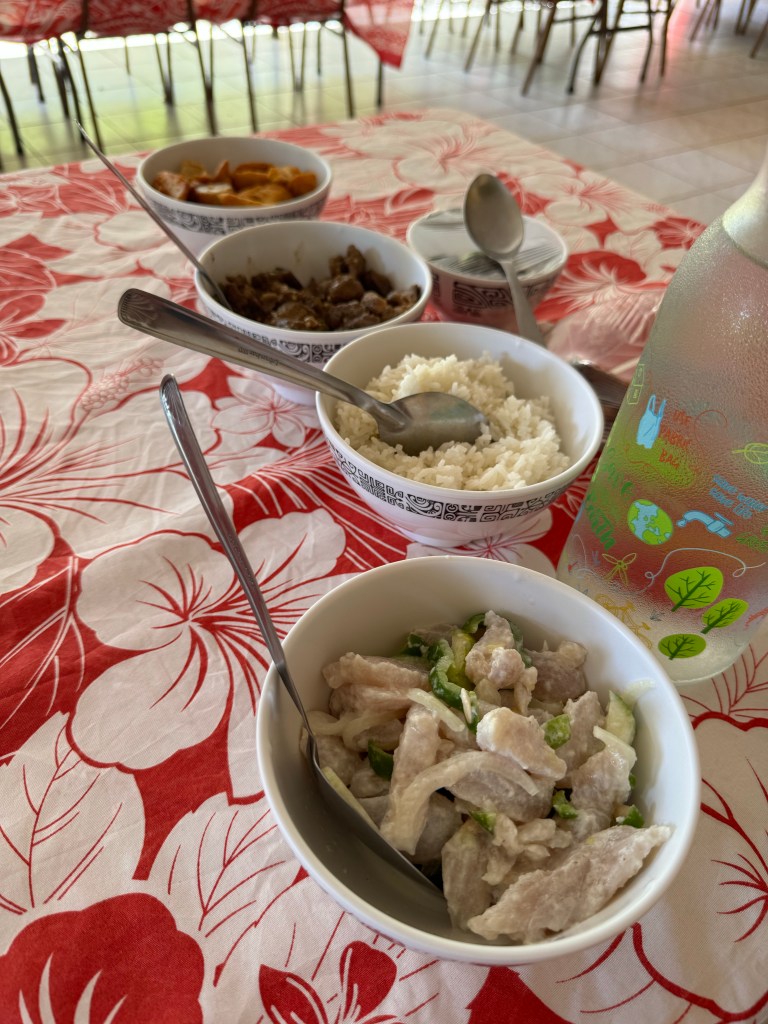
We continued along the mostly paved two lane road, which occasionally transitioned to a single paved or dirt road. Fortunately Herman toned down his inner race car driver. We’d made reservations at Restaurant Marie Antonette for a lunch of native cuisine that included goat, pork, and fish marinated in lime and coconut milk. Of the four desserts, my favorite bananas ou citrouilles ou ccours de coco (baked banana with coconut milk), which I plan to make sometime, because we loved it!
At the end of the road was the Iipona archeological site, which is one of the largest and best preserved sites in French Polynesia. Again, except for a few minutes, we had the place to ourselves, which gave us a chance to absorb the peace and cultural significance.
Dance & Bankiva Fowl
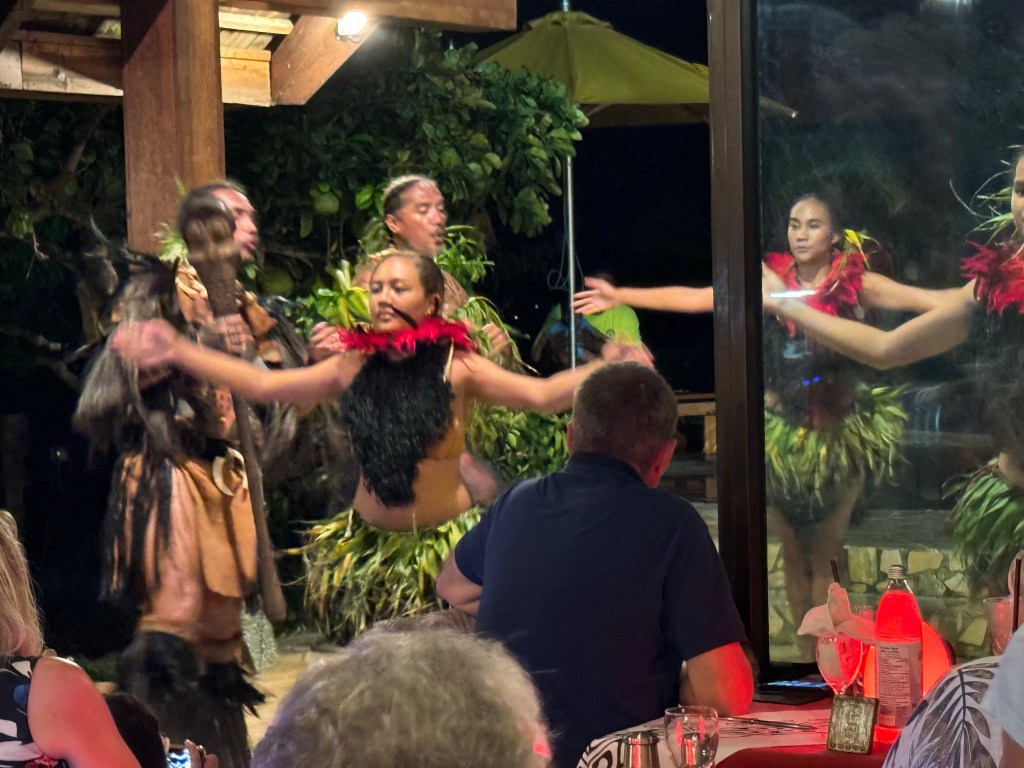
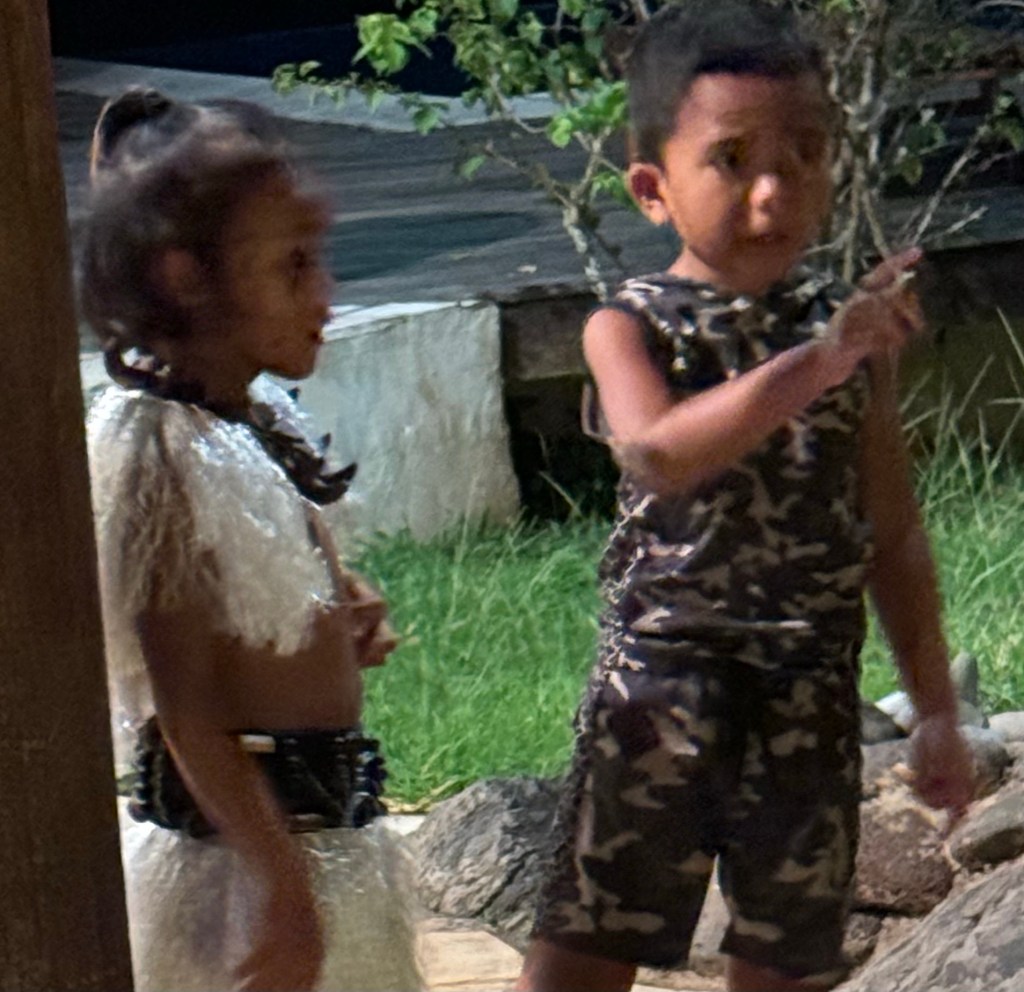
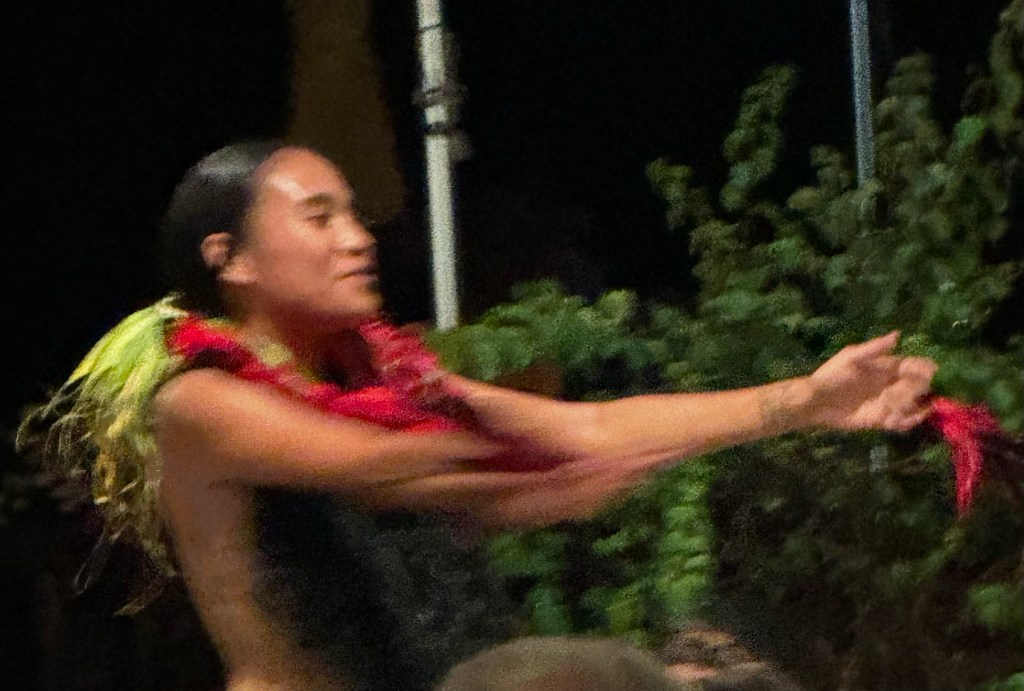
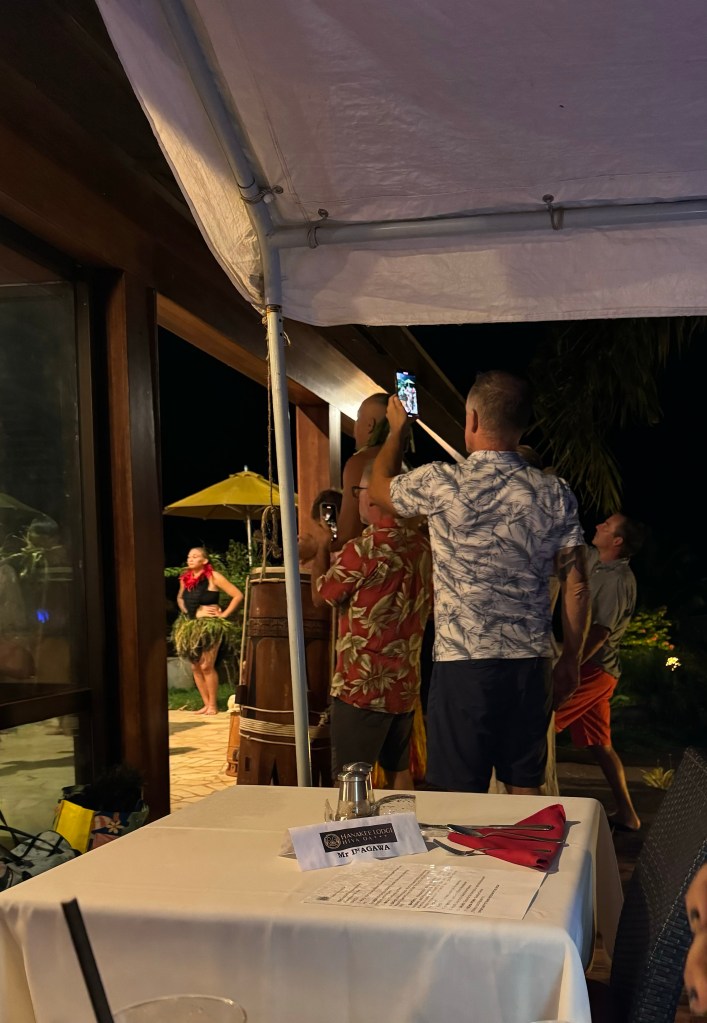
We attended a cultural dance at Hanakee Lodge as an opportunity to learn more about the island history. The warriors’ dances displayed their strength prior to battle and celebrated their safe and victorious return. Dances with both females and males related to courtship and fertility. Our experience was a bit marred by a few of our fellow countrymen who thought their video recording and conversations were more important than the show – embarrassing..
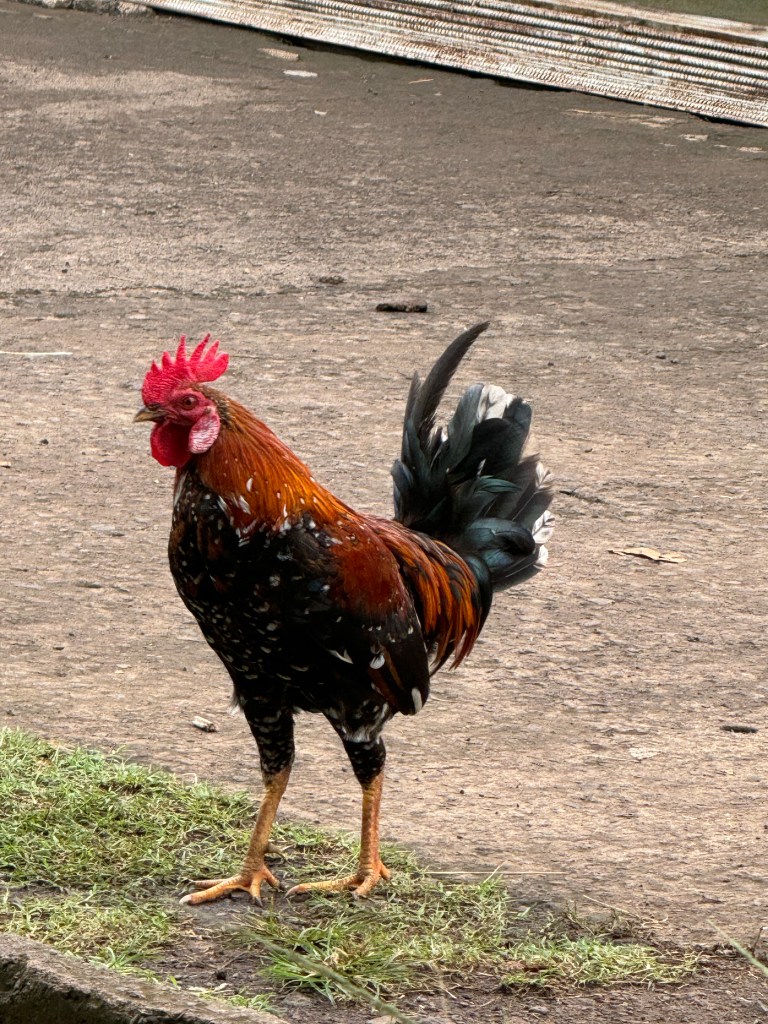
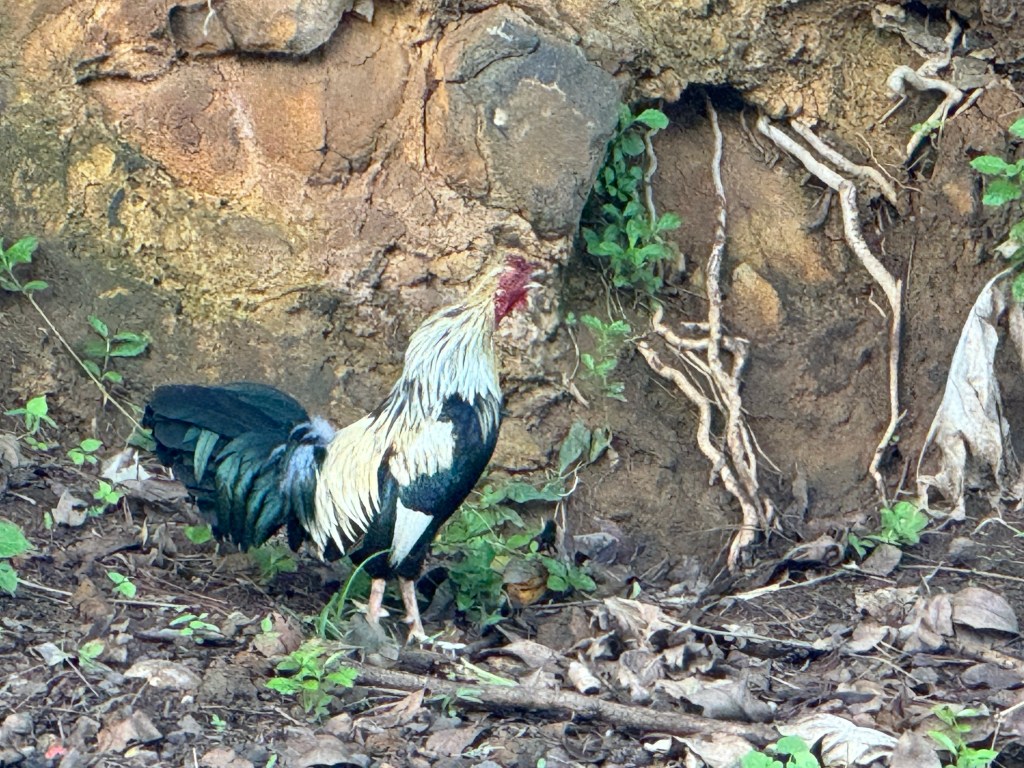
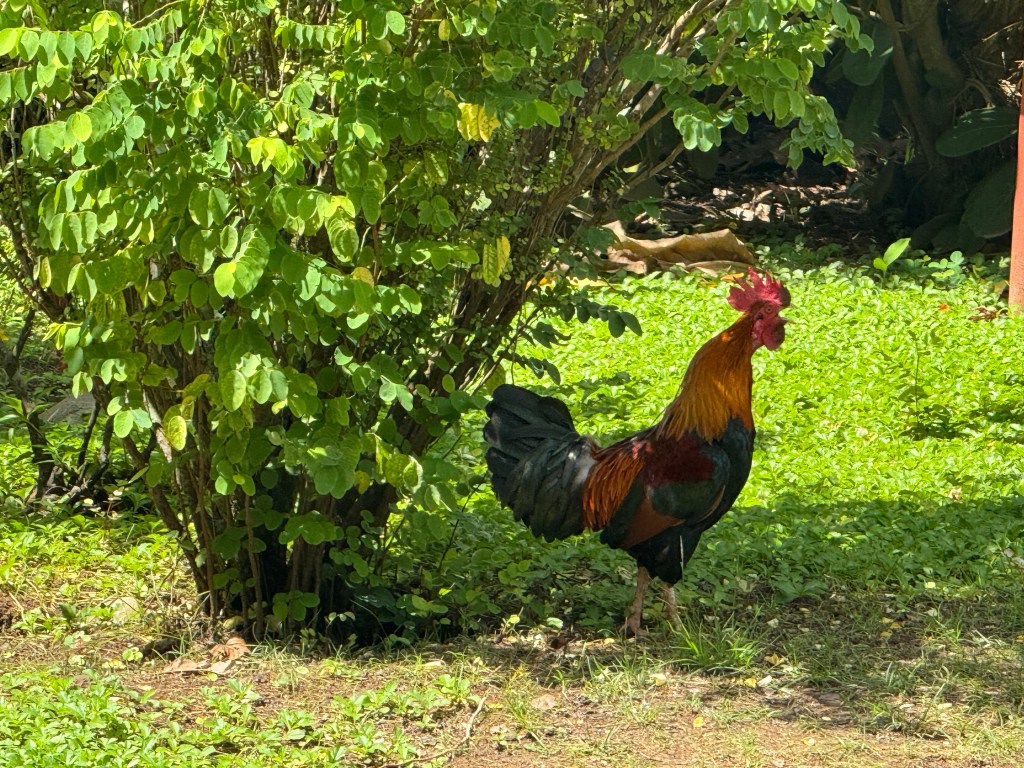
The feathers than adorned the costumes come from the bankiva fowl known as the caveman predecessor to our modern chickens. They’re all over the island and their iridescent feathers are just stunningly gorgeous. One of the beauties of bike rides to Atunoa was going slowly enough to see wildlife without disrupting them too much.
What’s next?
After a week of recovering and reprovisioning on Hiva Oa, and a week of cleaning and relaxation on Tahuata, we’re off to Taiohoe on Nuku Hiva. We’ve arranged with our agent to retrieve our original passports and visas that finally arrived. We also need fresh supplies before we head out to even more remote islands.
Americans seem to be in the minority in the South Pacific. Of the closest boats in our Tahuata anchorage, three were from Sweden, one from Germany and one from Norway. We saw a boat from Fremantle WA and stopped by to ask them where that was… Fremantle, Western Australia. We’re not in Kansas anymore!
We’re somewhat returning to our draft itinerary and plan to meander through the South Pacific with an anticipated arrival to New Zealand in early November. We’ll skip New Caledonia due to political unrest, and may stay longer or skip elsewhere depending on weather and Tieton’s needs. We’ve certainly learned that cruising requires flexibility. New Zealand provides us a safer place for the winter months (their summer), and the option to return to the South Pacific or continue westward.
We’ve seen the Southern Cross (to the left of the Milky Way) and we know why we’ve come this way. We are so grateful!


 Sailing Tieton
Leave a reply to alysorsb Cancel reply