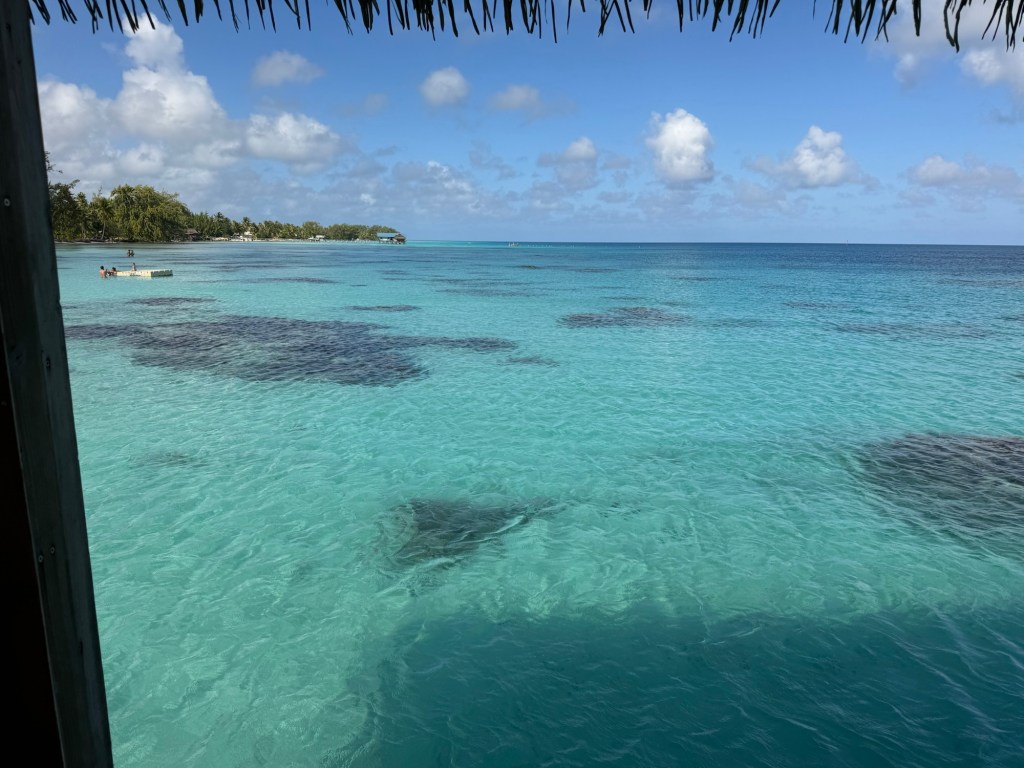
Fakarava is the second largest atoll in the Tuamotus with a rectangular shape that has a length of about 30 miles (50 km) and width of about 15 miles (25 km). For perspective, the San Francisco Bay Area is about 3-12 miles wide and 48-60 miles long, depending on what is included. We entered through the South Pass, stayed almost a week at Hirifa, then travelled through the atoll to Rotoava.
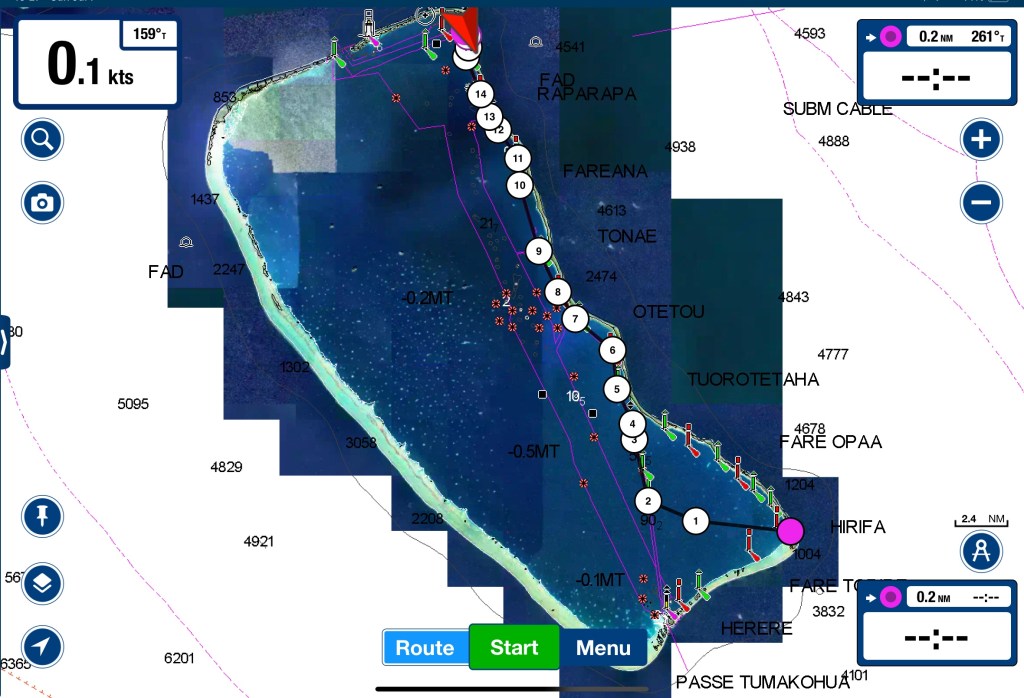
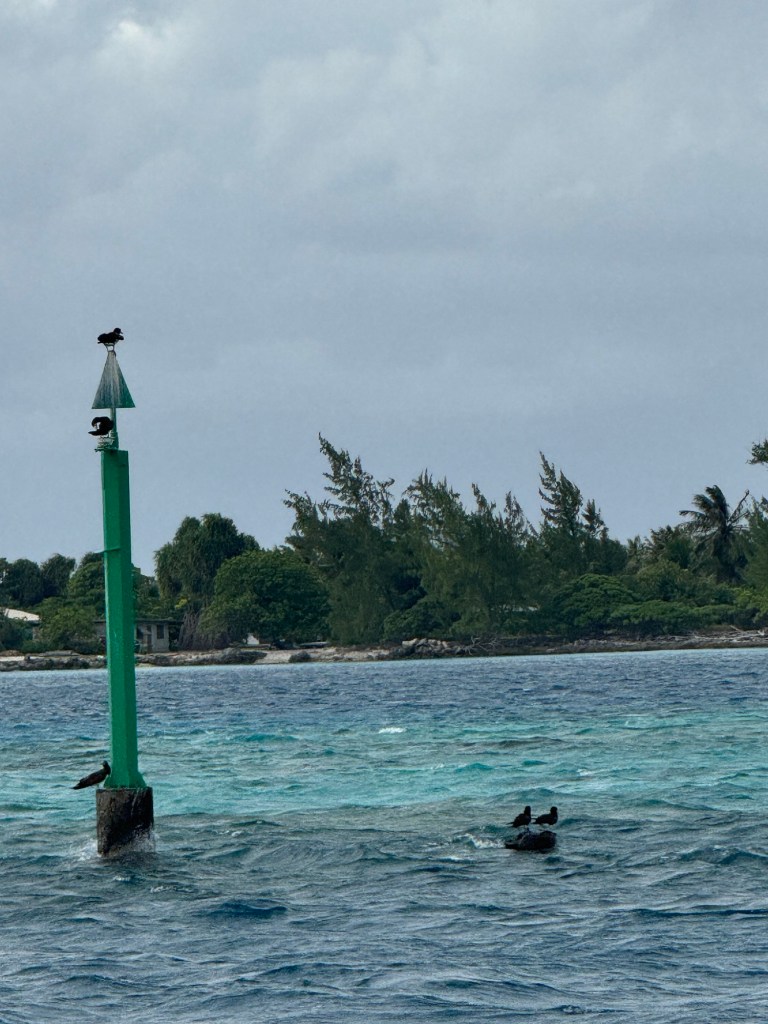
A note about navigation and markers: A rule of thumb that North American boaters learn is “red right returning, green right going”, meaning that when a boat is exiting, the green lights should be on the right, etc. Of course, it is opposite for much of the rest of the world. When at war with England, our North American founders intentionally changed switched the color of lights to confuse unwary captains who might run their ships aground.
With today’s maps, technology, Polaroid sunglasses, and good light, it is somewhat easier. Our rule of thumb is stay on the side that has water.
Hirifa
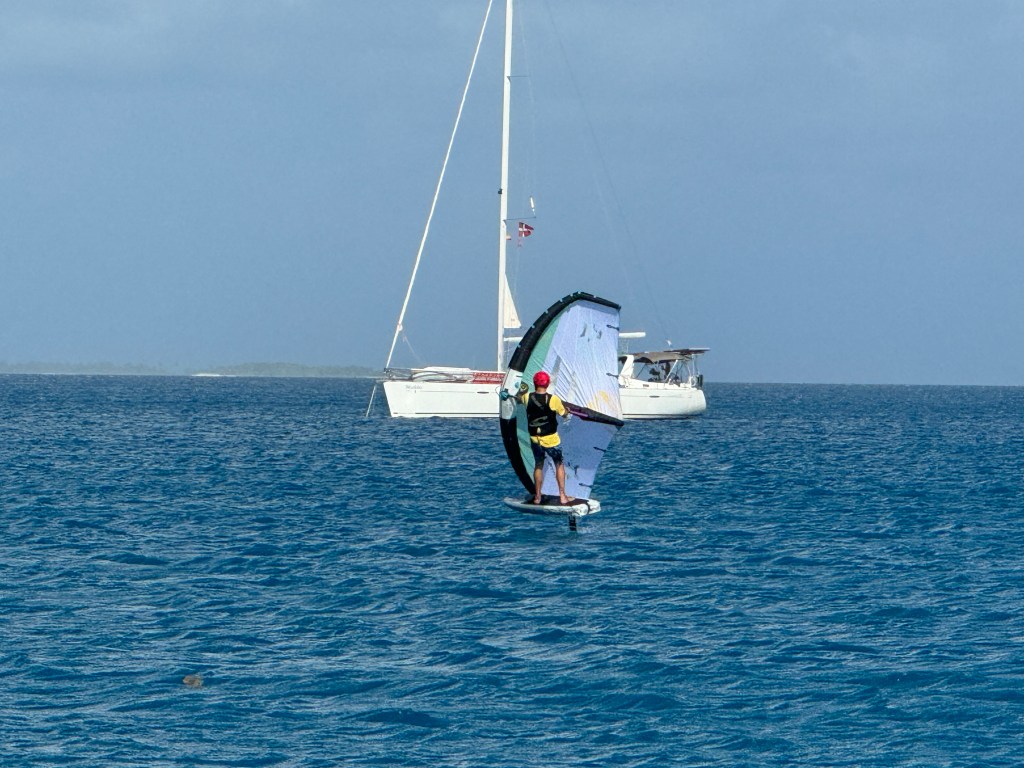
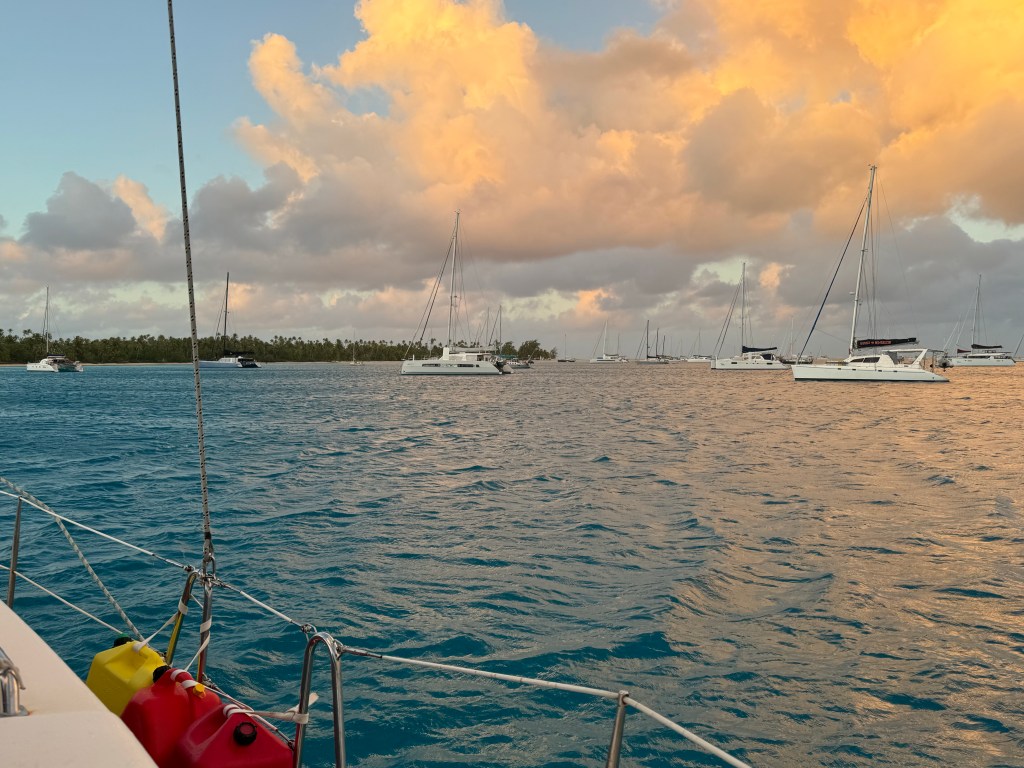
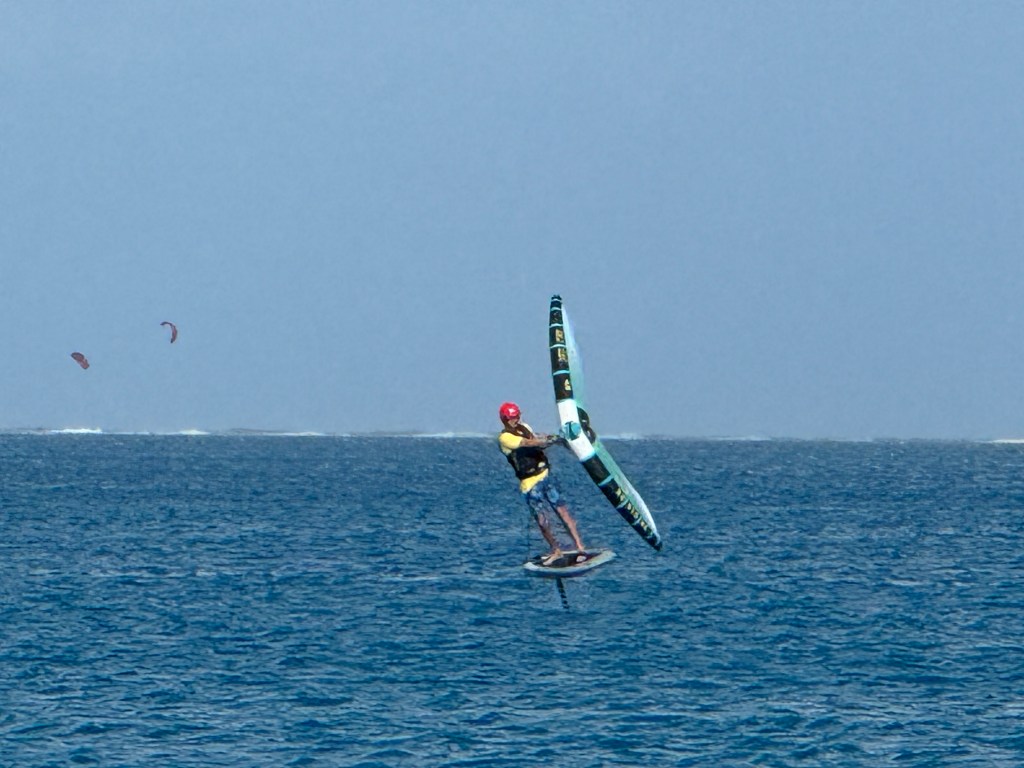
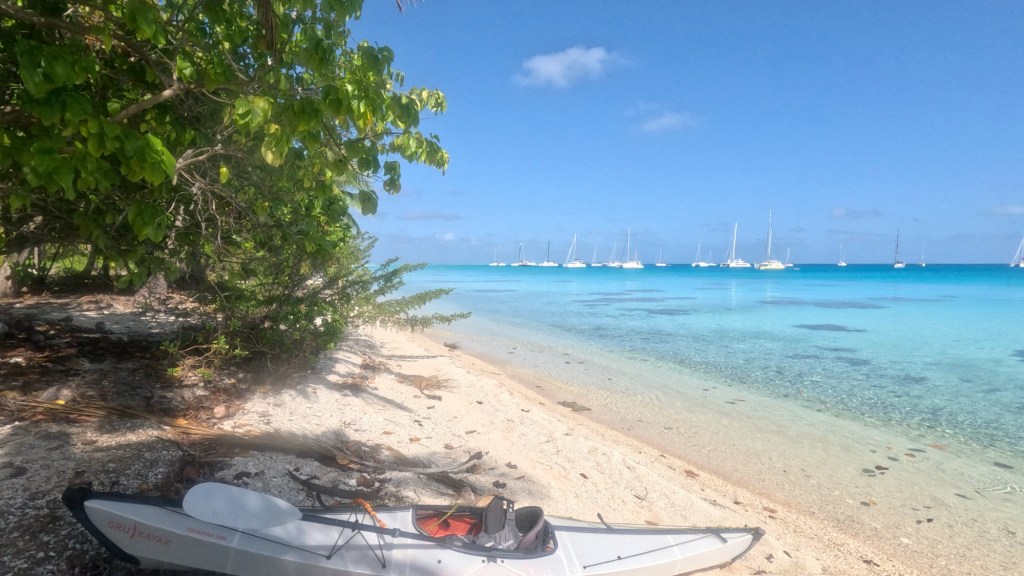
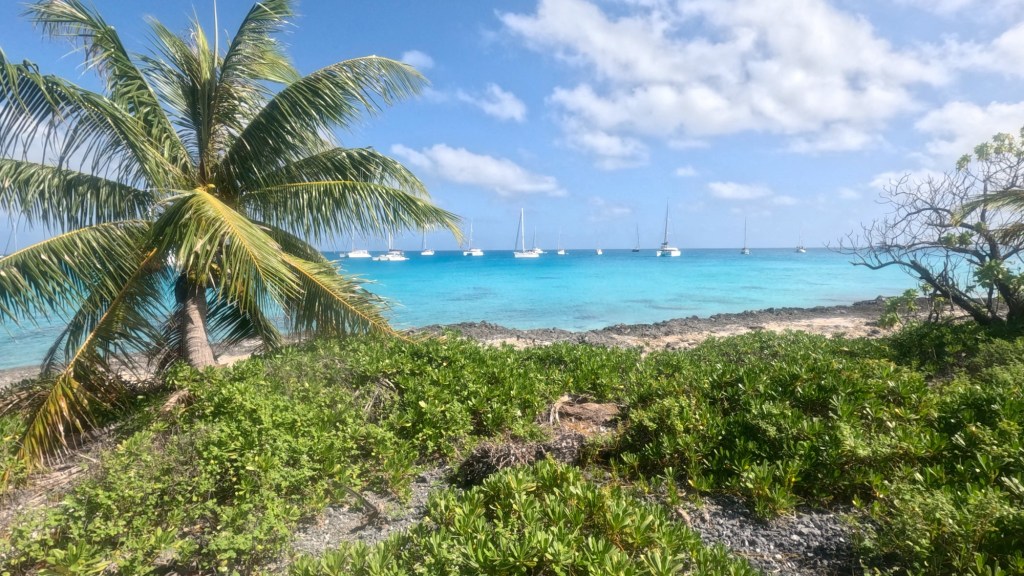
Located in the Southeast corner, Hirifa was the perfect place to wait almost a week for the 25 knot winds to pass through and we were joined by what seemed like most of the boats in the area. Towards the east was mostly beach out to the ocean, so Hirifa already has an excellent reputation amongst wind fans because the wind crosses directly across the expanse of sand and is great for wind sports. We were largely sheltered by the trees on the northern side of the motu, and had a fantastic view of wind sports fans playing with their toys: kitesurfing, windsurfing, kiteboarding, electric hydrofoils, etc. It was fun to hear their whoops as they made a great turn, or someone finally got up on a board. Many of the boats had middle schoolers who’d visit neighbors and play with shouts of joy on the expensive trampolines (AKA catamarans).
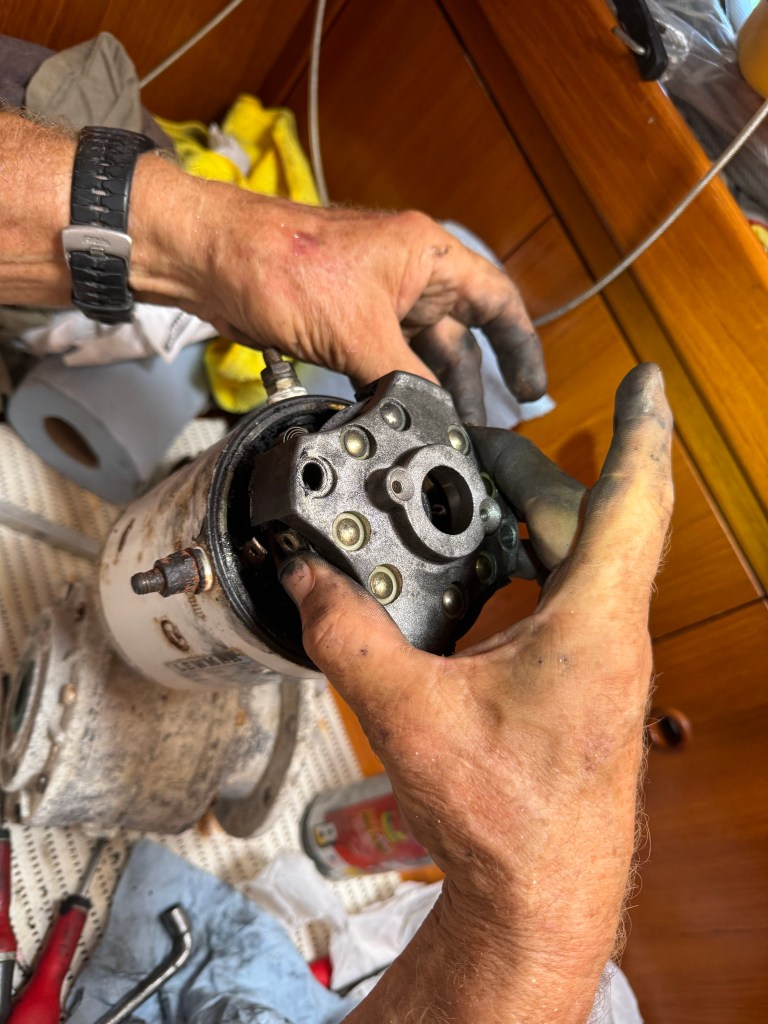
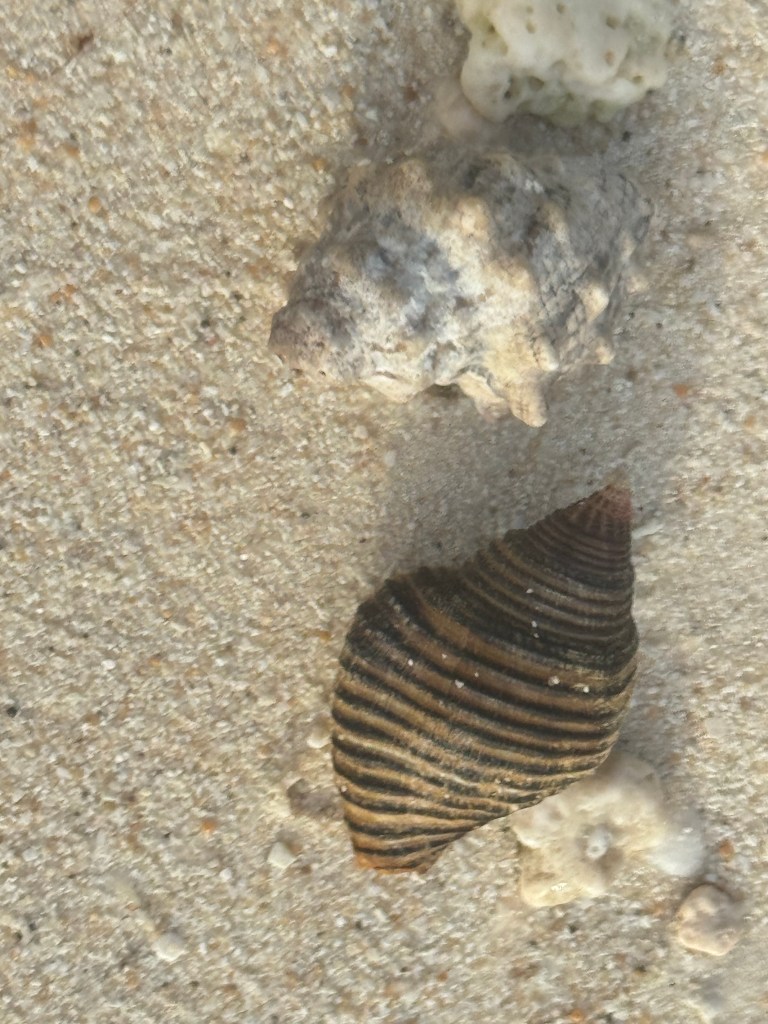
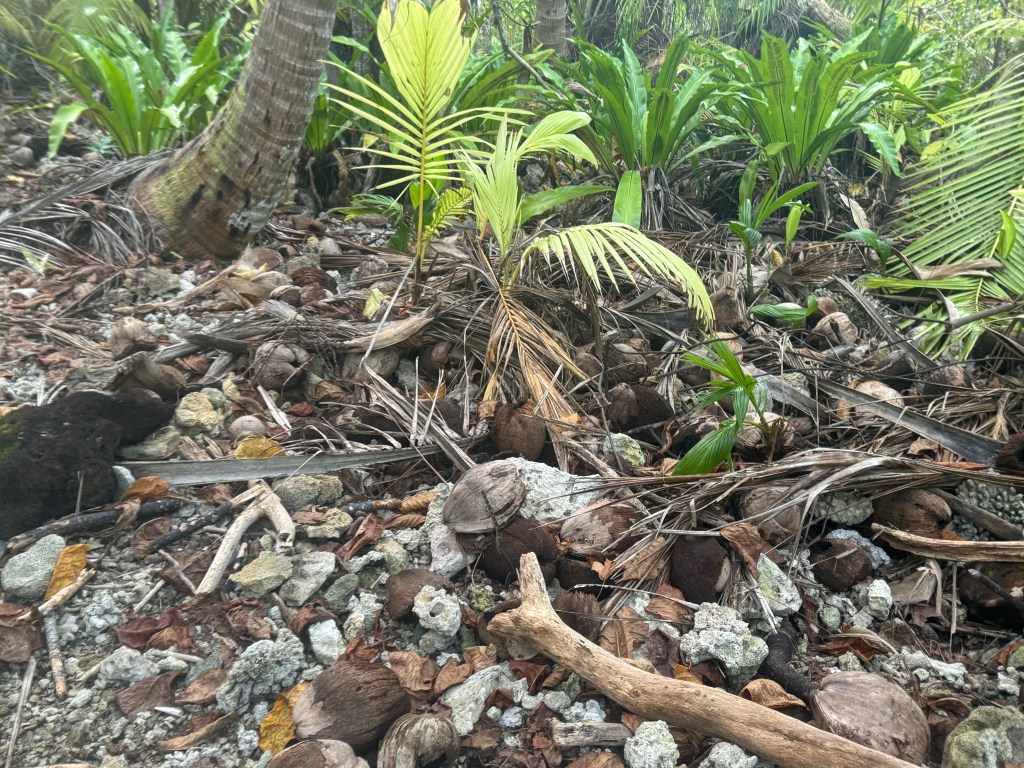
When we weren’t watching the wildlife or people, Herman and I swam, kayaked, snorkeled and went for walks on the beach/coral. Herman’s most important boat project was to fix the windlass that hauls the anchor out of the water so that he doesn’t have to do it by hand. After TWO solid days, Herman got it working again, much to his delight. (Spoiler alert, it quit after a short pull under stress and probably needs to be professional rebuilt or replaced). We’d also made a list of other boat chores and research for me that we accomplished. Yeah!

Marks Trail
Diving South Pass
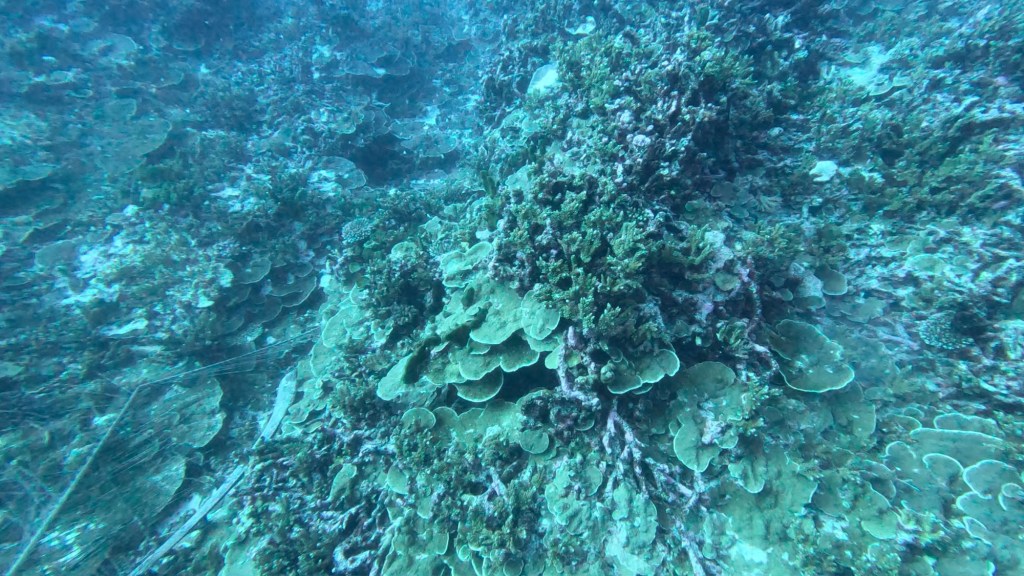
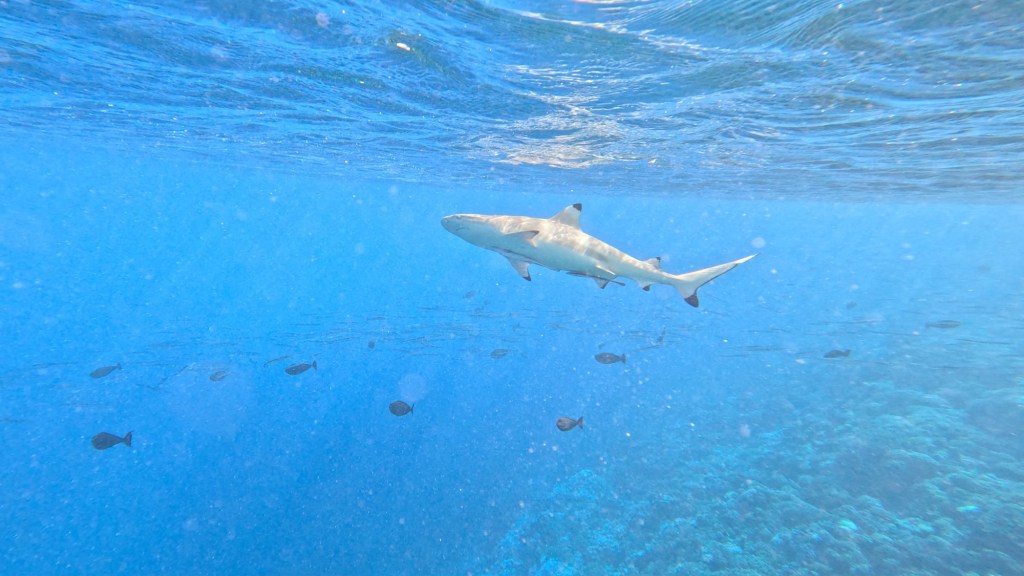
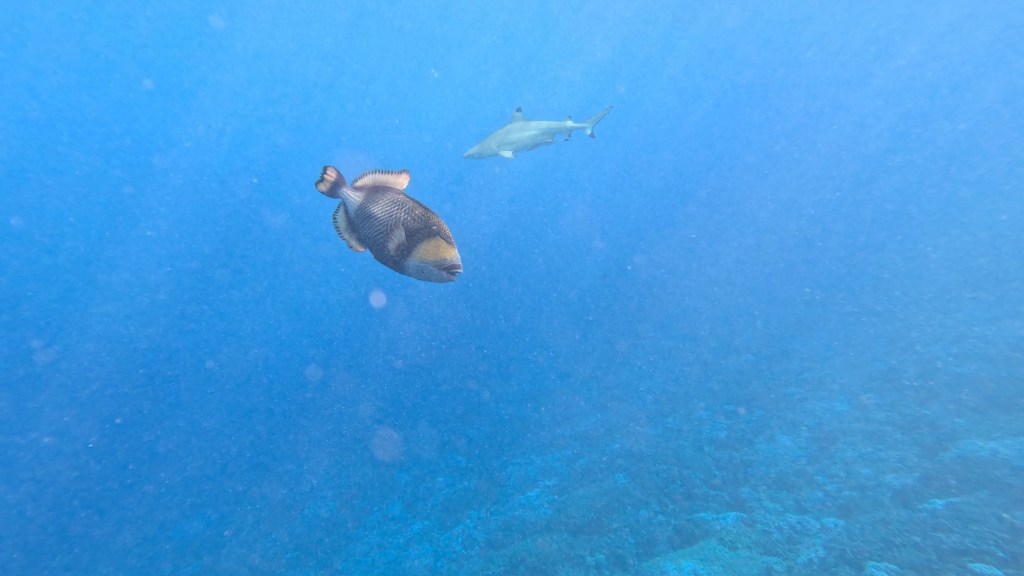
Fakarava’s South Pass is known for the “Wall of Sharks” that feed on the reef fish that abound in the pass. We arranged a scuba dive where we drifted with the tide change. Unfortunately, we were a bit out of practice so we only got one dive and missed the “Wall”, but our dive was great as was the snorkeling that followed. The coral in the pass looked like a garden with colorful fish, manta rays and sharks swimming through. Large schools of fish also hung out under the building and wharfs above the water.

Rotoava
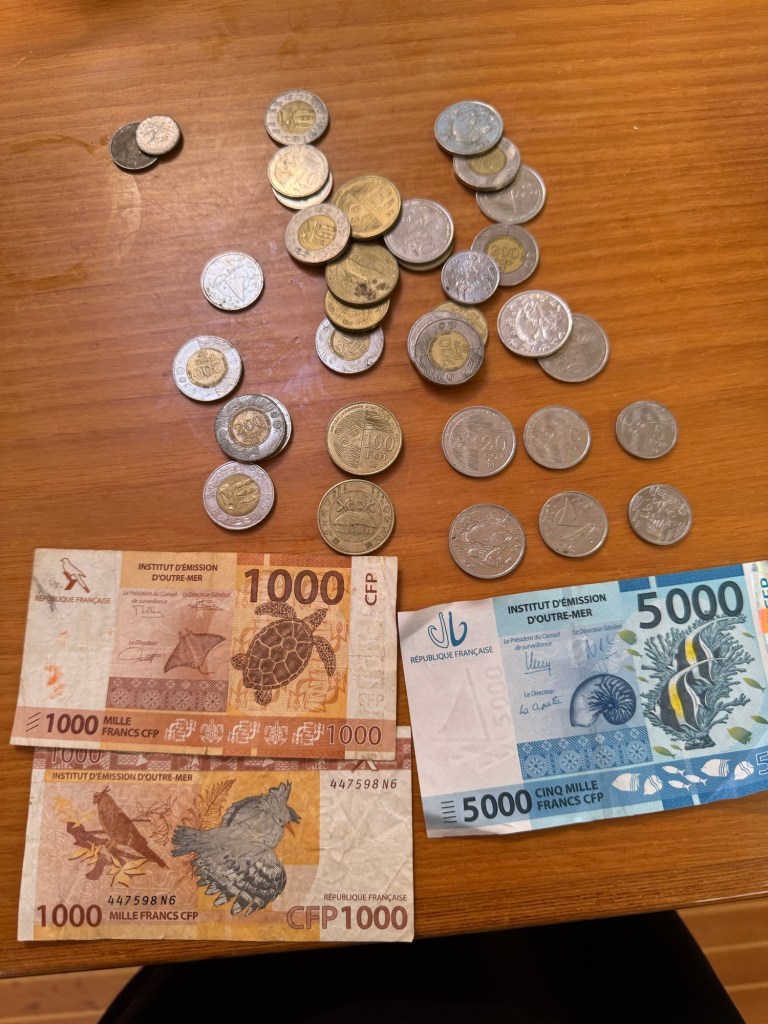
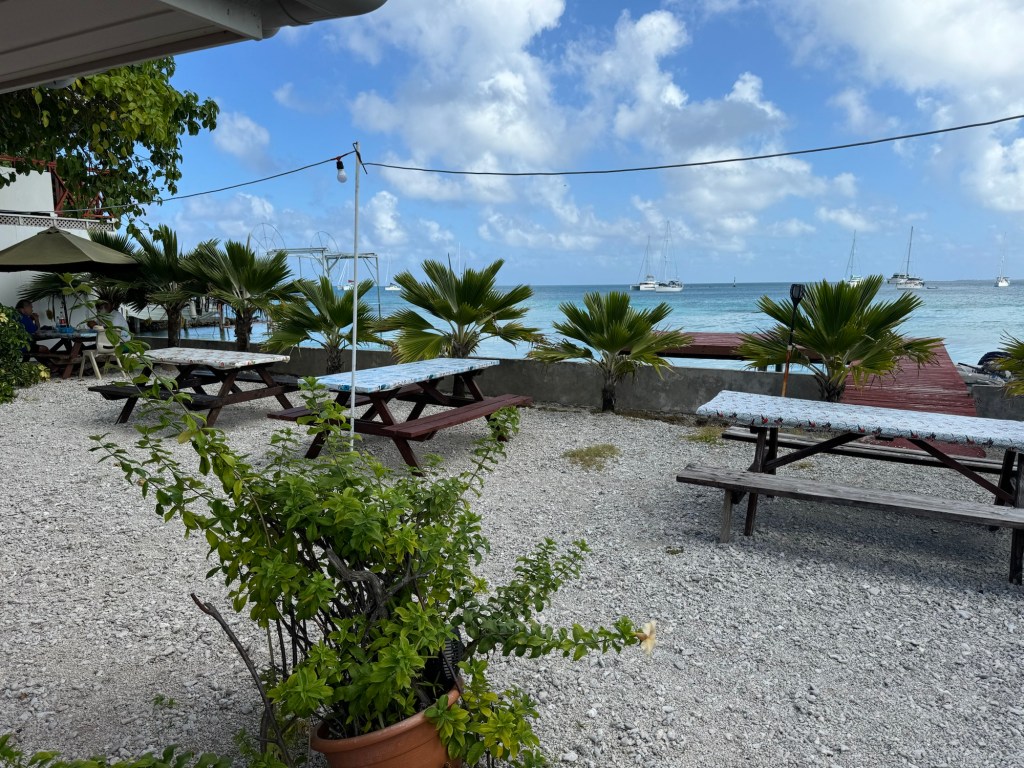
The town of Rotoava has a municipal wharf, one police car, a medical clinic, an airport, and a few pearl farms, pensions, restaurants and grocery stores. We arrived a day after the winds had stopped and the supply ship had arrived, so most of the goods delivered by the ship had been depleted. The restaurants obviously have a means of procuring fresh produce and I hope the locals do too. At the store, we bought some 70 CFP (US$0.63) baguettes, 120 CFP (US$1.10) canned corn, US$5.85 eggs, and some very expensive oranges and alcohol. We still have plenty of canned and dried provisions on board, so we’re not at all worried about food.

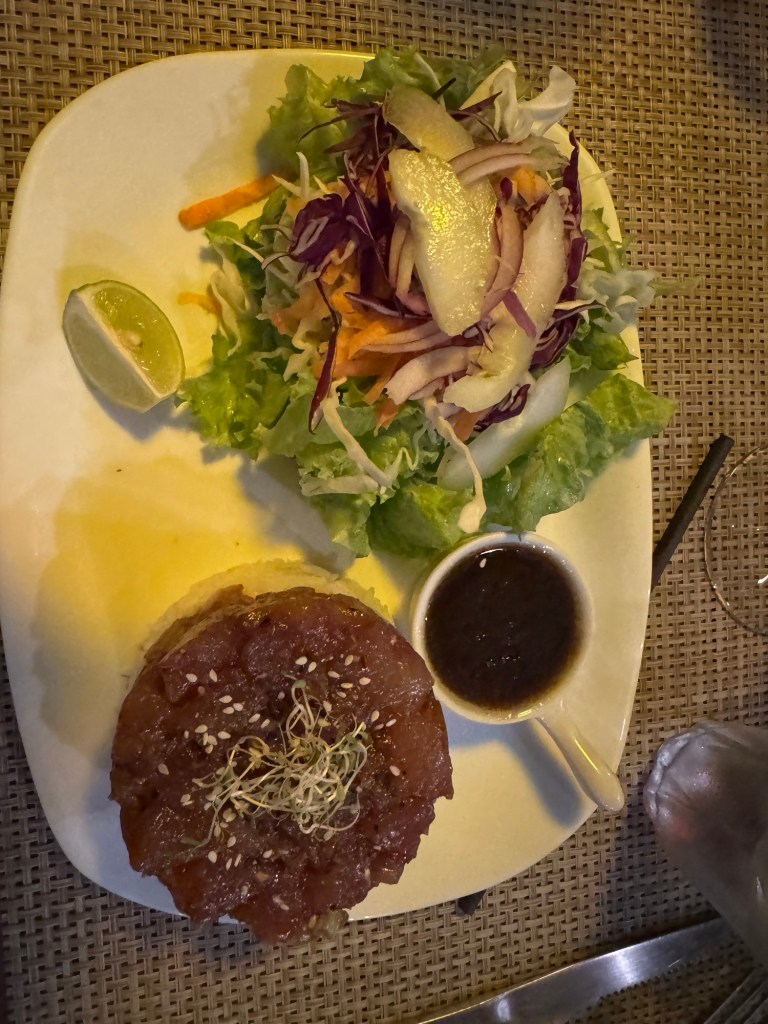
We ate our main meals out, and enjoyed some wonderful experiences. One evening, we dined next to a young couple on a two week vacation from Uruguay. He is a psychologist and she is an architect. As part of her degree in architecture from the university in Uruguay, she traveled for a year after her schooling to see architecture around the world. It is so interesting to meet people from around the world and learn about the different perspectives, opportunities and policies.
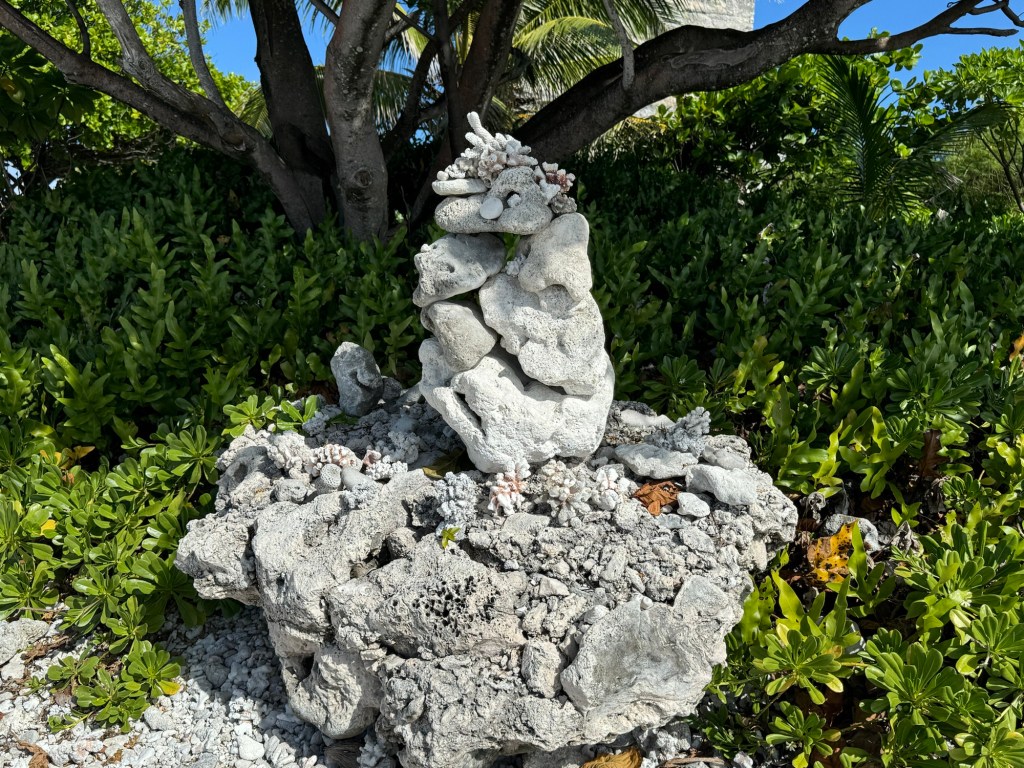
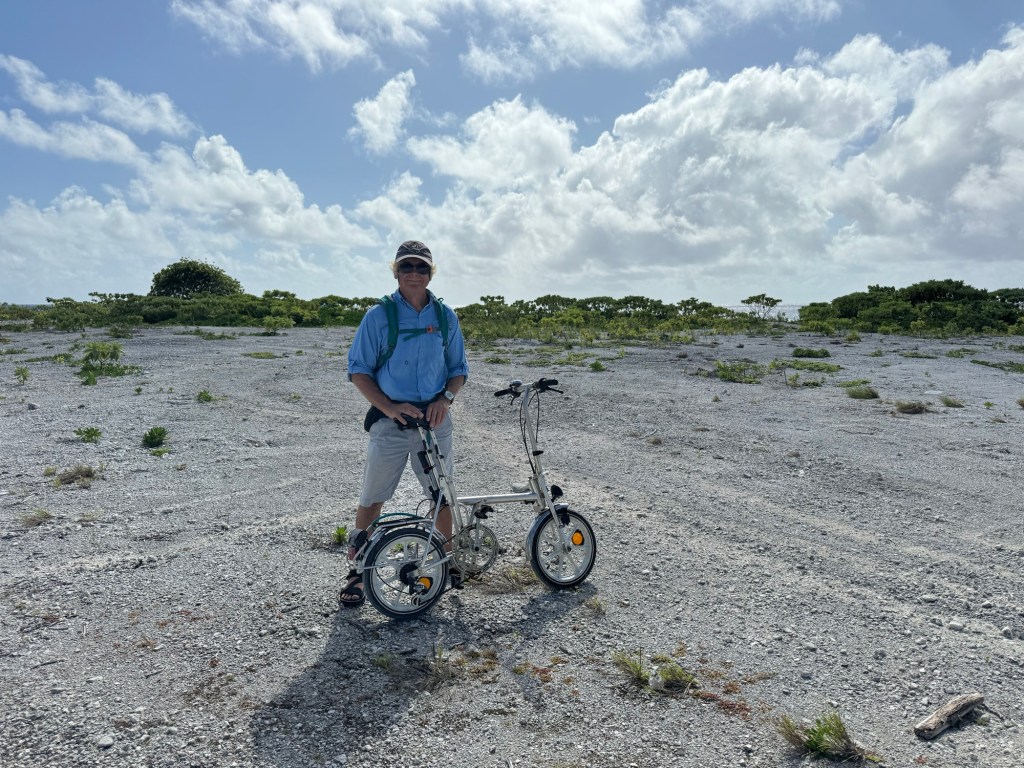
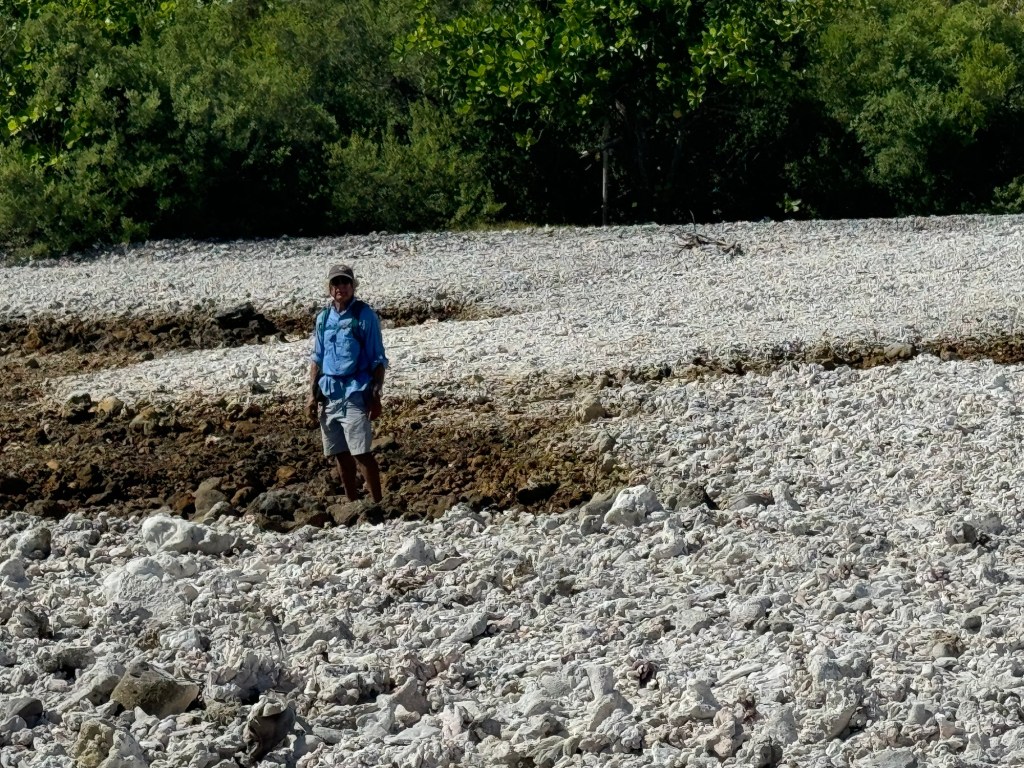
Because Rotoava has some paved and very decent dirt roads, we went for a two bike rides – one south for a few miles, and another north to the North Pass for about 15 miles (20 km) round trip. We wanted to see the pass that we’d use to exit the atoll, and along the way we got to see a lighthouse built from coral in 1857, and an airport that gets a couple commercial flights a day. At one point, the airport strip and road covered the width of the atoll.



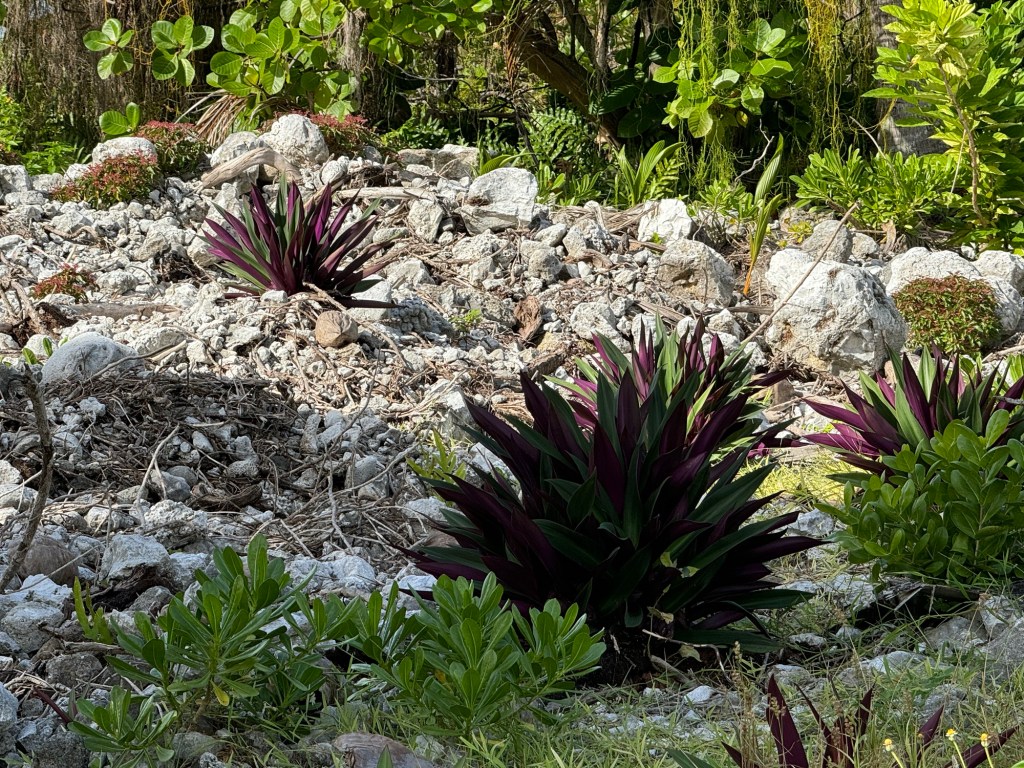
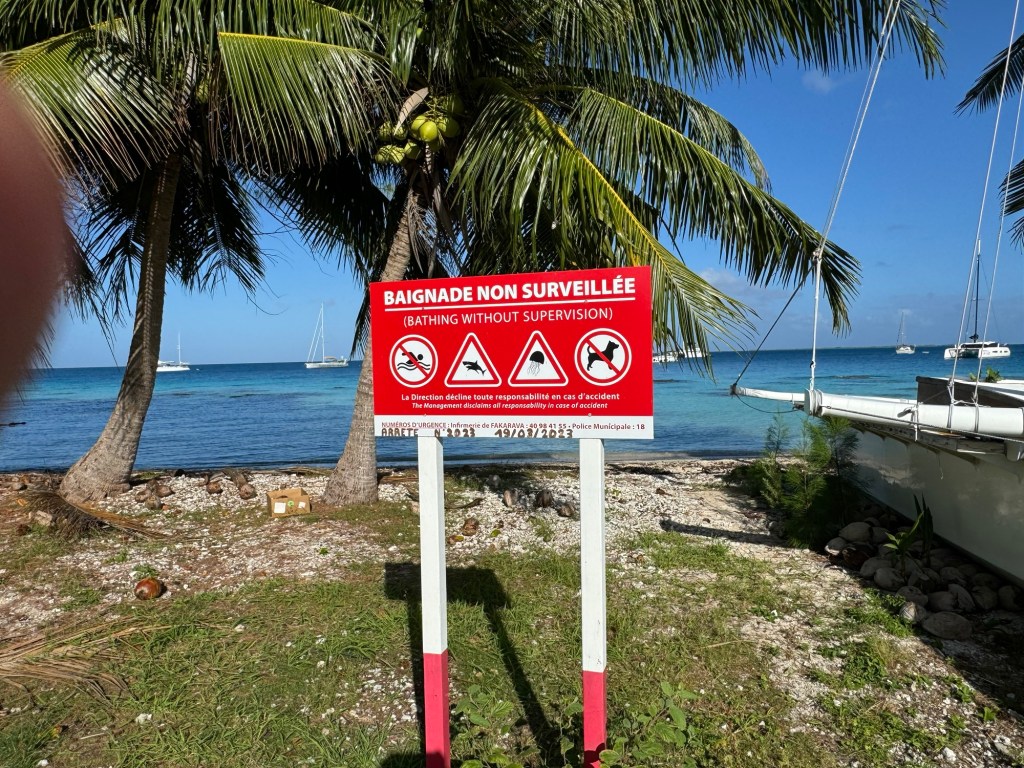
Ocean Edge

Pearl Farm
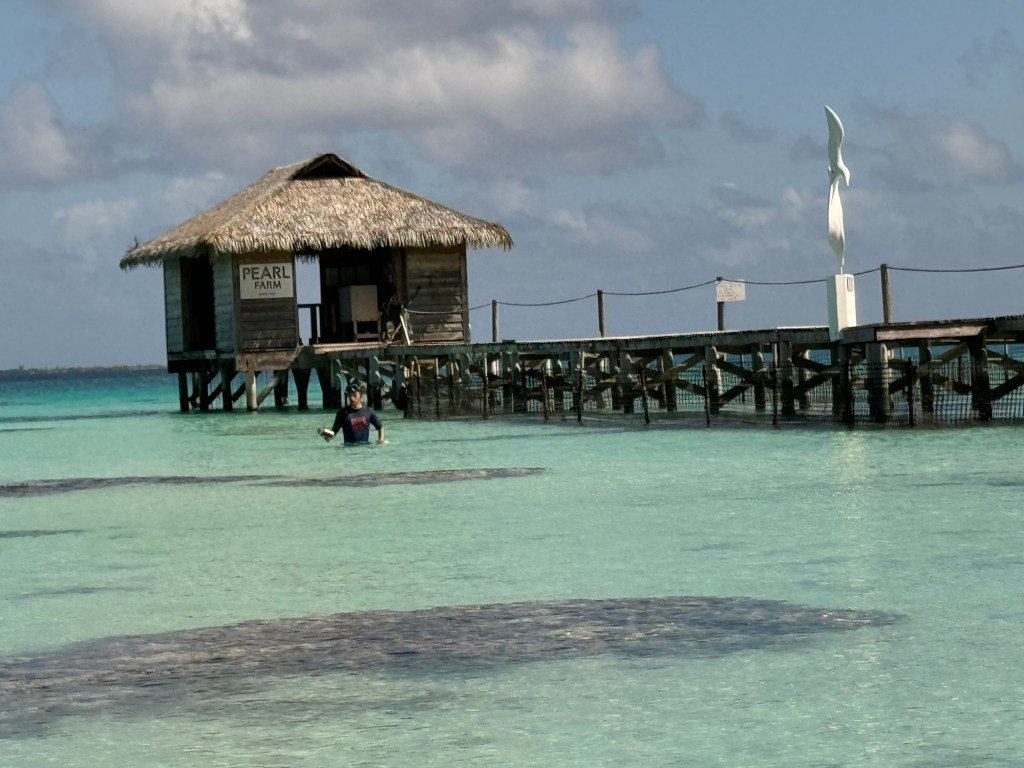
Fakarava is one of many atolls that make an ideal location for pearl/oyster farms, now that the natural oyster beds have been over harvested (sound familiar?). After learning the process to farm and harvest black pearls, I understand why they’re expensive.
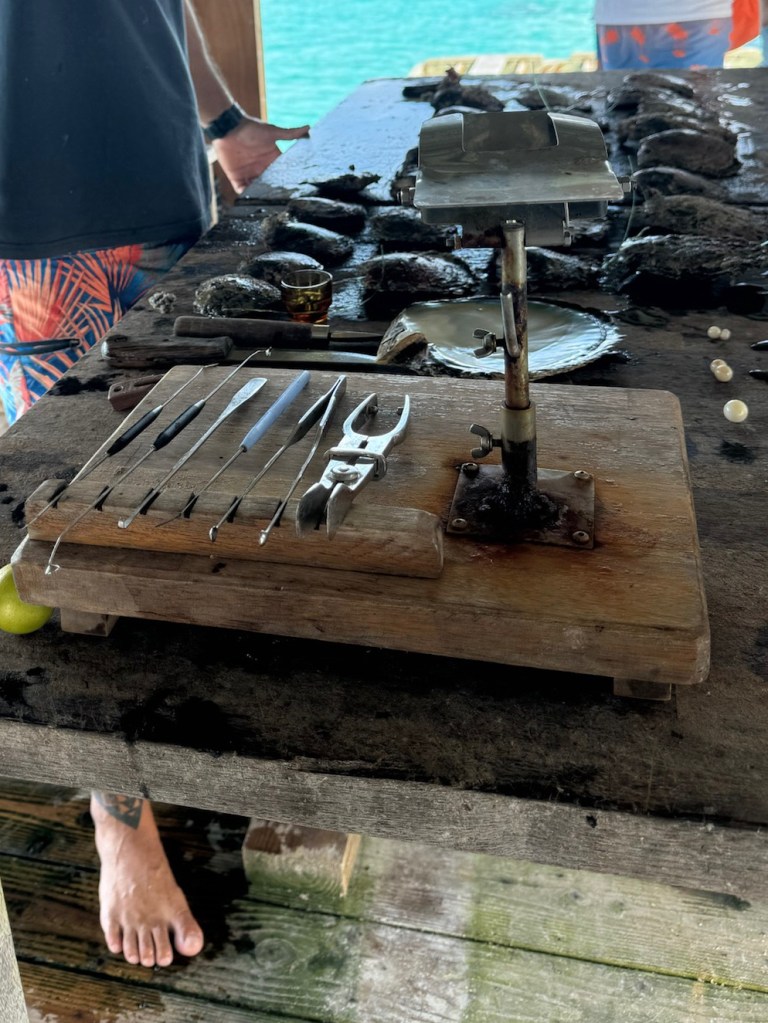
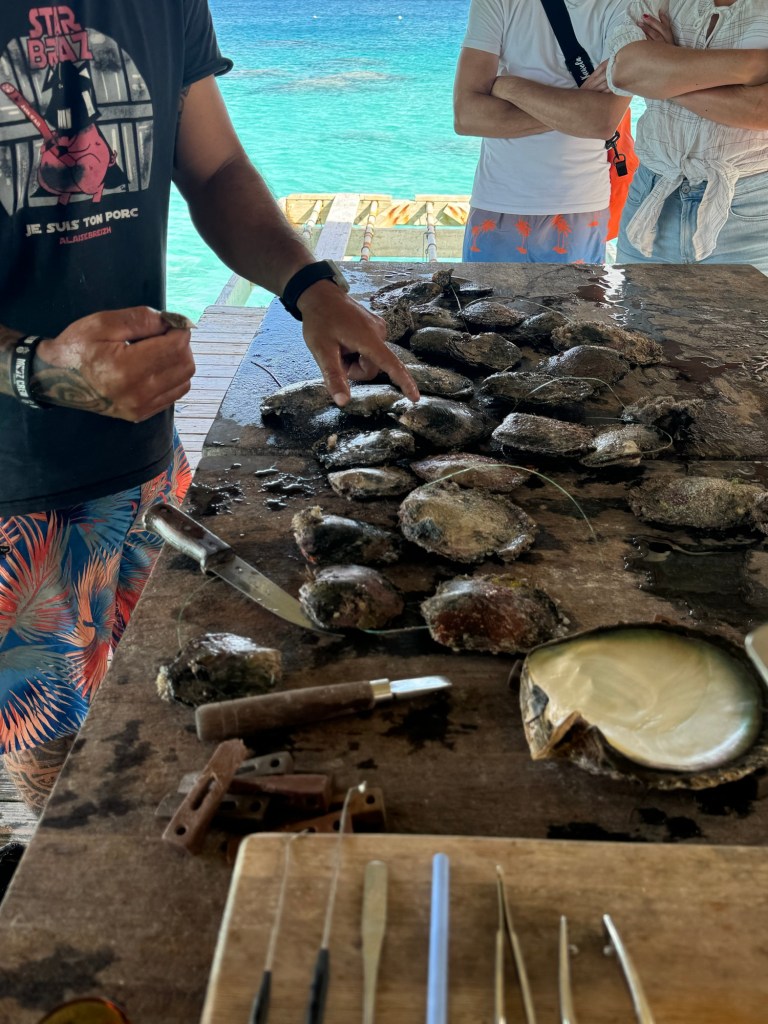
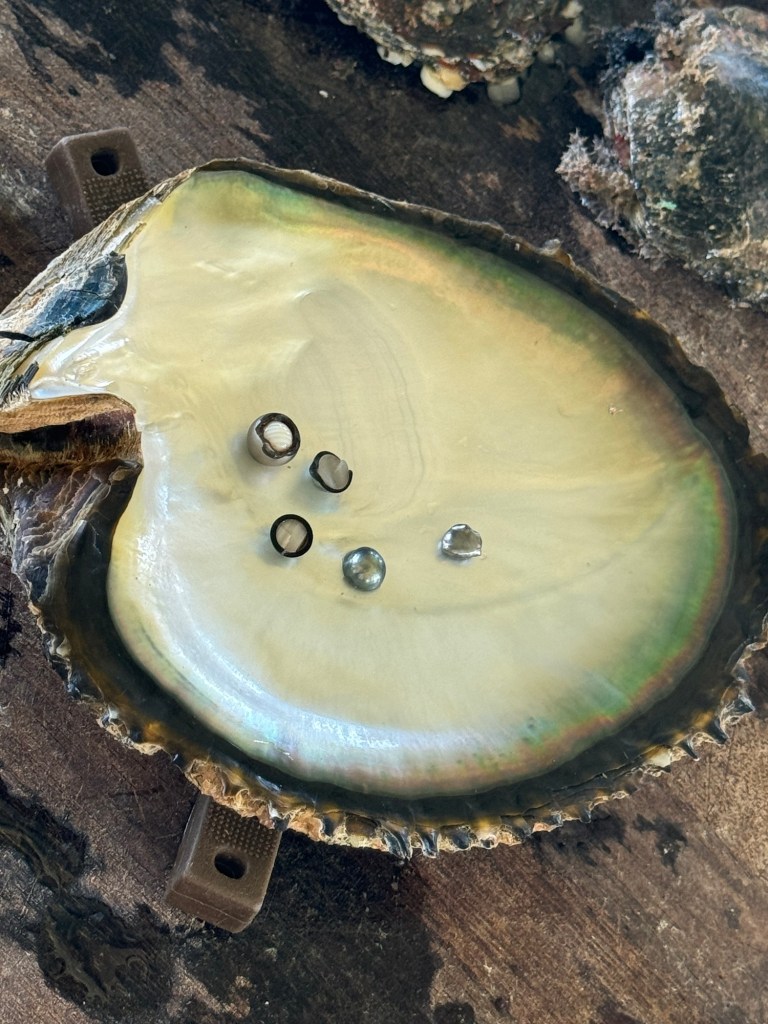
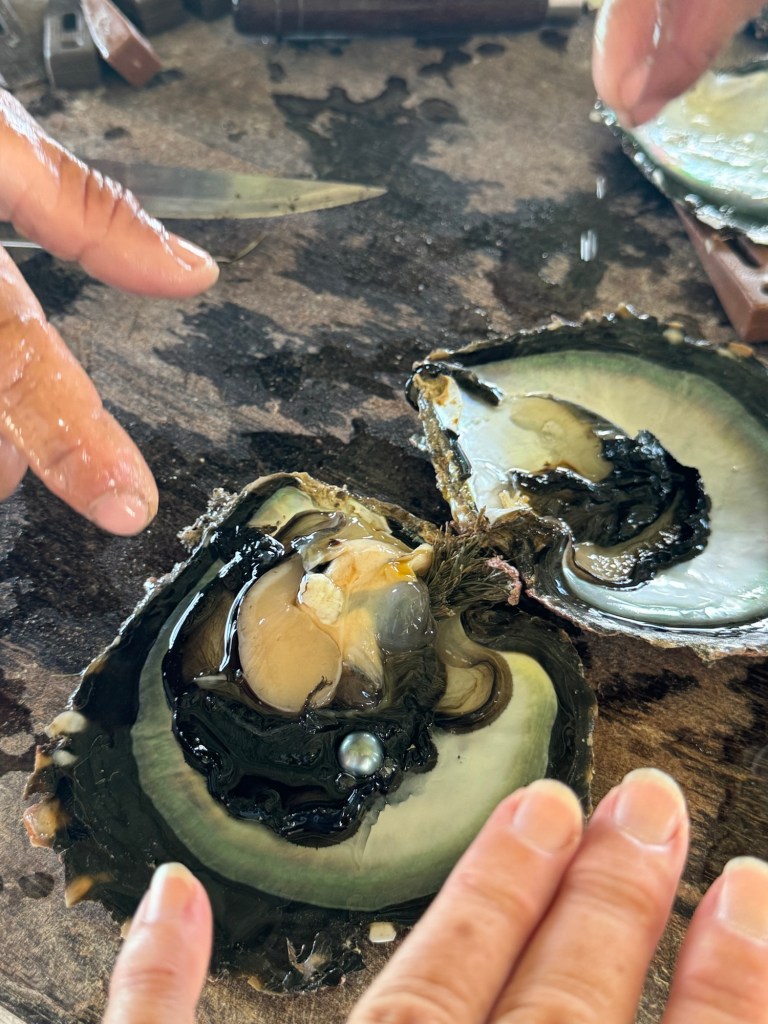
The initial seed implant occurs when the black-lipped oysters are about 18 months old. The implantation is performed by an oyster master who is credentialed after two years of education in Rangiroa, a neighboring atoll. The “seed” is made from a mussel shell from – you guessed it! – Mississippi, which is then finished in Japan. The master selects an oyster that is sacrificed to make 19 grafts of the lip for implant site of the lucky seeded oysters. The small initial seed is placed in the stomach of the oyster, then covered by a graft. The oysters are attached to cages and the cages are placed in the lagoon, floated by an oyster pearl buoy. Every three months, the cages are brought to the dock and pressure washed to remove the growth that might otherwise suffocate the oysters. After 14-18 months, the master gently pries the shell partially open and removes what they hope will be a perfectly round pearl that has coated the seed. The first harvest typically results in a shiny pearl that might make a small earring, and the second harvest might go into a necklace.
If the pearl is perfect, the oyster is reseeded with a seed the size of the extracted pearl (no subsequent grafts), and the process is repeated up to four times per oyster, at the rate of 14-18 months per pearl. If the pearl is imperfect, the oyster ends up on a dinner plate at the nearby restaurant.
The tour was fascinating and made even better by the guides near-perfect English along with beautiful sounding French. The tour was free, so we purchased a lottery ticket in advance, which allowed us to select an oyster and keep the pearl if it had one. We got a lovely pearl, which they polished and put on a bracelet while we enjoyed an espresso at a table with our feet in the water. Life is tough.




What’s Next
We will spend the next week or so at less inhabited atolls starting in Toau, before heading to the more populated Rangoria. Much to my delight, Herman pulled the anchor in Rotoava under the watchful eye of a turtle. Herman was working too hard to realize he was being supervised.
We had an uneventful exit out of Fakarava and got to watch a bit of a feeding frenzy on our brief crossing.


 Sailing Tieton
Leave a reply to svtieton Cancel reply