Huahine is about 80 miles northwest of Tahiti and is the first of the Leeward Islands region of the Society Islands. Bora Bora, 40 miles northwest, is the most well known of the Leewards. Like Tahiti, Huahine-nui (big) has an iti (little) island that has completely separated, yet is still part of the same reef system.
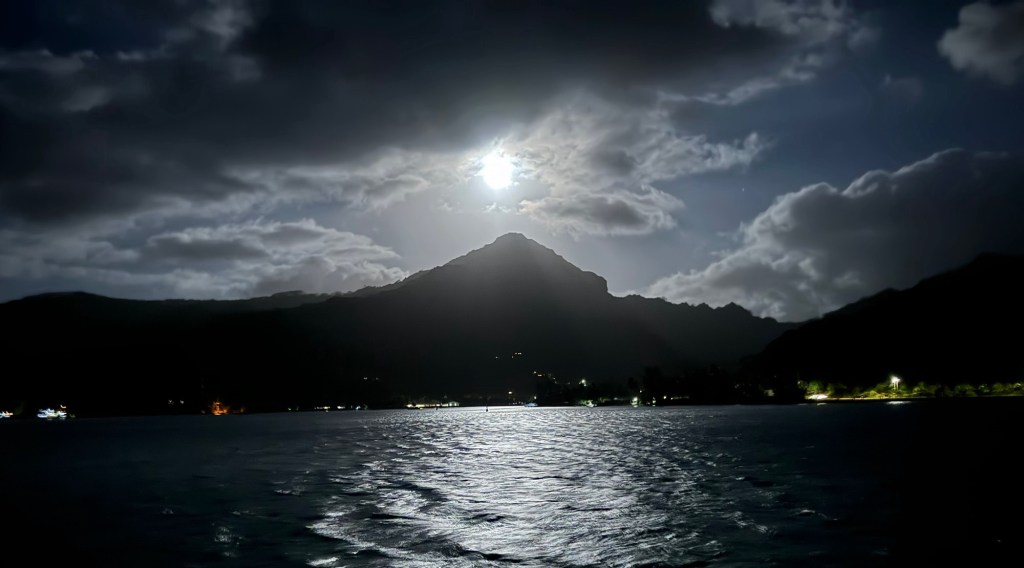
Our overnight voyage from Mo’orea was uneventful, except that Herman let me sleep through most of my 2 AM watch. 😴 A whale breached behind us as we approached Huahine, and we also saw another pod of whales surfacing ahead. Having swum with whales adds a new level of wonder and amazement when we see them on the surface.
Hana Iti
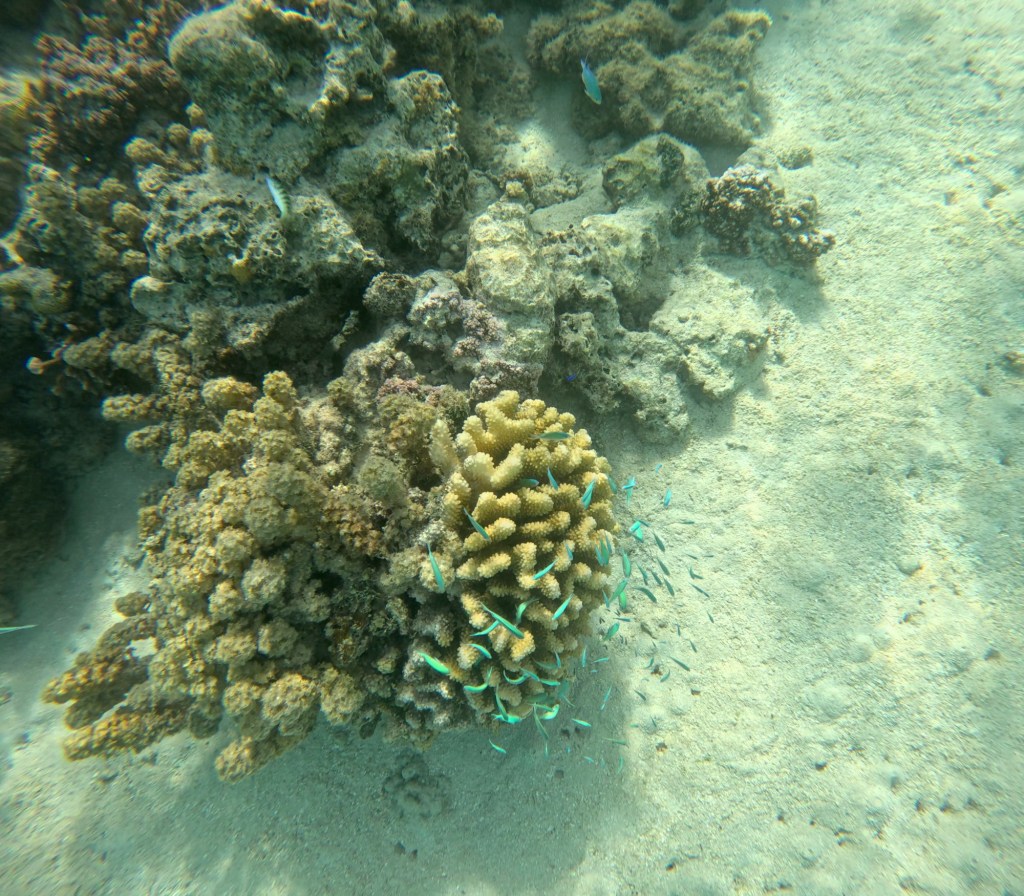
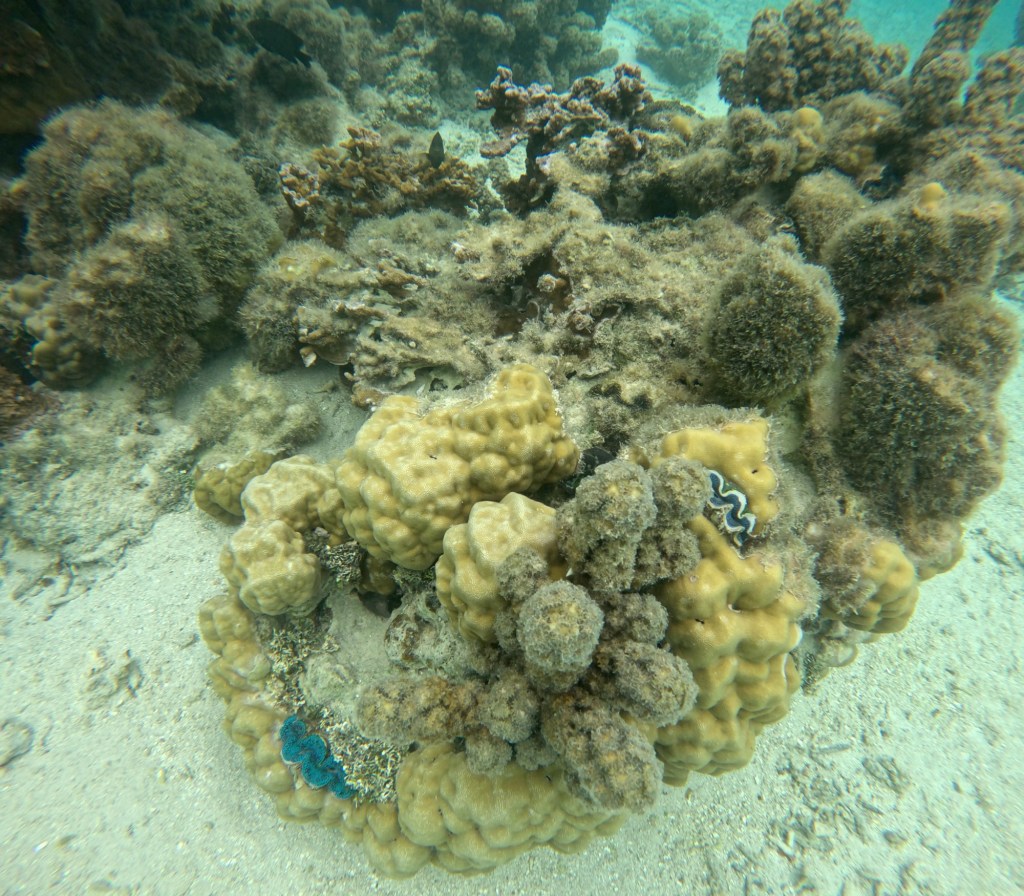
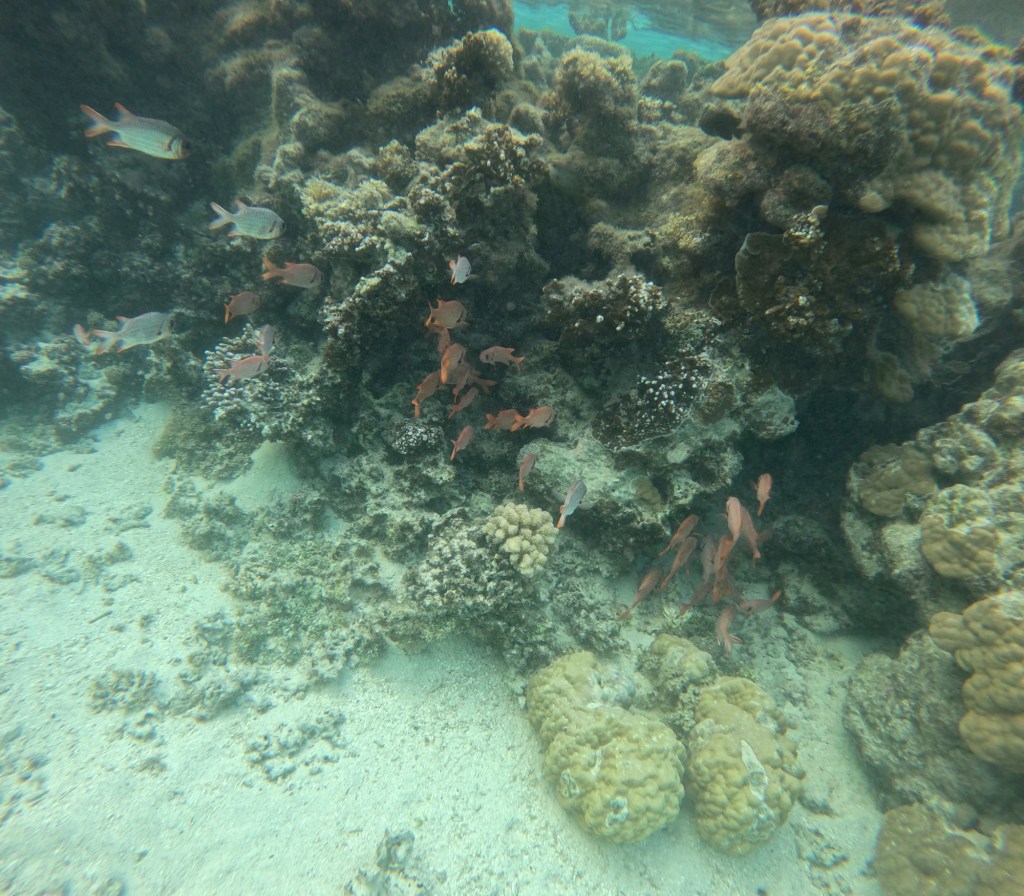
We spent our first night on a mooring buoy in the bay between the Huahine islands. We snorkeled a nice coral garden at the nearby motu.
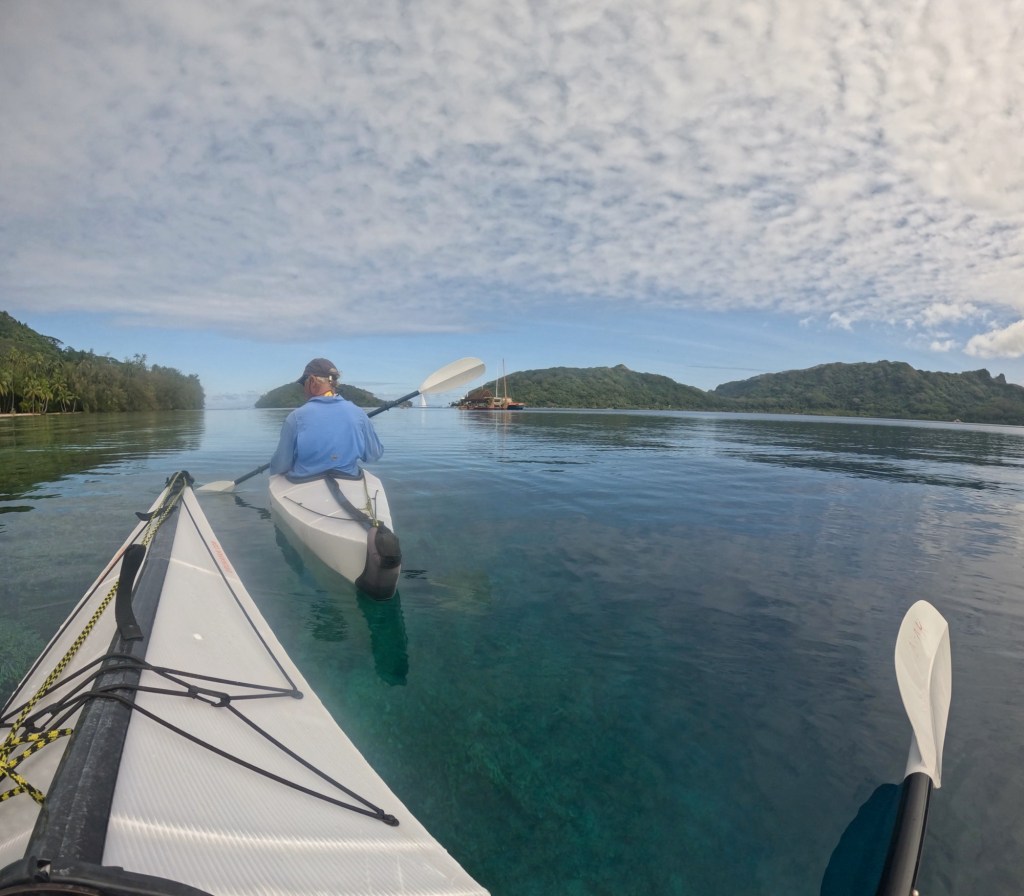
The following morning we paddled our kayaks towards the bridge that joins the islands. A coral reef bordered the island and in the calm waters, we were able to kayak along the edge of the reef cliff. Under the kayak was bottomless deep water and right next to us was a reef about a foot below the surface. In the bay was the cutest little houseboat with a catamaran beside it that would be a great AirBNB.
Fare’
We moved to Fare’, Huahine’s main town, so that we’d have more shelter from the upcoming winds. Huahine (feminine) is thus named because the profile of island appears to be a reclining pregnant woman. We agree, although a modern OB/GYN might be concerned about the shape of her belly.
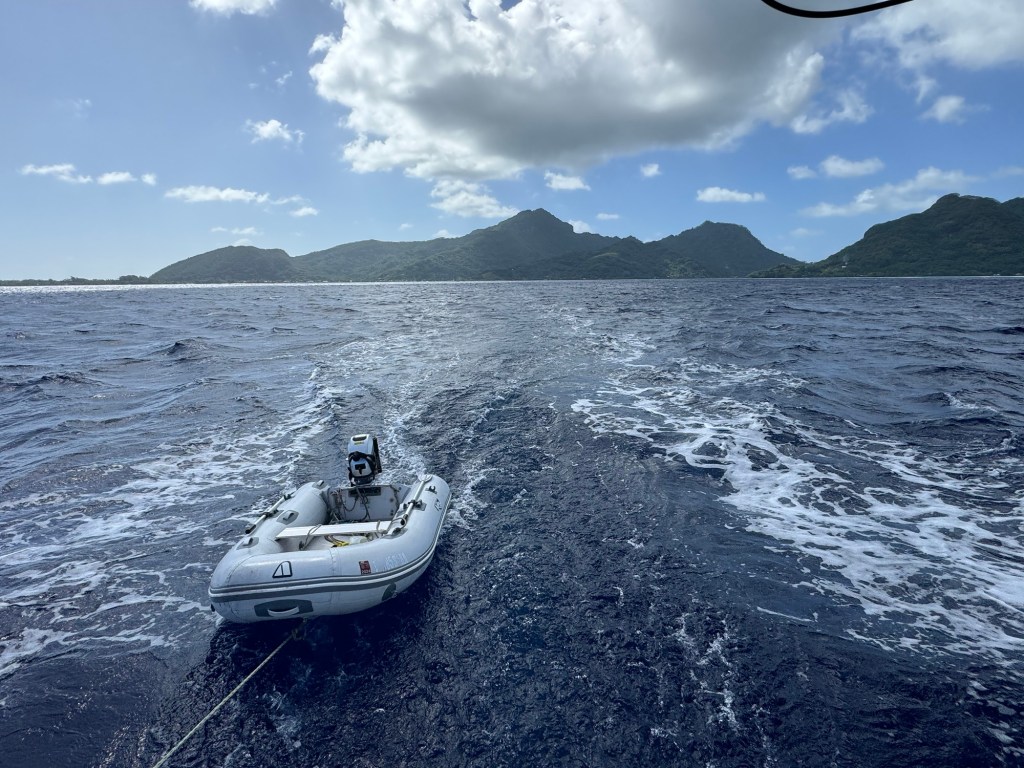
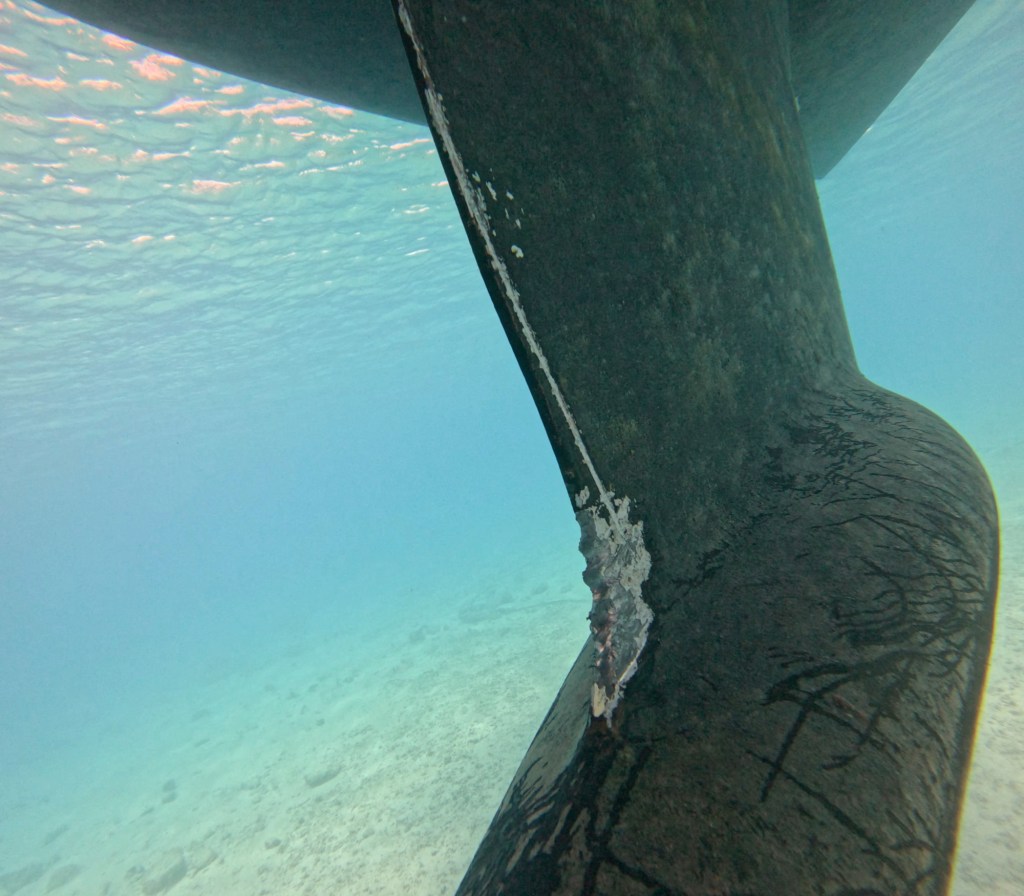
As opposed the waltz we had at the LaPaz, Mexico anchorage, we experienced more of a tango in Fare’. Our shallow 14 foot anchorage meant that the boat quickly danced around with changes in the strong shifting winds and currents, sometimes circling completely around the anchor. After a rocky night at anchor, we discovered the next morning that our anchor chain had wrapped around the keel, the sailboat’s heavy bulb beneath the hull that provides stability. After a few attempts to release the chain by maneuvering the boat around it, Herman donned his scuba gear. He secured a line about six meters out on the chain, and I used the winch to haul in the anchor chain. Fortunately this relieved enough tension that Herman was able to unwrap the chain from the keel. Next time we’re in a similar situation, we’ll float the chain so it doesn’t have the opportunity to get close to the keel.
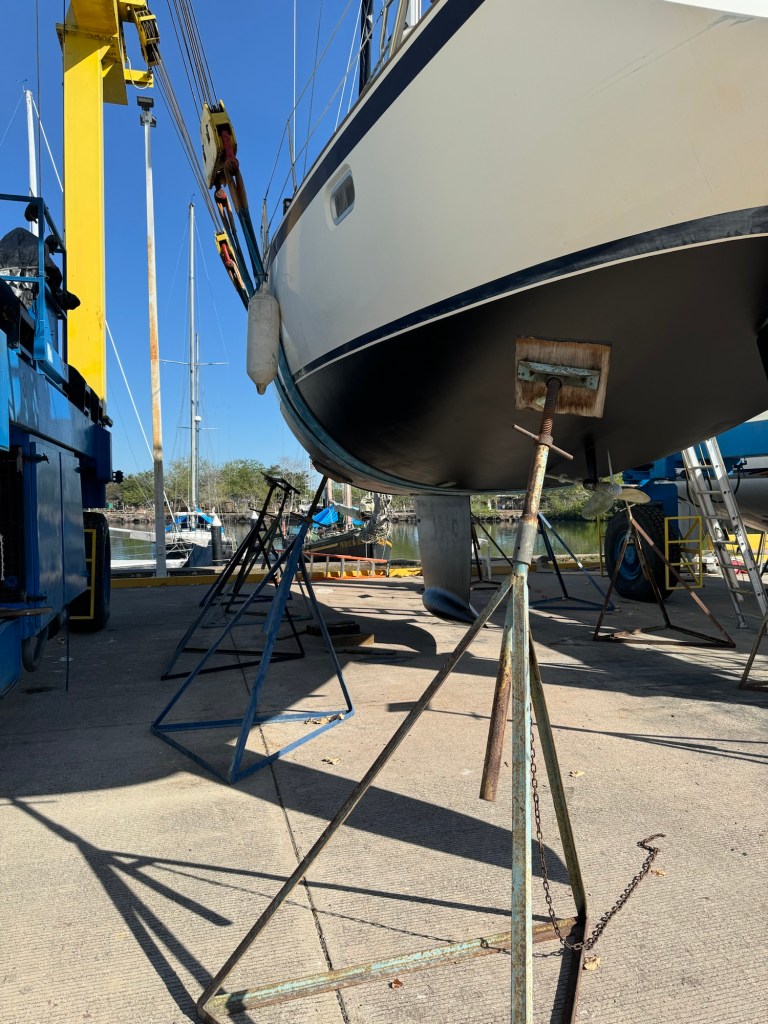
(Bottom Paint in
San Blas)
The town of Fare’ was delightful, in that it had more locals than tourists or cruisers. Huahine is a three hour ferry ride from Tahiti, and less than an hour to Bora Bora or Raiatea. The bay front yacht club had a mix of locals and visitors and was busy morning to night, especially for happy hour. We watched spinner dolphins play in the current, and even better was the wonder in the eyes of children viewing them.
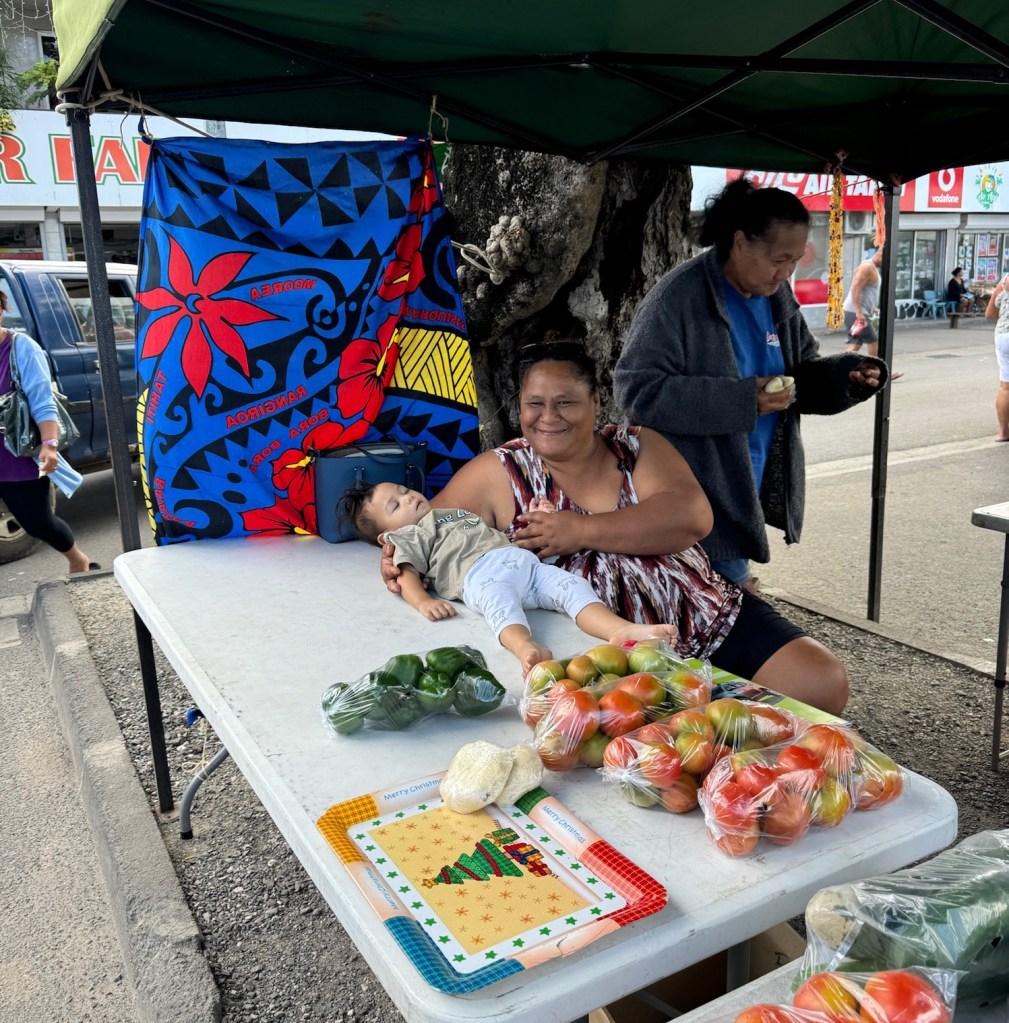
Along the street local vendors set out tables to sell their fresh fruits and vegetables. Although the mix of street vendors varied, we saw vendors each time we came into town. Fish vendors come on Fridays, but we missed that. The local grocery store was the best we’ve seen since Mexico, or maybe even better. A few times, a small group of men sang harmonies and played ukuleles near the village waterfront.
Huahine Tour
Alix led our four hour tour that we shared with a French couple, and she switched easily between French and English. Alix, along with her husband and son, have lived on their boat since moving a year ago from coastal La Rochelle, France. Her experience as a ranger and outdoor advocate brought a richer perspective to our tour, plus now we have to add La Rochelle to our list of places to visit. Back to the tour…
More About Vanilla
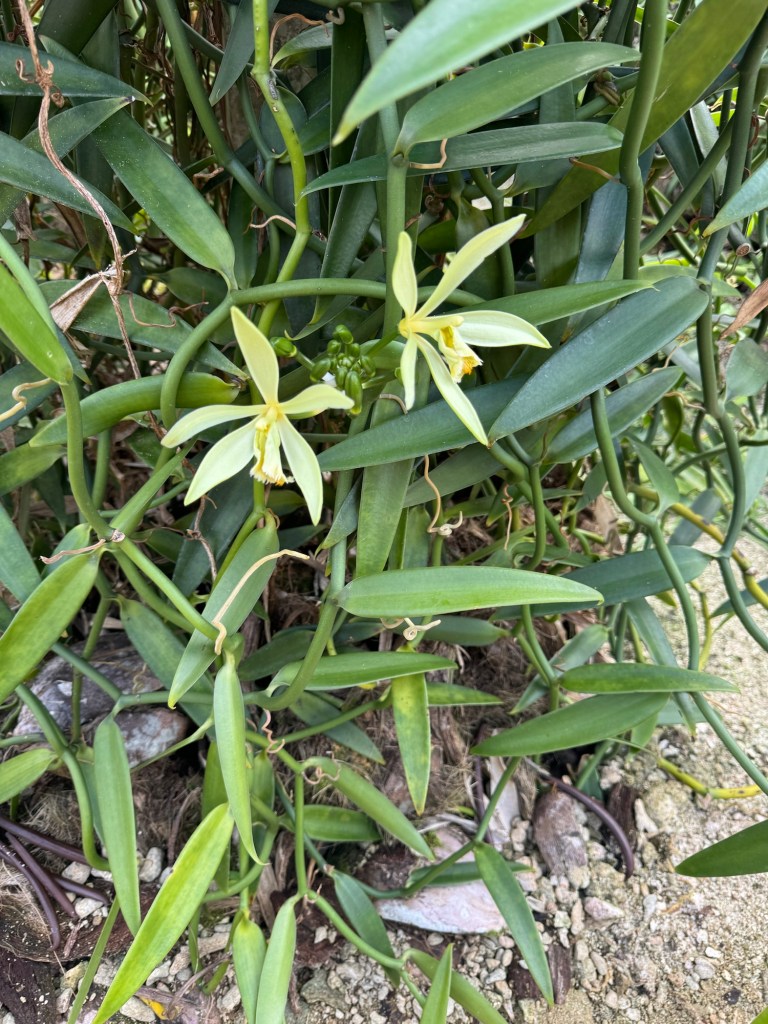
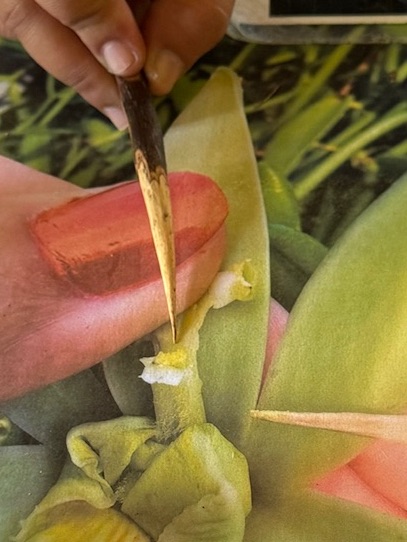
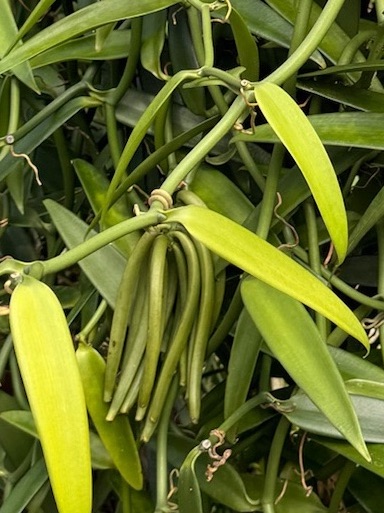
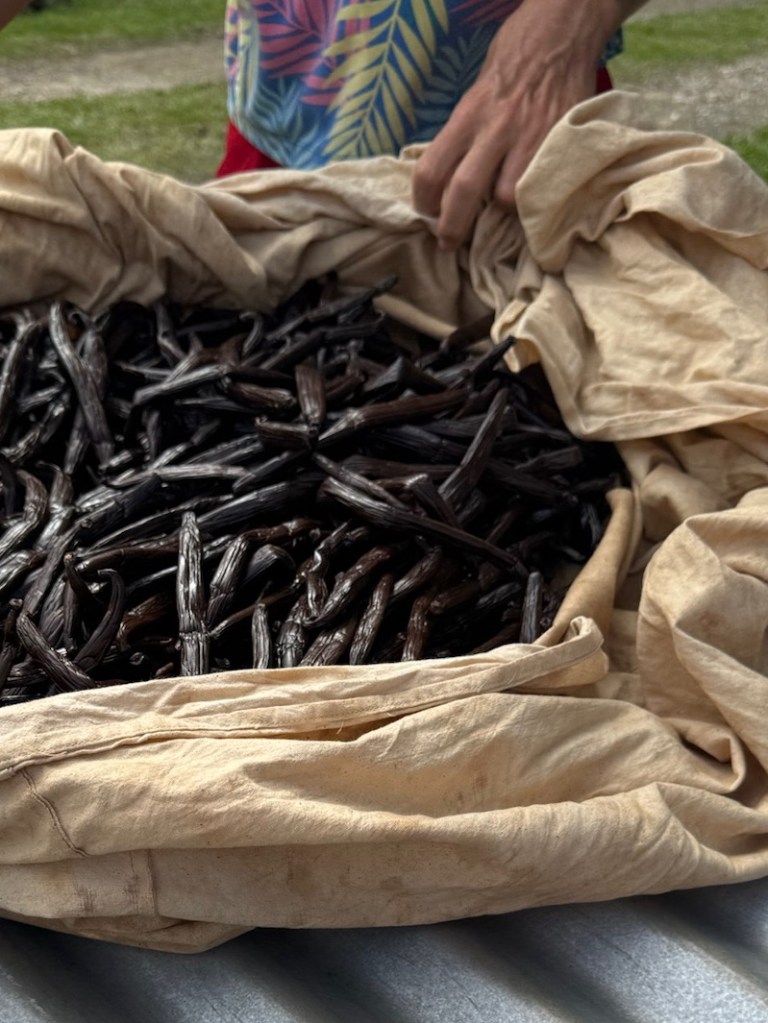
We visited a family vanilla farm where six family members work their three tents. Vanilla plants were brought from Mexico centuries ago, but not the bees that fertilize them, thus flowers must be hand pollinated in order to produce beans. When nighttime temperatures dip below 78F (25C), flowers bloom at dawn and fall off by 2 PM, which requires daily vigilance to pollinate the flowers. A carved stick is used to gather pollen and place it deep within the flower’s stigma. Ten months later the beans are harvested so the plants will continue to flower.
Vomit Fruit
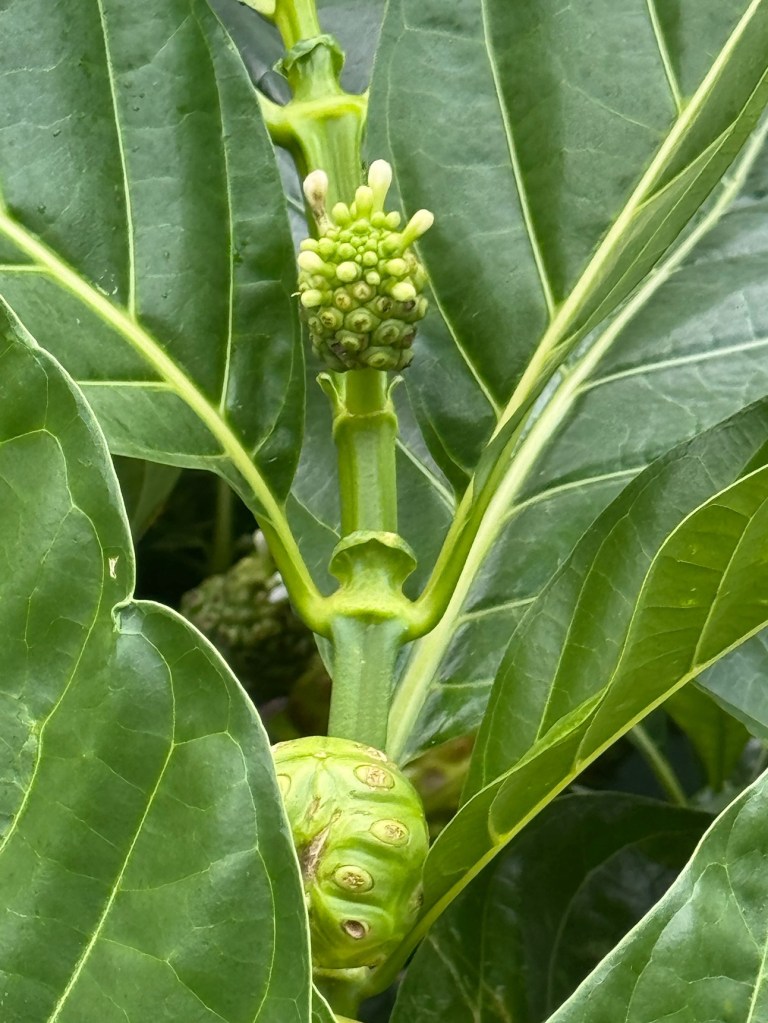
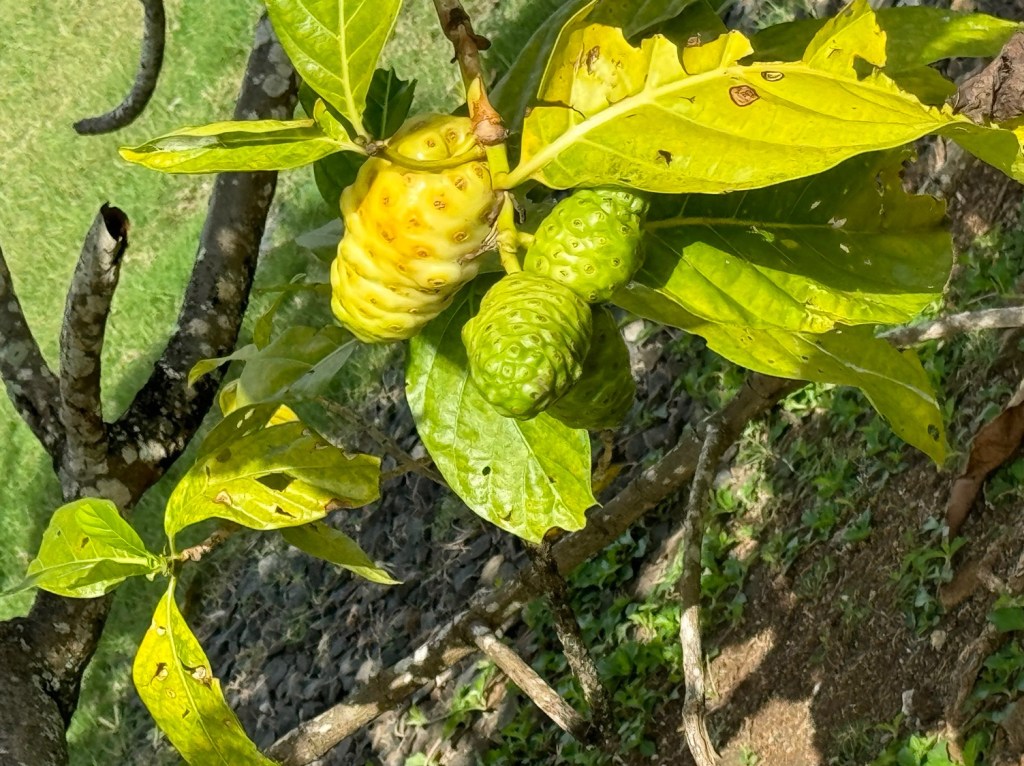
While at the vanilla farm, we also learned about the strange fruit we first saw in the Marquesas, and this explains so many things. Through our travels, we seen many splat-covered sidewalks underneath what we now know are vomit fruit trees. In Fakarava, via gestures a grocery clerk convinced me that shouldn’t buy what I thought was coconut milk because it tasted like vomit. Bringing in all together, we learned that many believe vomit fruit has great medicinal qualities and will drink it in spite of the fact it tastes like vomit.
Mareas & Maeva
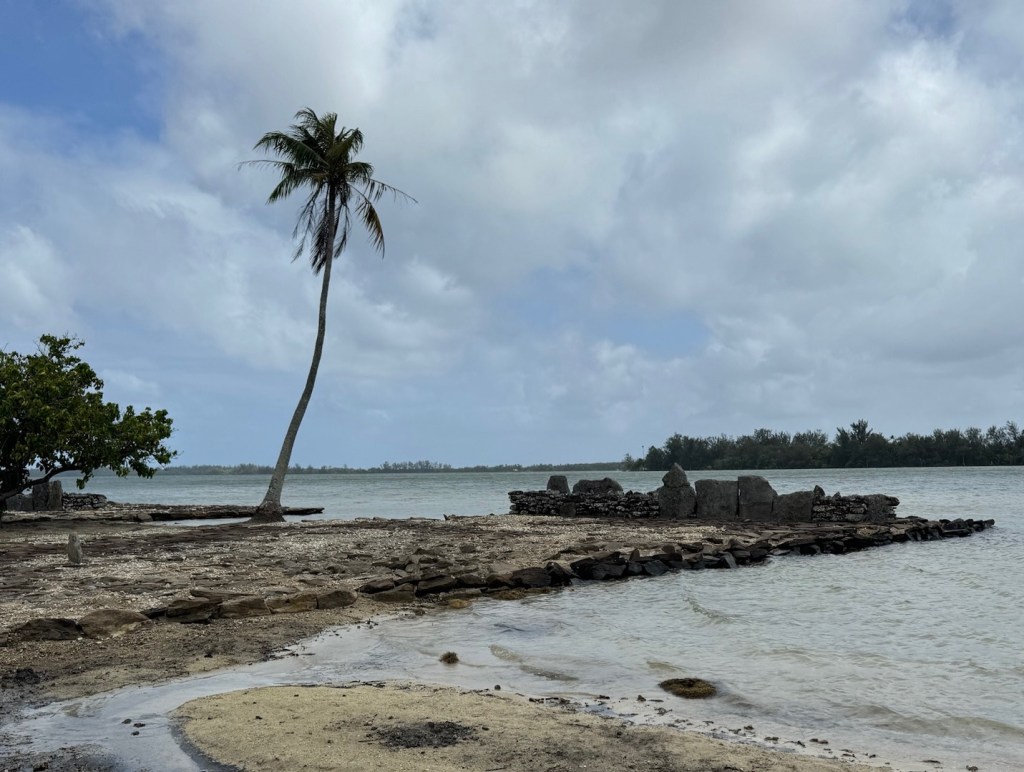
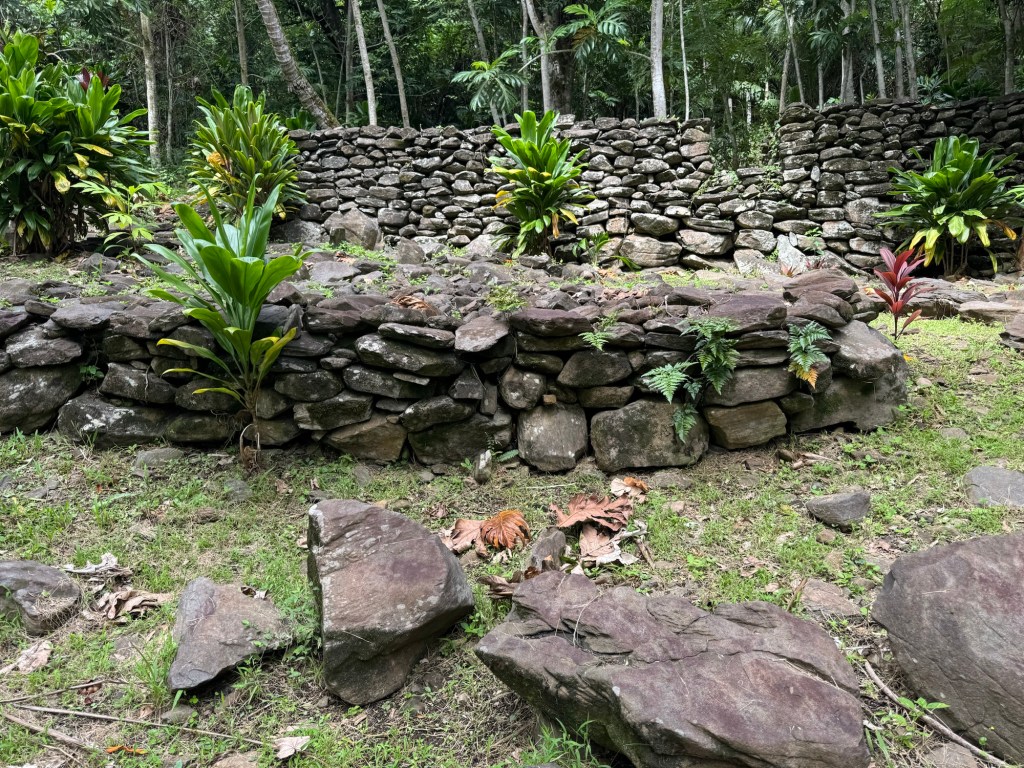
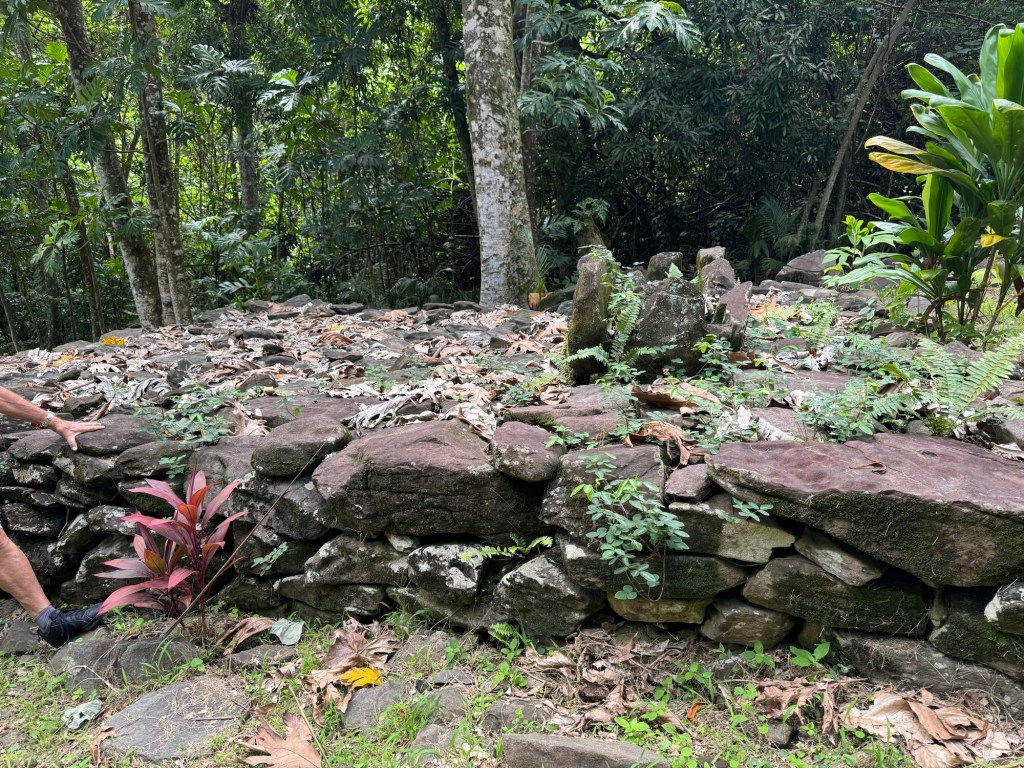
Mareas are traditional temples that we’ve seen throughout French Polynesia. Although some are shared by communities, many families have their own Mareas. Alix explained that they’re the joining of Tapoo and Tao (forgive me if misspelled). To be revered, Tapoo is dark and not breathing – so ocean life except surfacing whales, unborn babies, and the deceased. Tao is light and breathing. Mareas are the joining of the two, and where the living can connect with those who aren’t living.
Historically, the royal families lived together in Maeve near Lake Fauna Nui. Remains of their homes and burial platforms are on the hillside above the town behind a fortress used to defend the royal families from the marauding Bora Bora.
Ancient Fish Traps
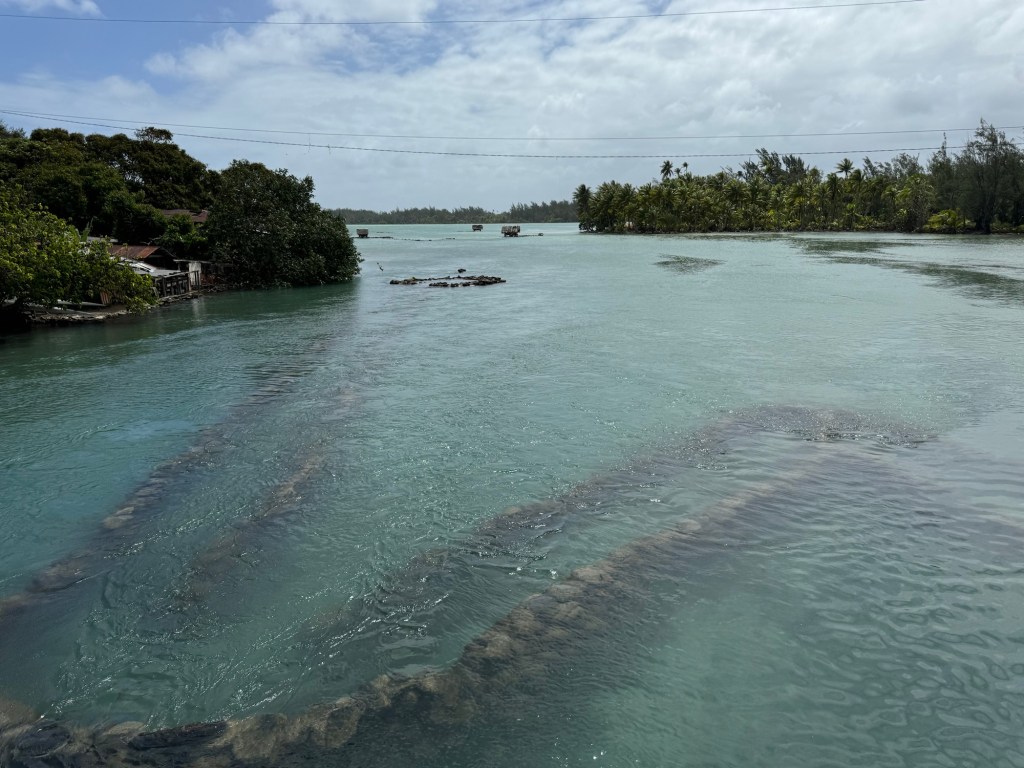
Adjacent to the town of Maeve are ancient fish traps still in use today, having been maintained over the centuries. Historically only royal families were entitled to fish from the traps, but now village fishermen maintain the traps and may take the fish. Hapless fish swim in with the tide where they are easily trapped before the tide recedes. Alix remarked that very similar traps were built in La Rochelle during the same timeframe. Isn’t our world amazing?
Sacred Blue Eyed Eels
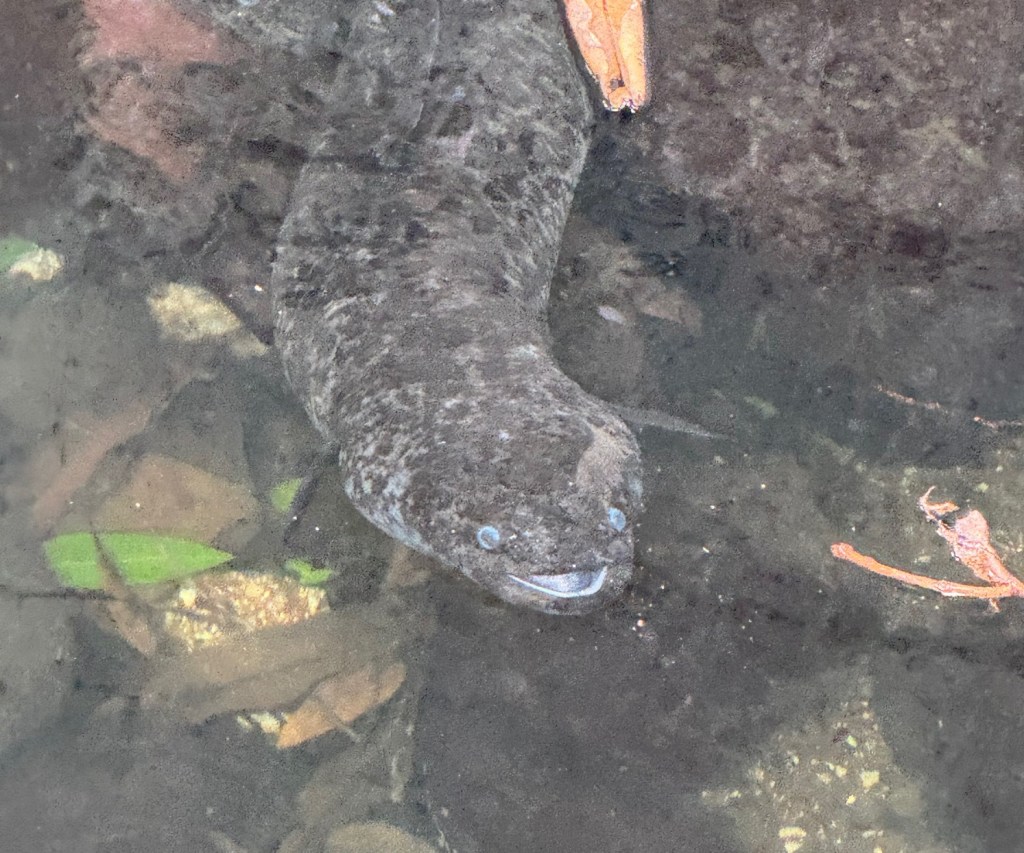
Going back to the concept of Tapoo, these eels are sacred because they like the dark, don’t breath air and live in the water. They spend most of their life in fresh water streams and go sea to breed. Natives visit the eels and show their honor by feeding them. Sacred or not, I think their blue eyes look creepy.
What’s next
Taking advantage of a day with decent winds, we set sail for Raiatea where we’ll wait out more days of strong winds and get permission to exit French Polynesia. Two dolphins escorted us out of the bay putting the perfect end to our great visit to Huahine island.
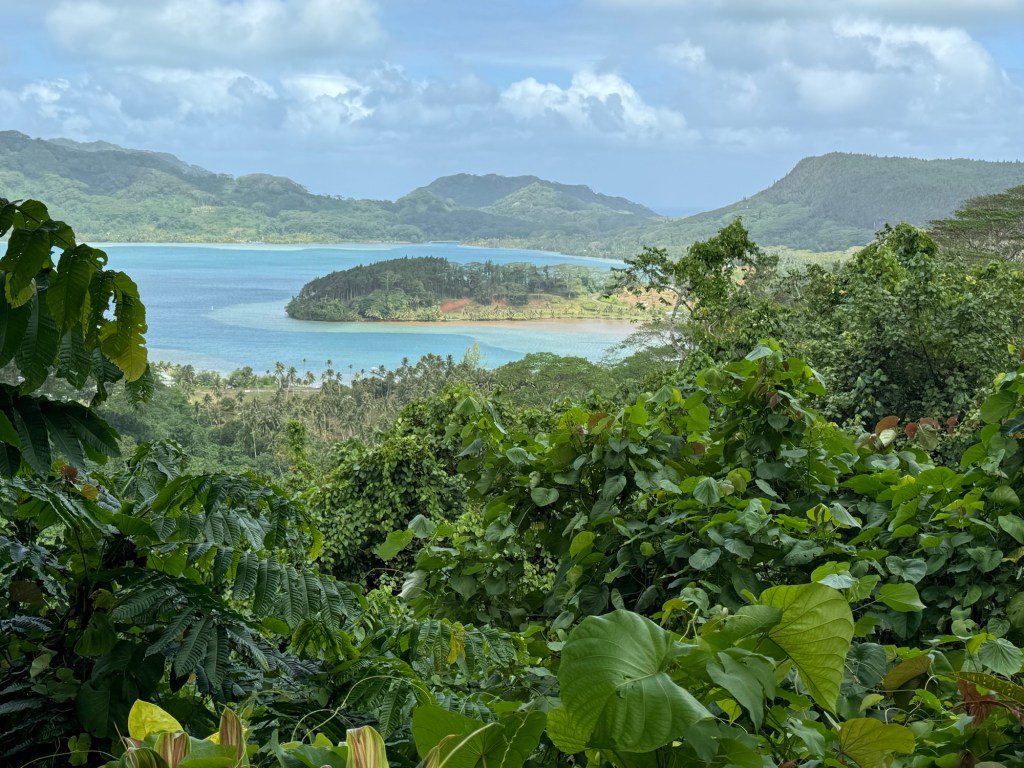
Huahine Nui and Iti

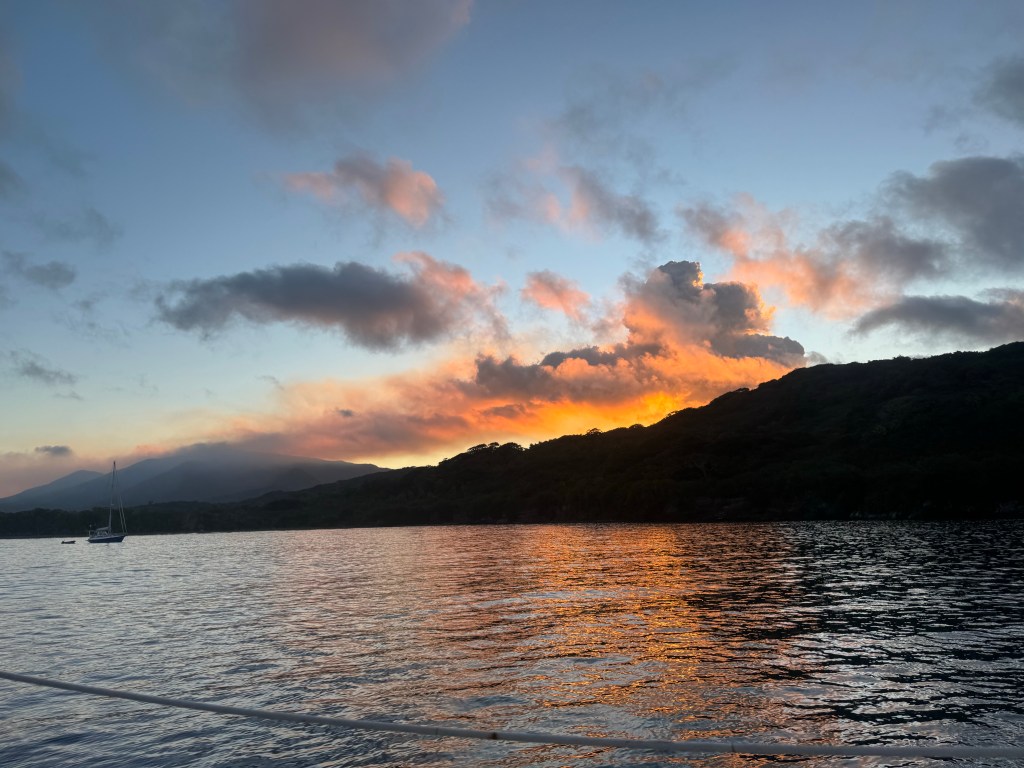
 Sailing Tieton
Leave a reply to alysorsb Cancel reply