The Kingdom of Tonga consists of 171 islands in four groupings (south to north: Tongatapu, Nomuka, Ha’apai and Vava’u). To the north is Samoa, west is Fiji, and 1,100 nautical miles south is New Zealand. Only 36 islands are occupied, because of small landmass and inadequate water. The deep Indo-Australian tectonic plate is immediately to the west, and occasional plate shifts cause earthquakes which sometimes result in the birth of new volcanoes/islands. A volcanic explosion is 2022 devastated some of the islands in the Tongatapu group and reached north into Vava’u beaching boats.

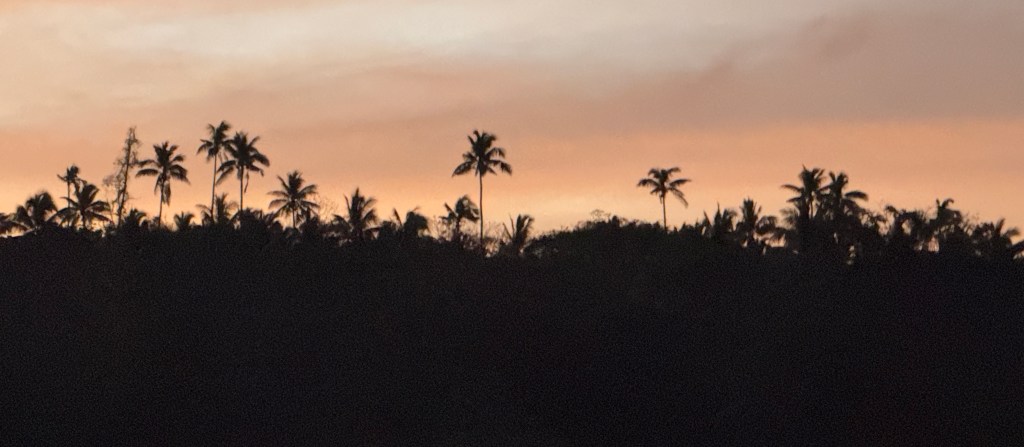
We will stay Vava’u group for the duration of our Tonga visit. Vava’u is known for its deep waters and sheltered coves that serve as breeding and birthing places for whales. In some ways the water, mountains and terrain remind us of Puget and Desolation Sounds, except the weather and water are warmer, and coconut trees dot the landscape. It is difficult to believe that we’ve already been here over three weeks.
Captain Cook dubbed Tonga “the Friendly Islands” and in the Ha’Apai group was befriended by a Vava’u chief, who very wisely (and falsely) told Cook the Vava’u waters weren’t navigable. Thus Vava’u remained “undiscovered” until the arrival of Spain’s Captain Maurelle, who had recently been given command of Spain’s fort in San Blas, Mexico. The Pacific trade winds provided the most efficient route, and when Maurelle ran low on water and food, he replenished in the Vava’u group, claiming them for Spain. Even Maurelle missed the nearby community of Neiafu, which now serves as the main port and commercial hub of Vava’u. When we arrived, Neiafu was too crowded for us to anchor, so we proceeded immediately to Port Maurelle. It wasn’t until later we discovered the amazing connection to San Blas where we were in February.
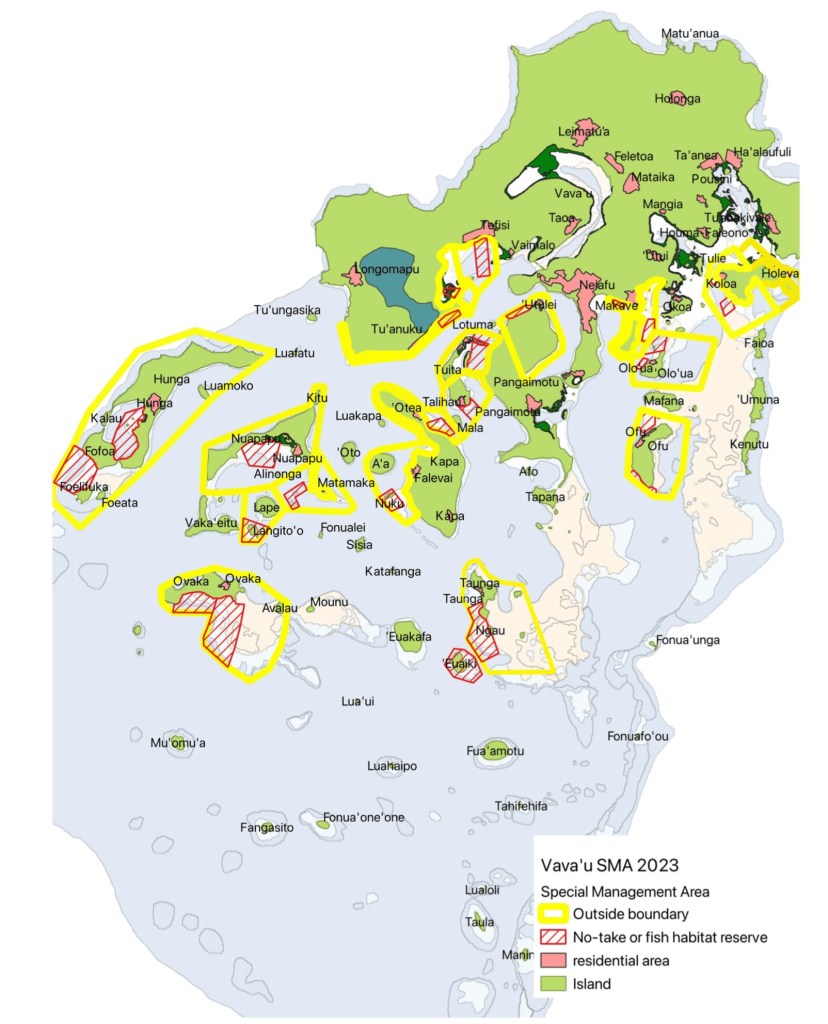
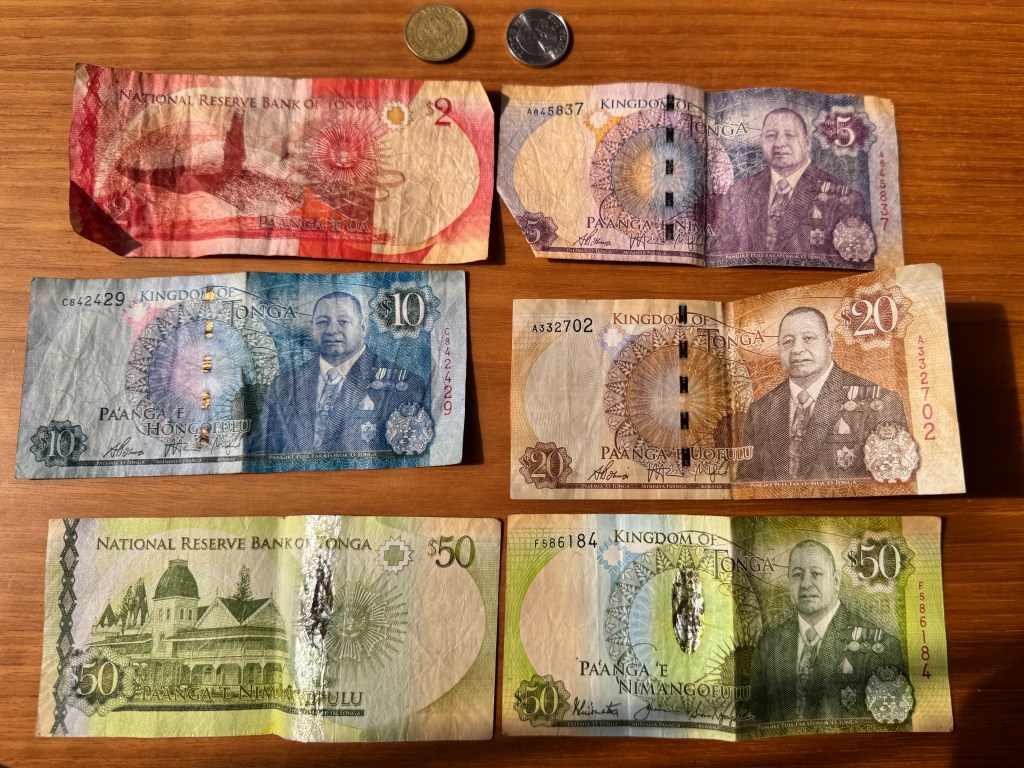
In 2010, legislation enacted transitioned Tonga from a true monarchy to a government similar to the United Kingdom. Officials are now elected and the monarchy holds a symbolic role. In 2002, a system of Special Management Areas (SMA) was adopted in an effort to preserve fish and coral habitat. Villages boundaries provide the locals the ability to restrict fishing and anchoring within their boundaries. Leaders can also install moorings and collect mooring and anchoring fees. Most of our anchorages have been free, and the most we were charged was about TOP$20 (less than US$10) per night for a mooring in the main harbor of Neiafu. We’ve also heard that the SMA regions prohibit villages from plundering each others’ fish habitat and water supply.
The International Dateline
Tonga, at GMT +13, now dubs itself as where the day begins, so we’re now 20 hours ahead of the US west coast, at least until daylight savings time ends. Since our arrival in the Marquesas (GMT -9.5), I’ve been contemplating the political nature of the international dateline. The prime meridian in the Royal Observatory in Greenwich marks zero degrees longitude, and also where the time begins at Greenwich Mean Time (GMT). According to book “Longitude” this was approved in 1884 at the International Meridian Conference, much to the upset of the French, who kept with Paris Mean Time until 1911. Some might think the international dateline was a straight line, but it definitely meanders along political boundaries. I’m not sure why the day doesn’t begin in Kiribati, which has chosen GMT +14 and +13. Directly north of Kiribati lies the Hawaiian Islands, which keeps on the same date as the US at GMT -10.

All this leads me to believe I just might have too much time to contemplate. For those wondering, the technical answer to the what to do if a birthday occurs crossing the dateline westward is that the birthday should be skipped. The reality is that Herman got two birthday treats of homemade frozen yogurt. More wild partying underway!
Tonga Culture
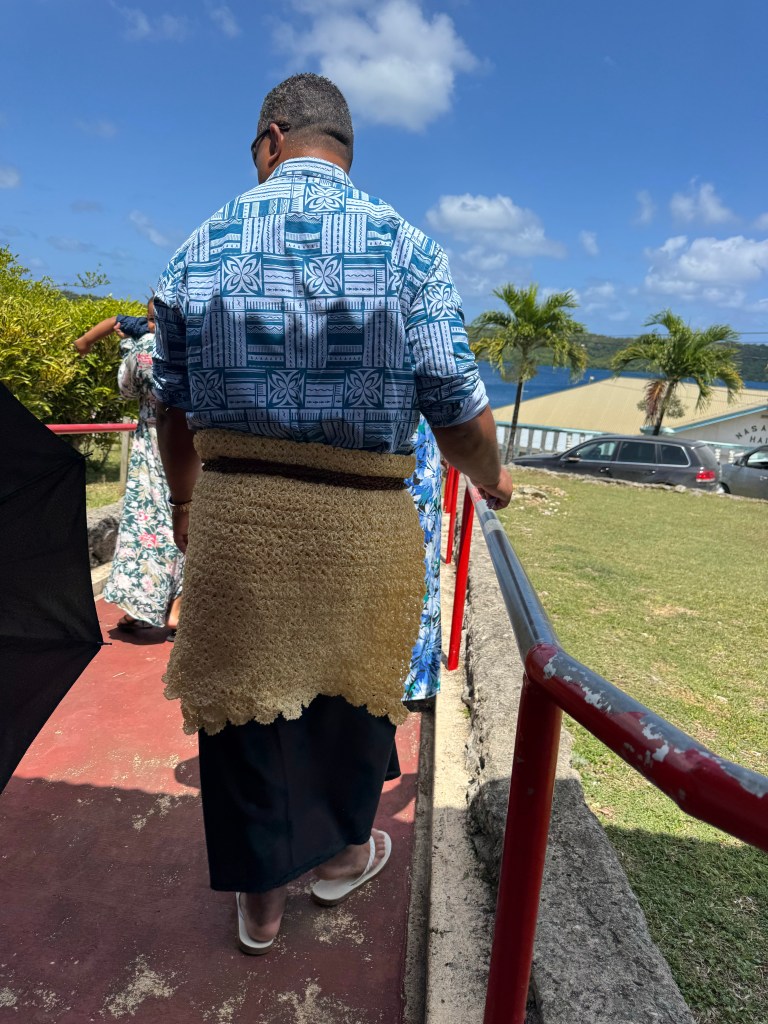
Tongans dress very conservatively and visitors are also expected to do so when near towns. Women wear ankle-length skirts (lava) with an overdress that covers their shoulders and knees. Men wear knee-length skirts or pants and shirts that cover their shoulders. Even when swimming, both women and men wear shirts that cover their shoulders. Hats are not to be worn around authority or church, and are not often seen. Many women use umbrellas or fans to shade themselves.
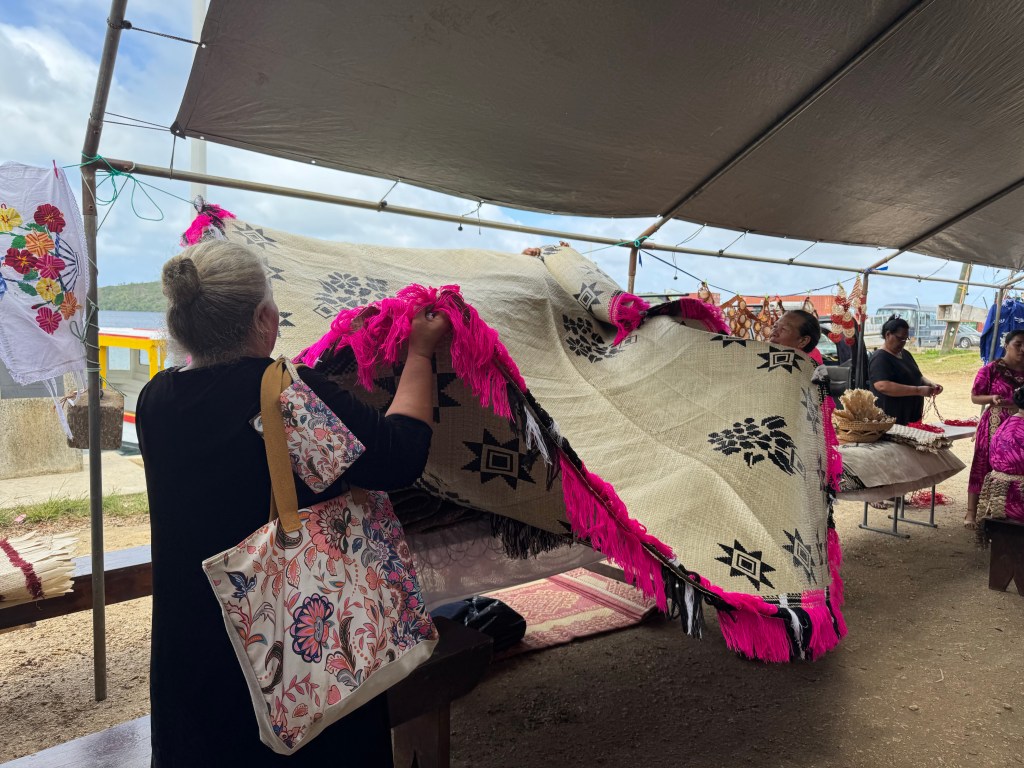
For funerals and church, women wear a decorated waistband (kiekie) and men wear a woven mat (taovala). Both show respect for ancestors and the royal family, and many are handed down over generations.
Sunday is a day for worship, rest, and family. We went to the Catholic service, which was mostly in Tongan with the occasional English for the visitors. The music that reverberated throughout the church was acapela, except at the beginning of some songs the music director played a brief melody on his mouth organ. Without a piece of music in sight, it seemed that everyone in the congregation sang their part in the music and harmony. I wasn’t the only person with tears.



Deterioration
Cyclones, salt water, insects, heat and humidity take a terrible toll on infrastructure, and the evidence is apparent throughout the main town of Neiafu. Although The Moorings charter boat company no longer has yachts in Tonga, their cruisers’ guide is still used by yachties. As an example of deterioration, their 2005 guide highly recommends The Paradise International Hotel that has a swimming pool, garden, and restaurant. Little remains of the hotel, which locals are hoping will be torn down and rebuilt. Who knows how long it has been since the dock was used.


Maurelle & Swallow Cave
We first anchored at the beautiful protected cove of Port Maurelle, which provided opportunities for snorkeling, swimming and kayaking near the shore. Several “kid boat” families met ashore regularly for soccer and running on the beach.
Herman pulled the start cord out of our new Honda generator. We knew the screws has rusted over and were hoping to make it to New Zealand to have them drilled out at a Honda repair shop. Herman contacted our neighbor Walter on SV My Way to borrow an “EasyOut” tool. Although Walter didn’t have the tool, he came over to help get the cover off. I stayed in the cabin and tried to stifle my laughter as Walter talked with himself in German, and Herman did the same in English. Neither abided by the Tongan cultural norm to avoid displays of anger or frustration. We later joined Walter and Anja for a lovely dinner at a nearby resort, which involved a walk through the woods and climbing a ladder over a fence by the village.
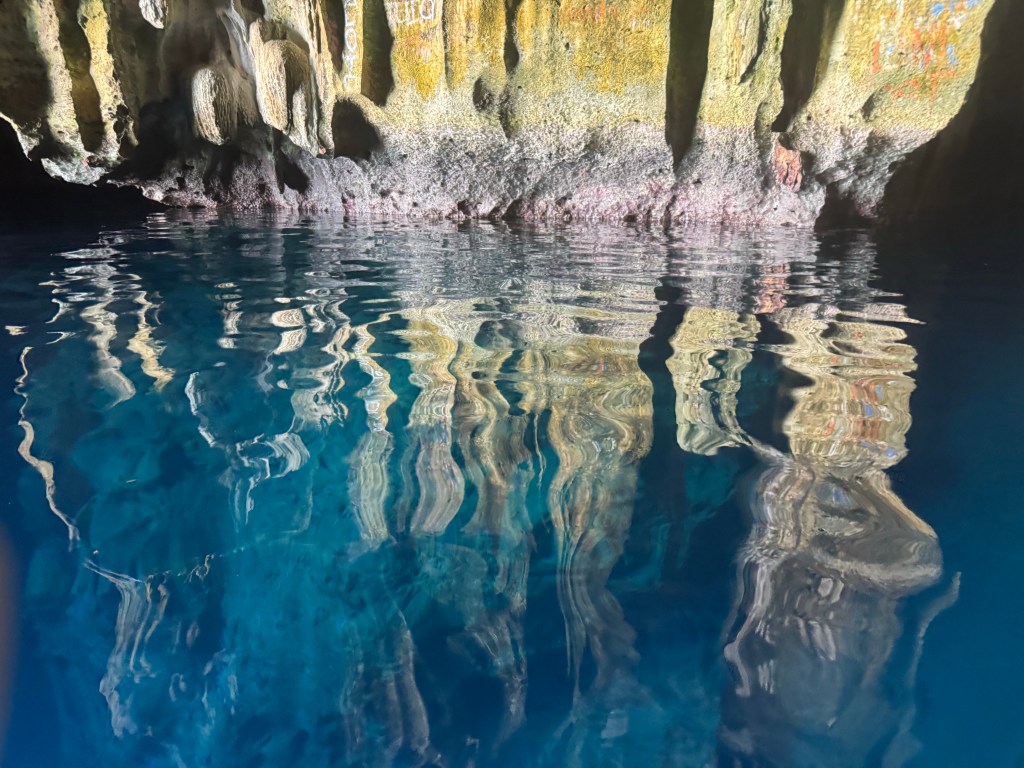
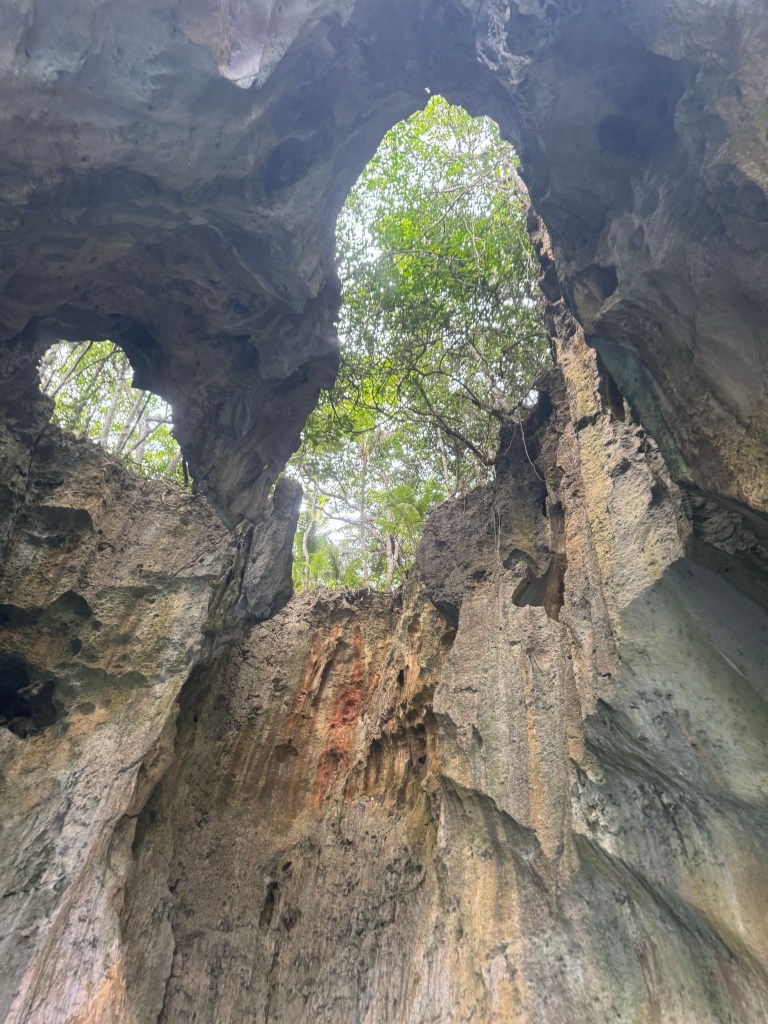
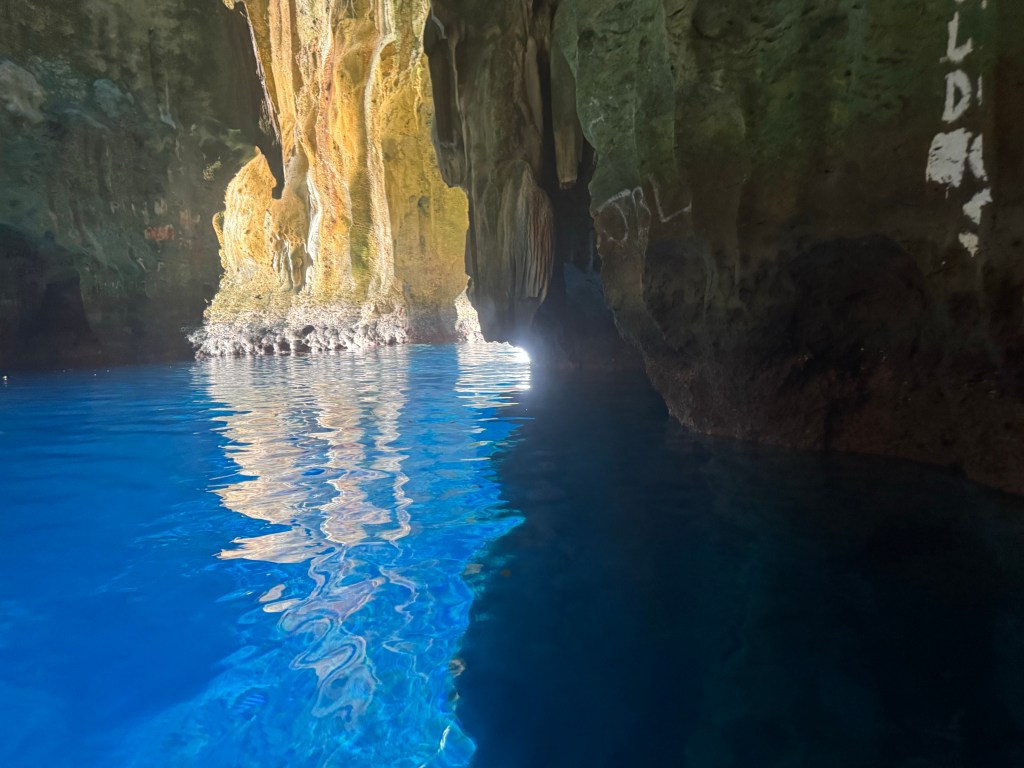
We took the dinghy inside Swallow Cave on the point near Port Mourelle. The clear water inside the cave reflects the stalagmites (and sadly some graffiti). We skipped the climb into the rear chambers of the cave, because the idea of bat droppings and cockroaches falling from the ceiling didn’t appeal.

Neiafu and Shopping
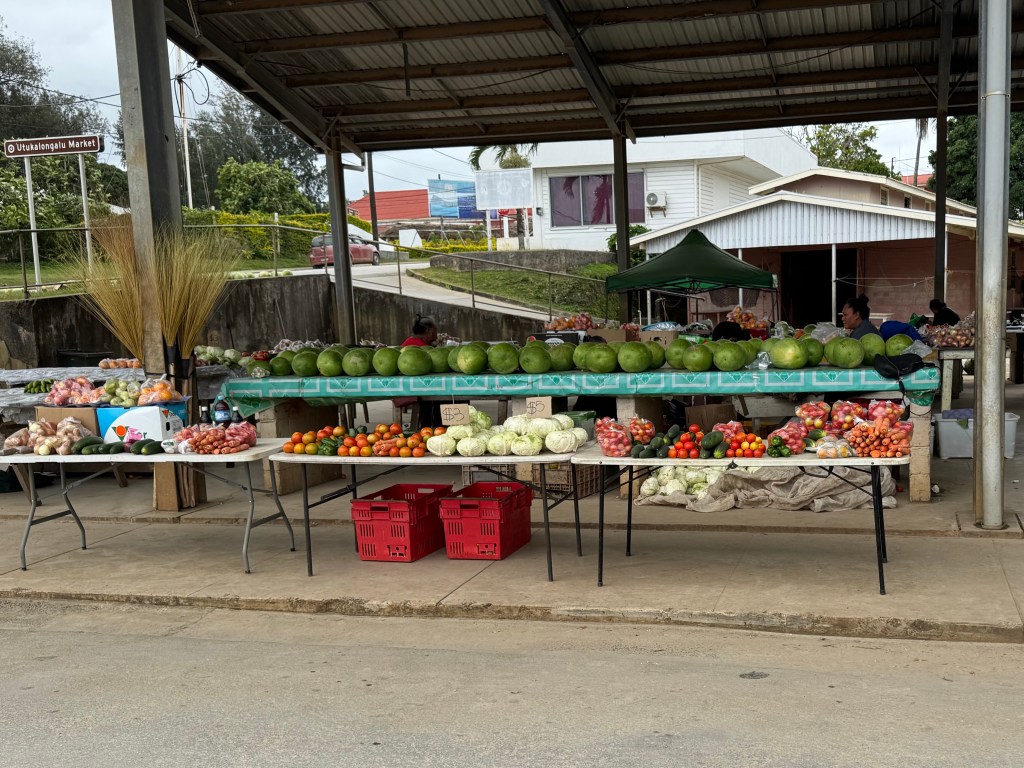
We returned to Neiafu, which comprises a waterfront with a few restaurants and a farmers’ market area, plus a couple streets inland with a variety of small stores. Chinese own most of the small grocery stores, which have similar wares from China, frozen products, canned staples, candy, and an occasional rat wandering the aisles. Many of the aisles were lined with boxes serving as extra storage, with nary a concern over liability if a patron tripped.
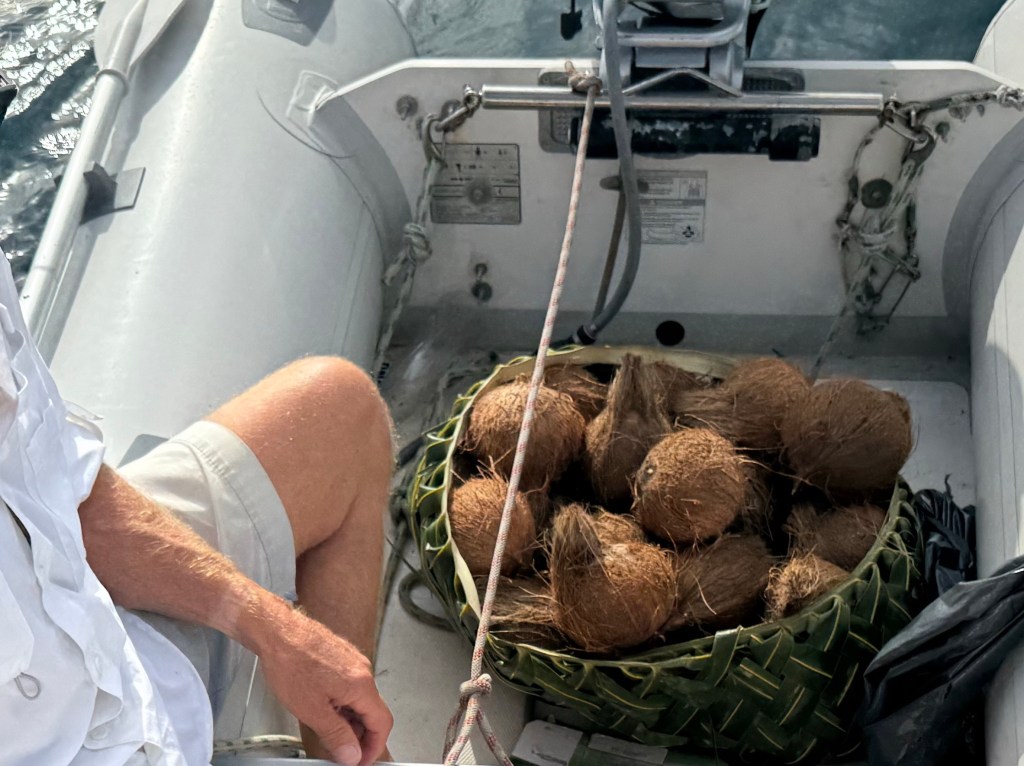
At the farmers’ market women tended the tables selling a variety of homegrown fruits and vegetables, along with others obviously purchased wholesale and repackaged into smaller sizes. Women in the interior stalls were selling handmade jewelry and baskets. We bought a few things for immediate consumption, and waited until Monday to shop before we headed to our next anchorage. It turns out Monday isn’t the greatest day and a few things weren’t available. We wanted a couple coconuts and were only able to by a laughable quantity. For about US$10, we purchased coconuts in a handmade woven basket. The basket was too heavy and awkward for Herman to carry solo, so we put it in a heavy plastic bag and carried them to the dinghy together. On our way back to Tieton, we stopped at some friends’ boats to give some away, joking that we might leave more on their boat if they left it unattended.

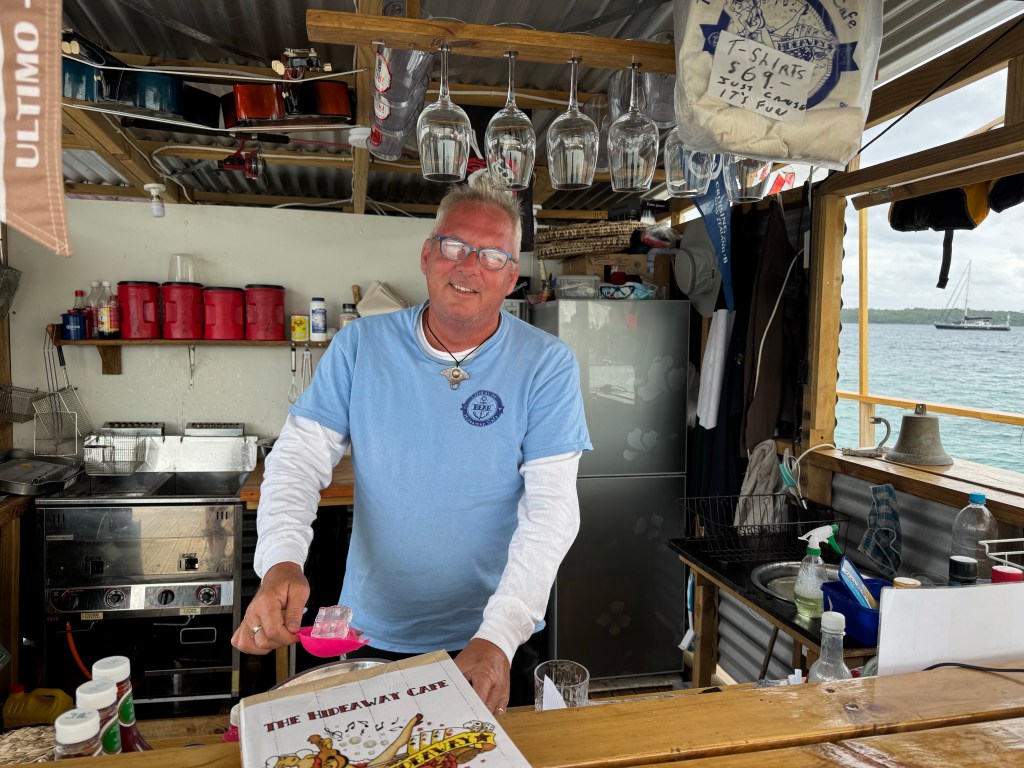
Vava’u has a strong cruisers’ radio net, which occurs at 8:30 daily except Sunday. The net sprang into action when a solo sailor approaching Vava’u called a Mayday because he’d been hit in the head by the boom in an accidental jibe. Fortunately the sailor hadn’t lost consciousness or been thrown off the boat. Bear, owner of the Hideaway Bar and deli and a trained volunteer, talked the sailor through lowering his sails then asked him to stay in the cabin until other volunteers arrived to board his boat and take care of them. A local dive vendor sped out to take the volunteers to the sailboat, now bobbing in the ocean with an engine that wouldn’t run. It turns out that Josh, who helped us with our anchor in Aitutaki, is a trained nurse so he tended the sailor’s first aid needs and accompanied him to the hospital. Jamie and Rusty, who we also met in Aitutaki, volunteered to sail the boat in. One could almost hear a palpable sigh over the radio when listeners heard that the volunteers were able to get on the sailboat and the sailor got into the dive boat. Other than a bruised face, black eye, and headache, the sailor was okay after the four hour rescue mission. Phew!

What’s Next
It has now been over a month since our arrival in Tonga. After checking out through customs, we left Neiafu yesterday afternoon and had a sporty sail through the night. Later today, we’ll leave Tongan waters as we sail to Minerva Reef and New Zealand.
On the way, we’ll finish Part 2 of Tonga.
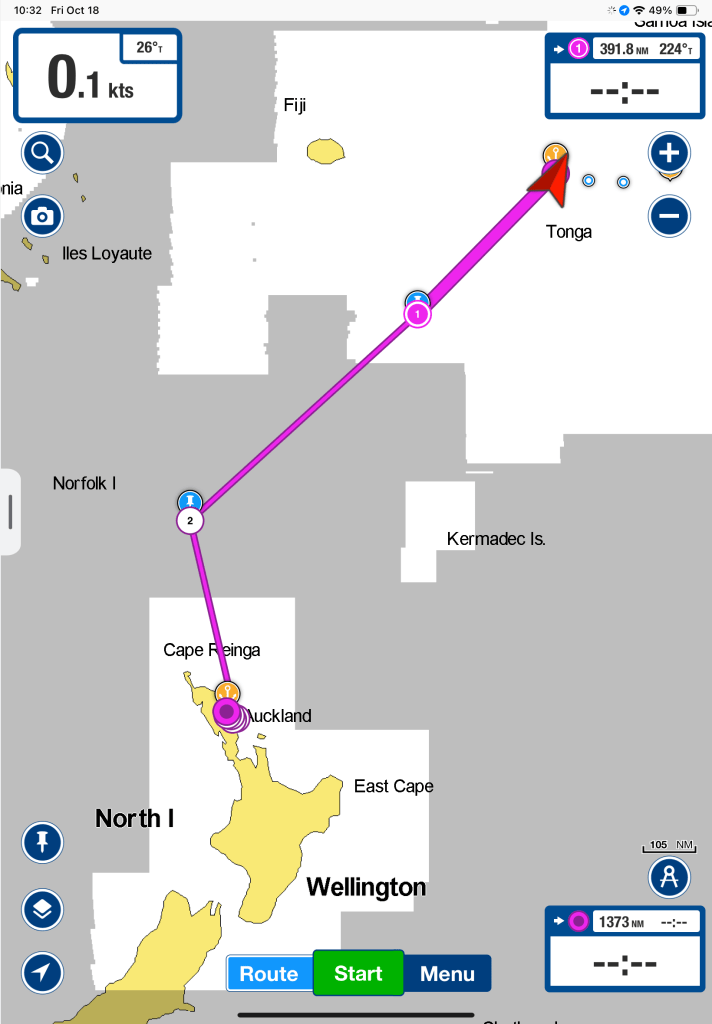
Almost 1400 NM


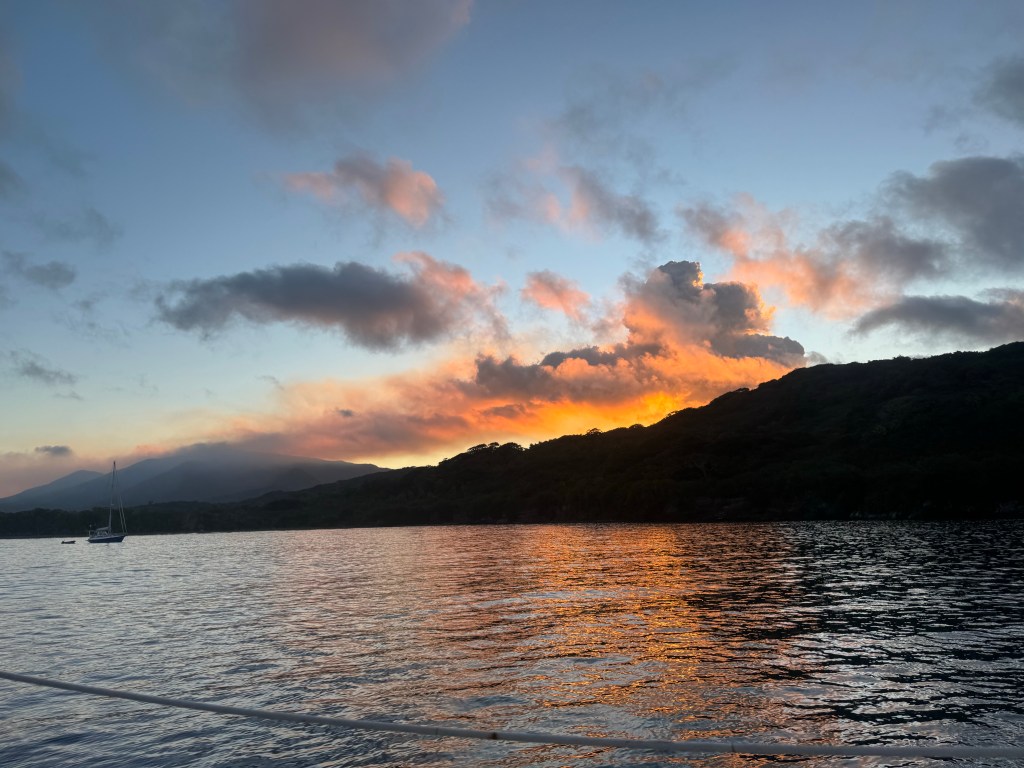
 Sailing Tieton
Leave a reply to arbiterbuttery6b548732a5 Cancel reply