Our feet are bare and warm; puffy jackets, sweaters and socks are stored, and we’re enjoying hot and humid Fiji.
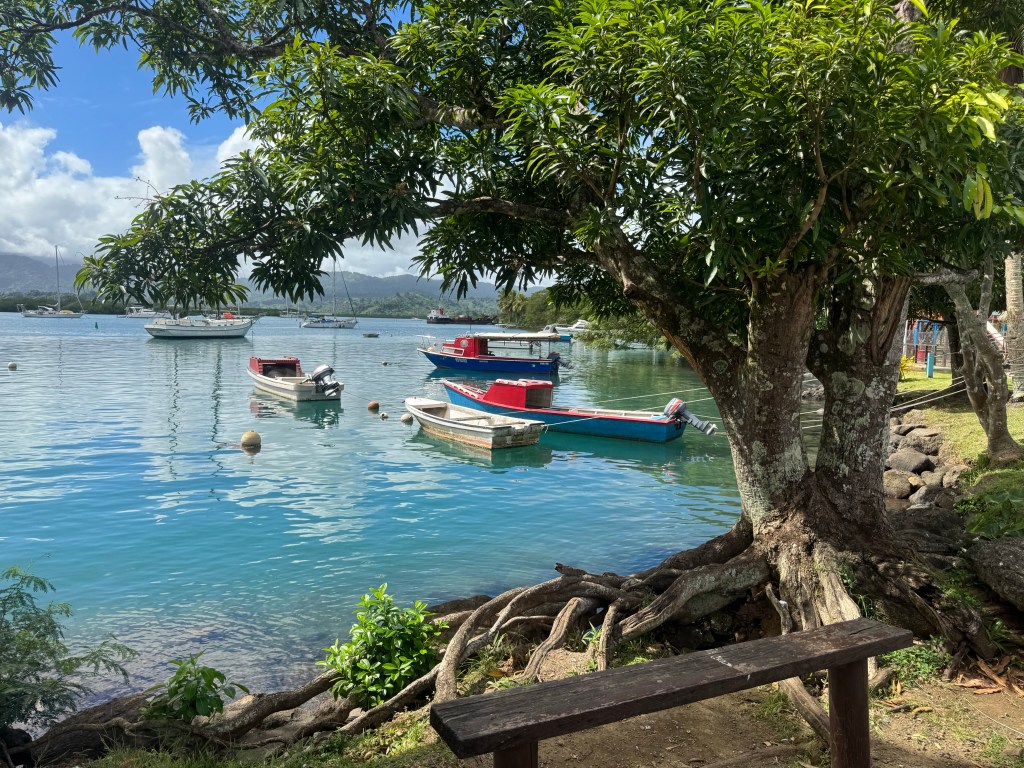
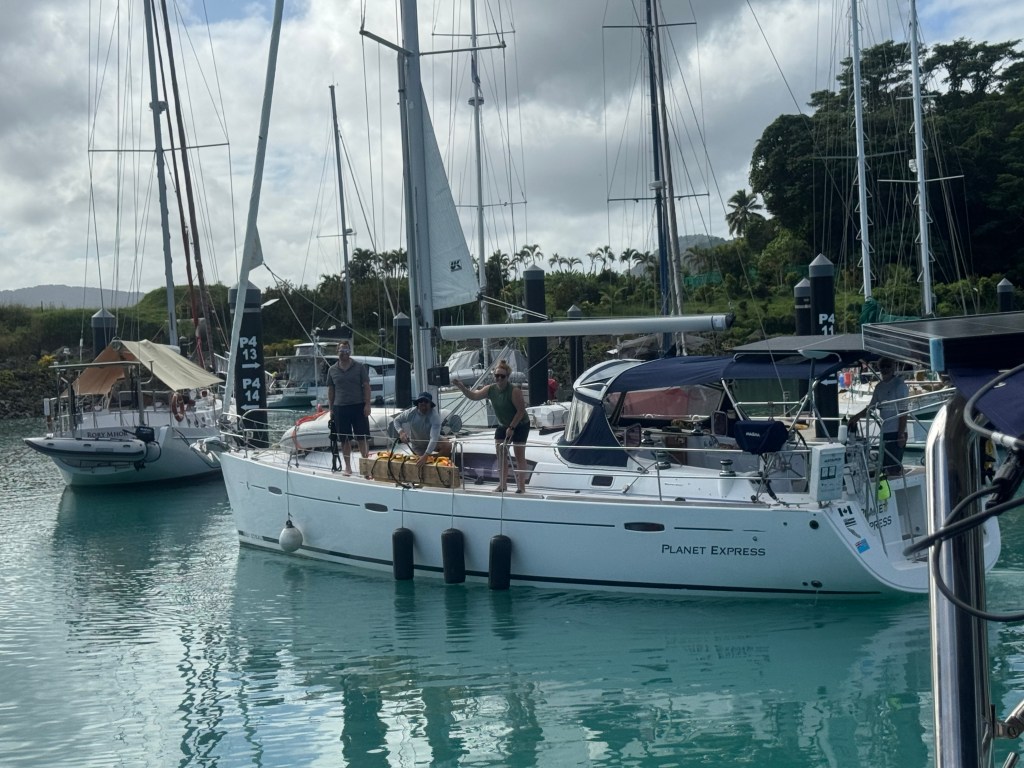
Nawi Marina was our home for the first two weeks, which was a delightful respite from being at sea. Being at the marina gave us a chance to get to know Rich and Sharon from Bumblebee as we relieved our passage isolation with several evenings of meals, beverages and games together. Anja and Walter from My Way came to Savusavu for a visit with us before they proceeded westward. We got to know Adam from Planet Express who sailed here after the 2024 Pacific Cup Race from San Francisco to Hawaii, and was getting ready to sail back to Vancouver.
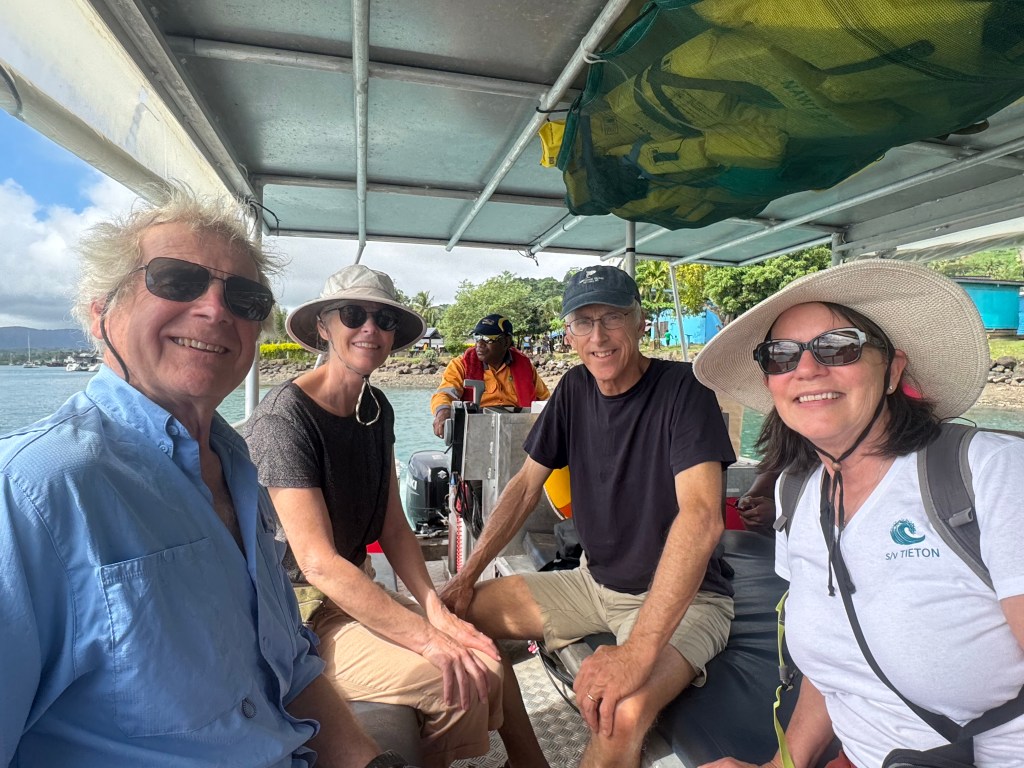
Kokomana Chocolate Farm
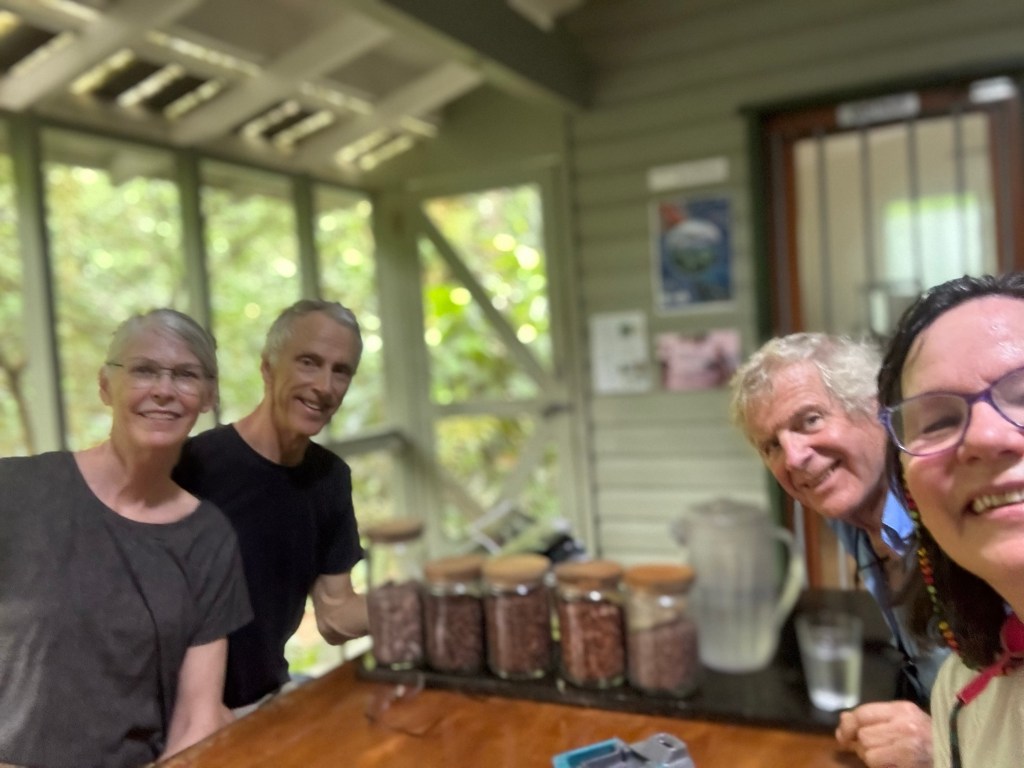
We toured the Kokomana Chocolate Farm, a business that grows cocoa and produces an average of 200 55g (2 oz.) chocolate bars a week. Along with the tours, the two-acre cocoa farm provides a living for five people.
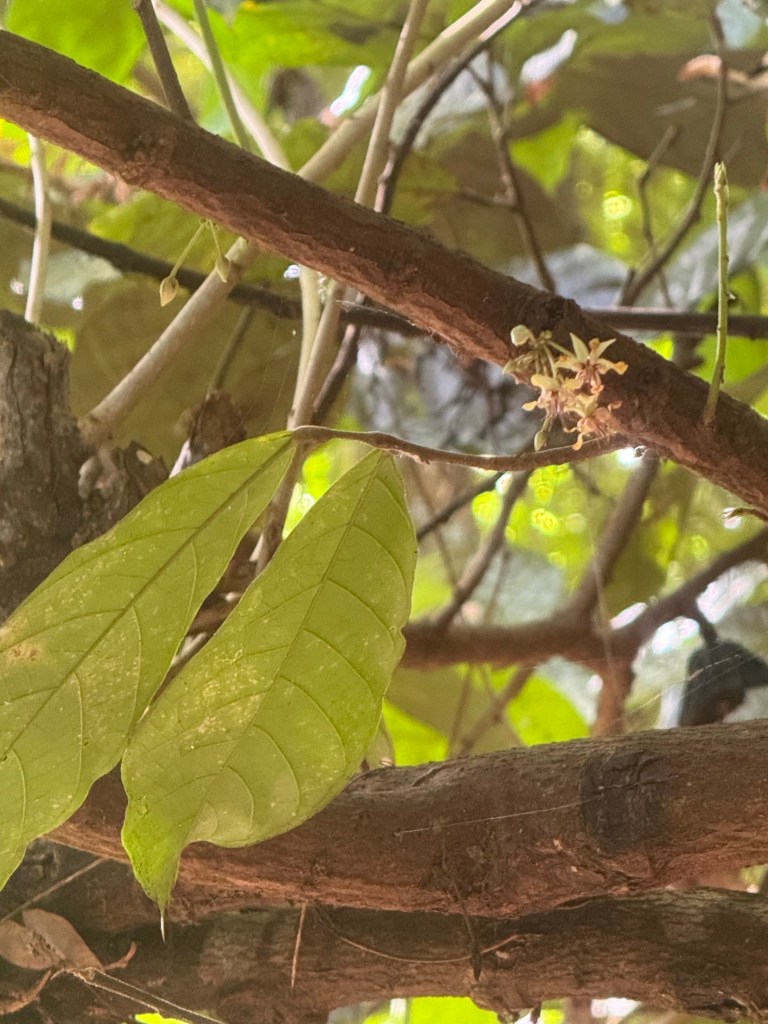
Jillian explained that once planted, it takes three years before the tree flowers, then the fruit ripens in about six months. As the plantation matured, rats became a problem, so four cats were brought in to control the population. Early Polynesia settlers brought the rats as a source of protein, because they were easier to manage on an outrigger canoe than pigs. Anyone considering becoming a vegetarian? Back to the cats: they’ve been so successful that now they’re fed cat food and given a special treat when they catch a mouse. Jillian feels better about using the cats instead of the 40 poison traps recommended by the agricultural ministry.
Left alone, cocoa trees grow very tall, so trees are pruned to keep them within handpicking range. Companion plants taro, vanilla, peppers and kava provide shade, pest control, nutrition, and additional revenue for the farm. Trees flower on the main branches which can sustain the weight of the mature fruit.
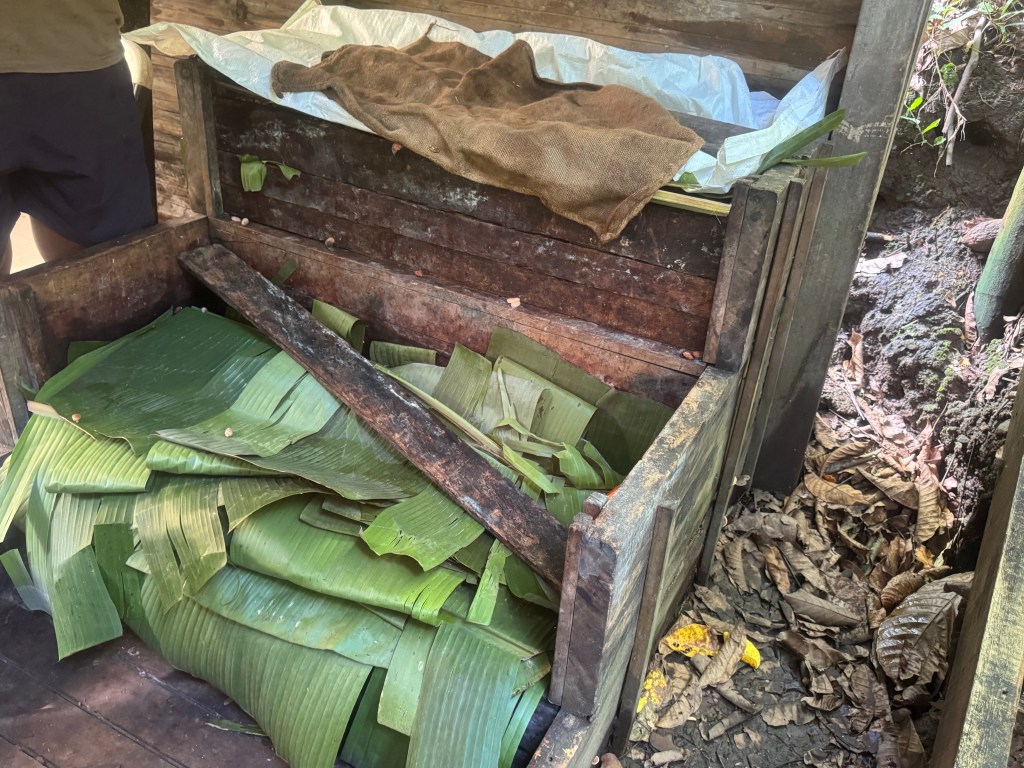
After picking, the seeds are extracted and set in a container to ferment. Fruit flies arrive, packing yeast under their wings (no suitcases 😆) which hastens the fermentation process. When enough fruit flies swarm, the seeds are covered and rotated for six days, then set out to dry for two to three weeks in the sun.
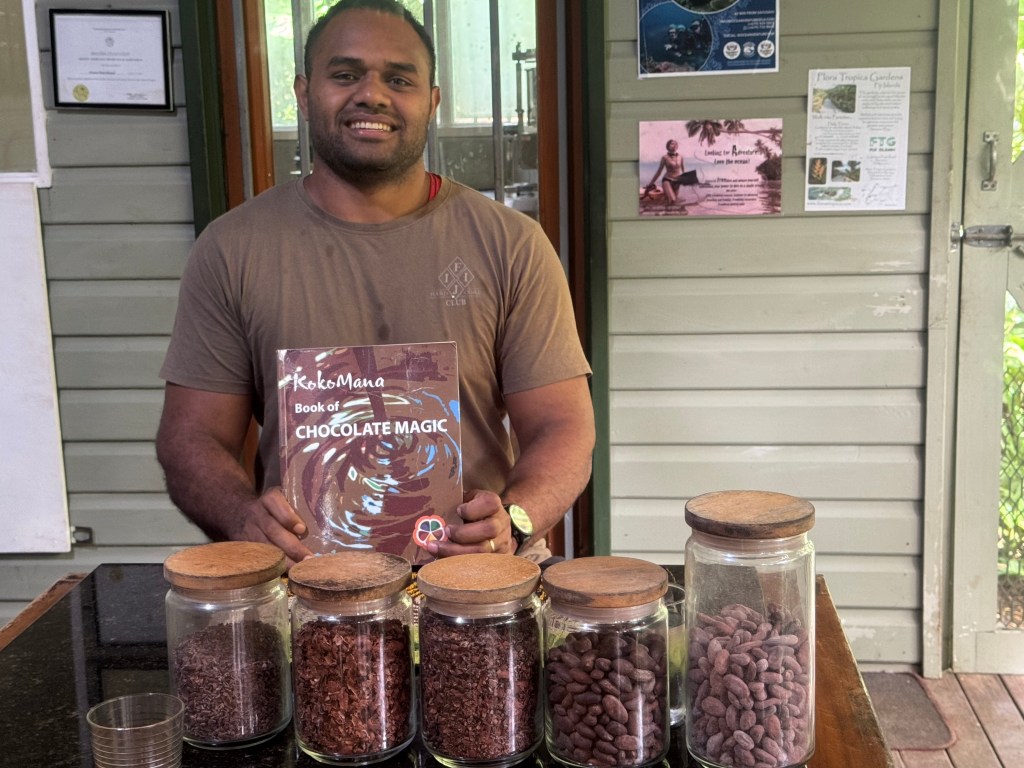




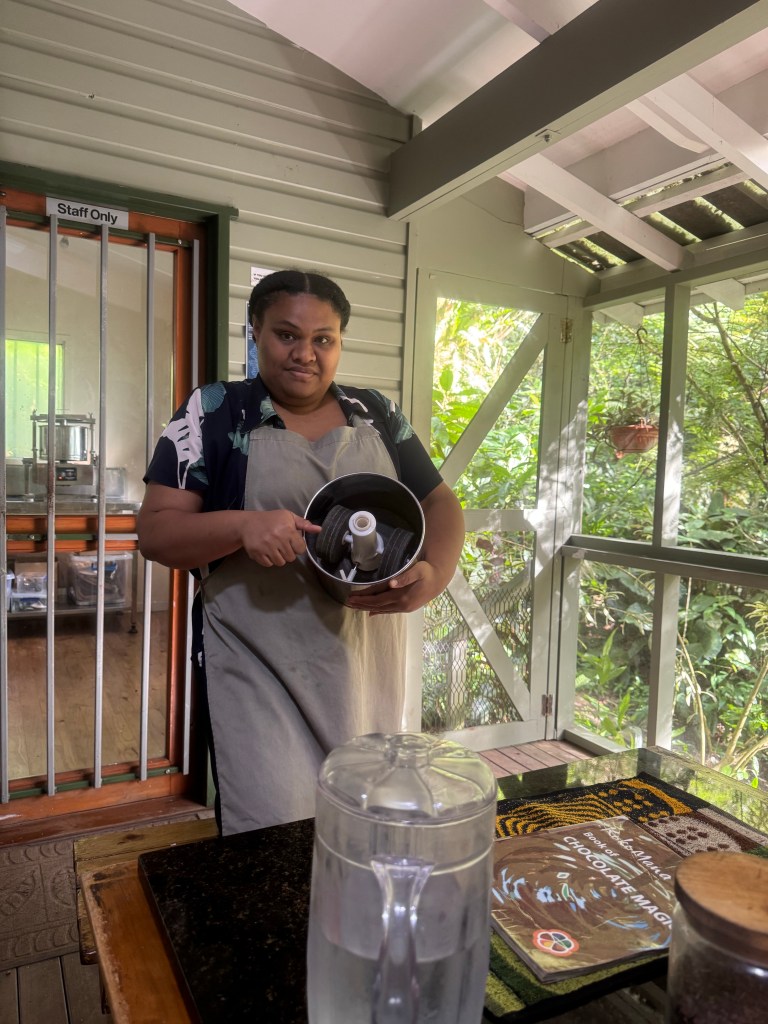
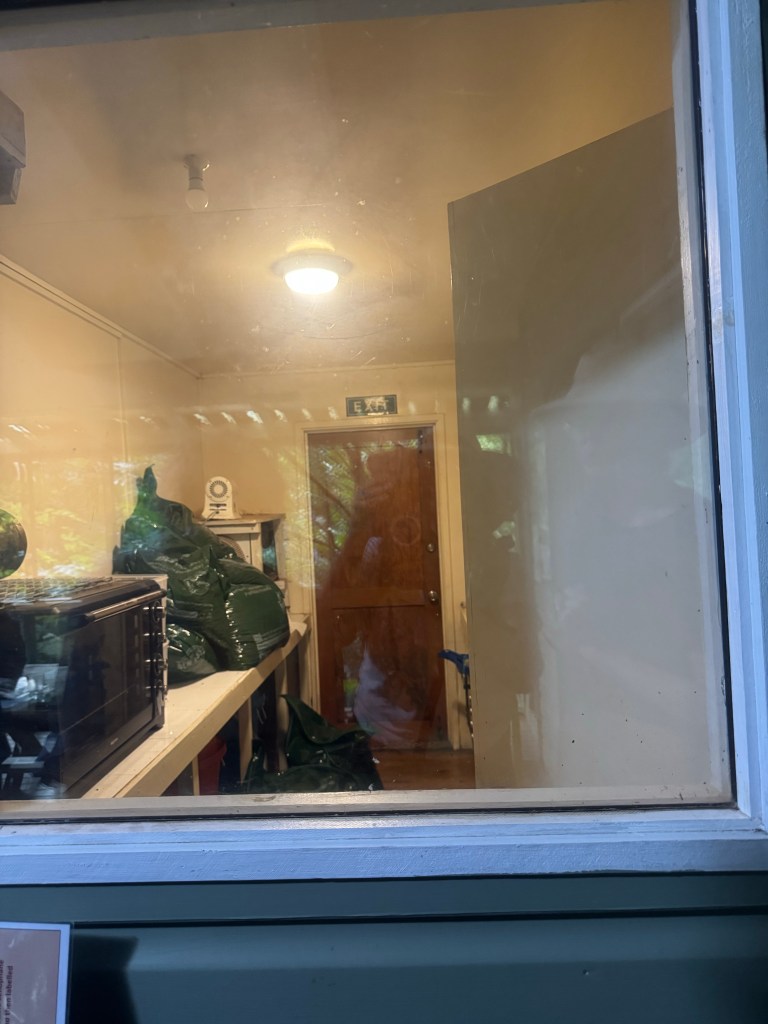
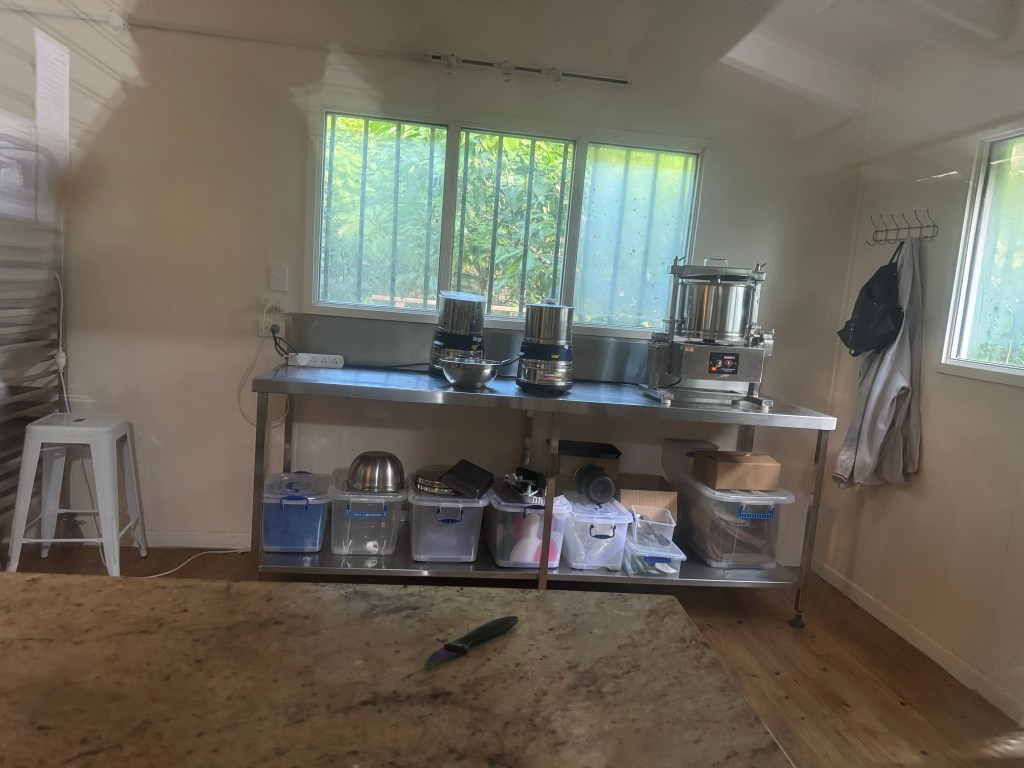
Chocolate chef Anna bags the chocolate in heavy duty plastic and sets them aside for six months allowing the flavors to ripen, somewhat like wine. After six months Anna roasts and cracks the seeds, winnows away the husks then puts the cocoa into an Indian spice grinder for 31 hours. When the grinder is going, someone sleeps at the production facility in case of fire or electrical outage.
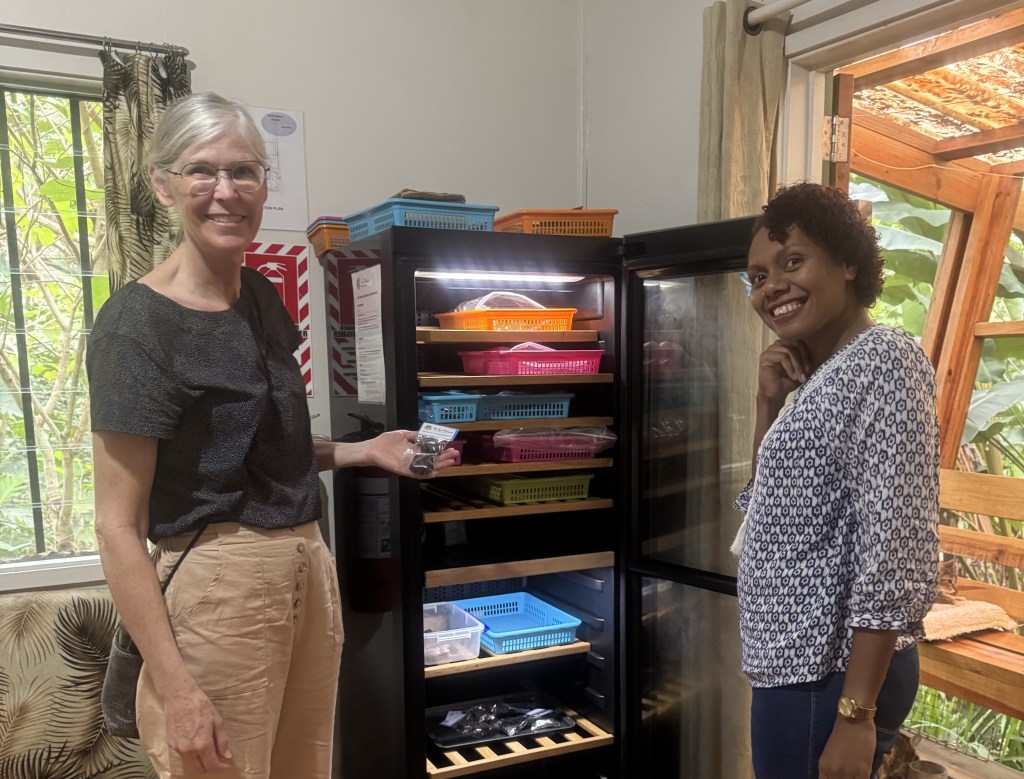
In an air conditioned room (21°C/70°F) Anna tempers the cocoa by heating the cocoa to insert 57°C (135°F), adds sugar to an 85% cocoa/15% sugar mix, then turns 2/3 of the mix onto granite hand-turning with a spatula to cool to 28°C(82°F) when it is returned to the pot for an overall temperature of 32°C(90°F) and in the final step pours it into molds for the bars. To their lowest 70% mix, they add flavors of coconut, sea salt, ginger, or chai masala. From flower to chocolate bars, the overall process takes 13 months. We tasted all flavors and ended up buying one of each, as did Sharon & Rich from Bumblebee. Unfortunately, they were sold out of ginger and chai masala.
Boat Stuff
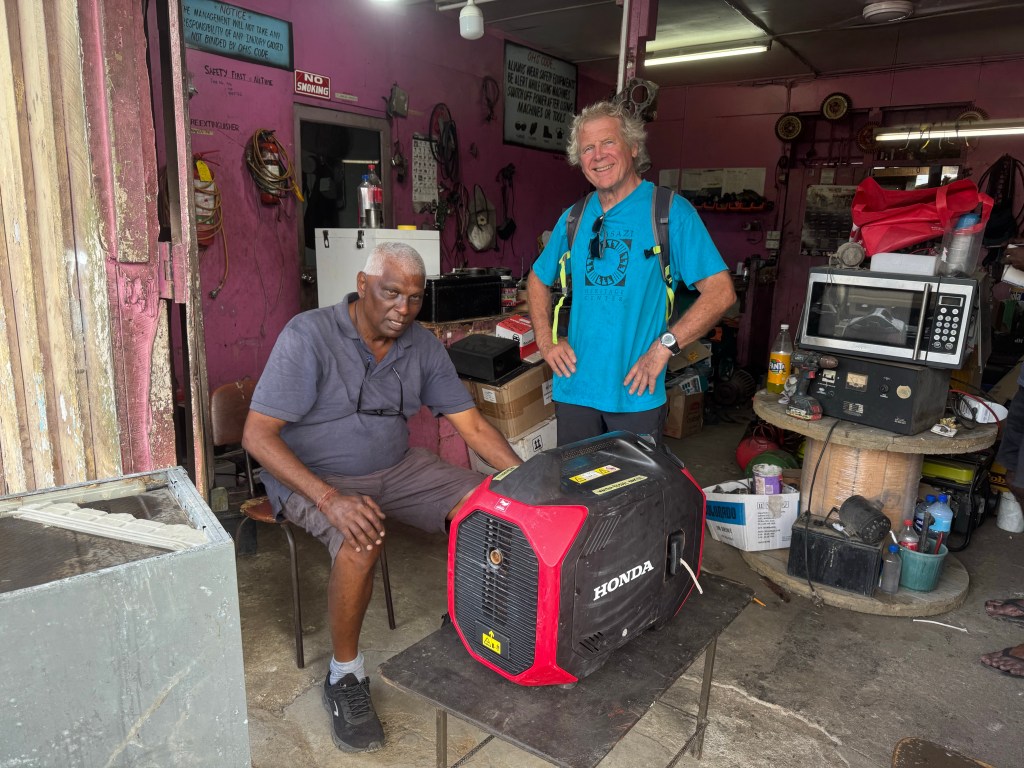
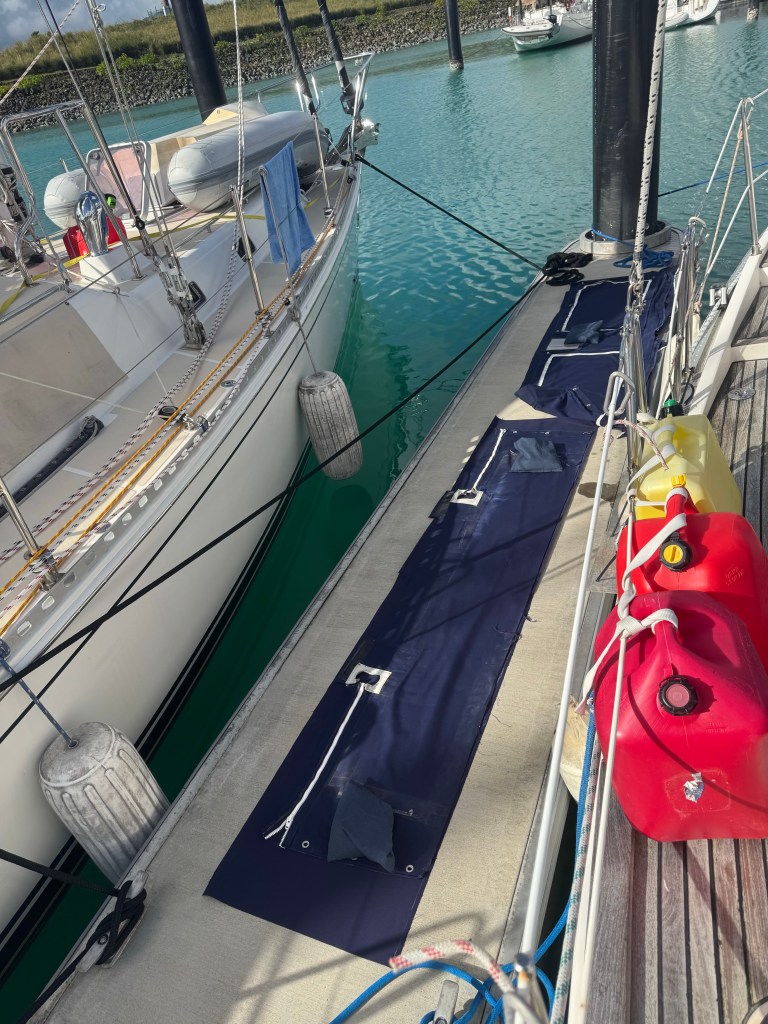
Herman focused on getting the Honda generator fixed while I repaired the bimini. The marina referred us to a small engine repair business in Savusavu, so Herman carried the generator onto the marina’s ferry shuttle. Owner Pilay met the ferry so that Herman didn’t have to lug the generator to his shop. Between the marina staff and Pilay, Herman gained an appreciation of Fiji time in a series of missed connections either because of early departures or late arrivals. After three solid Fiji days of work, Pilay proudly presented a working generator and a bill for FD$350 (US$150). In the shop were the East Indian landord, Pilay’s son who Pilay hopes will take over his business, and Pilay – my accountant brain thinks about overhead and how far our $150 will go.
Since the bimini had ripped at the awning rope that attaches to the boat, I needed to take apart some of the #@! bimini. After five solid days of work, the new and improved bimini is back on Tieton.
Savusavu
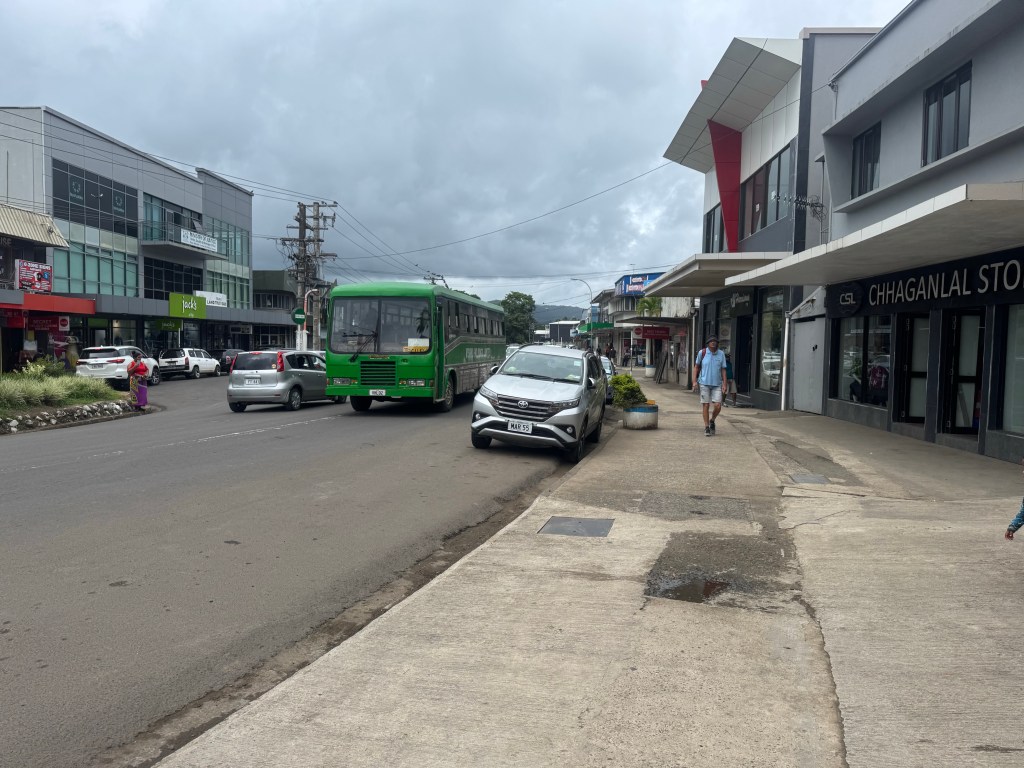
The town of Savusavu gave us a little insight into Fiji an culture, and we’re looking forward to learning more. A farmers’ market with at least fifty stalls opened in May 2025 in a newly upgraded building. Cucumbers, onions, bok choy, pineapples, eggs, bananas, kava and eggplant were readily available and reasonably priced. Tomatoes and cabbage aren’t ready yet, but can be had a premium prices. Sadly, although garbage is a problem and attempts to recycle are underway, market vendors provide single use bags without charge.
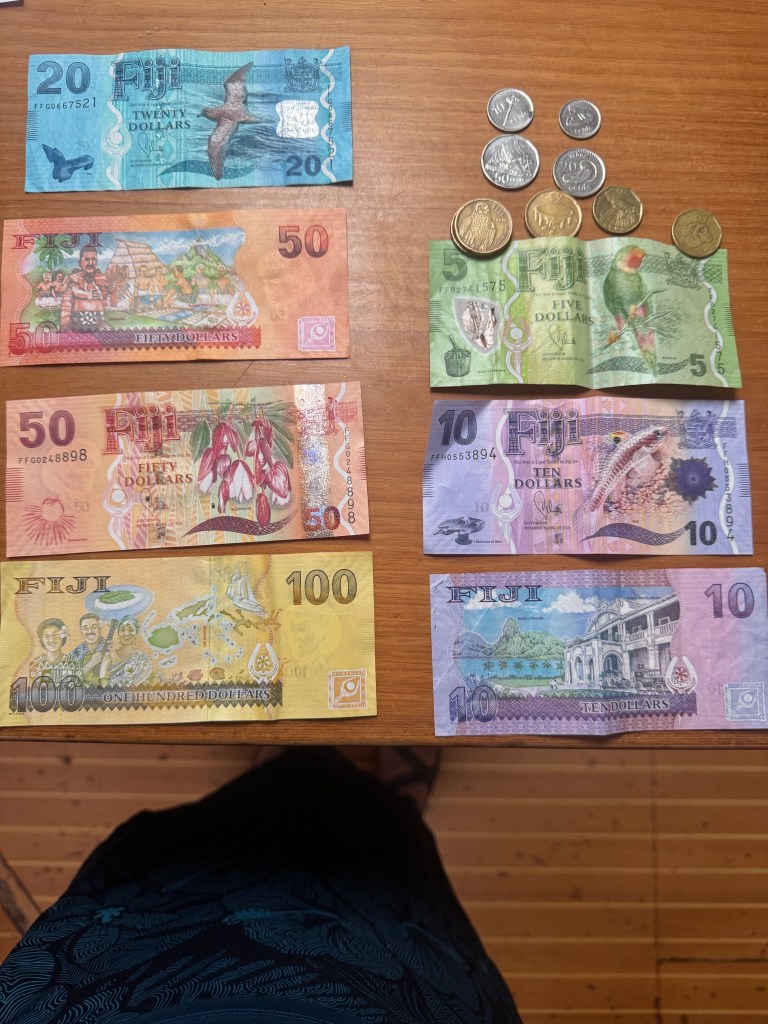
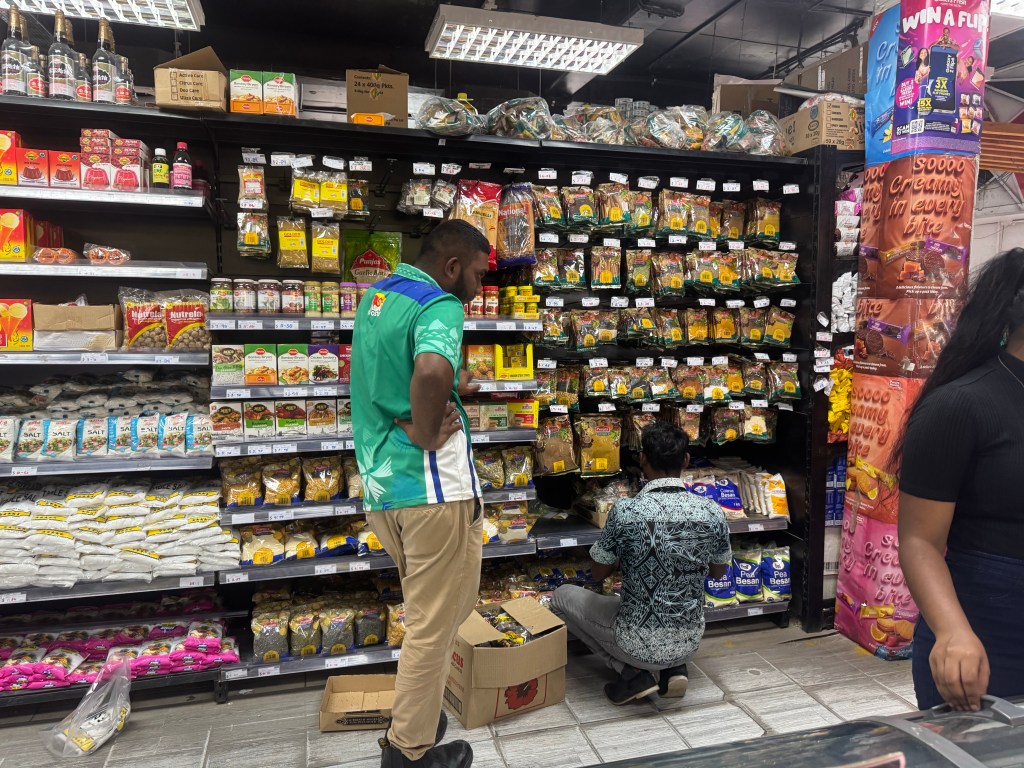
Grocery stores have standard canned goods, although many are packaged with extra sugar. Several bakeries sell fresh white bread and sweet pastries, and whole wheat bread is a distant memory. Beer and wine are reasonable, and alcohol is pricey. Cash is king and if stores take credit cards, they charge an extra 4 or 5%.
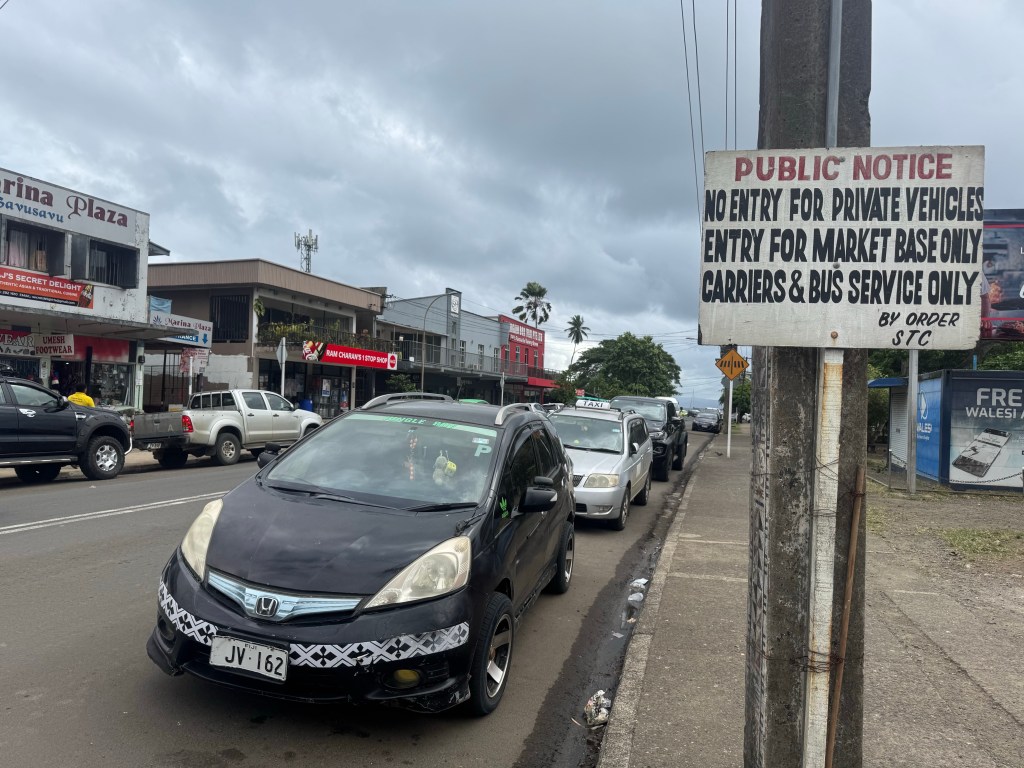
The public transportation system seems robust and the shop that sells tickets has a huge line that seems like it’d take hours to get through. We haven’t braved that yet.

What’s Next
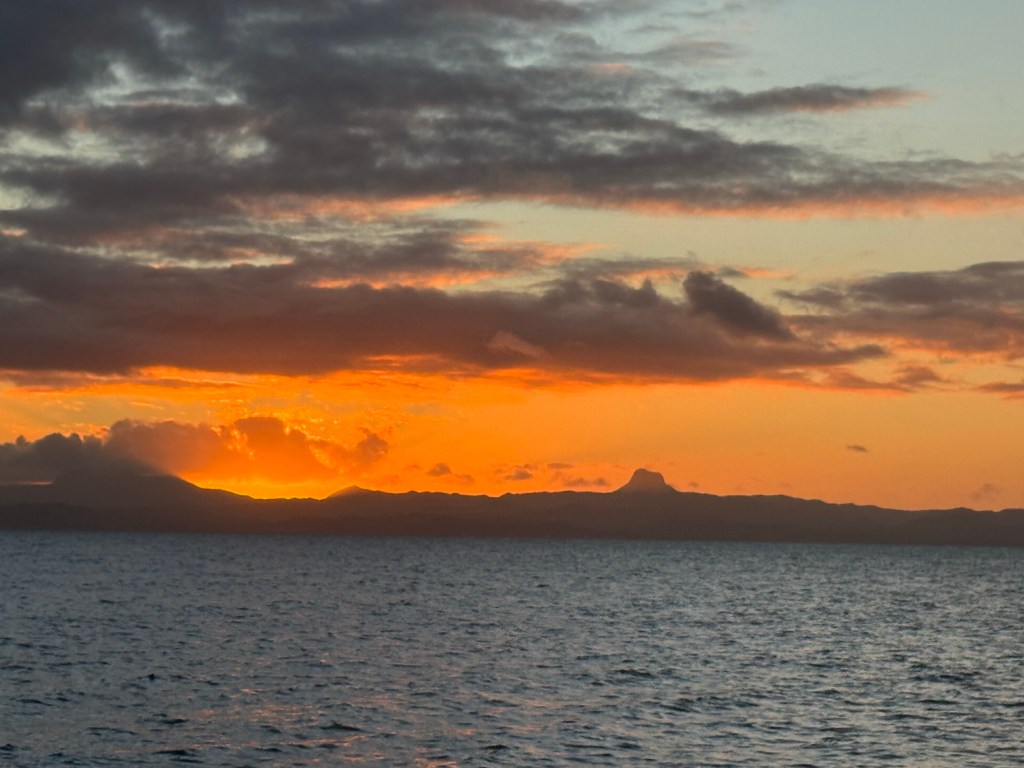
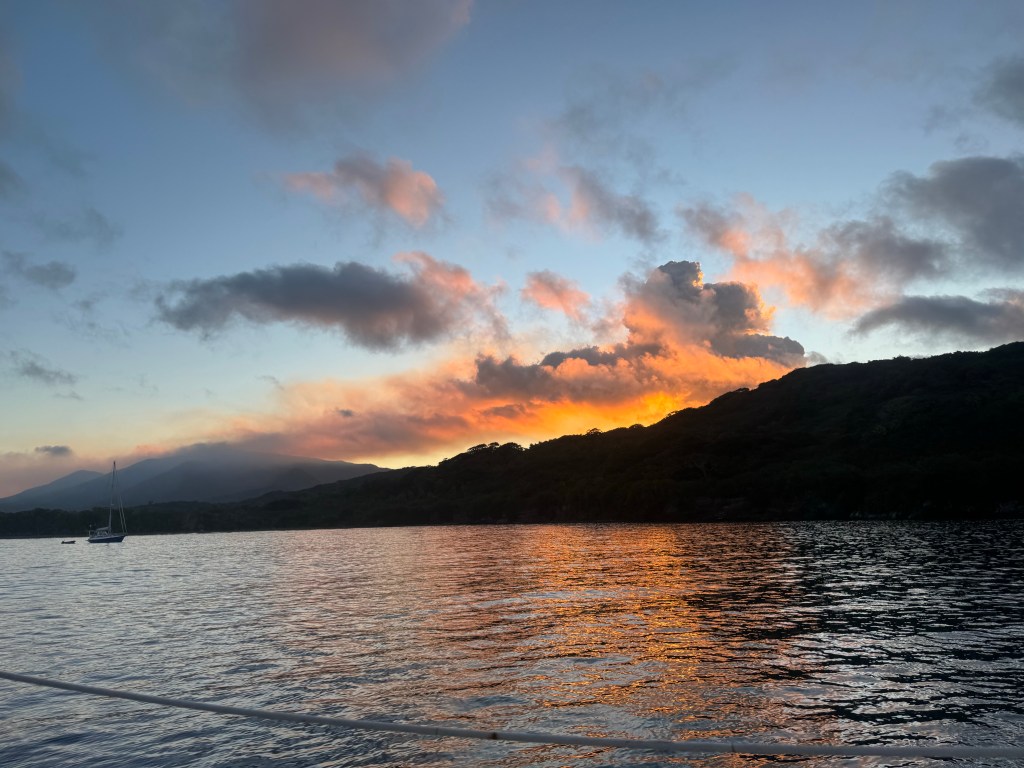
We decided to skip land-based touring in Savusavu and get the boat back on an anchorage and us back to diving/snorkling. Perhaps we’ll return after we get to the Lao Group.


 Sailing Tieton
Leave a reply to svtieton Cancel reply